Tag Archives: undefined

Harvesting Higher Yields With The Fallen Angel Bond ETF
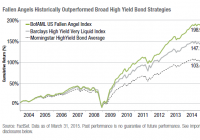
Summary High-yield bonds have attracted significant investor attention in the current yield-starved environment. However, lower quality credit is usually associated with higher volatility and risk compared to investment grade credit. Can fallen angels capture the best of both words? This article seeks to compare the fallen angel bond ETF ANGL with three other U.S. corporate bond ETFs: LQD, JNK and HYG. Introduction The low interest rate environment that has prevailed for the past few years has shifted significant investor attention towards a range of income-generating securities, such as dividend stocks, REITS, MLPs, BDCs and high-yield bonds. Within the realm of high-yield bonds, the two largest U.S. high-yield bond ETFs are the iShares iBoxx $ High Yield Corporate Bond ETF (NYSEARCA: HYG ) and the SPDR Barclays High Yield Bond ETF (NYSEARCA: JNK ), which have attracted around $14B and $10B in assets, respectively. However, high-yield bonds, due to their lower credit quality have also historically been associated with increased volatility and risk compared to investment grade bonds (see the iShares iBoxx $ Investment Grade Corporate Bond ETF (NYSEARCA: LQD ), which has $21B in assets). Not surprisingly, this leads to a common investor dilemma: should one go for the increased yield but higher risk of junk bonds, or the increased safety but lower yield of investment grade bonds? And is it possible to have some of both? Fallen angels Fallen angel bonds are those that were rated as investment grade when issued, but were then subsequently downgraded to non-investment grade status. Consequently, fallen angel bonds typically occupy the higher rungs (i.e., BB) of the non-investment grade bond credit ladder. The fall of a company from investment grade to non-investment grade status, sometimes due to a ratings cut of as little as one notch, can significantly impact the perceived risk and hence valuation of the company’s debt and equity. These bonds instantly become subjected to forced and indiscriminate selling by fund managers or indices that do not allow junk debt in their investment mandates. This can lead to substantial mispricing which therefore can create value in these bonds. According to data provided by the fund website , fallen angel bonds have outperformed high-yield bonds for 8 out of 11 calendar years since 2004, and with superior risk-adjusted returns to boot. The Market Vectors Fallen Angel Bond ETF (NYSEARCA: ANGL ) aims to capture the outperformance of fallen angel bonds. This fund appears to be little-known, with only 76 followers on Seeking Alpha. This article seeks to compare ANGL with three other U.S. corporate bond ETFs, LQD, JNK and HYG to evaluate the performance of the fallen angel ETF since inception and whether or not it has performed as expected. Credit profile The following table provides data for the credit quality distribution of these four funds (data from fund websites). ANGL LQD JNK HYG AAA – 1.7 – – AA – 10.82 – – A 0.64 47.86 – – BBB 1.56 38.25 – 2.29 BB 76.9 – 42.06 48.14 B 14.13 – 44.15 39.47 CCC 6.98 – 13.79 9.18 This data is also presented graphically. We can see from the data above that the majority of ANGL’s holdings are in BB bonds. LQD obviously contains only investment grade bonds, while JNK and HYG both only contain non-investment grade bonds. JNK and HYG appear to have a similar overall credit quality, with JNK having fewer BB bonds but more CCC bonds. Performance The following chart shows the performance of the four funds over the past 4 years (since inception of ANGL). ANGL Total Return Price data by YCharts We can see from the data above that ANGL has had the highest performance of 29.07% over the past four years. The two high-yield bond funds, JNK and HYG, had total return performances of 21.33% and 21.76%, respectively, while LQD had the lowest total return of 13.08%. The following table illustrates further performance metrics for the four bond funds. Data are from Morningstar, and return figures are annualized. Metric ANGL LQD JNK HYG Return (3Y) 9.98 4.41 7.08 7.04 Return (5Y) – 6.54 7.16 8.37 Return (10Y) – 5.41 – – Volatility (3Y) 4.34 5.22 4.91 4.59 Volatility (5Y) – 5.21 8.48 6.65 Volatility (10Y) – 7.07 – – Sharpe ratio (3Y) 2.21 0.84 1.41 1.50 Sharpe ratio (5Y) – 1.23 1.17 1.24 Sharpe ratio (10Y) – 0.58 – – We can see that over the past three years, ANGL not only had the highest return out of the four bond funds, but is also had the lowest volatility as well. This is surprising because one might have expected the ANGL to possess increased volatility compared to the investment grade bond fund LQD. The lowest volatility and highest return of ANGL causes the fund to exhibit a Sharpe ratio (2.21) that is significantly higher than the three other bond funds. This indicates that ANGL has exhibited the best risk-adjusted performance of the four funds ove the past three years. Fund data Relevant data for the funds are shown below and are from Morningstar . ANGL LQD JNK HYG Yield [ttm] 5.18% 3.37% 5.77% 5.37% Expense ratio 0.40% 0.15% 0.40% 0.50% Inception Apr. 2010 Jul. 2002 Oct. 2007 Apr. 2007 Assets $36.7M $20.8B $10.1B $5.37B Avg Vol. 8.7K 2.2M 6.8M 6.1MM No. holdings 173 1,371 801 1,010 Annual turnover 35% 9% 30% 11% Average maturity 10.17 12.21 6.34 4.93 Concluding thoughts In my opinion, ANGL is an excellent bond ETF that can form a core part of a well-diversified portfolio. It currently yields 5.18%, which is around 180 basis points greater than the investment grade bond fund LQD (3.37%) . Additionally, its yield is only 20 to 50 basis points less than that of JNK (5.77%) and HYG (5.37%), which are significantly “junkier” than ANGL. Additionally, its expense ratio is reasonable at 0.40%, which is the same as that for JNK and 0.10% cheaper than that for HYG. Importantly, fallen angel bonds have outperformed high-yield bonds on a risk-adjusted performance for 11 years (index performance), and for at least four years over both high-yield bonds and investment grade bonds (live ETF performance). Additionally, I believe that the mispricing that occurs upon the downgrading of a bond into non-investment grade status is an anomaly that should continue to persist into the future. The AUM of ANGL is only $36.7M, which is less than 1% that of the other three funds, but I expect this figure to rise as the performance of the fund becomes better known. However, this does lead to a trading low volume of 8.7K shares for ANGL, which may result in higher bid-ask spreads for investors. Additionally, the maturity of ANGL is at 10.17 years, which is lower than for LQD (12.21) but significantly higher than for JNK (6.34) and HYG (4.93). This suggests that ANGL might be more interest-rate sensitive than JNK and HYG. Surprisingly, however, ANGL has avoided damage from the mini-“Taper tantrum” of 2015 so far, posting even better total return performances compared to the lower-maturity funds JNK and HYG, while LQD has predictably slid. ANGL Total Return Price data by YCharts Disclosure: I am/we are long ANGL. (More…) I wrote this article myself, and it expresses my own opinions. I am not receiving compensation for it (other than from Seeking Alpha). I have no business relationship with any company whose stock is mentioned in this article.
Investors – Your Hair Is Not On Fire, You Don’t Have To Get Out Of The Market

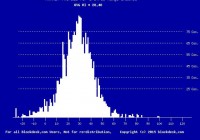
Summary The media woods (including Seeking Alpha) are full of dire predictions of market corrections, retrenchment, collapse, from anticipated Fed interest rate hikes, Greek intransigence in the EU, Putin’s Ukranian grab. Oh, woe! It’s all bad. ISIS amok. Massive panicked African emigration to Europe. Police stations and bible study groups becoming shooting ranges. Our own government and AT&T telling lies. Wouldn’t you think folks who help big-$-fund Portfolio Managers realign their holdings would see a market decline coming? But they sure don’t behave like they believe it’s so. What’s the matter with them? Or is it with us? Rational Behavior under threats The normal actions of informed humans sensing impending danger is to erect defenses and plan strategies to deflect or overcome attacks. That is what market-makers [MMs] do in their ordinary course of moving a large part of a trillion dollars of equity investments each day from one set of hands to another. To get balance between buyers and sellers where volume transactions in stocks involve tens and hundreds of $-millions, the MMs usually have to put firm capital at risk temporarily. Hundreds of times a day, every day. They are no strangers to risks and threats. They are highly skilled practitioners of hedging and arbitrage. Those art forms are integral to their enviable successful progress in protecting their capital from harm. So what are they doing to protect against market declines? Nothing out of the ordinary. Just what they have been doing, day-in and day-out. That includes world-wide watching, listening, questioning, reporting, recording, evaluating, communicating. It’s strange that organizations so well resourced and disciplined would miss the threats that so many others claim to be about to harm all of us. Yet MMs continue to behave in the same manner, hedge to the same degree, pay for protection about the same amounts, in deals structured the same way as they have been, over many past months. We have been watching their behavior for decades They clearly behave quite rationally, rather systematically, given what they know at various times. In our recent SA article of “Worry, worry, worry” we demonstrated the differences present as they sense impending problems or ongoing good times. Our behavioral analysis of their hedging practices daily has not changed over decades. It shows the asymmetry of their price change expectations for 3,000 or more stocks day after day. For each stock we produce what they must think their serious, powerful clients are likely to do to the prices of stocks the clients want to own in the future, and to ones they no longer want to own. And to the price points where the clients might change their minds. The ranges of possible price prospects get described by a single simple measure, the Range Index. Its job is to tell the balance between upside price change potentials and downside price change exposures. Each stock, ETF, or equity market index has a Range Index [RI] whose number tells what percentage proportion of that subject’s likely coming price range lies below its current market quote. A low RI suggests limited downside, ample upside. So the RI becomes a common denominator for price expectations, a very useful yardstick to compare the expectations of many varied issues. And, in the aggregate, to have a sense of what the market outlook overall might be. That’s what is shown at various stages of market price change anticipations in the “Worry, worry, worry” article. Figure 1 updates that distribution of informed professional expectations to last night. Figure 1 (click to enlarge) (used with permission) The average Range Index of the 2,500+ names covered in this picture is 28, meaning that the typical stock has better than twice as much upside as downside. A 50 RI would make the odds of up vs. down a coin-flip. How many in Figure 1 have that kind of prospect, or worse (a higher RI than 50)? A negative RI means that the subject’s current price is lower than the bottom of the price range regarded as likely or justifiable. That condition sounds like “cheap” to many Graham & Dodd folks. Figure 2 tells what has happened to stock, ETF, and market index prices in the 16 weeks following the daily observation of Range Indexes for this population during the past 4-5 years. Some 2,959,450 observations built this display. Figure 2 (click to enlarge) That 1 : 1 blue row of Figure 2 is the overall population average, positioned at the 50 RI level. That’s where up and down price change prospects are held equally likely. The green rows above are of progressively lower Range Index (or cheaper) forecasts, and the red rows below the blue row are of progressively more expensive RIs. The maroon-count row just above the blue row is coincident with today’s population average. But we should be more interested in what can be done to improve an existing investment portfolio than in speculating about what might happen to the market as a whole. Play the game better What is of interest to active investment managers is the potential payoffs and odds for success in buys of those stock or ETF RI forecasts up in the top rows of the table. And what might best be purged from a portfolio where the holding’s RI is among those below the 50 blue-row level – higher RIs than 50. For perspective, take a look back at Figure 1. Today, just as in most daily experiences, there are many promising prospects for purchase off to the left in the Figure 1 distribution. To the extent that these have proven to be reliable, credible forecasts, then it is likely that what happens to the market as a whole has little impact on their near-term future. And it is their near-term future that active investors should be concerned with. In today’s global, high-tech, communicative and competitive networks of business activity, reaching out with forecasts as much as a year or more is not investing, it is just speculating. While overall-market forecasters are speculating as to where the averages will be a year or more from now, active investors will have the opportunity to have capitalized on interim opportunities, compounding their triumphs (often 3-4 times in a year) net of their mistakes (typically 1 in 2 years) to produce rates of gain that may be multiples of what the market averages may have produced in capital gains. Those kinds of odds, 6 out of 8, or 7 out of 8 wins in two years for each allocation of capital, are quite doable when good guidance is provided. Usually the rates of gain in the wins are well above those of the market, and the effect of compounding can multiply the progress in wealth-building well beyond the (now highly competitive and economical) transaction costs or infrequent loss. As an example, using market-maker forecasts to compare over 2,500 equities daily, and ranking them based on how well prior forecasts similar to the current-day forecast have performed, over 1900 opportunities have been identified so far in this 2015 year at a rate of 20 a day. Following a time-efficient discipline standard of portfolio management to all, of the closed out positions (more than half) the average annualized rate of net gains are +31%, compared to that of SPY at +5.1%. Conclusion There are nearly always attractive stocks or ETFs to buy, regardless of overall market prospect appearances. The diversity of opportunities among over 3,000 potential quality portfolio investment candidates provides a rich field of perpetually price-renewed prospects. But investors need to have a portfolio management strategy and discipline urging them to be frequently aware of developing opportunities and maturing prior actions in need of reinvesting. This is called active investing, and will involve more attention and time commitment than many investors are willing or need (the most fortunately capitalized) to make. The rewards for active investing are demonstrably far better than most investors of all types have been led to believe. Those investors faced with impending capital-requirements having fixed time deadlines may find that the only way now that will satisfy their needs makes adoption of active investing a most sensible practice. Disclosure: I/we have no positions in any stocks mentioned, and no plans to initiate any positions within the next 72 hours. (More…) I wrote this article myself, and it expresses my own opinions. I am not receiving compensation for it (other than from Seeking Alpha). I have no business relationship with any company whose stock is mentioned in this article.

Stocks Or Bonds?

I was writing to potential clients when I realized that I don’t have as much to write about my bond track record as I do my track record with stocks. I jotted down a note to formalize what I say about my bond portfolios. One person I was writing to asked some detailed questions, and I told him that the stock market was likely to return about 4.5%/year (not adjusted for inflation) over the next ten years. The model I use is the same one as this one used by pseudonymous Philosophical Economist . I don’t always agree with him, but he’s a bright guy, what can I say? That’s not a very high return – the historical average is around 9.5%. The market is in the 85th-90th percentiles of valuation, which is pretty high. That said, I am not taking any defensive action yet. Yet. But then it hit me. The yield on my bond portfolio is also around 4.5%. Now, it’s not a riskless bond portfolio, as you can tell from the yield. I’m no longer running the portfolio described in Fire and Ice . I sold the long Treasuries about 30 basis points ago. Right now, I am only running the credit-sensitive portion of the portfolio, with a bit of foreign bonds mixed in. Why am I doing this? I think it has a good balance of risks. Remember that there is no such thing as generic risk . There are many risks. At this point, this portfolio has a decent amount of credit risk, some foreign exchange risk, and is low in interest rate risk. The duration of the portfolio is less than 2, so I am not concerned about rising rates, should the FOMC ever do such a thing as raise rates. (Who knows! The economy might actually grow faster if they did that. Savers will eventually spend more.) But 10 years is a long time for a bond portfolio with a duration of less than 2 years. I’m clipping coupons in the short run, running credit risk while I don’t see any major credit risks on the horizon aside from weak sovereigns (think the PIIGS), student loans, and weak junk (ratings starting with a “C”). The risks on bank loans are possibly overdone here, even with weakened covenants. Aside from that, if we really do see a lot of credit risk crop up, stocks will get hit a lot harder than this portfolio. Dollar weakness and US inflation (should we see any) would also not be a risk. I’ve set a kind of a mental stop loss at losing 5% of portfolio value. Bad credit is the only significant factor that could harm the portfolio. If credit problems got that bad, it would be time to exit, because credit problems come in bundles, not dribs and drabs. I’m not doing it yet, but it is tempting to reposition some of my IRA assets presently in stocks into the bond strategy. I’m not sure I would lose that much in terms of profit potential, and it would increase the overall safety of the portfolio. I’ll keep you posted. That is, after I would tell my clients what I am doing and give them a chance to act, should they want to. Finally, do you have a different opinion? You can email me, or you can share it with all of the readers in the comments. Please do. Disclosure: None.