Tag Archives: seeking

Vietnam Holding: Nearly Triple The Return Of The VN Index
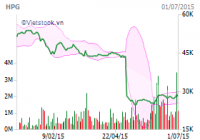
Summary Vietnam Holdings Ltd. had a 1 Year Return of 23.25%, which is substantially higher than the VN Index gain of 8.88%. A further increase in the fund’s price is highly likely for the following reasons: low valuation, recovery of multiple industries, and irrational drops in stock prices that will recover. Vietnam Holdings Ltd. is the best option for investors to gain exposure to Vietnam through US Exchanges. In a previous article , I mentioned the opportunities of investing in Vietnam, and how the Market Vectors Vietnam ETF (NYSEARCA: VNM ) was not the best means to profit off of the growth in Vietnam. When an investment fund is unable to outperform the index and has a negative return in a country with substantial growth, skepticism is befitting. The Market Vectors Vietnam ETF has had a 1 year return of -6.82% , while VN index has had a return of 8.88% . While the most successful funds are generally not listed on US Exchanges, Vietnam Holding Ltd.(OTC: VNMHF ) is a superior alternative that has outperformed the VN Index. Investors, who are bullish on Vietnam and want to trade on US Exchanges, should consider this fund as the most appropriate vehicle. Vietnam Holdings Ltd. is a closed end investment holding company in Vietnam that is listed on the US OTC market. The advantages of this fund include more attractive valuation, consistently higher returns, and its investment in two companies fully held by foreign investors. Performance Comparison Market Vectors Vietnam ETF Vietnam Holdings Ltd. P/E Ratio 15 5.33 Number of companies held with full foreign ownership None 2 1 year return -8.53% 23.25% 3 year return 2.68% 19.4% 5 Year Return -3.70% 14.7% ROE 12% 24.35% Vietnam Holding Ltd. has a very strong portfolio, with extreme low valuation, and more than double the ROE of the top listed equity holdings of the Market Vectors Vietnam ETF. Moreover, the fund’s financial performance has been excellent, particularly in the past year with a return of 23.25% . The current low valuation, coupled with specific companies that demonstrate high potential, will attribute to future success. Its success is mostly attributed to very recent successful performance in the past year, and the growth appears to be in the initial stages. The portfolio is holistically very strong, while I would say that the greatest potential will result from the performance of DHG Pharmaceutical, Petrovietnam Drilling and Well Services, Vinamilk, and Hoa Phat Group. Hoa Phat Group Hoa Phat Group is the most undervalued company, as its share prices have dropped substantially over the past months. The company is currently rated as one of the top 50 best listed companies in Vietnam Forbes and No. 7 for enterprises with the largest turnover. The company has the largest market share for steel production and steel pipe segments, with approximately 18% and 19.8%, respectively . The stock’s price has been constantly declining, although the sharp decline in the middle of May represents an adjustment of stock price due to the issuance of dividends and bonus stocks. I am currently holding Hoa Phat Group at a 9.15% loss, after investing initially in late April and buying down after this drop. Financial performance of the company has been consistent, with strong growth in net income, net revenue, and ROE since 2012. Moreover, Net Income increased by 37% in the 1st quarter of 2015. An increase in steel prices is projected for the future, which will result in recovery of the stock’s price. Vinamilk and DHG Pharmaceutical JSC Although it does not represent a large portion of the fund’s portfolio, the holding of Vinamilk and DHG Pharmaceutical JSC is very strategic, as these companies are fully held by foreign investors. Vinamilk is one of the most sought after companies by foreign investors, as many foreign investors are willing to pay a premium of up to 20% for shares of this company. The slight decline in net income in 2014, coupled with valuation that is not relatively attractive for Vietnam, has not been enough to deter investment away from this company; considerable growth is ahead for the company and its share price will surely increase. Its key position in the dairy market in Vietnam is crucial, as the industry is expected to grow by 9% up to 2020 . DHG Pharmaceutical is another very strategic holding of this portfolio, with average valuation for Vietnam and consistent growth. The company’s EPS is projected to grow by 34% in 2015 , making a rebound in its stock price extremely likely. These two holdings can be considered a major strength of this portfolio, although they only represent 13.7% of the fund’s portfolio. Moreover, there are certainly other companies fully held by foreign investors with better valuation and more potential for growth; some of these include Refrigeration Electrical Engineering Company, Military Commercial Joint Stock Bank, and FPT Corporation. The removal of the foreign ownership limitation in Vietnam, which will begin in some industries in September , will be extremely beneficial for this fund. Both companies are trading very near to their 52 week lows, and an increase in share price in the near future is highly likely, due to company’s valuation, projected growth, and prestige of being fully held by foreign investors. Petrovietnam Drilling and Well Services Petrovietnam Drilling and Well Services is another holding that is extremely undervalued and holding this company will be beneficial, as a rebound in price is inevitable. The sharp drop in price has been very irrational, resulting from the fear of the declining price of oil and some large investment funds selling holdings of this company. Despite the sharp drop in its share price, a large number of foreign investment funds are still keeping this company in their portfolio, in anticipation of a rebound in price. Beyond having extremely attractive valuation, the company has had consistent growth in net revenue since 2003 , even when oil prices fell below $40/barrel in 2009; net revenue increased by 9.9% and net income only fell by 9.5% in 2009. History has shown that the company is capable of continual growth, and its financial performance will not suffer if the price of oil plunges further. Currently trading at 53,000 dong, opportunity for a rebound is substantial as the company is extremely undervalued; the company’s share price dropped to its 52 week low at 42,800 dong earlier this year. General Strengths A large number of companies that this investment fund holds will have a significant increase in their share prices. This will result from a wide variety of factors, including: High value of companies fully held by foreign investors, and the removal of the foreign ownership limitation for some industries beginning in September . Adverse performance of industries, which are on track for recovery. Irrational drops in stock prices, which will be reconciled. A portfolio of companies with low valuation, that have demonstrated consistent financial performance. Favorable outlook for Vietnam stocks, as the VN Index was projected to increase to a seven year high to 655 : it is currently at 605.7 Conclusion I recommend Vietnam Holdings Ltd. as the best option for US investors wishing to invest in Vietnam. Moreover, investment into this fund should be a long-term endeavor, to ensure that investors profit off of the recovery of all industries and the reconciliation of companies that are undervalued. For those wishing to venture further and explore options not listed on US Exchanges, the following investment funds are most suitable: PXP Vietnam Emerging Equity Fund, Asia Frontier Capital’s Vietnam Fund, Tundra Vietnam Fund, and PYN Elite Fund. Editor’s Note: This article covers one or more stocks trading at less than $1 per share and/or with less than a $100 million market cap. Please be aware of the risks associated with these stocks. Disclosure: I/we have no positions in any stocks mentioned, and no plans to initiate any positions within the next 72 hours. (More…) I wrote this article myself, and it expresses my own opinions. I am not receiving compensation for it (other than from Seeking Alpha). I have no business relationship with any company whose stock is mentioned in this article.
My Favorite Utility Stock: 41 Consecutive Years Of Increased Dividends

Summary Utility stocks are getting beaten down, mostly due to fears of rising interest rates. However, I continue to favor well-run regulated utilities, which should be fine even if interest rates rise. This is because they can achieve favorable rate outcomes to ensure steady growth. Consolidated Edison offers the best mix of growth, an attractive valuation, and high yield. If I could only buy one utility stock, it would be ConEd. Utility stocks are getting sold indiscriminately right now, mostly because of the prospect of higher interest rates. Investors are fearing that once the Federal Reserve starts hiking interest rates, utility stocks will suffer from rising costs of capital. I believe this fear is overblown, especially as it pertains to the regulated utilities. Regulated utilities should be fine, even with higher rates, because they are able to pass through regular rate increases to cover their higher costs. Rather than getting overly panicked about interest rates, it’s more important to assess the health of an underlying business, which I believe is a truer indicator of whether a stock will perform well long term. Utilities are selling off now, but the downside risk is limited, because their underlying businesses are vitally important to society. People always need to keep the lights on. Electricity is basically a matter of national security, which makes it hard for me to believe the best utility stocks will suffer greatly, even if interest rates rise from here. As a result, I believe income investors can use the recent dip in utility stock prices as a buying opportunity. Valuations look attractive, and dividend yields are elevated, thanks to the falling stock prices. My favorite in the entire utility sector is a regulated utility with a strong business, attractive valuation, high dividend, and a long history of dividend growth: Consolidated Edison (NYSE: ED ). The Best Mix Of Growth And Yield Consolidated Edison has increased its dividend for 41 years in a row, which is very impressive. At its recent closing price, the stock yields 4.5%, which is also impressive. This is a higher yield than many other popular utility stocks, including American Electric Power (NYSE: AEP ), which yields 3.9%, or Exelon Corporation (NYSE: EXC ), which yields 3.6%. This gives ConEd an edge for income investors. Admittedly, ConEd doesn’t match Southern Company (NYSE: SO ), which yields 5%, but I believe investors should avoid Southern Company for fundamental reasons. Southern Company is struggling, because of problems at its massive Kemper project. Kemper is a massive lignite coal facility, which is amounting to a money pit for the company. Last year, Southern took $536 million in after-tax charges related to increased costs at Kemper. The year before that, the extra costs totaled $729 million. The total price tag for Kemper is projected to reach $5 billion, which is significantly higher than the $2 billion initially anticipated. Continued cost overruns are weighing on Southern, which posted a 15% decline in earnings per share last quarter . Meanwhile, ConEd is displaying the slow-and-steady growth that is more typically associated with utilities. ConEd’s earnings per share grew 2% last quarter , thanks to higher rates, as well as lower operating and maintenance expenses. Looking back further, ConEd grew EPS by 3% last year . These aren’t huge growth rates of course, but utilities aren’t relied upon for growth. ConEd’s growth is more than enough to continue paying its dividend, as well as providing modest dividend increases each year. Plus, ConEd expects 2015 to be another successful year. The company raised full-year guidance after its first-quarter earnings report. ConEd expects to earn $3.97 per share at the midpoint of its forecast, which would represent 6.5% growth from 2014. This is a very strong growth rate for a utility. Moreover, even when interest rates do begin to rise, ConEd will be able to navigate the rising-rate environment because it has a manageable level of debt. According to ConEd’s 10-K , ConEd’s interest payments total $662 million this year, $1 billion over the following two years, and then just $878 million the two years after that. ConEd’s interest payments over the next four years are manageable, given the company’s steady profitability. Last year, alone, ConEd earned $1.1 billion in net income. Its profits are more than enough to meet its debt obligations as well as continue to reward shareholders with earnings and dividends. Lastly, ConEd is my favorite utility because I believe it is attractively valued in relation to its peer group, especially considering its growth is higher than many of its competitors. ConEd trades for 15 times earnings. That is on par with AEP, and is a lower valuation than both Southern Company and Duke Energy (NYSE: DUK ), which each trade for 18 times EPS. The “Goldilocks” Utility Stock It seems that not all utility stocks are created equal. While some like Southern Company and Duke Energy appear slightly overvalued, ConEd trades for a discounted P/E. Meanwhile, ConEd’s dividend yield is higher than certain utility stocks, such as AEP and Exelon. For these reasons, I believe ConEd is the Goldilocks utility stock. Its valuation, underlying growth, and dividend yield are just right. That’s why if I were could only buy one utility stock right now, it would be ConEd. Disclosure: The author has no positions in any stocks mentioned, and no plans to initiate any positions within the next 72 hours. (More…) The author wrote this article themselves, and it expresses their own opinions. The author is not receiving compensation for it (other than from Seeking Alpha). The author has no business relationship with any company whose stock is mentioned in this article.

Keep LatAm At A Distance – Overweight Emerging Asia

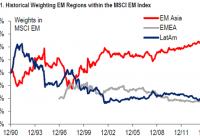
I sense a strong desire to buy LatAm given valuations. I would restrain that desire though. While Asia’s earnings are growing, LatAm’s are still in recession terrain. Investors are overweight LatAm over Asia still. A contrarian view will suit investors well. LatAm’s weighting has been reduced substantially among emerging markets to a low of 15% ( Figure 1 ). This is the lowest level since 1990. Some would suggest overweighting LatAm (NYSEARCA: ILF ) vs. Asia (NYSEARCA: GMF ). I disagree, and LatAm remains my largest underweight. (click to enlarge) The time for recovery will arrive for EMEA (NASDAQ: EEME ) and LatAm, but not yet (see figures 2 and 3). Earnings wise, LatAm and EMEA remain in recession. When you buy a stock, you end up buying an earnings story, not GDP. LatAm earnings are 47% below their pre-financial crisis high, and earnings in USD terms are lower than their financial crisis low. EMEA earnings in USD terms are above their financial crisis low but just barely. Only Asia earnings have continued making new highs. (click to enlarge) Source: Bloomberg Terminal Now, you might argue that a low base lends itself to a powerful rebound, however, as I will further explain, this is not the case. As you can see in Figure 4 , beneficiaries from commodity prices should experience a margin lift from lower input costs while LatAm should suffer from worsening terms of trade. Some countries in EMEA win and some lose, so it’s less clear there. Russia is a loser (NYSEARCA: RSX ). Turkey gains on trade, but loses on the capital account side (NYSEARCA: TUR ). And that leaves South Africa which benefits through the trade balance (NYSEARCA: EZA ). (click to enlarge) In LatAm, commodity income represents 30%, and 60% in EMEA. In Asia, commodities represent only 14% of net income and most of that comes from processors and not extractors. EPS revisions are improving in the case of Asia, but worsening in EMEA and LatAm. Investors should ideally like stocks and markets with improving EPS revisions and shun those with deteriorating conditions. Trailing price-to-earnings ratios for Asia are one standard deviation below average. For EMEA, this number stands at mean, and for LatAm, the P/E is one standard deviation above the mean. Implied EPS growth rate for Asia, EMEA and LatAm are 2.1%, 3.4% and 4.5%, respectively. This means that both EMEA and LatAm need to grow at higher rates in order to justify their valuations. The same story is echoed by the price-to-book. The only measure that would put LatAm on top is the CAPE, however, the CAPE is very dependent on past performance repeating itself in the future, and with low commodity prices, CAPE is a bit out of sync in my opinion. Lower commodity prices, as I mentioned, should hinder energy exporters while benefiting importers as terms of trade are improving for importer countries. Another factor is current account deficits. Mexico (NYSEARCA: EWW ) will most probably follow the Federal Reserve higher, and Brazil’s (NYSEARCA: EWZ ) rates should also increase. Normally, this wouldn’t impact emerging market equities as historically equities have increased after the first Fed rate hike, as a hike usually means growth is returning. However, current account deficits with higher interest rates are not an optimal combination, which should put a limit in stock market price appreciation. If you divide countries with current account surplus vis-a-vis deficit and evaluate how they’ve reacted after the hike, one can evidence a strong divergence between countries with different CA situations ( see Figure 5 ). Asia mostly maintains current account surpluses. This should help maintain Asian equities. (click to enlarge) Investors are still overweight LatAm over Asia based on 60 EM funds ( see Figure 6 ), and this should provide a buying opportunity. A time should arrive when being a contrarian will not be the way to go, however, that time is not here yet. (click to enlarge) I would personally use the SPDR S&P Emerging Asia Pacific ETF to invest in the region. The expense ratio is .49% and 1-year performance ending 01/31/15 was 18.77%. Here is a chart of LTM. A picture says more than a thousand words. GMF data by YCharts Disclosure: The author has no positions in any stocks mentioned, and no plans to initiate any positions within the next 72 hours. (More…) The author wrote this article themselves, and it expresses their own opinions. The author is not receiving compensation for it (other than from Seeking Alpha). The author has no business relationship with any company whose stock is mentioned in this article.