Tag Archives: function

EWM: Does This Former Tiger Economy Merit A Closer Look?
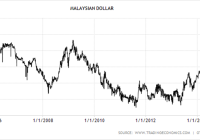
Summary Malaysia has steadily weaned itself off oil revenues and reduced the budget deficit by introducing new taxes and reducing subsidies. Despite high growth, 2.3% inflation and strong foreign currency reserves, the Malaysian dollar has weakened and is close to global financial-crisis lows. Expensive valuations, meager earnings growth and political instability do not provide many incentives to invest in EWM. With a GDP per capita of $12,127, Malaysia is the richest nation state in Southeast Asia. Many investors have avoided Malaysia due to political uncertainties and an over reliance on oil for government revenues. On March 2014, the judiciary found the opposition leader, Anwar Ibrahim, guilty of sodomy and jailed him for five years. While the political situation has not calmed since the verdict, Prime Minister Najib Razak has continued to liberalize the economy. Reforms As of 2015, Malaysia is the 14th most competitive economy in the world, ranked higher than countries like Australia, United Kingdom, South Korea and Japan. Subsidy reforms have not only improved competitiveness but have also bolstered the government’s balance sheet. In December 2014, the government ended all fuel subsidies, saving $5.97 billion annually . The minimum quota for Malay ownership in publicly traded companies has been lowered from 30 percent to 12.5 percent. Changing Economy Economic growth comes with problems as Malaysia’s attractiveness for lower-wage manufacturing has diminished as average wage levels have increased, making Malaysia an upper middle-income country. The government has championed efforts to become the world’s center of Islamic Finance, promoting an appreciation of the currency, even at the cost of exporters. As a result, Malaysia is the global leader in the sukuk (Islamic bond) market, issuing US$17.74 billion worth of sukuk in 2014 – over 66.7% of the global total of US$26.6 billion. Government Budget The Government is hugely reliant on Oil-based revenues from Petronas but has managed to diversify its income sources. While 30% of the government’s total revenue in 2014 still came from oil-based sources, the proportion is lower than 40% in 2009. To further reduce dependence on oil, the government implemented a 6% goods and services tax in April 2015. Due to such measures and a reduction in subsidies, the government debt to GDP ratio has returned to 2010 levels of 52.8%. Currency The Malaysian Dollar (also known as the Ringgit) has been subject to capital controls since September 1998, a consequence of the 1997 Asian financial crisis. The currency was pegged to the dollar at 3.80 from 1998 to 2005. Malaysia ended the peg on July 2005, but the currency is still a managed float, trading within ranges deemed acceptable by the national bank. The currency steady strengthened against the U.S. dollar until the 2013 taper tantrum. (click to enlarge) Despite the weaker currency, the economy has not been stronger since the financial crisis. The economy posted 6.0% GDP growth in 2014 and has averaged 2.3% inflation in the past five years. The benchmark interest rate of 3.25 is unchanged since September 2014, with only one rate hike in the past four years. However, the Current Account to GDP % has decreased from above 15% pre-financial crisis to just 5.7% in the past few years. This decline is unlikely to reverse course as Malaysians utilize their higher incomes to purchase imported goods. Still, the economy is likely to withstand a Fed tightening cycle with over $97 billion in foreign currency reserves . iShares MSCI Malaysia ETF ( EWM) Holdings (click to enlarge) The table above contains the top 16 components of EWM by weight. It should be noted that the numbers presented here, differs from data provided by iShares. While the discrepancy is partially due to the 28.4% weight I did not consider, I believe other factors are at play. For example, the WSJ and iShares disagree on the S&P P/E and dividend yield. The data in the above table was collected from malaysiastock.biz Financial stocks have the highest weight in the ETF at 31% and account for 3 of the top 4 holdings. There is also a divergence in growth between Public Bank ( OTC:PBLOF ) & Malayan Banking ( OTCPK:MLYBY ) vs CIMB ( OTCPK:CIMDF ) & AMMB ( OTC:AMMHF ). The former has enjoyed double digit revenue growth compared the latter at single digits and therefore commands a P/B premium. The utilities are not dividend paying income stocks; rather they are positioned for growth. Both Tenaga Nasional ( OTCPK:TNABY ) and Petronas Gas ( OTC:PNADF ) have dividend yields of 2%, below the 3% yield for the whole ETF. They tend to invest more of their earnings into projects which supply growing electricity demand. Tenaga appears to be the cheapest stock in the ETF but it is merely enjoying the drop in commodity prices last year. The telecoms and financial stocks pay the highest dividends and are the cheapest on a Price/Cash Flow basis. The only consumer staples stock and the only materials stock in the top 16 have negative revenue growth, showing how these sectors are struggling in every market. The stocks with the highest growth rates, the healthcare stock IHH ( OTCPK:IHHHF ) and the consumer discretionary stocks of Genting ( OTC:GEBEY ) also have higher P/E ratios than average. The ETF does not present a bargain in individual stocks or as a whole. The dividend yield is only 1% than yields on developed market stocks. 5yr CAGR growth rates at single digits suggests that there is not much growth to be had by investing in Malaysia. While the P/B and P/Cash Flow ratios seem cheap, it’s only due to the high weighting of financials in the ETF. Conclusion Investing in EWM over the iShares MSCI Emerging Markets ETF (NYSEARCA: EEM ) is not a value, growth or income proposition. While the reforms taken by Prime Minister Najib Razak are encouraging, the political scene remains frothy. An internal power struggle between the PM and his mentor has erupted and respected business leaders are openly criticizing government policies. A possible Fitch downgrade over the $11.5 Billion debt of 1Malaysia Development Berhad (1MDB), a state-owned investment company should also concern current EWM investors. While moves taken to reduce the budget deficit and reliance on oil are encouraging, it would be wiser to revisit the ETF after the Fed raises rates and the political situation improves. Editor’s Note: This article discusses one or more securities that do not trade on a major U.S. exchange. Please be aware of the risks associated with these stocks. Disclosure: I/we have no positions in any stocks mentioned, and no plans to initiate any positions within the next 72 hours. (More…) I wrote this article myself, and it expresses my own opinions. I am not receiving compensation for it (other than from Seeking Alpha). I have no business relationship with any company whose stock is mentioned in this article.
Do Hedge Fund ETFs Live Up To Their Hype?

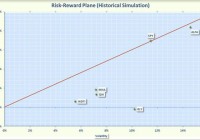
Summary Hedge fund ETFs provide a convenient way for retail investors to gain exposure to hedge fund strategies. Some, but not all, hedge fund ETFs were relatively uncorrelated with the S&P 500. Hedge fund ETF performances have been uneven, with some funds outperforming while others lagged. Hedge funds offer investors an alternative to traditional investment funds. Hedge funds can use leverage to increase returns and can also invest in a wide range of derivatives and short positions. Over the years some have scored phenomenal successes while others have suffered spectacular losses. Hedge funds are not currently regulated by the Securities and Exchange Commission (SEC) so only “accredited investors” can participate. Accredited investors must have a net worth of at least a million dollars or an income greater than $200,000 a year. Even if you meet the financial requirements, most funds charge a 2% management fee plus take 20% of the profits. These high charges are not for me so I looked for some alternatives to hedge funds among the plethora of Exchange Traded Funds (ETFs). The hedge fund ETF category includes funds with a variety of strategies including convertible arbitrage, managed futures, merger arbitrage, and tend following. Note that the ETFs in this category do not actually invest in hedge funds but instead try to replicate hedge fund performance. There are currently 22 ETFs in the hedge fund category but only five have assets over $100 million. These larger ETFs are summarized below. IQ Hedge Multi-Strategy Tracker ETF (NYSEARCA: QAI ). This ETF is based on techniques called “hedge fund replication” that try to reproduce hedge fund returns using a portfolio of conventional assets. The fund goes long or short other ETFs in an attempt to replicate the risk-adjusted performance of a mix of hedge funds. QAI uses a rules based momentum strategy to decide which assets to buy or short. The portfolio can change monthly depending on the economic environment but generally this fund maintains a large net long allocation to bonds, which can be rotated among Treasuries, corporate bonds, floating rates, high yield, and convertible bonds. The fund also invests in equities, currencies, commodities, and REITs. The effective duration of the bond portion of the portfolio is a little over 4 years. The fund has an expense ratio of 0.91% and yields 1.3%. This is the largest hedge fund ETF with an asset base of over $1 billion and a daily average volume of more than 180,000 shares. IQ ARB Merger Arbitrage ETF (NYSEARCA: MNA ). This ETF invests in global companies where there has been an announcement of an imminent merger or takeover. Merger arbitrage attempts to capture the difference between the current price of the takeover target and the final price. This is a market neutral strategy that has typically been relatively low risk. The fund currently has 58 holdings with 45% in US stocks, 15% in non-US stocks, and 40% in cash. The expense ratio is 0.76% and the fund does not generate any yield. The daily volume averages only 23,000 shares so limit orders should be used when buying or selling this fund. WisdomTree Managed Futures Strategy ETF (NYSEARCA: WDTI ). This actively managed WisdomTree ETF provides returns based on the Diversified Trend Indicator (DTI). DTI is a trend following, quantitative strategy developed by Victor Sperandeo (also known as “Trader Vic”). The DTI is used to go long or short futures associated with 24 components in 18 sectors. The futures cover a wide range of the liquid future markets including currencies (50%), energy (19%), livestock (5%), precious metals (5%), industrial metals (5%), and agriculture (16%). The fund is rebalanced monthly. The expense ratio is 0.95% and the fund does not have any yield. The daily volume averages only 34,000 shares per day so limit orders should be used when buying or selling this fund. AlphaClone Alternative Alpha ETF (NYSEARCA: ALFA ). This ETF invest in the securities that are widely held by hedge funds and institutional investors. This strategy is possible because hedge funds that manage more than $100 million must periodically disclose their equity holdings. The selection of the securities is based on a proprietary index methodology. The portfolio is also risk-managed and can vary from long-only to a heavily hedged position. The portfolio currently consists of 74 holdings with 83% from the US and 17% international. The sector breakdown includes 24% technology, 20% health care, 14% consumer staples, and 14% industrials. The expense ratio is 0.95% and the fund yields less than 1%. The daily volume averages only 22,000 shares so limit orders should be used when buying or selling this fund. SPDR Multi Asset Allocation ETF (NYSEARCA: RLY ). This is an actively managed ETF that is focused on securities that traditionally provide good inflation hedges. The portfolio consists of 12 ETFs, with a focus on inflation-linked bonds (19%), commodities (17%), REITs (20%), and natural resource companies (38%). The fund has an expense ratio of 0.70% and yields 2.3%. The daily volume is extremely small with an averages of only 5,000 shares so limit orders should be used when buying or selling this fund. For reference I also included the following funds in the analysis: SPDR S&P 500 Trust ETF (NYSEARCA: SPY ). This ETF tracks the S&P 500 index and has an ultra-low expense ratio of 0.09%. It yields 1.9%. SPY will be used to compare the performance of the hedge fund ETFs to the broad stock market. To assess the performance of the hedge fund ETFs, I plotted the annualized rate of return in excess of the risk free rate (called Excess Mu in the charts) versus the volatility for each of the funds. I used 1% as an estimate for the risk-free rate. I would have liked to see how these ETFs performed during the 2008 bear market but the oldest fund was not launched until 2009. Most of the other funds only have a 3 year history so I used a 3 year look-back period from June, 2012 to June, 2015. The Smartfolio 3 program was used to generate the plot shown in Figure 1. (click to enlarge) Figure 1. Risk versus reward over past 3 years Figure 1 illustrates that the hedge fund ETFs have had a large range of returns and volatilities. To better assess the relative performance of these funds, I calculated the Sharpe Ratio. The Sharpe Ratio is a metric, developed by Nobel laureate William Sharpe that measures risk-adjusted performance. It is calculated as the ratio of the excess return over the volatility. This reward-to-risk ratio (assuming that risk is measured by volatility) is a good way to compare peers to assess if higher returns are due to superior investment performance or from taking additional risk. In Figure 1, I plotted a red line that represents the Sharpe Ratio associated with SPY. If an asset is above the line, it has a higher Sharpe Ratio than SPY. Conversely, if an asset is below the line, the reward-to-risk is worse than SPY. Some interesting observations are evident from the figure. With the exception of ALFA, these funds were significantly less volatile than the S&P 500. However, this decrease in volatility was accompanied by an even larger decrease in return. Therefore, with the exception of ALFA, SPY easily outperformed these hedge funds on a risk-adjusted basis. ALFA was the best performer among all the hedge fund ETFs (on both an absolute and risk-adjusted basis). This is not too surprising since piggybacking on the equity portfolio of hedge funds would be expected to perform well in a bull market. However, ALFA was very volatile and slightly under-performed SPY on a risk-adjusted basis. RLY was the worst performer. Again, this was not surprising since inflation has been tame and precious metals have been in a bear market. WDTI had the lowest volatility but also a relatively low return that only beat RLY. Even though MNA and QAI employed different strategies, they booked similar risk-adjusted returns. One of the advertised advantages of hedge funds is the low correlation with the stock market. To assess the validity of this claim, I calculated the pair-wise correlations between the funds. The results are shown as a correlation matrix in Figure 2. The symbols for the funds are listed in the first column and along the top of the figure. The number at the intersection of the row and column is the correlation between the two assets. For example, if you follow WDTI to the right for two columns you will see that the intersection with MNA is 0.004. This indicates that, over the past 3 years, WDTI and MNA were only 0.4% correlated. Note that all assets are 100% correlated with themselves so the values along the diagonal of the matrix are all ones. Figure 2. Correlation matrix over past 3 years The figure illustrates that, with the exception of ALFA, hedge funds provide good diversification relative to the overall stock market. As you might expect, ALFA is highly correlated with SPY since the portfolio of ALFA consists of popular stocks from the S&P 500. The managed futures fund, WDTI, is basically uncorrelated with all the other funds so it provides excellent diversification. The other ETFs (MNA, QAI, and RLY) are only moderately correlated with each other and the stock market.. For my last analysis, I reduced the look-back period to 12 months. The results are shown in Figure 3. What a difference a couple of years make. During this period, both WDTI and MNA performed well and had essentially the same risk-adjusted return as the overall stock market. ALFA again was the best performer and actually beat out the S&P 500 on both an absolute and risk-adjusted basis. RLY as again the worst performer, sinking well below the zero line. (click to enlarge) Figure 3. Risk versus reward over past 12 months. Bottom Line Hedge fund ETFs cannot all be lumped together and some lived up to their hype while other did not. ALFA was by far the best performer but it is highly correlated with the S&P 500. If you are looking for a hedge against a stock market correction, I would not use ALFA. However, if you are risk tolerant and want exposure to the overall market, ALFA is worth consideration. As a hedge, I like WDTI and MNA. These are low volatility funds, have a reasonable return, and are relatively uncorrelated with the stock market. In a bull market, these funds will lag but I do think they have lived up to their reputation as a vehicle to hedge the market. Unfortunately, the most popular fund, QAI, has not lived up to its hype. RLY may do well in the future but until inflation increases, I would avoid this fund. Disclosure: I/we have no positions in any stocks mentioned, and no plans to initiate any positions within the next 72 hours. (More…) I wrote this article myself, and it expresses my own opinions. I am not receiving compensation for it (other than from Seeking Alpha). I have no business relationship with any company whose stock is mentioned in this article.

You Could Short China At This Point, But It’s Not For The Fainthearted

Chinese stock markets could be set to fall by 50 percent. Given concerns of a stock market bubble in China, I take a bearish view on Chinese equities at this point in time. The ProShares Short FTSE China 50 ETF could potentially provide an opportunity to take advantage of a downturn. However, this strategy carries high risk given the degree of volatility inherent in Chinese stock markets. Once a booming economy at which a growth rate of below 8 percent annually was unheard of, things have certainly been changing for China in the past five years. Stock markets in China have certainly seen periods of abnormally high returns. However, such returns have come with significant volatility and sustained growth has remained elusive. For instance, the Shanghai Composite Index (000001.SS) has seen significantly high returns in the past year, up over 100 percent from the beginning of 2014 to May of this year. However, the trend now appears to be reversing, with the index having lost as much as 12 percent since the beginning of June, along with various experts predicting that the index could in fact fall by 50 percent. While I had previously commended China’s rise in stock prices and was optimistic on its continuation, I am less so in light of the recent volatility. Firstly, high stock market returns have not been matched by correspondingly high growth. China’s stock markets appear to have been taking a similar course as that of Europe, where quantitative easing and lower interest rates have forced investors to seek higher returns in the stock market. Moreover, this situation is being exacerbated in China given that returns from the property sector have been significantly lower than in previous years. In this context, I take a bearish view on China at this point in time. Given the historical nature of volatility across Chinese stock markets, the market appears to be at a significant risk of correction. This is especially possible given that stock returns are increasingly being driven by margin; i.e. investors are now borrowing to fund their positions. Should contagion develop in China and investors pull out their funds, then it is quite conceivable that a 50 percent drop would be possible under such circumstances. While a 50 percent drop seems rather drastic, it would not be that unusual when taking into account that the Shanghai Composite has already appreciated by over 100 percent in the past year. Moreover, China’s stock markets have precedent for demonstrating that they are not immune to contagion, with the Shanghai Composite having dropped almost 60 percent between 2007-08 in spite of higher economic growth rates above 8 percent at the time. Additionally, with China trading at a cyclically-adjusted price-earnings ratio of 20.5, this is significantly higher than the overall emerging markets ratio of 16.5. In this regard, China’s stock markets are likely overvalued and could be due for a pullback. While China’s quantitative easing has spurred increased investment in the stock market due to lower borrowing costs, this is unsustainable and there is always a risk of a sharp pullback in response to a rise in US interest rates, as investors seek more stable returns elsewhere. For investors wishing to take advantage of a specific short position on Chinese stock markets, one way of doing so is through the ProShares Short FTSE China 50 (NYSEARCA: YXI ), which has returned over 7 percent since the beginning of May. This ETF corresponds to the inverse of the FTSE/Xinhua China 50 Index and has succeeded in capturing a broad downturn in the Chinese market over the past two months. However, a significant risk remains in that investors would likely have to time the trade very well; returns on the ETF as a whole have been negative. Moreover, 5 of the 10 largest companies on the index originate from the financial sector. In this regard, it is likely that stock performance would move down in response to a broader economic downturn in China. However, with Chinese banks gaining traction internationally, it could be the case that this in fact lifts stock market performance higher. To conclude, I take an overall bearish view on the Chinese stock market at this point and a short opportunity likely exists. However, investors would likely endure significant volatility in doing so which would make this quite a risky trade. Disclaimer: Investing in emerging markets carries a high degree of volatility and as such, the above strategy is not recommended for conservative investors. Disclosure: I/we have no positions in any stocks mentioned, and no plans to initiate any positions within the next 72 hours. (More…) I wrote this article myself, and it expresses my own opinions. I am not receiving compensation for it (other than from Seeking Alpha). I have no business relationship with any company whose stock is mentioned in this article.