Tag Archives: undefined

MDY’s 2015 2nd-Quarter Performance And Seasonality
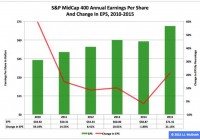
Summary The SPDR S&P MidCap 400 ETF in the first half ranked No. 1 among the three most popular exchange-traded funds based on the S&P Composite 1500’s constituent indexes. In the second quarter, the ETF’s adjusted closing daily share price dipped by -1.12 percent. And in June, the fund’s share price dropped by -1.28 percent. The SPDR S&P MidCap 400 ETF (NYSEARCA: MDY ) during 2015’s first half was first by return among the three most popular ETFs based on the S&P Composite 1500’s constituent indexes: It expanded to $273.24 from $262.52, an increase of $10.72, or 4.08 percent. Over the same period, MDY behaved better than the iShares Core S&P Small-Cap ETF (NYSEARCA: IJR ) by 6 basis points and the SPDR S&P 500 ETF (NYSEARCA: SPY ) by 2.91 percentage points. In contrast, MDY last quarter performed worse than SPY and IJR by -1.34 and -1.29 percentage points, in that order. Most recently, MDY last month lagged IJR by -2.34 percentage points and led SPY by 73 basis points. Comparisons of changes by percentages in SPY, MDY, IJR, the small-capitalization iShares Russell 2000 ETF (NYSEARCA: IWM ) and the large-cap PowerShares QQQ (NASDAQ: QQQ ) during the first half, over Q2 and in June can be found in charts published in “SPY’s 2015 2nd-Quarter Performance And Seasonality.” Figure 1: S&P 400 EPS , 2010-2014 Actual And 2015 Projected (click to enlarge) Notes: (1) Estimates are employed for the 2015 data. (2) The EPS scale is on the left, and the change-in-EPS scale is on the right. Source: This J.J.’s Risky Business chart is based on analyses of data in the S&P 500 Earnings and Estimate Report released June 30. MDY may have behaved OK in the first half, but the ETF might have a hard time performing OK in the second half. As Howard Silverblatt, senior index analyst at S&P Dow Jones Indices, indicated in the S&P 500 Earnings and Estimate Report series this year, the analysts’ average earnings-per-share estimate for the S&P 400 index underlying MDY for 2015 slipped to $71.31 June 30 from $75.06 March 26 (Figure 1). And I believe this EPS estimate continues to be highly unrealistic, as it would require growth of 21.13 percent over last year. As a result, I think there will be more downward revisions in this estimate, which collectively will not constitute an MDY tailwind. Figure 2: MDY Monthly Change, 2015 Vs. 1996-2014 Mean (click to enlarge) Source: This J.J.’s Risky Business chart is based on analyses of adjusted closing monthly share prices at Yahoo Finance . MDY behaved worse in the first half of this year than it did during the comparable periods in its initial 19 full years of existence based on the monthly means calculated by employing data associated with that historical time frame (Figure 2). The same data set shows the average year’s strongest quarter was the fourth, with an absolutely large positive return, and its weakest quarter was the third, with an absolutely small negative return. Figure 3: MDY Monthly Change, 2015 Vs. 1996-2014 Median (click to enlarge) Source: This J.J.’s Risky Business chart is based on analyses of adjusted closing monthly share prices at Yahoo Finance. MDY also performed worse in the first half of this year than it did during the comparable periods in its initial 19 full years of existence based on the monthly medians calculated by using data associated with that historical time frame (Figure 3). The same data set shows the average year’s strongest quarter was the fourth, with an absolutely large positive return, and its weakest quarter was the third, with an absolutely small negative return. Disclaimer: The opinions expressed herein by the author do not constitute an investment recommendation, and they are unsuitable for employment in the making of investment decisions. The opinions expressed herein address only certain aspects of potential investment in any securities and cannot substitute for comprehensive investment analysis. The opinions expressed herein are based on an incomplete set of information, illustrative in nature, and limited in scope. In addition, the opinions expressed herein reflect the author’s best judgment as of the date of publication, and they are subject to change without notice. Disclosure: I/we have no positions in any stocks mentioned, and no plans to initiate any positions within the next 72 hours. (More…) I wrote this article myself, and it expresses my own opinions. I am not receiving compensation for it (other than from Seeking Alpha). I have no business relationship with any company whose stock is mentioned in this article.
Exelon Cements Credentials As A Long-Term Stock

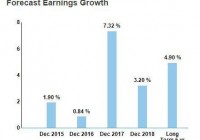
Summary Growth investments directed at improving generational assets and growing regulated asset base will ensure rate base growth and earnings stability for the company in the long run. Recent POM acquisition approval is signaling that EXC’s regulated EPS growth will improve in coming quarters. Future cash flows remain strong due to EXC’s efforts to have a large, regulated asset base. I reiterate my bullish stance on Exelon Corporation (NYSE: EXC ); the company is making good progress on its plan to have an extended regulated asset base through acquisitions and investments. EXC’s ongoing capital investments in several infrastructure development projects will add value to shareholder wealth, which will portend well for the stock price. Moreover, the company’s nuclear operation divesture plan is still under consideration; the plan, if approved, will strengthen EXC’s competitive position in the long run. The company’s rapidly growing regulated asset base provides a foundation for stable earnings and cash flow base, which will support dividend growth in future years. EXC currently offers an attractive dividend yield of 3.9%. Attractive Long-Term Growth Path Since the start of 2015, the volatile interest rate environment has weighed on utility stocks, and the utility sector underperformed the broad market in 1H’15. Owing to improving economic conditions in the U.S., the Fed is likely to increase short-term interest rates in 2H’15, which will put pressure on the stock prices of utility companies, including EXC. Despite the fear of a rise in interest rates, I believe EXC’s performance in the coming quarters will stay strong, mainly supported by the correct strategic efforts of the company. EXC, along with other utility companies in the industry, including American Electric Power (NYSE: AEP ) and PPL Corp. (NYSE: PPL ), have a robust capital spending outlook, which will support earnings growth in the next five years. EXC is following the industry norm by making hefty growth investments and acquisitions in regulated business to secure its long-term growth. During 2014, EXC spent almost $1.78 billion on several infrastructural growth-related projects, up 46.6% year-over-year. As per its recent sustainability report, the company has invested around $3.1 billion for electric and gas utility infrastructure, which includes a $500 million investment in the installation of smart meter technology during 2015. I believe the company’s recent approach to provide safe and reliable energy is bringing convenience for customers in a way that creates value for it over the long term. Another important area of investment has been EXC’s increased focus on improving its power generation capacity through the expansion and improvement of the gas business. In this regard, the company’s previously acquired 6 natural gas power plants in Maryland have started operations from June 28. The 128MW power plants will benefit EXC by improving its natural gas production capacity in the Maryland state and will ultimately add towards its rate base growth and positively affect the stock price. Moreover, the company has recently received approval for the much-awaited PEPCO Holdings (NYSE: POM ) merger from the Delaware Public Service Commission (PSC); the $6.8 billion merger is expected to complete in 2H’15, which will strengthen the company’s regulated operations and will positively affect the stock price. The upside of this merger rests in improving the EXC business and financial risk profile, as its regulated operations will increase; the company’s management expects that the merger will add nearly 15 cents-to-20 cents to EXC’s EPS during the first full year of operation. In fact, a rate base of nearly $26 billion has been projected for the combined entity, which indicates significant upside for its future ROE and cash flows. Moving ahead, under its plan of making strategic investments in diversifying the power generation portfolio, the company is planning to spend around $16 billion over the next five years, which I believe will enhance EXC’s future financial performance. On the other side, the company’s plan to shut down its loss making, Illinois-based 6 out of 11 nuclear power plants is still on hold. Recently, five of these nuclear units have failed to clear PJM’s base residual auction; despite the inability of its nuclear units to qualify for the PJM rate base auction, analysts are hoping that EXC will generate $150 million more in capacity revenue during 2017-2018 than it would have attained if all of its capacity had cleared the auction. However, the failure to qualify for the PJM auction has strengthened the company’s case before legislatures to shut down the nuclear plants. So, either the FERC should support them or LCPS standards should be changed to support its nuclear operations. While EXC is still in talks with the FERC to lower LCPS standards, I continue to believe that the closure of nuclear power plants is positively affecting the company’s performance in the long term, and will allow the company to focus more on stable regulated operations. EXC has an attractive dividend payment plan, which is strongly backed by its healthy cash flow base. Thus far, its healthy dividend payments have earned the company a decent dividend yield of 3.9% and a modest payout ratio of 48% , which indicates that there is significant room left for further dividend hikes, if the company opts to increase the payout ratio. Given EXC’s strong commitment to having a large, regulated asset base, I continue to believe in the security and sustainability of EXC’s future cash flow base, which ensures dividend stability and dividend growth in the years ahead. I recommend investors to keep track of the upcoming 2Q’15 earnings, as the company will provide an update on its capital expenditure outlook and will discuss its plans to increase regulated operations, which could have a significant impact on the stock price. According to the company’s guidance, EXC is expected to report EPS in a range of $0.45-$0.55 for Q2’15. In contrast, analysts are anticipating EPS of $0.51 for 2Q’15. The following table shows analysts; EPS forecast for EXC’s 2Q’15. Consensus EPS Forecast Low EPS Forecast High EPS Forecast 2Q’15 $0.51 $0.48 $0.55 Source: Nasdaq.com Risks The company continues to face operational and financial risk from its nuclear energy generation assets. Moreover, uncertainty about regulatory rate approvals, changes in national energy demand, stringent environmental standards and unforeseen negative economic changes are key risks that might hamper EXC’s future stock price performance. Conclusion I am bullish on EXC and believe the company will deliver a healthy performance in the long term. The company’s growth investments directed at improving its generational assets and growing its regulated asset base will ensure rate base growth and earnings stability in the long run. Furthermore, the recent POM acquisition approval is signaling that EXC’s regulated EPS growth will improve in the coming quarters. Moreover, the company’s future cash flows remain strong due to its efforts to have a large, regulated asset base, which will support dividend growth and make dividends more stable. Analysts have also projected a healthy next five-years earnings growth of 4.9% for EXC, as shown below in the chart. Source: Nasdaq.com Disclosure: I/we have no positions in any stocks mentioned, and no plans to initiate any positions within the next 72 hours. (More…) I wrote this article myself, and it expresses my own opinions. I am not receiving compensation for it (other than from Seeking Alpha). I have no business relationship with any company whose stock is mentioned in this article.

ALLETE, Inc: Diversified Utility Seeking New Growth Areas

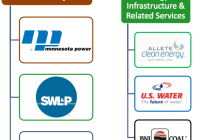
Summary The company just acquired another new wind facility. The company acquired U.S. water earlier in the year which will drive sales growth. 88% of revenue comes from its regulated utility side. It doesn’t get much more boring than ALLETE, Inc (NYSE: ALE ). The diversified utility based in Minnesota is pretty predictable considering 88% of its revenue is from its regulated utilities. It has been seeking new growth areas as of late. It has taken several steps to aid growth that look quite promising. This new diversification, a solid regulated business, and attractive dividend make ALLETE a great long-term pick in the utilities sector. Stepping back and looking at the company as a whole it is easy to see that it is a very diversified utility. Although it generates 88% of its revenue through its regulated business it also has several other segments. Below is the breakdown of the company’s holdings. (Source: ALLETE ) The regulated business has helped the company achieve steady growth over the past couple of years. This is illustrated by the fact that between 2010 and 2014 earnings grew at a compounded annual rate of 6.7%. All the while the company has been diversifying its portfolio. Through the small reoccurring growth in its regulated business and the higher growth possibilities in its other segments the company is forecasting annual EPS growth of 5% for the next couple of years. Along with this it also expresses that it will keep its dividend competitive and growing. Currently the shares sport a 4.3% yield making it very attractive to dividend investors. Specifically there are two areas which should take the company’s growth to the next level. Below I outline what the company is doing in terms of growing its portfolio and diversifying its business. U.S. Water The best example of the company further diversifying its portfolio is when earlier this year it aquired U.S Water. U.S Water is a integrated water management company that provides solutions to many industrial and commercial clients. The company serves clients nationwide and serves many Fortune 500 companies. (Source: ALLETE ) It has increased its customer base from 2,141 in 2011 to over 3,600 in 2014. It also has an excellent track record of retaining these customers with over 90% of customer being retained. In 2014 U.S Water did $120M in sales which the company forecasts will increase between 10-15% annually over the next few years. Considering ALLETE only has revenue of $1.16B in 2014 this is a very significant addition to the business. On top of that growing it at 15% would mean the company expects it to be pulling in nearly $160M by the end of 2016. U.S. Water continues to retain clients and add reoccurring revenue which compliments the regulated part of ALLETE’s business well. ALLETE Clean Energy Renewable energy has become even more popular in recent years as well as more economical. ALLETE has been expanding its clean energy business as it attempts to make its business more diversified and less reliant on fossil fuels. Over the past year it has increasingly built up its presence in this area, particularly in wind generation. This past November the company agreed to actually develop a wind farm for Montana-Dakota Utilities, which is a division of MDU Resources Group (NYSE: MDU ). In the agreement it will end up selling the wind farm to MDU for $200M. While I couldn’t locate the exact amount of capital the company will need to put into the development it did make it clear in the quarter one confrence call that it will have an effect on earnings. It should be noted that the effect of these earnings have not been factored into the earnings guidance the company has given thus far. Other than developing wind farms it has also been acquiring them for its own portfolio. Below are the wind farm aquistions the company has completed over the past couple of months. In December closed a deal to acquire 108 MW facility in Iowa. In January closed a deal to acquire 3 wind farms in 3 different states from AES Corp. (NYSE: AES ). In April closed a deal to acquire 98 MW facility from EDF Renewable. In June closed another deal with AES to acquire 101 MW facility in Pennsylvania. With the latest acquisition the company now has over 500 MW of wind generation in operation. Seeing as it has acquired majority of these this year it should be interesting to see the company grow this business in the next couple of years. In the conference call the company touched upon that it will also see positive effects for the year from these clean energy acquisitions. However, it expects its gains in this area to only offset the losses from the steel industry dynamics that face its Minnesota Power business. Conclusion ALLETE is further diversifying its portfolio to seek new areas of growth. Although it has yet to see positive effects from the newest acquisitions it should start to see them as the year progresses. With these new growth opportunities as well as an extremely strong regulated business to lean on it expects to deliver 5% earnings growth over the next couple of years. This should translate into further dividend growth adding attractiveness to the already high yield of 4.3%. I think as a long-term play ALLETE is making the right moves making itself more diversified and seeking new growth areas. Disclosure: I am/we are long AES. (More…) I wrote this article myself, and it expresses my own opinions. I am not receiving compensation for it (other than from Seeking Alpha). I have no business relationship with any company whose stock is mentioned in this article. Additional disclosure: Always do your own research before investing.