Tag Archives: seeking-alpha

What To Find Before Seeking Alpha: Minimum Volatility Domestic Equity Allocation
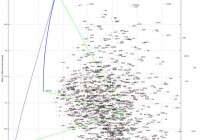
Summary Minimum volatility strategies have outperformed in the U.S. markets. A minimum volatility portfolio may make a good “skeleton” for a concentrated equity allocation. USMV appears to be a good implementation of the strategy. In my last article , we looked at several types of portfolios for U.S. domestic equity. We saw that broad-based static allocations limit alpha , and tend to track the wider market in terms of returns. Nevertheless, we did see that momentum-value, minimum variance, as well as stock-based portfolio with slack had an edge over the market portfolio (as proxied by the Vanguard Total Stock Market ETF (NYSEARCA: VTI )) in terms of returns, inverse beta, drawdown, and mean-variance efficiency. The minimum variance strategy, as proxied by the iShares MSCI USA Minimum Volatility ETF (NYSEARCA: USMV ), scored especially well. We also saw how some allocation slack in the concentrated stock portfolio allows investors to potentially capture some alpha . In this article, we expand on the minimum variance strategy within the context of U.S. domestic equity, but extend the strategy to small-cap stocks in a more concentrated stock portfolio, which should be more conducive to generating potential alpha whilst maintaining some of the structure of a quantitative strategy. Data and Methods The S&P 1500 stocks were assembled from State Street’s SPDR S&P 500 Trust (NYSEARCA: SPY ), SPDR S&P MidCap 400 Trust (NYSEARCA: MDY ), SPDR S&P 600 Small Cap (NYSEARCA: SLY ) ETFs holdings disclosures. The S&P 1500 was chosen because it’s both familiar and covers most of the market; it also weeds out many less investable parts of the market by using liquidity, float, and financial considerations. The price and return data then were obtained from the data facility of Yahoo! Finance. Only stocks with about 7.5 years of history were retained so as to include the financial crisis in 2008. This full sample requirement was to make the estimates more comparable, and left 1348 equities. The market benchmark portfolio, as proxied by VTI, was calculated for the same period, along with the ETF implementation of the strategy, USMV. The continuous logged total returns for the portfolios are computed from their split and volume-adjusted prices using the quantmod package for R . The dividends are accrued daily over the observed period. The daily return and standard deviation statistics are then made monthly using 21 trading days. The 1-year forward earnings estimates stem from Thomson Reuters fundamentals; a few missing estimates were complemented with either numbers from Yahoo or last year’s earnings. The real risk-free rate is assumed to be 1.62% comparable to some margin rates offered. The data were then imported into MATLAB in order to use the well-documented financial toolbox (The same exercise is possible in R, just much less comfortable). The minimum-variance portfolio from the sample is then computed using quadratic programming, no short-selling, no leverage, and constrained to ensure that no fewer than 10 stocks are chosen. Figure 1 gives an overview of both the assets and the minimum variance portfolio, visible in green at the nadir of the blue radial curve. Green lines emanate from the market portfolio, VTI, to the risk-free rate, minimum variance, and the mean-variance efficient portfolios. (click to enlarge) Figure 1: Risk vs. Return Efficiency Frontier for S&P 1500 Figure 1 reveals that the minimum variance portfolio has vastly outperformed the market in the last 8 years as evidenced by the upward sloping angle that connects its risk/return with that of the market portfolio in the swarm of assets. One might expect that the performance ought to be below that of the market return and above that of the risk-free rate, i.e. somewhere near the lower line segment that connects the risk-free rate with the market return where the equal weighted portfolio now lies (green point). I’m not versed in the financial literature on volatility, but I am skeptical whether such outperformance can continue – my pet theory is that the phenomenon is attributable to an uncompetitive bond market. Central banks have artificially lowered the discount rate by about half since the beginning of this sample period. This would approximately double the discounted present value of the company even with static earnings. Since the market return of 8.4% is essentially in line with historical averages (7-10% depending on the period and methods), I thus also suspect the momentum has drawn in participants from the other more volatile segments of the market. Beyond my empirical musings, many of you are most likely interested in the component stocks. Table 1 compares the holdings of the solution with those of the USMV. Note that the weights do not quite tally to 100% as many of the miniscule positions (i.e. < 0.5%) were omitted. Table 1 shows the weights of the solution compared with the USMV ETF. Table 1: Large/mid-Cap Minimum Volatility Portfolio (S&P1500) Symbol Company Index Index Weight Sector MinVol{SP1500} Weights USMV Weights Ratio of Portfolio Weights FW Earnings Yield JNJ Johnson & Johnson SP500 1.62% Health Care 5.1% 1.4% 3.63 5.8% PEP PepsiCo Inc. SP500 0.79% Consumer Staples 2.8% 1.4% 1.97 5.0% WMT Wal-Mart Stores Inc. SP500 0.76% Consumer Staples 5.3% 1.5% 3.47 5.9% MO Altria Group Inc. SP500 0.54% Consumer Staples 2.0% 0.8% 2.51 5.5% MCD McDonald's Corporation SP500 0.50% Consumer Discretionary 5.2% 1.4% 3.64 5.8% SO Southern Company SP500 0.25% Utilities 10.0% 1.4% 7.30 6.0% GIS General Mills Inc. SP500 0.18% Consumer Staples 10.0% 1.3% 7.67 5.2% BDX Becton Dickinson and Company SP500 0.15% Health Care 1.8% 1.6% 1.11 4.8% ED Consolidated Edison Inc. SP500 0.11% Utilities 6.9% 1.3% 5.45 6.0% CAG ConAgra Foods Inc. SP500 0.08% Consumer Staples 5.5% 0.0% - 6.3% DLTR Dollar Tree Inc. SP500 0.08% Consumer Discretionary 0.9% 0.2% 3.83 4.5% BCR C. R. Bard Inc. SP500 0.07% Health Care 3.2% 0.7% 4.81 5.4% CLX Clorox Company SP500 0.07% Consumer Staples 8.5% 0.3% 25.13 4.3% LH Laboratory Corporation of America Holdings SP500 0.05% Health Care 1.4% 0.5% 2.61 6.8% CPB Campbell Soup Company SP500 0.04% Consumer Staples 1.9% 0.3% 7.73 5.5% HRL Hormel Foods Corporation SP500 0.04% Consumer Staples 8.6% 0.3% 29.85 4.8% CHD Church & Dwight Co. Inc. SP400 0.65% Consumer Staples 5.4% 0.6% 8.59 4.2% AJG Arthur J. Gallagher & Co. SP400 0.47% Financials 1.7% 0.0% - 5.9% RGLD Royal Gold Inc. SP400 0.27% Materials 3.0% 0.0% - 2.0% TECH Bio-Techne Corporation SP400 0.21% Health Care 0.9% 0.0% - 4.2% LDOS Leidos Holdings Inc. SP400 0.16% Information Technology 1.5% 0.0% - 5.9% FCN FTI Consulting Inc. SP400 0.10% Industrials 1.9% 0.0% - 5.3% BOFI BofI HOLDING INC. SP600 0.15% Financials 2.8% - - 6.1% HSTM HealthStream Inc. SP600 0.09% Health Care 1.1% - - 1.5% SENEA Seneca Foods Corporation Class A SP600 0.03% Consumer Staples 1.8% - - 4.7% Expected Earnings Yield: 5.2% As expected, the resultant portfolio has many of the same members as USMV. It is, however, much more focused than USMV, which operates under several other sector and weight constraints. Nevertheless, this tighter collection of stocks would be more manageable for an individual investor's portfolio. The stocks are not exactly cheap trading at 19.23x forward earnings vs. about 14.67 historical average for the S&P 500. Including the small-caps does reveal some interesting small-caps like Leidos, which is a specialized IT outfit with government contracts, or Royal Gold, which owns a variety of stakes in precious metals. The latter has an interesting business model that assembles cash-flow stakes in precious metal interests, but is not exposed to the operational risk like a miner would be. In this sense, the minimum volatility portfolio solution might help to identify unique stocks that might otherwise pass through a standard stock screen. I suspect that many of you may already have either large-cap funds or stocks within your portfolio, so I performed the same exercise by looking at just the S&P 1000, which would complement those putative holdings. Figure 2 reveals that limiting the equity space reduces the efficiency of the portfolio as evidenced by the frontier shifting right in the (horizontal) risk space, and down in the (vertical) return space. The magenta line connects the moments of the S&P 1000 volatility portfolio to those of the market portfolio. The orange dotted line is a regression of risk, as measured by the annualized standard deviation of returns, versus annualized total returns; the negative slope counter-intuitively is telling us that more risk equates to fewer returns in the recent equity market. (click to enlarge) Figure 2: Minimum Volatility Portfolios and Risk versus Return Table 2 displays the weights and holdings of that minimum variance portfolio, we see a fair amount of overlap in the portfolios with health care, staples, and utilities playing a large role. Interestingly, we see a few more of the pro-cyclical industrials, financials, and technology firms represented. As prime example, Synopsys is a small engineering and development outfit that looks like an interesting, reasonably priced tech-play if U.S. capital expenditures pick up. Table 2: Mid/Small-cap Minimum Volatility Portfolio (S&P1000) Symbol Company Index Index Weight Sector MinVol{SP1000} Weights FW Earnings Yield CHD Church & Dwight Co. Inc. SP400 0.65% Consumer Staples 10.00% 4.2% AJG Arthur J. Gallagher & Co. SP400 0.47% Financials 7.55% 5.9% SNPS Synopsys Inc. SP400 0.41% Information Technology 2.01% 6.2% UTHR United Therapeutics Corporation SP400 0.37% Health Care 1.41% 6.9% ATO Atmos Energy Corporation SP400 0.34% Utilities 4.34% 5.5% WCN Waste Connections Inc. SP400 0.34% Industrials 1.46% 4.6% GXP Great Plains Energy Incorporated SP400 0.27% Utilities 2.85% 6.2% RGLD Royal Gold Inc. SP400 0.27% Materials 4.33% 2.0% CPRT Copart Inc. SP400 0.26% Industrials 0.56% 4.7% ATK Alliant Techsystems Inc. SP400 0.23% Industrials 2.00% 10.4% RNR RenaissanceRe Holdings Ltd. SP400 0.23% Financials 3.50% 8.8% VVC Vectren Corporation SP400 0.23% Utilities 0.54% 5.5% FLO Flowers Foods Inc. SP400 0.22% Consumer Staples 5.90% 5.1% THS TreeHouse Foods Inc. SP400 0.22% Consumer Staples 6.35% 5.1% TECH Bio-Techne Corporation SP400 0.21% Health Care 8.57% 4.2% HE Hawaiian Electric Industries Inc. SP400 0.21% Utilities 10.00% 5.1% LDOS Leidos Holdings Inc. SP400 0.16% Information Technology 6.52% 5.9% FCN FTI Consulting Inc. SP400 0.10% Industrials 3.00% 5.3% HAE Haemonetics Corporation SP600 0.28% Health Care 4.81% 4.9% MGLN Magellan Health Inc. SP600 0.24% Health Care 2.20% 3.9% ICUI ICU Medical Inc. SP600 0.16% Health Care 0.79% 3.3% BOFI BofI HOLDING INC. SP600 0.15% Financials 3.68% 6.1% HSTM HealthStream Inc. SP600 0.09% Health Care 0.91% 1.5% ANIK Anika Therapeutics Inc. SP600 0.08% Health Care 0.80% 3.9% SENEA Seneca Foods Corporation Class A SP600 0.03% Consumer Staples 3.23% 4.7% Expected Earnings Yield: 5.03% Having seen the content of the portfolios, we now compare their performance attributes. Portfolios are evaluated using: annualized returns, Sharpe ratio (return efficiency), Calmar ratio (drawdown efficiency), and inverse beta (systemic risk). These four statistics are then computed relative to the market portfolio, and their geometric mean is taken to arrive at a general score (last column). Table 3 reports the results. Table 3: Portfolios Compared PORTFOLIO* DATA (years) Portfolio Stats Benchmark Relative Stats (stat_portfolio/stat_benchmark) R SD Sharpe Calmar Beta R SD Sharpe Calmar R Sharpe Calmar Beta^-1 Score MinVolSP1500 7.4 14.4% 13% 1.141 0.353 0.648 8.4% 22.3% 0.38 0.11 1.72 3.03 3.30 1.54 2.27 MinVolSP1000 7.4 11.0% 14% 0.757 0.353 0.648 8.2% 22.0% 0.37 0.11 1.35 2.04 3.30 1.54 1.93 MinVolSP900 7.4 16.7% 13% 1.312 0.353 0.648 8.1% 21.9% 0.37 0.17 2.06 3.55 2.08 1.54 2.20 Mid-Cap 8.0 9.7% 25% 0.394 0.119 1.076 8.4% 22.2% 0.38 0.11 1.17 1.05 1.06 0.93 1.05 Market 8.0 8.4% 22% 0.376 0.113 1 8.4% 22.2% 0.38 0.11 1.00 1.00 1.00 1.00 1.00 S&P500 8.0 7.9% 22% 0.358 0.106 0.989 8.4% 22.2% 0.38 0.11 0.95 0.95 0.95 1.01 0.96 Dividend 8.0 8.4% 24% 0.348 0.104 1.041 8.4% 22.2% 0.38 0.11 1.01 0.93 0.92 0.96 0.95 Sectors 8.0 8.1% 23% 0.353 0.104 1.014 8.4% 22.2% 0.38 0.11 0.96 0.94 0.92 0.99 0.95 Market Cap 8.0 8.4% 24% 0.345 0.099 1.079 8.4% 22.2% 0.38 0.11 1.01 0.92 0.88 0.93 0.93 "Cramer" 8.0 8.5% 26% 0.325 0.096 1.073 8.4% 22.2% 0.38 0.11 1.02 0.86 0.85 0.93 0.91 Random Stock 7.2 1%^ 32% 0.032 -0.036 1.25 8.2% 23.0% 0.36 0.11 0.13 0.09 -0.33 0.8 NaN^ *The other portfolios are explained in my previous article . ^Due to the slight difference in how returns are calculated between the method outlined and the Calmar ratio in the performance analytics package for R, an imaginary solution is produced when the geometric mean is taken. We see that the annualized returns of the minimum variance portfolios have dominated the other domestic portfolio strategies in recent years, not only with double digit returns, but they also score much better in terms of risk-efficiency as measured by the Sharpe and Calmar ratios. Furthermore, the portfolios exhibit considerably less systematic risk as measured by beta , which implies they could be significantly leveraged to reach even higher returns without taking more aggregate systemic risk than the other portfolios. We now compare the focused do-it-yourself portfolio to the benchmark ETF USMV over a common period. Table 4: Portfolios vs. USMV Parent Index S&P 1500 S&P 900 S&P 1000 Period (years) 2.644 2.644 2.644 Portfolio Stats R 0.177 0.167 0.11 SD 0.127 0.127 0.145 Sharpe 1.396 1.312 0.757 Calmar 0.353 0.353 0.353 Beta 1.025 1.025 1.025 Benchmark R 0.191 0.191 0.191 SD 0.097 0.097 0.097 Sharpe 1.982 1.982 1.982 Calmar 3.074 3.074 3.074 Relative Stats (port/bench) R 0.923 0.873 0.574 Sharpe 0.704 0.662 0.382 Calmar 0.115 0.115 0.115 Beta^-1 0.976 0.976 0.976 Score 0.519 0.504 0.396 A bit to my own surprise, we see that USMV outperformed the other minimum variance stock portfolios. I would have thought the S&P 1500 and S&P 1000 portfolios would outperform in that the former incorporates more equities, and the latter is optimized on a class of equities, which have traditionally exhibited larger risk premia. Even optimized on a similar large and mid-cap space, USMV outperforms. Moreover, USMV has more constraints on its portfolio construction, such as turnover restrictions or an upper bound of 1.5% on any given asset. Furthermore, it has an expense ratio. It does have three advantages that spring to mind. The first is that it dynamically adjusts every 6 months, whereas the results presented here are computed as an ab initio allocation held for the entire period. The second is that as money pours into the strategy, the stocks in the ETF rise in the price - since the holdings are somewhat distinct, this might give the ETF an edge as money flows into it (but this also may run in the other direction…). Third, is the fact that the index providers may have a bit of secret sauce for how the index is constructed - this is not to say they are hiding something, merely that they may know what constraints provide a slight edge over my "dumb" optimization. That is to say, some smart quant on MSCI's index team may have a keen, but undisclosed, rationale for why no stock may be more than 20x the allocation in its parent index provides a slight edge. In this article, we have seen that minimum volatility strategies have outperformed in the recent period, but that both on a fundamental and theoretical level, this outperformance may be transitory. Nevertheless, the strategy does have some conceptual merit, and might be a good initial skeleton for retail investors who are known to choose riskier higher beta and smaller cap stocks. Beyond a basic industry diversification, retail investors are unlikely to be in a position to exploit the covariance amongst the assets. Some of these correlations are not immediately obvious - for example, my miner, Vale (NYSE: VALE ), is linked to my utility by virtue of the fact that they are both Brazilian. My Australian stocks seem subservient to the whims of Chinese GDP reports, and my gold miner tracks my iron stock. In short, unless you have done the work ahead of time it is fairly easy to inadvertently put together a very volatile portfolio that looks on paper to be very diversified, but trades very wonky. As we saw in Figures 1 and 2, the advantage of the minimum volatility approach is that it at least should keep your equity portfolio somewhere in the triangle between the risk-free-rate, risk-optimal return, and the market portfolio; staying out of the dangerous southern hemisphere and wild eastern reaches of the risk-return chart should prevent your portfolio from getting totally wracked on the low-return high-variance shoals of the equity markets. If you are less-risk averse and do not want to use margin, the strategy at least leaves you with some risk-budget to squander, err.., "deploy" on high-octane biotechs or Internet IPOs. For those who do not seek the venerated alpha or who do not want to do-it-yourself, USMV looks like a good implementation of the allocation strategy where its expense ratio vs. VTI might be just good value, rather than a wealth-destroying violation of the Bogleheads' sacred low-fee doctrine.

Be A Value Investor Without Doing The Work: The Magic Formula

The Magic Formula from Joel Greenblatt’s Little Book That Beats the Market sounds like a cheap gimmick, but is in fact a robust value investing strategy. When individuals implement the Magic Formula in a disciplined way, they buy above-average companies at below-average prices, which is by definition value investing. The only way to succeed with the Magic Formula is to avoid behavioral bias. That means following the strategy in a rote and mechanical way, with no tweaking. You have to stick with it! Most investors can’t, which is actually why the Magic Formula will continue to work. Despite the recent availability of Magic Formula alternatives (including from Joel Greenblatt himself), the simple Magic Formula, applied strictly mechanically, remains compelling for disciplined long-term investors. Do you want to be a value investor but have no idea how to read financial statements? Or maybe you just don’t have the time to do your own proprietary research. Fear not! The Magic Formula will do it all for you. OK – it all, down to the name of the strategy, sounds very, very suspicious. I know it turned me off immediately when I first saw it. It’s the same reaction I had when I saw the title of Joel Greenblatt’s book describing the Magic Formula, The Little Book That Beats the Market (or as it’s now known, The Little Book That Still Beats the Market ). It sounds almost as bad as his other big book, You Can Be a Stock Market Genius . (Of course, that book somehow managed to launch a fleet of a thousand hedge fund manager careers, after the same methods made Greenblatt many millions of dollars personally.) But consider this. This stigma associated with the name the Magic Formula is actually a huge boon to anyone that cares to practice the Magic Formula! To look at why, we need to go back to the very definition of what the Magic Formula is. “The magic formula tries to buy those companies that provide the best combination of being both cheap and good.” – Joel Greenblatt, The Little Book That Still Beats the Market , Afterword to the 2010 Edition As Joel Greenblatt said both in the book and in almost every interview since then, the Magic Formula is a thought experiment – what results would you get if you tried to buy stocks that were cheap, Benjamin Graham style, but also good, Warren Buffett style? As the Magic Formula is an abstract thought experiment, the parameters of “cheap” and “good” are both simplified. “Cheap” is taken to mean that a company, compared to other companies, trades at a price that is cheap price compared to its earnings. But instead of using the simple price to earnings ratio, Joel Greenblatt’s Magic Formula instead uses the adjusted metric of EBIT/Enterprise Value. “Good” is taken to mean that a company, compared to other companies, can reinvest its money at higher rates of return. The adjusted metric that the Magic Formula uses to calculate this is EBIT/(Net Working Capital + Net Fixed Assets). The Magic Formula ranks the stocks in the market by how cheap they are, ranks them by how good they are, and then combines these rankings to get an ordering of how cheap and good each stock is. Put even more simply, the Magic Formula is a way to systematically buy companies that are priced at less than they are worth. That’s value investing. The good thing about the Magic Formula is that it does this for you. Even better, you don’t actually have to run the screens yourself (although you can if you want to). Just go to magicformulainvesting.com /, create a free account, and the computer will spit out a list of stocks (US stocks excluding ADRs and financial and utilities stocks, for which it is not appropriate to use the Magic Formula criterion) for you. You then simply buy a few stocks from this list every month, and hold each stock for about a year (give or take a day for tax-loss harvesting). That’s how little work you need to put in this. Oh? And the returns…they’re quite good. In The Little Book That Still Beats the Market , Joel Greenblatt reported that the Magic Formula applied to stocks over $50 million from 1988 to 2009 returned a total of 23.8% annualized. By comparison, the S&P returned a total of 9.5% annualized over that same period. You can see the performance of the Magic Formula since then at third-party sites unconnected with Joel Greenblatt (so the methodology in calculating return – which is complex, may not be exactly the same). But this article won’t focus on the returns. If you want to research those, there are a lot of third-party sources that let you look into more details on that. This is an article on how to be a value investor by using the Magic Formula. And being a value investor is about having the correct process, not on chasing recent good performance. So if the Magic Formula is so great, why hasn’t everyone done it? What is it about the process that makes it so good, and yet so rare? And we all know that one of the iron rules of finance is that good ideas tend to be arbitraged away. Why hasn’t the Magic Formula suffered the same fate? A few reasons: 1. The stocks that the Magic Formula highlights tend to be cheap for obvious reasons. Many are heavily shorted and hated. Stocks that are cheap despite being quantitatively good tend to be so because of serious headline risk or other “ick” factors. 2. The Magic Formula works for the same reason that value investing itself works – that is to say, it doesn’t work all the time and it takes time, and in today’s impatient and recent-past-performance oriented market, this opportunity does not get fully arbitraged away. And the results are quite volatile. There will be many down months and in fact many down years and many months and years of underperformance as well. 3. The Magic Formula is robust, meaning that not only does the top ten percent of stocks as ranked by the Magic Formula outperform the other stocks, but the second best ten percent performs all the ones below it, the third best ten percent performs all the ones below it in turn, and so on, to the very worst ten percent. So it is naturally hard to arbitrage away. 4. It’s very unsexy. You won’t impress any of your friends by saying you beat the market by mechanically applying someone else’s formula from a book published in 2010. You won’t get a job in equity research or as a hedge fund analyst by talking about your personal portfolio which was invested mechanically in the Magic Formula. 5. And most importantly, going back to the original point – the very name of the Magic Formula is repellent to people! And the process is, too. People either want to use their judgment to pick stocks, or they want to just set and forget a regular monthly contribution to a fixed asset allocation across index funds. So the Magic Formula will never catch on. The whole thing has an ick factor. And that’s very beneficial to people who actually stick with it. The less people do it, the stronger it is. But although it works, you don’t hear a lot of stories of people getting rich with the Magic Formula. Why? The strongest reason is our human behavioral flaws. There’s something weird about the human tendency to ruin a good thing. Tobias Carlisle and Wesley Gray wrote about a strange phenomenon in their recent book Quantitative Value . Study after study in fields as different from finance as medical diagnosis have shown that even expert judgment tends to detract from the performance of a good model. That is to say, models do worse when you add human judgment, even if it’s the judgment of an expert! The same is true in investing, and especially so for the Magic Formula. Joel Greenblatt said it himself in an online column (referring to an experiment where a partner company set up accounts to let people either pick Magic Formula stocks themselves out of a defined list, or just do the picking for them, randomly): Well, as it turns out, the self-managed accounts, where clients could choose their own stocks from the pre-approved list and then follow (or not) our guidelines for trading the stocks at fixed intervals didn’t do too badly. A compilation of all self-managed accounts for the two year period showed a cumulative return of 59.4% after all expenses. Pretty darn good, right? Unfortunately, the S&P 500 during the same period was actually up 62.7%. “Hmmm….that’s interesting”, you say (or I’ll say it for you, it works either way), “so how did the ‘professionally managed’ accounts do during the same period?” Well, a compilation of all the “professionally managed” accounts earned 84.1% after all expenses over the same two years, beating the “self managed” by almost 25% (and the S&P by well over 20%). For just a two year period, that’s a huge difference! It’s especially huge since both “self-managed” and “professionally managed” chose investments from the same list of stocks and supposedly followed the same basic game plan. Let’s put it another way: on average the people who “self-managed” their accounts took a winning system and used their judgment to unintentionally eliminate all the outperformance and then some! – Joel Greenblatt, 2012 What tends to happen is this. The Magic Formula will give you a list of stocks to choose from. Most people will exercise their judgment and pick the stocks that look the safest or the most promising out of the list. They’ll purposely avoid the ugliest looking companies that they just know will lose money. And what will happen is that the stocks that tended to look the best will actually perform the worst, and the stocks that looked the worst will perform the best. And by doing so, they’ll drain all the outperformance out of the Magic Formula, and in fact end up not even performing as well as if they had simply bought an index fund! So I can say with certainty that you shouldn’t do that. I can give some personal examples out of my own Magic Formula portfolio. Chicago Bridge & Iron (NYSE: CBI ) looked like a great pick when I bought it in July 2014. (I exercised no judgment when I bought the stock. I bought it because it showed up on the relevant Magic Formula list for me.) It was a big holding at Berkshire Hathaway for good measure, picked either by Warren Buffett himself, or Ted Weschler or Todd Combs. One of those super stock pickers had decided this was a great stock to own. Even H. Kevin Byun of Denali Investors, one of Joel Greenblatt’s best students, was behind this stock! As of the writing of this article, it’s down over 30% from my cost basis, excluding dividends. And it could turn out to be a permanent impairment of capital, depending on what happens in the world. On the other hand, Ebix (NASDAQ: EBIX ) looked like a terrible pick when I bought it in August 2014 (Again, I exercised no discretion in picking the stock, but bought it merely because it showed up on the Magic Formula list.) The stock was extremely heavily shorted, and I think I had to put in a special verification code at my broker when buying it, so heavy was the stigma. As of the writing of this article, it’s up over 45% from my cost basis, excluding dividends, and could go higher still. A few tips for implementing the Magic Formula without style drift due to behavioral error: 1. Decide on a fixed asset allocation to the Magic Formula, and then stick with it, by putting the same dollar amount into the Magic Formula every month. Don’t chase returns by putting money in when the Magic Formula has done well in the last few months, and then not putting money in when the Magic Formula underperforms the market. Beware of self-deception in coming up with reasons not to stick to the exact rules. 2. Don’t time the market. Concretely, this means making your contributions regularly rather than according to your whim or any other market-timing factors. And it also means sticking to the rules of holding each stock for one year (give or take one day, for tax-loss harvesting purposes), no more, no less, regardless of how good or bad the stock looks at any given point of time during your holding period. 3. Pick stocks completely randomly from the Magic Formula list, and resist the urge to “just this once” selectively buy or not buy a stock, no matter how great your knowledge on that specific company. This goes back to the point expressed in Quantitative Value about even experts detracting rather than adding value to a good model, which is what the Magic Formula is. The last point is the most important, and the hardest to stick with. You will end up buying a lot of stocks that look like value traps, and a lot of those stocks will in fact be value traps. My portfolio currently has Gamestop (NYSE: GME ), among other companies that everyone knows are obsolete, Herbalife (NYSE: HLF ), among other companies that everyone knows are “frauds” and King Digital Entertainment (NYSE: KING ), among other companies that everyone knows have past earnings that are unsustainable in the future. All of these stocks may in fact end up as losses. But implementing the Magic Formula means trusting that on the whole, taken across a diversified portfolio of Magic Formula stocks, and over a long period of time, because of the systematic underpricing by the market of these statistically cheap and good companies, the losers will be made up for by the winners. And because we trust in the power of a proven model over human judgment, which we know to be flawed, we know that throwing out or throwing in stocks to your Magic Formula portfolio will on the whole detract from the portfolio’s returns. The easiest way to fail, and ironically what happens to almost everyone who tries the Magic Formula, is that they just cannot stick with it in a systematic way (just Google “Magic Formula blog.” You’ll find many who a retail investor who tried to be a Magic Formula investor but just could not stick with it or ended up making their own little tweaks that killed their returns). In fact, the failure rate was so high that Joel Greenblatt – who doesn’t exactly need the money after making millions as a special situations hedge fund manager – opened a set of mutual funds called the Formula Funds that did the Magic Formula for you. But then that didn’t work out either because people could not handle the volatility. So then he closed those funds and opened a series of mutual funds called the Gotham Funds that do a sort of modified Magic Formula, but that short expensive stocks as well to lower the volatility. You can invest in those if you’d like. But to be honest, the fees are pretty high. And if you can handle volatility, you should just do the Magic Formula by yourself. After all, Joel Greenblatt keeps on paying the hosting fees for magicformulainvesting.com/, and keeps on standing by the Magic Formula in interviews. And if you want to hedge your market exposure, you can always just buy S&P 500 put options or futures. So although the secret is out, it’s as if it isn’t. After all, value investing itself hasn’t exactly been a secret for a very long time, and yet it continues to work. So if you are the rare person who can stick to the Magic Formula, you will end up beating the market over the long run. That’s what will happen if you buy stocks that are both cheaper than the market and better than the market. That’s what long-term value investing is. Sticking to a process that you know works. And the process here intuitively makes sense. By following the Magic Formula, you are basically making your own mini index fund. But it’s better than a typical market-capitalization-weighted index fund that you might buy from Vanguard. Instead of being weighted towards the biggest companies, which may be overpriced compared to their intrinsic value, your mini-index fund that is your Magic Formula asset allocation is equally weighted among a set of companies that are both the cheapest and the best. You can’t not do better than the market in the long run (although you will have months and years of underperformance which cause most people to quit, and thus which allow the anomaly to continue to exist) with such an approach. You are buying better businesses that are also cheaper. And if you believe in the principles of value investing, you know that the return from investing comes from a combination of the underlying businesses you buy and the prices you pay for them. So you will beat the market, and you will do it by value investing. Yet somehow, you can avoid doing any of the hard work usually involved. Just don’t talk about it to your friends, family, and on forums. You’ll be derided for using a “Magic Formula” and reading a “Little Book That Beats the Market.” But that’s good. It means less competition for you, and that’s why the Magic Formula will continue to be a compelling investment methodology going forward. P.S. One downside of using magicformulainvesting.com /, which is after all free, is that the site does not retain historical data. Thankfully, some third parties have stepped up that task. The best I’ve seen are www.magicdiligence.com /, which provides summaries of the Magic Formula’s performance each year since 2009, so you can see how the Magic Formula performed since the book’s publication, and www.dusthimer.net/Magic-Formula-Data.html , which has collected the monthly Magic Formula picks as reported by the website, so you can play around with the data yourself. But I personally don’t recommend playing around with the data too much here. You’ll get tempted to add a variable or ten and ruin a simple good thing, as most have. Additional disclosure: The author’s personal portfolio has a substantial portion allocated to a strictly mechanical Magic Formula strategy.

If I Could Invest In Only One Fund . . .

Which fund is my #1 pick out of 7,000 mutual funds? Attributes of my top fund: low fee, low turnover, low risk of strategy obsolescence. Value beats Growth; Small Cap beats Large Cap. If I could invest in only a single fund . . . . . . and I had to invest all of my equity investment dollars in this fund . . . and I could only own this single fund for the rest of my life . . . which fund would I pick? Given that there are roughly 7,000 mutual funds available in the U.S. today, the above scenario of having to invest in only a single fund is admittedly not realistic. However, if you can come up with a good answer for it then you have probably found yourself a fund that deserves a significant share of your investment dollars. For me, I am looking for a fund that has a combination of the following attributes: 1. A time-tested, consistent and successful investment strategy based on empirical evidence of what actually works in investing. The strategy must also have low risk of obsolescence over time. (Thus, it must be a numbers-driven strategy). 2. Broad diversification – I can’t have the risk of too much money in a single stock 3. Low fees – I want a very cheap fund that is an excellent business proposition. 4. Tax efficiency – I need a fund that has very low turnover (trading)-and consequently high tax efficiency and very low drag on returns. Here is my personal investment profile: I am a long-term oriented and risk tolerant investor looking to maximize wealth over decades, not in any one year. Given my investment objective and my fairly high tolerance for risk, the fund I would choose for myself out of the 7,000 possibilities if I were able to invest in only one fund for the rest of my life is the Dimensional Small Cap Value Portfolio (MUTF: DFSVX ). Why does this particular fund top my list? There are many reasons, but here are my biggest 5: 1. Value Beats Growth The first reason is the fund’s value focus. Investors everywhere should understand a basic historical fact of stock markets: Value stocks-stocks that are cheap by financial measures-have outperformed growth stocks, their more expensive, glamorous and news-worthy cousins, by a wide margin. This is true both in the U.S. and in overseas stock markets. Does value outperform growth every year? No. Is there any guarantee that value will outperform growth in the future? No. But that’s a risk I’ll happily take. The data are compelling. And this Dimensional fund takes value seriously: the average price-to-book value ratio of its individual holdings is a mere 1.16x. It’s chock full of cheap stocks. 2. Small-Cap Beats Large-Cap The second reason is the fund’s small-cap focus. Here’s another thing all investors should know: it is a matter of record that historically small company stocks have delivered better investment performance than large company stocks, albeit with more volatility. For me, the extra volatility is ok. Remember, I’m a long-term investor looking to maximize my wealth over the coming decades-not in any one year. Any big swoons will just be opportunities for me to increase my small-cap value holdings. And as with the value versus growth comparison, the phenomenon of small-caps outperforming large-caps is true in both U.S. and overseas stock markets. Do small-caps outperform large-caps every year? No. (In fact, U.S. small-caps lagged large-caps in 2014-after beating them handily in 2013. Does the fact that large-caps beat small caps in 2014 do anything to diminish my confidence in the long-term outlook for small caps? No.) 3. Broad Diversification The Dimensional Small Cap Value Portfolio is also very well diversified-much more so than the vast majority of small-cap funds. The fund currently holds more than 1,200 stocks, thereby greatly reducing the possibility that the performance of any single stock will dramatically affect overall fund performance. It is important to understand that the fund’s objective is to efficiently capture the returns of the world’s top performing equity segment-small-cap value stocks-not hit a home run on any single stock. The fund’s numerous underlying holdings enable it to do just that. 4. Consistency of Strategy and Low Risk of Obsolescence If I’m going to be locked into an investment for the next 50 years (I hope), I want it to have a consistent, reliable, data-driven strategy that does not depend on the investment acumen of any human (or group of humans). My chosen fund is managed according to quantitative factors. Stocks enter or exit the portfolio based on their quantitative value or size characteristics, not because of a judgment someone had to make. It is of course true that humans created Dimensional’s investing algorithms, but now the strategy has 30-plus years of successful performance history under its belt and requires minimal tinkering (in my opinion). 5. Very Low Costs It is critical for investors to mind the costs of their funds. The range of expenses among funds is very wide and fees are often disclosed only deep in mind-numbing fund prospectuses. The net expense ratio of my chosen fund is a mere 0.52%, however, which is a significant discount to the average fund. In addition, my chosen fund has annual turnover of only 14%. Its light touch on trading keeps a lid on costs and makes the fund more tax-efficient as well. Portfolio turnover (buying and selling) creates costs for a fund but such trading costs are not disclosed explicitly and cannot be predicted accurately. Many mutual fund managers turn their funds over in excess of 100% per year (i.e. only hold the average stock for one year), and in the process rack up huge costs that are passed through to the underlying investors. In some cases investors may be squandering 2%-3% per year of performance right out of the gate simply by owning a high-turnover fund. To sum it up, Dimensional Small Cap Value Portfolio has the right combination of attributes that make it my top pick out of 7,000 funds if I were required to put all of my money into a single fund for the rest of my life. Investors considering taking a similar approach to me but with ETFs instead of mutual funds may want to check out the iShares Russell 2000 Value ETF (NYSEARCA: IWN ) or the iShares S&P Small Cap 600 Value ETF (NYSEARCA: IJS ). For an option that has a more large-cap focus but useful rebalancing methodology, the Guggenheim S&P 500 Equal Weight ETF (NYSEARCA: RSP ) might be worth some consideration. Investors should take note that the average market cap of the holdings in each of these funds is substantially higher than that of the holdings of the DFA Small Cap Value Portfolio, however. To learn more about Dimensional Funds and how we employ them in client portfolios, please visit us at www.orionportfolios.com .