Tag Archives: seeking-alpha

QGBR Is An Interesting ETF For Foreign Exposure
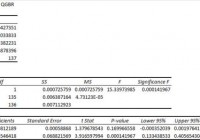
Summary I’m taking a look at QGBR as a candidate for inclusion in my ETF portfolio. The expense ratio relative to the diversification within the ETF is not very good. The extremely low correlation with other major funds (like SPY) is great, but is probably just the result of poor liquidity distorting trading data. Low volume makes commission free trading on the ETF a requirement to even consider it. I’m not assessing any tax impacts. Investors should check their own situation for tax exposure. Investors should be seeking to improve their risk adjusted returns. I’m a big fan of using ETFs to achieve the risk adjusted returns relative to the portfolios that a normal investor can generate for themselves after trading costs. I’m working on building a new portfolio and I’m going to be analyzing several of the ETFs that I am considering for my personal portfolio. One of the funds that I’m considering is the SPDR® MSCI United Kingdom Quality Mix ETF (NYSEARCA: QGBR ). I’ll be performing a substantial portion of my analysis along the lines of modern portfolio theory, so my goal is to find ways to minimize costs while achieving diversification to reduce my risk level. What does QGBR do? QGBR attempts to track the total return of the MSCI UK Quality Mix Index. Normally at least 80% of the assets are invested in funds included in this index, but there appears to be some leeway under unusual market conditions. QGBR falls under the category of “Miscellaneous Region”. Does QGBR provide diversification benefits to a portfolio? Each investor may hold a different portfolio, but I use (NYSEARCA: SPY ) as the basis for my analysis. I believe SPY, or another large cap U.S. fund with similar properties, represents the reasonable first step for many investors designing an ETF portfolio. Therefore, I start my diversification analysis by seeing how it works with SPY. I start with an ANOVA table: (click to enlarge) The correlation is only 32%, which is incredible for modern portfolio theory. Extremely low levels of correlation are wonderful for establishing a more stable portfolio. However, this may reflect the poor liquidity distorting the reported closing price. Standard deviation of daily returns (dividend adjusted, measured since June 2014) The standard deviation is fairly acceptable. For QGBR it is .8570%. For SPY, it is 0.7232% for the same period. SPY usually beats other ETFs in this regard, so that is not a major concern. Major risks The ETF suffers from absurdly low volume. The average volume at times is less than 500 shares per day, which is a major liquidity risk. Investors needing liquidity should avoid this risk. Going through the closing values on a day by day basis shows the problem is even worse. It was very common for the closing value to be identical for several days at a time. While it is possible that shares were traded at that price, it is also possible that this represents a day in which no shares traded hands. The resulting value for the daily return, 0.00%, could cause the standard deviation and correlation that are calculated to be substantially less than the real values. Investors need to be aware of this risk when considering the security. I plan to rebalance my ETF portfolio frequently, but the funds will be in a retirement portfolio that I will not have access to for a long time. Investors that need more liquid securities should avoid this market. Mixing it with SPY I also run comparisons on the standard deviation of daily returns for the portfolio assuming that the portfolio is combined with the S&P 500. For research, I assume daily rebalancing because it dramatically simplifies the math. With a 50/50 weighting in a portfolio holding only SPY and QGBR, the standard deviation of daily returns across the entire portfolio is 0.6429%. With 80% in SPY and 20% in QGBR, the standard deviation of the portfolio would have been .6538%. If an investor wanted to use QGBR as a supplement to their portfolio, the standard deviation across the portfolio with 95% in SPY and 5% in QGBR would have been .7019%. Why I use standard deviation of daily returns I don’t believe historical returns have predictive power for future returns, but I do believe historical values for standard deviations of returns relative to other ETFs have some predictive power on future risks and correlations. Yield & Taxes The SEC yield is 3.21%. That appears to be a very favorable yield. For retiring investors the yield may be tempting, but remember that this is not a very liquid security. I’m not a CPA or CFP, so I’m not assessing any tax impacts. Expense Ratio The ETF is posting .30% for an expense ratio. I want diversification, I want stability, and I don’t want to pay for them. The expense ratio on this fund is a tiny bit higher than I want to pay for equity securities, but not high enough to make me eliminate it from consideration. Market to NAV The ETF is at a .91% premium to NAV currently. Premiums or discounts to NAV can change very quickly so investors should check prior to putting in an order. I would only consider using this ETF with limit orders and no commissions on trading. Largest Holdings The diversification within the ETF is pretty bad. There were 7 companies that were each more than 3% of the total holdings. Diversification costs money. I want the expense ratio to be covering the costs of acquiring a more diverse set of securities. (click to enlarge) Conclusion I’m currently screening a large volume of ETFs for my own portfolio. The portfolio I’m building is through Schwab, so I’m able to trade QGBR with no commissions. I have a strong preference for researching ETFs that are free to trade in my account, so most of my research will be on ETFs that fall under the “ETF OneSource” program. I’m interested in QGBR because of the very low correlation, but I’ll need more data before I feel comfortable coming to a conclusion. My general premise at this point is that the stock is so absurdly illiquid that the statistics are substantially misleading it. I think investors should be very wary of buying into any assets with such a painfully low level of liquidity. Before investing, I would probably record the bid-ask spreads at several times throughout the day on several days and compare those values to the NAV at the end of the day. I might consider a small position in the ETF, but even with no liquidity needs I would want to make sure I didn’t get taken for a ride on the entry price. Additional disclosure: Information in this article represents the opinion of the analyst. All statements are represented as opinions, rather than facts, and should not be construed as advice to buy or sell a security. Ratings of “outperform” and “underperform” reflect the analyst’s estimation of a divergence between the market value for a security and the price that would be appropriate given the potential for risks and returns relative to other securities. The analyst does not know your particular objectives for returns or constraints upon investing. All investors are encouraged to do their own research before making any investment decision. Information is regularly obtained from Yahoo Finance, Google Finance, and SEC Database. If Yahoo, Google, or the SEC database contained faulty or old information it could be incorporated into my analysis. The analyst holds a diversified portfolio including mutual funds or index funds which may include a small long exposure to the stock.
Hedged ETFs Provide Foreign Exposure Sans Currency Risk

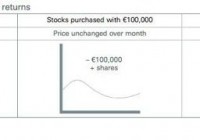
By DailyAlts Staff A new whitepaper from Deutsche Asset & Wealth Management (Deutsche AWM) considers the benefits of using currency-hedged ETFs (exchange-traded funds) to gain foreign equity exposure. Written by Deutsche AWM ETF strategists Dodd Kittsley and Abby Woddham, the paper explores the growth of investor interest in foreign stocks and the ETFs that hold them, as well as considering the potential “currency risk” of holding unhedged foreign equities. Foreign Investment Difficulties Investing in foreign stocks has been difficult historically for a variety of reasons. First and foremost, most foreign stocks trade on foreign exchanges, and domestic investors inherently have reduced access to foreign exchanges. Furthermore, stocks trading on foreign exchanges are priced in foreign currencies, creating an intermediary requirement (and hassle) for U.S. investors to first exchange dollars for foreign currencies, and also creating the phenomenon of “currency risk” – the risk that exchange rates between the dollar and the foreign currency will change during the holding period of the foreign stock. Overcoming Those Difficulties Over time, these difficulties have been addressed one by one. First, the number of foreign stocks trading on U.S. exchanges has increased steadily over time, including Alibaba’s record-breaking IPO last year. Secondly, U.S. investor access to foreign exchange markets has increased – but even more significantly, the rise of ETFs that hold stocks trading on foreign exchanges has greatly expanded investor access to such stocks. Indeed, the low cost, tax efficiency, liquidity, and transparency of ETFs has made them perhaps the most popular means of gaining foreign equity exposure. But for “unhedged” foreign stock ETFs, the phenomenon of currency risk remains – and it can have a devastating impact on an investment’s results. An Example of Currency Risk Deutsche AWM’s whitepaper offers the following example as evidence: Imagine you wanted to buy $150,000 of a stock trading on a German exchange, with the stock’s shares priced in euros. Suppose the exchange rate at the time of the purchase was $1.50 to 1 euro, and therefore $150,000 would buy 100,000 euros worth. Now imagine that a year later, the stock price is flat, and you therefore still have 100,000 euros worth of shares – but unfortunately, the dollar has strengthened against the euro so that $1 equals 1 euro. In this case, your 100,000 euros worth of stock, that you paid $150,000 for a year earlier, would now be worth just $100,000. Due to currency risk, an investment that would have resulted in a breakeven return became a 33% loss. This is illustrated below: (click to enlarge) How Currency Hedging Works In response, ETF providers have developed “currency-hedged” products. These ETFs hold shares of stocks priced in foreign currencies, but they use forward currency contracts to “hedge” against currency risk. This is done by agreeing to sell the foreign currency at the current exchange rate sometime in the future – if, in the example above, you would have agreed to sell 100,000 euros for $150,000 one year in the future at the same moment you bought 100,000 euros worth of stock; then a year later, your stock would still be flat at 100,000 euros, but instead of losing 33% to currency fluctuations, your forward contract would offset that loss with a 33% gain. You could sell your shares for 100,000 euros, but instead of exchanging them for $100,000 at the current exchange rate, your forward contract would entitle you to sell them for $150,000. Conclusion The authors of Deutsche AWM’s paper point out that currency risk is a blade that can cut both ways: Japanese stocks were up 54.6% in 2013 when priced in yen, but only 27.2% when priced in dollars due to the dollar strengthening against the yen that year. But when Japanese stocks only gained 0.6% in 2010 priced in yen, they gained 15.4% that same year priced in dollars due to the yen’s strengthening against the dollar that year. Since exchange-rate changes can have either positive or negative impacts on an investment’s value, the whitepaper’s authors suggest strategically choosing “to hedge or not hedge” based on the outlook for the particular currencies involved. But with the dollar widely expected to strengthen in 2015 as the Federal Reserve begins raising interest rates, currency-hedged ETFs may be particularly worth the consideration of investors seeking exposure to foreign stocks. For more information, download a pdf copy of the whitepaper .

Lack Of U.S. Wage Growth Puts These ETFs In Focus

The U.S. is creating jobs fast, but is slow in boosting wage growth. While the buzz about poor wage growth has been doing rounds for long, the unexpected and steepest fall in average U.S. hourly wage for December since 2006 cast a dark cloud over the country’s economic growth story. Average hourly earnings dipped 0.2% sequentially in December, and November average hourly earnings were adjusted down to a 0.2% increase. On a year-over-year basis, average hourly earnings in December were up 1.7%. This indicates that the brighter overall job picture was courtesy of the low-wage category. Thanks to this downbeat data, positive sentiments that shaped up over the U.S. investing in last few months, suffered a brief (seemingly) setback to start 2015. The U.S. dollar dipped against the yen, though slightly, following not-so-enthusiastic payrolls. Several emerging market currencies, however, including Taiwan’s dollar and Indonesia’s rupiah had witnessed a notable ascent following the payroll data. The WisdomTree Emerging Currency ETF ( CEW) , which provides a diversified play on emerging market currencies, added 0.24% on January 9th. Added to this is the inflationary outlook, which will likely remain grave in the days to come due to the unending oil rout. In fact, a beneficial driver like lower greenback also failed to perk up oil investing. Bloomberg analysts envisaged that U.S. consumer prices possibly grew 0.7% year over year in December, the five-year lowest. Most of the market participants started to believe that a solemn inflationary picture and a lackluster wage scenario will delay the hike in U.S. interest rates. We expect this shaky investor sentiment to take charge of the market movement at least for a few days. An upbeat economic data report is urgently needed to lift investors’ mood which is already sinking due to global growth worries. Greenback Gives Up Given the change in the market fundamentals and slide in the greenback following the latest wage data, investors might think about shorting U.S. dollars to take advantage. PowerShares DB U.S. Dollar Bearish Fund (NYSEARCA: UDN ) This fund could be the prime beneficiary of the falling USD as it offers exposure against a basket of world currencies. These include the euro, Japanese yen, British pound, Canadian dollar, Swedish krona and Swiss franc. This is done by tracking the Deutsche Bank Short U.S. Dollar Index Futures Index Excess Return plus the interest income from the fund’s holdings of U.S. Treasury securities. In terms of holdings, UDN allocates nearly 57.6% in euros while 25% collectively is in Japanese yen and British pounds. All of these currencies nudged up after the U.S. wage growth report. The $37.1 million fund charges 80 bps in fees a year from investors. This ETF was up 0.5% on January 9 but failed to sustain the gains after hours. Tilt to Treasuries Like 2014, the 10-year Treasury note too was off to a great start this year with yield slipping even below 2% since October. Notably, this was the best yearly start treasuries experienced in 17 years thanks to a spike in market volatility. Demand for 30-year treasury bonds was so high that yields plunged to the lowest level since July 2012. Investors seeking to ride this environment might take interest in iShares 20+ Year Treasury Bond ETF (NYSEARCA: TLT ) . This ultra-popular long-term Treasury ETF with an asset base of $6.6 billion – TLT – has added more than 4% so far in the New Year. TLT charges 15 bps in fees. Glitters of Gold After a tumultuous 2014, gold finally heaved a sigh of relief. Soft global growth, persistent plunge in oil and now the prospect of a delayed rate hike in the U.S. returned the shine of the yellow metal. On January 9, the SPDR Gold Trust ETF (NYSEARCA: GLD ) – the product tracking gold bullion -added about 1.14%. In the year-to-date frame, this $27.6 billion fund was up 3.2%. The ETF charges 40 bps in fees. Bottom Line As a caveat, investors should note that the outlook is quite rough for the inverse dollar and gold ETF. This is more the case for UDN, which tracks the greenback against currencies like the presently nine-year low euro. These ETFs will turn out winners as long as volatility and downbeat sentiments over the U.S. market prevail. Thus, investors need to be aware of the market at large before considering these investment options.