Tag Archives: seeking-alpha

Bull Markets Climb A Wall Of Worry — So Where Are We Now?

Summary Bull markets climb a wall of worry. Bull markets end when no one is any longer worried about anything. There plenty to worry about right now. Does that mean we should expect a good market going forward? Bull markets climb a wall of worry. Bull markets end when no one is any longer worried about anything. Bear markets then decline as more and more investors throw in the towel. Bear markets end when most investors swear off investing in the market. Why this reminder? One of our clients wrote last month and asked if I believed we should be in the market at all. Consider, after all: Europe is in shambles. China is decelerating. Oil, gas and most essential commodities are down, down, down and face a glut as there is more supply than demand for almost all of them right now. 4th-quarter earnings of US companies are only so-so. Expectations have been lowered hugely for 2015 future earnings. Our president speaks of helping the middle class, yet his policies have harmed working families the most. We’ve never reached such heights in the market. Mark Hulbert, who monitors and reports on a subset of financial writers, began a recent article, “The U.S. stock market’s major trend now is down, so act accordingly.” This bull is older than almost every bull market in history. Etc., etc. All true. All worrisome. But bull markets climb a wall of worry. It’s possible, of course, that this particular one will end with a failure to break out and without the usual euphoria that typically accompanies the end of a bull. Or maybe it ended in December, with that euphoria, and now it is merely gasping for air. (Mr. Hulbert’s piece, citing 2 of 3 adherents of Dow Theory, seems to suggest this as a distinct possibility.) If this is the case, we’ll add to our defensive positions – but I don’t believe it is. Here is what I see in the coming year in both the markets and the economy… While our firm practices asset allocation for about 85% of our, and our clients’, portfolios, we are not dogmatic about it. If there is an obvious opportunity like, say, buying the biggest and best oil companies with a view to long-term recovery, we will slightly change our reallocation matrix to over-weight this or that sector or asset class. We do this knowing we may sacrifice small gains in the short term for significantly larger gains in the future. We live in the present and plan to live even better in the future, so that’s the way we invest. With that in mind, here’s our take on… U.S. Stocks I don’t believe this will be as great a year as “most” years ending in “5” (which has nothing to do with numerology and much to do with the U.S. federal election cycle.) But I still expect to see a single-digit gain (5%? 7%?) this year. Once we hit the summer doldrums, we might or might not hang onto those gains. Still, as I survey the other possibilities (CDs and bonds providing negative returns after taxes and inflation, emerging markets stung by the strong dollar, commodities slumping from low demand, etc.) I think companies selling products and services to U.S. consumers – think small- and mid-cap domestic firms – are the best bet on the immediate horizon. Some of our favorite funds in this area are Aston / LMCG Small Cap Growth N (MUTF: ACWDX ), Guggenheim Spin-Off (NYSEARCA: CSD ), Akre Focus (MUTF: AKREX ) and TrimTabs Float Shrink (TTFS.) Can We Make Money in Bonds? Sure we can. As long as central bankers are rushing to duplicate the success the USA has begun to enjoy as a result of slashing interest rates to the point where “who wouldn’t” take a 30-year fixed mortgage at 3.75% or an auto loan at 0%. We’ll always keep “some” amount of our allocation in US bonds, not for their returns but for their shelter from the storm. But this year I think we can see much better returns buying quality foreign bonds via ETFs and actively managed mutual funds. As Japan, Australia, Canada, Europe, et al, slash rates, their existing bonds paying higher rates become more desirable and begin to appreciate. That’s why PIMCO Foreign Bond (USD-Hedged) D (MUTF: PFODX ) is our largest position in our Investor’s Edge Growth & Value portfolio. Among US funds, we prefer the beaten-down hi-yield funds to their more conservative brethren right now. PIMCO Income A (MUTF: PONAX ) and Guggenheim Bulletshares 2015 (NYSEARCA: BSJF ) come to mind. Currencies We don’t trade the currency markets. We have just one direct position in the US $, some options in the Aggressive Portfolio. But indirectly , it is the strength of the dollar that leads us to believe this year will be better for the small and mid cap firms that don’t get paid in Euros, Yen or Yuan and then must repatriate those currencies into fewer dollars. I believe there will be great turbulence in the currency markets this year as nations jockey to ensure they maintain trade supremacy by doing whatever they can to control their currencies. This is not an arena we choose to compete in; central bankers have slightly more resources to get their way than those of us who work for a living. Commodity Products We do not invest directly in commodities. If you think it’s tough to compete against central bankers, try going head to head with the best minds private industry can buy. At least central bankers have proven themselves inept from time to time; I don’t want to compete in the sugar trading business with Coca Cola (NYSE: KO ) or in the oil business with Exxon (NYSE: XOM ). I’m thinking their pockets are, again, slightly deeper than mine and their very livelihood depends upon being right more often than they are wrong. Still, the price of oil in the USA, wheat in Canada or tea in China does affect our investing, and I imagine this year will not be kind to sectors that rely upon more demand than supply for their profitability. I think oil is likely to be the big exception; the selloff has been more severe than companies’ revenues justify and the Bigs are slashing CapEx left and right. As for the US and World Economies The markets are predictive of the economy, not coincident to it. But financial journalists must write about market ups and downs and saying, truthfully, “Hell, we don’t know why it was down 300 today,” must cite something. That’s why they say, “The market was crushed today because GDP came in 0.3% below expectations” or “The market soared today because Alcoa delivered an upside earnings surprise.” Since we believe the markets to be predictive of future economic trends, it follows that we see the macro-economic environment unfolding something like this in 2015: We believe volatility has returned with a vengeance. If you can’t take the occasional 300-point down day without having your cardiologist on call, buy bonds. Inflation is DOA right now and likely to remain so for most of the world for this year. Europe and Japan may well surprise on the upside as they stimulate their economies. Most emerging markets will be moribund. There will be exceptions. The housing recovery will accelerate, as will consumer spending. Capital spending and wage growth won’t accelerate, however, keeping growth steady but not exciting. A Fed rate increase in June? I doubt it; the strong US$ is already cutting into exports. This is no time to make it worse. Still, humans sit on the board of the Fed. They’ve cried wolf so many times, they may initiate a token increase just to show, um, demonstrate, er, pretend they are in charge of the economy rather than the other way around. ————— As Registered Investment Advisors, we believe it is our responsibility to advise that we do not know your personal financial situation, so the information contained in this communiqué represents the opinions of the staff of Stanford Wealth Management, and should not be construed as personalized investment advice. Past performance is no guarantee of future results, rather an obvious statement but clearly too often unheeded judging by the number of investors who buy the current #1 mutual fund one year only to watch it plummet the following year. We encourage you to do your own due diligence on issues we discuss to see if they might be of value in your own investing. We take our responsibility to offer intelligent commentary seriously, but it should not be assumed that investing in any securities we are investing in will always be profitable. We do our best to get it right, and we “eat our own cooking,” but we could be wrong, hence our full disclosure as to whether we own or are buying the investments we write about. Disclosure: The author is long ACWDX, AKREX, DRESX, HDPSX, SCHH, DBEF, DTN, ROOF, DFE, SCHG, VONE. (More…) The author wrote this article themselves, and it expresses their own opinions. The author is not receiving compensation for it. The author has no business relationship with any company whose stock is mentioned in this article.
Inside Guggenheim’s New High Income Infrastructure ETF

The income ETF space remains a favorite among investors as evidenced by the incredible level of interest seen in many of the products in the space. In fact, many issuers have lined up with several new funds focused on income strategies to tap into this sentiment (read: 3 ETFs Yielding Over 6% to Watch as Market Speculates Rising Rates ). This trend continues with Guggenheim which has just launched a fund with global coverage, focusing on the high income space, but with a slight tilt as the fund has a specific sector exposure i.e. infrastructure. In fact, the global footprint made the fund more attractive given the ultra-low interest rate backdrop prevailing in most developed economies. Below, we have highlighted the newly launched fund – Guggenheim S&P High Income Infrastructure ETF ( GHII ) – in greater detail. GHII in Focus This product tracks the S&P High Income Infrastructure Index, focusing on 50 high-yielding global infrastructure companies. These companies are engaged in several infrastructure-related sub-industries, such as energy, transportation and utilities. The individual stocks are moderately diversified as no single security forms more than 5.09% of the total fund assets. Sydney Airport (5.09%), Williams Companies, Inc. (4.99%) and Jiangsu Express Co. Ltd-H (4.79%) are the top three holdings of the fund. As far as geographic allocation is concerned, the U.S. takes the top spot with about one fifth of the basket followed by Australia (14.45%) and China (9.37%). Overall, the fund is spread across 15 countries. Utilities hold the lion’s share followed by Industrials (33.15%) and Energy (16.70%). The fund charges 45 bps in fee. How Could it Fit in a Portfolio? The ETF could be well suited for income-oriented investors seeking higher longer-term returns with low risk. Utilities and infrastructure related stocks are interest rate sensitive and recession resistant in nature. With interest rates being low in most developed nations, the appeal of utilities stocks has increased as these offer steady and strong yields (read: 3 Utility ETFs Surging to Start 2015 ). However, investors looking for a high-growth vehicle may not be satisfied with this product as infrastructure is generally a slow-growth business. Competition The main competitor of GHII is the established iShares S&P Global Infrastructure Index Fund ( IGF ) . This product also focuses in on global utilities ranging from transportation to electricity services, and it has already seen a great deal of interest from investors, as evidenced by its $1.18 billion in assets under management. This iShares fund charges 47 bps in fee. The U.S. takes about 32.8% of the basket followed by Canada (8.33%) and Australia (8.17%). The fund holds 75 stocks in total. The fund yields yielded about 2.98% as of February 19, 2015. The newly launched ETF will also face stiff competition from iShares S&P Global Utilities Index Fund ( JXI ) , which has amassed about $338.3 million in assets. The fund charges 48 bps in fees and yields about 3.67% annually (as of February 19, 2015) (read: FlexShares Launches Global Infrastructure ETF ). Another potentially sound player in the space is SPDR FTSE/Macquarie Global Infrastructure 100 ETF ( GII ) though the fund was behind the newly launched GHII in terms of assets within such a short span. Notably, within just seven days of launch, GHII has amassed about $189 million in assets while GII has garnered $112 million in AUM. So, though competition may be intensifying in the global infrastructure ETF world, GHII is definitely worth a closer look. The product charges reasonably in the space and has an attractive yield, which is drawing investors’ attention. We expect its winning trend to continue in the days to come. Also, most other global infrastructure ETFs have put a large weight on the U.S. unlike GHII. A lower focus on the U.S. market might earn GHII an extra advantage over its peers as the U.S. economy will likely see a rise in rates.

GURU And ALFA: Are Hedge Fund ETFs Worth Your While?

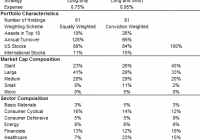
Summary There has been a great deal of interest in ‘hedge fund cloning’ ETFs of late. Despite exhibiting decent performance, a closer look reveals a different story. We remain skeptical of their alpha potential, after a detailed analysis of their track record. There has been significant interest in recent years in “cloning” the equity investment ideas of hedge funds, leading to the launch of several ETFs and indices that track their stock picks. In this article we provide an assessment of the two longest running ETFs, the Global X Guru Index ETF (NYSEARCA: GURU ) and the AlphaClone Alternative Alpha ETF (NYSEARCA: ALFA ). GURU and ALFA At a Glance Despite both being “copy-cat” funds, GURU and ALFA are actually two quite different propositions. Key Features From an investment strategy perspective, the GURU is designed to be 100% long, while the ALFA has the flexibility to go short by 50% subject to market technicals. In other words, one is a long-only equity fund, while the other aims to mimic long/short equity hedge funds by altering its market exposure over time. Due to its hedging ability, the ALFA appears to charge more for this feature, with the expense ratio close to 1%. Portfolio Characteristics A key difference between the two ETFs is their stock weighting methodology. GURU weights its positions equally, and has fewer positions in total. The ALFA applies variable weighting, with higher weights assigned to higher conviction names based on a proprietary scoring methodology. It is more concentrated than GURU in the top holdings, but has a long tail of smaller positions. It is difficult to say which method is more effective, only time will tell. Both portfolios comprise mainly of U.S. stocks, which is intuitive as hedge funds do not disclose their overseas holdings in 13F filings – unless they are U.S.-listed securities, such as ADRs. In terms of portfolio churn, both ETF portfolios have fairly high turnover ratios. For GURU, this is at a staggering 128%. We believe a high turnover is only justified if it results in superior performance, otherwise it typically cranks up excessive trading costs and impacts long-term returns. Portfolio Composition According to Morningstar classifications, both ETFs have a pronounced mid/small-cap bias, as evidenced by their high allocation to SMID cap stocks. The ALFA has a more aggressive tilt than the GURU. From a sector perspective, we would note the high allocation to the tech sector of both funds, although it is not too far from market index weights, as defined by the Russell 1000 Index. Performance Benchmark As both ETFs are essentially U.S. equity funds and exhibit a mid-cap orientation, we believe the Russell 1000 Index (“R1000”) is an appropriate performance yardstick. The Vanguard Russell 1000 ETF (NASDAQ: VONE ) tracks this benchmark and charges a 0.12% fee. Quantitative Analysis – Last 31 Months (1 Jul 2012 – 31 Jan 2015) Below is a summary table of key MPT statistics for the past 31 months, based on monthly data. Investment Results Both the GURU and ALFA have done well over the past 31 months (since common inception date), posting modest outperformance versus the Russell 1000 Index. Risk Both ETFs have exhibited higher volatility than the R1000 (as measured by the standard deviation). At ~11%, this is some 30% higher than the market index. From a beta perspective (sensitivity to equity market movements), both are also higher, at 1.20 and 1.08 respectively. Alpha Alpha is a measure of manager skill on a risk-adjusted basis, in other words it reconciles return and volatility to provide an indication of stocking picking skill. After accounting for volatility, the GURU’s alpha is negative, and the ALFA’s is mildly positive. GURU’s outperformance over the R1000 appears to have been achieved with higher risk. At 1.2 beta, it is akin to R1000 running on steroids, but less efficient. To illustrate this point, if we levered the R1000 to a similar level (beta of 1.2x), this would have yielded better returns at lower volatility. Tracking Error GURU and ALFA are both high tracking error products, meaning their performance pattern can diverge significantly from the R1000 from time to time (both positive and negative) — and benchmark-aware investors should be prepared to stomach this performance divergence. Risk Adjusted Returns Both ETFs have posted identical and good risk-adjusted returns in terms of Sharpe Ratio. However, the slightly levered R1000 once again leaves both ETFs in the dust. Taking It All Together Despite outperforming the R1000 Index in the past 31 months, the alpha of these ETFs are not significant (and negative for GURU), after taking into account their volatility. A Longer Term Perspective For better understanding of the performance pattern of these ETFs, we can look at the indices that they track, which has been back-tested over longer periods. However, one must note that these are “back-tests” and must be treated with a degree of caution. After all, a back-tested index must demonstrate favorable results before a ETF provider is willing to wrap it into an investment product. We do not know how conservative the index producers have been with their assumptions, so we will look no further back than the past 60 months (or five years). 60 Month Statistics (1 Feb 2010 – 31 Jan 2015) The longer term stats paint a similar picture. Guru Index Alpha is again negative over the past five years. Its higher return is explained by higher beta. A similar version (1.1x) of the R1000 would have achieved higher returns at lower levels of volatility. AlphaClone Index Alpha is high at 4.6. This number is a result of a) lower volatility than the R1000 and b) similar level of return. Its 60-month beta is 0.66, a third of the market index. This implies that its market hedge mechanism must have kicked in during this 60 month period, which has provided some protection in down months of the R1000. Despite the existence of alpha, we would note the following: In the period since the ALFA ETF has been live, hedging has not been used, as indicated by its beta of 1.1 to the R1000. It would be interesting to see how it works in practice in the future. In absolute return terms, the back-tested performance of ALFA over the past 60 months is still inferior to the R1000 (15.2 vs. 15.8). A skillful equity long/short hedge fund manager would typically be able to capture less downside, but a similar level of upside, resulting in better returns than the market index over time. This indicates that AlphaClone’s market hedge (think of it as the manager’s skill in shorting the market) have not helped drive extra returns over this 60 month period. A Closer Look at Alpha Patterns We believe outperformance from stock selection comes in waves, and is not constant. There will be extended periods when a portfolio performs well, and extended periods less well due to the existence of style biases (i.e. growth, value, size effect etc). These biases can be in, or out of favor with the market from time to time. To assess alpha patterns we look at the rolling 2-year excess returns versus the R1000. Our assessment period is the last 60 months, as above. Interestingly, the Guru Index has been losing altitude of late, with its margin of outperformance vs. the R1000 dropping fast. This points to a deterioration in its stock selection — possibly due to style biases, a decline in the performance of hedge funds they track, the efficacy of their cloning process, or a combination. Meanwhile, the AlphaClone Index has lagged the R1000 for years (on a rolling 2 year basis), before taking a positive turn in late 2013. This is most likely because the index has very much been long-only and not market hedged since then. Tracking Quality One final factor to consider is the quality of index replication. The good news is that both ETFs appeared to have tracked their underlying indices well after fees in real life. The tracking error is marginally higher for the GURU in the past two calendar years, despite having a lower fee than the ALFA. Our Verdict Over the past 31 months, the GURU and ALFA ETFs have performed well in absolute terms, although if one takes a closer look, reveals a different story. For GURU, we are concerned of its high beta, high portfolio turnover, and stock selection efficacy which has been decreasing recently. For ALFA, we are not big fans of its higher fees and market hedge, which has not been tested in real life. As long-term equity investors interested in maximum capital appreciation, we do not believe that market timing adds value. This is confirmed by the ALFA’s subpar returns to the R1000 over the period under review. Based on our analysis, we remain skeptical of both ETFs’ alpha potential. Disclosure: The author has no positions in any stocks mentioned, and no plans to initiate any positions within the next 72 hours. (More…) The author wrote this article themselves, and it expresses their own opinions. The author is not receiving compensation for it (other than from Seeking Alpha). The author has no business relationship with any company whose stock is mentioned in this article. Additional disclosure: For research purposes, Real Return Partners LLP compile the RR Partners AlphaEquity® Index (Bloomberg: RRALPHA). This is a long-only equity index that tracks the performance of a portfolio of 20 US-listed, 13F equity positions representing the best ideas of an elite group of institutional money managers. The Index is independently calculated and is published as a net total return index. There are no investment products linked to this index.