Tag Archives: seeking-alpha

An Overview Of A Timber And Forestry Play – WOOD
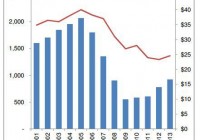
Summary Prices for timber and timber stocks are generally correlated with new housing starts. Timber and forestry stocks offer exposure to a renewable resource industry. Upticks in housing starts have not resulted in equal magnitudes of timber price gains, which suggests that price increases are forthcoming. While there are many plays for investors who wish to profit from a recovering housing market, one often overlooked alternative is timber and forestry related stocks. As I’ve said in various articles, I’m generally a fan of owning ETFs over individual holdings for their low fees and diversification, and this is no exception. One such ETF alternative is the iShares Global Timber & Forestry ETF (NASDAQ: WOOD ). This ETF offers exposure to Companies that produce forest, agricultural, paper and packaging products. According to Blackrock (NYSE: BLK ), the fund seeks to track: The investment results of an index composed of global equities in or related to the timber and forestry industry. What drives demand for timber and forestry products and services? The level of new residential construction activity. Demand for repair and remodeling. Demand for wood chips for use in paper and wood products. The U.S. Department of Housing and Urban Development released New Residential Construction statistics wednesday that were less than stellar, but nonetheless point to a moderate recovery. Key takeaways January 2015 building permits fell .7% from the revised December 2014 seasonally adjusted rate of 1,060,000, but were up 8.1% from January 2014. January 2015 privately owned housing starts were down 2% from December but up 18.7% from January 2014. January 2015 single family housing completions were 1.3% above December 2014 estimates and 9.4% above January 2014 estimates. Housing markets are regarded as somewhat choppy, with interest rates continuing to hover near historic lows at an average of 3.69% on 30 year mortgages (up from 3.59%), while stagnant wages continue to weigh on potential home buyers. Nonetheless, last month, the Mortgage Bankers Association reported that the seasonally adjusted index of mortgage applications posted the largest gain (49.1%) since the middle of the Great Recession. Homebuilder confidence fell from 57 to 55 , according to the National Association of Homebuilders release on Tuesday, but results above 50 still indicate that more homebuilders view market conditions favorably as opposed to negatively. Why invest in timber and forestry stocks? Timber and forestry stocks offer an opportunity to invest in a renewable resource. Housing starts drive timber prices. Housing starts have rebounded since 2009 lows, but sawtimber stumpage prices have not responded as quickly. (Source Rayonier Investor Presentation) Housing starts are projected to increase over the near-term, which should result in an uptick in both demand for and prices of sawtimber. (Source Rayonier Investor Presentation) ETF Overview (data as of 2/18/15 courtesy of Blackrock unless otherwise stated) Price (as of 2/18/15) $56.11 NAV Total Return YTD 5.83% Net assets $323,169,989 Inception date June 2008 Benchmark index – S&P Global Timber & Forestry Index Geographic and Industry Exposure (courtesy of Blackrock) Notes – Despite being a “global fund”, over 64% of the Company’s geographic concentration is in North America. Notes – This “sector” breakdown is a tad misleading, because as shown below, the REITs are generally focused within the Paper & Forest products industry. REITs do however, have different tax and ownership characteristics than other publicly traded securities. Top 5 Holdings as of 2/19/15 West Fraser Timber Co ( OTCPK:WFTBF ) 8.36% West Fraser Timber is an integrated wood products company that produces wood chips, lumber, LVL, MDF, plywood, pulp and newsprint. The Company operates in western Canada and the southern U.S. and trades on the Toronto Stock exchange. Weyerhaeuser REIT (NYSE: WY ) 7.99% Weyerhaeuser operates in four general segments, timberlands, wood products, cellulose fibers and real estate. According to Weyerhaeuser’s most recent annual report , the Company grows and harvests trees, manufactures and sells products made from trees, builds and sells homes and develops land. The Company’s largest market is the United States, however it has a significant customer base in Japan, Europe, China and Canada. Plum Creek Timber Company REIT (NYSE: PCL ) 7.83% Plum Creek owns approximately 6.8 million acres of timberlands across 19 states. The Company operates in the following segments, Northern Resources (timberlands in Maine, Michigan, Montana, New Hampshire, Oregon, Vermont, Washington, West Virginia, and Wisconsin); Southern Resources (timberlands in Alabama, Arkansas, Florida, Georgia, Mississippi, Louisiana, Mississippi, North Carolina, South Carolina, Texas and Virginia); Energy and Natural Resources (oil and natural gas production, construction aggregates, mineral extraction, wind power and communication rights of way); Real Estate (sales of higher and better use timberlands); and Manufacturing (lumber mills, plywood mills, medium density fiberboard and lumber remanufacturing). Rayonier REIT (NYSE: RYN ) 6.26% Rayonier owns, leases or manages 2.6 million acres of timberlands in nine states and New Zealand. The Company is the third-largest timber REIT and operates in two reportable segments: Forest Resources (harvesting of timber and other valued added activities such as leasing for hunting/mineral extraction and cell towers) and Real Estate (property sales including higher and better use). MeadWestvaco Corp (NYSE: MWV ) 4.71% MeadWestvaco is a global company that provides packaging products for the healthcare, personal care, food, beverage, tobacco and agricultural industries. The Company also produces specialty chemicals for the automotive energy and infrastructure industries. A word of caution Spectacular collapses in the housing market can result in equally spectacular collapses in timber prices and timber and forestry related stocks. If you are unsure of the general direction and momentum of the U.S. housing market, consider other natural resource alternatives. The ETF is thinly traded (average volume of less than 25,000). This can result in unfavorable bid-ask spreads. The market pricing mechanism of thinly traded ETFs is not always efficient. As recent as 2012, WOOD traded at a premium as high 1.07% to its NAV and at a discount as low as 1.16%. That spread of over 200 basis points could make the difference between a profitable trade and a loss depending on the timing of entry and exit. Disclosure: The author has no positions in any stocks mentioned, and no plans to initiate any positions within the next 72 hours. (More…) The author wrote this article themselves, and it expresses their own opinions. The author is not receiving compensation for it (other than from Seeking Alpha). The author has no business relationship with any company whose stock is mentioned in this article.
Do These 9 Stocks Represent Your Portfolio?

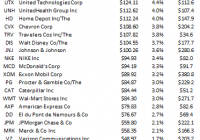
The oft referenced Dow closed at its all-time high on Friday. The Dow, which uses a price weighting methodology, might not be representative of your portfolio. Broadly diversified, capitalization-weighted indices should correlate more with a highly diversified portfolio. The Dow Jones Industrial Average (NYSEARCA: DIA ) closed at its all-time high on Friday of 18,144. This new record will be a talking point on the nightly news, and around the dinner table this weekend. My sister-in-law, knowing that I work in investment management, brought Dow 18,000 up to me in the last week. While it is very nice of her to engage me in conversation about one of my favorite topics – the financial markets – talk of the Dow to me is like nails on a chalkboard. Why? The Dow got its start in the late 1800s as a means of synthesizing the movements of industrial stocks into a single number. While its price-weighting and narrow coverage universe of thirty stocks are now anachronistic in the days of computerized calculations and alternative weightings, the Dow has retained its status as a stock market bellwether. To understand my aversion to references about the Dow, I have tabled the current thirty constituents with their market price, market capitalization, and index weight below: Source: Dow Jones, Bloomberg You will notice above that the index weights are based on the stock price. A company worth $100B could have a stock price worth $1 and 100 billion shares outstanding, or have a stock price worth $1B and one hundred shares outstanding. A company with a stock price of $1B would dominate a price-weighted index. Exxon Mobil (NYSE: XOM ) has the largest market capitalization of any of the index constituents, but has only the fifteenth largest weighting amongst the constituents. General Electric (NYSE: GE ) has the smallest weighting in the Dow despite having the fifth largest capitalization. Exxon is the second largest constituent amongst the five hundred companies that make up the S&P 500. General Electric is the seventh largest constituent in that index. In fact, the nine companies tabled below make up half of the weight of the Dow. Source: Dow Jones, Bloomberg In the capitalization-weighted S&P 500, these same nine companies make up just over six percent of the index. Source: Standard and Poor’s, Bloomberg Half of the daily movement in the Dow is going to be driven by just these nine companies. Those same companies are going to account for just six percent of the variability of the S&P 500 (NYSEARCA: SPY ). Despite its analytical shortcomings, the Dow is still an oft referenced benchmark. Unless your portfolio is heavily weighted to the largest Dow components and their relatively high share prices, it is probably a bad representation of your domestic equity exposure. I will have to send this article to my sister-in-law. Disclaimer: My articles may contain statements and projections that are forward-looking in nature, and therefore inherently subject to numerous risks, uncertainties and assumptions. While my articles focus on generating long-term risk-adjusted returns, investment decisions necessarily involve the risk of loss of principal. Individual investor circumstances vary significantly, and information gleaned from my articles should be applied to your own unique investment situation, objectives, risk tolerance, and investment horizon. Disclosure: The author is long SPY. (More…) The author wrote this article themselves, and it expresses their own opinions. The author is not receiving compensation for it (other than from Seeking Alpha). The author has no business relationship with any company whose stock is mentioned in this article.

NextEra Energy, Part 2: Leadership Seen In Diversity, Community, And Renewable Energy

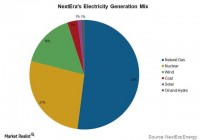
Summary The company ranks very well in diversity hiring, community involvement, and renewable energy. The company does not rate well in women hiring, green productivity, and has limited information in other places. We believe NEE is overall a strong leader in social responsibility. In Part 1 of this article, we saw that NextEra (NYSE: NEE ) is, at this time, not a “buy” for us. We see the upper limit of 2015 pricing in the $105-$110 range, and that the company’s fair value sits in the mid-$80s. Essentially, the company is not a buy for us from a purely financial standpoint. In this part of our research, we will focus on the socially responsible aspects of the company. Our findings are very promising. Yet, failing to see an upside in general, we cannot make an overall positive comment. The company should be respected for its work in socially responsible ways. Socially Responsible Scorecard There are many ways to understand and develop socially responsible investing (SRI). What is “responsible” for each person is vastly different, and what might be “responsible” to one person might be “irresponsible” to others. That is the toughest part of investigating companies for SRI. While pure capitalism to some is the most responsible approach to business, others may see that this could harm other areas such as environmental stewardship or economic development. Others may believe too much capital invested into socially conscientious programs could hurt profits and investors. Therefore, we will try to present as much information as we can to render the best opinion possible. Overall, socially responsible investments are more about leadership and paving the way, rather than compliance. Compliance is doing what is required, while corporate responsibility is about leading and doing more than is required. Companies that lead are always the most respected in the long term, and we believe provide both a safe investment platform as well as peace of mind. The criteria we use to examine the company’s overall social responsibility theme are gender equality, employment and diversity, environmental stewardship, leadership values and community involvement. With all research, some areas have more quantifiable parts, while in other areas, there is not as much. We base our research in taking an aggregate look at leading think tanks, research firms and important websites that cover these topics. We split this research into the aforementioned topics to help create a more holistic opinion. Overview NextEra appears to be a leading firm in the SRI space with strong showing in many key areas. The company was rated as a coveted Ethisphere World’s Most Ethical Companies in the 2014 edition, which shows a dedication to be a leading firm that goes above and beyond compliance. They lead in a number of areas with diversity hires, green energy, and a clear intention for community involvement. The company’s CSR Hub rankings did not show a strong lead, but they were above average. Their “Overall” rating comes in at 60, while Employees and Environment lead the way at 66 and 64, respectively. The company is above average, according to the Hub. The company, though, has won many awards and is a leader in a space that is one of the largest polluters. When we search for companies, we look for the ones that are leaders in various areas of business. NEE appears to be that way. Take a look at the company’s awards here . Some of the most interesting awards we have seen are: — ServiceOne Award for Exceptional Customer Service — Best Employees for Healthy Lifestyles – The Fortunes’s Most Admired Companies Award: In 2014, NextEra Energy was named No. 1 among electric and gas utilities for an unprecedented eighth straight year on Fortune magazine’s listing of “Most Admired Companies.” In that same Fortune survey, the company was named No. 1 electric and gas utility in innovation, No. 1 in social responsibility and No. 1 in quality of products and services. Workforce – Diversity, Compensation, Gender Equality NextEra’s is actually quite strong in their approach to diversity, equality, and compensation, serving as a leader in the way companies should approach their workforce. We believe this is very socially responsible and commendable. The company has been recognized as a top leader in hiring veterans and Hispanics. The company has been recognized by Hispanic Business magazine since 2010 as one of the leaders in diversity hiring. As the award states, “(they) determine the list, the magazine analyzed data on companies’ boards of directors and leadership, recruitment, retention and promotion, marketing and community outreach, and supplier diversity.” As for veterans, ” Vetrepreneur magazine, the voice of the National Veteran-Owned Business Association, gave FPL honorable mention in its compilation of the 2011 Best 10 Corporations for Veteran-Owned Businesses.” The company rates well in other areas of its workforce as well. The Human Rights Campaign rates the company as a 70, which is a rating system for a companies rights to gay, lesbian, and transgender employees. The company has the same rights for same-sex partners as opposite-sex partners and spouses outside of relocation assistance. The company’s 70 rating puts them at the upper end of the rating scale. The company is recognized as well as being one of the companies to have non-discrimination policies for sexual orientation as well. The company didn’t have much information on gender equality for hiring, but the diversity aspect is very positive. As for worker compensation, the company rated a 58 by CSR Hub for worker compensation. The company, though, has positive ratings for safety and health benefits. The company won Best Employers for Healthy Lifestyles for the eighth time for “its ongoing commitment to promoting a healthy work environment and encouraging its workers to live healthier lifestyles. The company was one of just two Florida-based companies and one of only two companies in the energy sector to receive the 2013 Best Employers for Healthy Lifestyles® Award in the prestigious Platinum category.” What we are seeing from the company is a dedication to a workforce and a dedication to policy that promotes safety, diversity, and compensation. We believe this is a leader in this arena, and it complements well their placement as a leading green energy utility. Green Initiative The company has been most recognized for its leadership in green energy. The company is in one of the dirtiest industries, and their reputation is strong. Yet, there are some weaknesses/improvements that need to be made. For as many green awards as the company has won, there are still improvements to be made. Just take a look at this chart to start: (click to enlarge) Despite being labeled the “green” utility, the company is using nearly over 50% in natural gas still, and they also use over a quarter in nuclear, which has some very negative consequences on society if not managed properly as well as waste concerns. In face, the company is really only about 17% actual “green” energy. Further, the company is not the cleanest utility out here. (click to enlarge) The company is definitely one of the cleanest, but it is not as clean as some of the best, and that mix could continue to improve. The company is a “leader,” but we should also understand that this is a company that still uses 50% of their fuel in natural gas. Newsweek’s Green List ranked the company 209th on its Green List, which is one of the most comprehensive looks at companies in the marketplace. This list, though, ranks companies fairly across the board and does not quantify their industry. Naturally, a utility company is going to struggle. The company rated at only 10%, 18%, and 13%, on their energy, carbon, and water productivity out of 100%. The company rated very well, though, on reputation. Out of utilities, the company ranked 15th, which is not exceptional especially given their reputation. Also troubling was the company’s decision not to respond to the Carbon Disclosure Project since 2010. The company did rate an 82 in 2009, which is a decent rating. What is troubling, though, is the CDP is one of the leading, respected firms for rating company plans for carbon versus actual carbon productivity. It is not rating on a single scale but looking at all companies individually. Yet, the company has won numerous awards as you can see here . The company is continuously rated in the Dow Jones Sustainability Index and was rated the best utility for renewable energy by EI New Energy. The company has been rated well for its top electric fleet, and it is rated well for their care and dedication to trees. Overall, the company has solid awards and is rated decently, but we are not as sold as these awards given that some of the leading research gatherers have not gotten necessary information or rated it as well when compared to its competition. What is definitely positive is the company’s leadership that they are the top renewable energy producer. It is an industry that is still mostly based in coal, oil, and natural gas, so the company is better in that regard. Yet, the company’s efficiency ratings aren’t as strong, which is something to consider. Additionally, the nuclear energy angle is considered part of renewable energy, but we are not high on this form of energy due to the direct social risk from it that may be even higher than non-renewable sources. Overall, we would like to see a continued reduction in natural gas and increases in wind and solar power. The company is very low on coal, which is great, and they do help bring other utilities into the mix into these renewable sources. There is still much work to be done. Community Involvement NextEra appears to have a pretty comprehensive strong approach to community. Not only do they rate quite well on their diversity hiring, but they are also leading the renewable utility energy game, which is also positive for the community. Yet, the company also has a very comprehensive direct community plan to volunteer, donate, and be involved in their communities. The company’s 22,000 hours of volunteer time in 2011 in their community and a whole week called Power to Care show some definite leading energy being put back into the community. You can read more about the company’s difference making here . The company has a very progressive hiring plan also for military volunteers that falls into the company’s Diversity Inclusion division that we believe is really respectable. In November, the company was awarded an “Above and Beyond” award in Florida for their strong military hiring program. As a retail company as well, the company has won numerous awards for their customer satisfaction and service. The information we collected here was more limited, but the company definitely appears on the right track. The unseen benefits are what excite us most with their efforts in renewable energy and diversity leadership. Conclusion As you can see, NextEra is a leader in quite a number of areas of social responsibility, but we do have concerns in some areas. We would note they are one of the top companies that are public today, though. Right now, they rate high for us in social responsibility, but we are not as high on their price analysis. We would love to add them on any slight dip in valuation to a socially responsibly crafted investment plan. Disclosure: The author has no positions in any stocks mentioned, and no plans to initiate any positions within the next 72 hours. (More…) The author wrote this article themselves, and it expresses their own opinions. The author is not receiving compensation for it (other than from Seeking Alpha). The author has no business relationship with any company whose stock is mentioned in this article.