Tag Archives: pro

Will The Fed Push Back Down GLD?
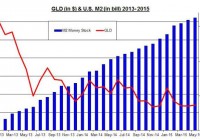
Summary The FOMC will convene again next week. If the FOMC hints about raising rates anytime soon, this could drag down GLD. The recovery of the U.S. dollar and rise in long-term treasury yields will keep pressuring down GLD. The recent strong labor report brought up the odds of the FOMC coming closer towards raising rates. It also cooled down the gold market. Nonetheless, the SPDR Gold Trust ETF (NYSEARCA: GLD ) is still flat for the year even though the U.S. dollar and long-term yields have picked up again in recent weeks. The FOMC isn’t expected to make any big changes in the upcoming meeting. But the price of GLD could start coming down again if the FOMC even drops a hint about raising rates in its upcoming meeting. The better-than-expected non-farm payroll report along with the sharp rise in JOLTS – number of job openings reached 5.38 million while market expectations were set at 5.03 million – have both driven a bit higher the implied probabilities of a rate hike in September to 33% and for December to 70%. The FOMC will convene on June 16-17 and release the press statement on June 17 accompanied with a press conference and release updated economic outlook. On the one hand, the GDP contracted back in Q1 and inflation is still contained below 2%. On the other hand, the U.S. labor market continues to show recovery, and there are possible speculative bubbles in the housing and stock markets, which could be popped once interest rates start to rise again. In the meantime, even though the FOMC is considering normalizing its monetary policy, this doesn’t mean the M2 isn’t growing – as of May, M2 is up by 5.3% year on year. This higher M2 comes despite the tumble in oil prices in the past few months. But the rise in M2, which is another indication for the changes in U.S. inflation, hasn’t driven up the price of GLD in recent years, as presented in the chart below. Moreover, the core PCE , which is the indicator the FOMC follows, has gone down to 1.2% – the lowest level in over a year. This low level doesn’t vote well for the FOMC to turn hawkish in the coming meeting. (click to enlarge) Source: FRED, Google Finance Despite the rise in M2, the U.S. money base remained relatively flat and rose by only 0.7% year over year. But this hasn’t resulted in a sharp rise in the money base as it was the case back when the FOMC implemented QE1, QE2, and QE3. After ending QE3, the FOMC only continued purchasing new bonds to substitute expiring bonds in order to maintain its big balance sheet. Thus, it would take a 180-degree change in the FOMC’s policy for the gold market to heat up again. The weakness of the Euro and other major currencies mainly due to ECB’s QE program, the Greek bailout talks also play a minor role in keeping the Euro weak, is likely to further drive up the U.S. dollar, which doesn’t help the price of gold or the price of GLD. Another factor that could keep slowly bringing down GLD is the recovery of long-term treasury yields, which have picked up in recent weeks. The correlations among GLD and long-term yields, as seen below, are negative and strong and suggest that if yields keep rising, GLD could also start to come down. (click to enlarge) Source: U.S Department of Treasury and Bloomberg Final note The upcoming FOMC meeting could be another nail in the gold market’s coffin – especially if the FOMC turns more hawkish by improving its outlook and providing a clearer picture about raising rates. Currently, the market doesn’t expect the FOMC to make any major changes to the policy and the Fed could remain dovish, which helps to keep GLD from tumbling. The major shift is only likely to occur closer to the end of the year – when the FOMC is more likely to raise rate, assuming the U.S. economy continues to progress in its current pace. Until then, the stronger U.S. dollar and higher long-term treasury yields are likely to keep GLD slowly dwindling. For more, please see: 3 Questions About Gold Disclosure: The author has no positions in any stocks mentioned, and no plans to initiate any positions within the next 72 hours. (More…) The author wrote this article themselves, and it expresses their own opinions. The author is not receiving compensation for it (other than from Seeking Alpha). The author has no business relationship with any company whose stock is mentioned in this article.
It Pays To Be Choosy In Emerging Markets

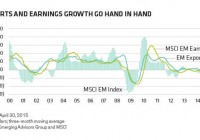
By Morgan C. Harting, CFA, CAIA Emerging equities remain rich in return opportunity, in our view. But as their recent whiplash behavior illustrates, capitalizing on this potential will require far greater selectivity than it did in the past. The recent selloff snapped a winning streak that had propelled the MSCI Emerging Markets Index up more than 11% through the end of April, far outpacing a flat S&P 500 performance. Still, the index remains well below its early 2011 levels, leaving most investors underweight and making this asset class one of the less crowded corners of the global equities market. In several countries, local investors have been buying stocks, pushing up market valuations and earning handsome returns – even though US$17 billion has been drained from emerging market equity funds so far this year. Worries about the US Federal Reserve’s impending first rate hike in a decade and a spike in currency volatility have dissuaded many foreign investors from taking broad emerging market exposure. Rallies in Russia and China Do domestic investors have an inside scoop on emerging market equities? Perhaps they’re less affected by country-specific concerns than foreign investors. For example, while foreign investors were worrying about the impact of sanctions on Russia, the local MICEX Index has marched higher; it’s now up more than 22% in US dollar terms this year. While global fund managers fixated on China’s slowing economic growth to a “mere” 6.5% and its corporate debt pileup, the Shanghai Composite Index surged 57%. Chinese retail investors have been opening up new brokerage accounts at a breakneck pace, encouraged by the government’s recent moves to boost economic growth and to open up its capital markets (including making it easier to use borrowed funds to buy stocks). Despite this local confidence, we don’t advocate a wholesale leap back into emerging markets. The powerful economic tailwinds of export growth, high commodity prices and domestic credit expansion that drove the asset class’s robust outperformance of the past decade have diminished. To find tomorrow’s winners, investors will need to make clearer distinctions among countries, companies and thematic opportunities. Exports Signal Caution A sharp focus on valuation and growth prospects remains central to our thinking about investments in emerging markets. One additional fundamental economic perspective that we believe is critical when considering the timing of allocations to emerging markets in portfolios is exports. Recent data from South Korea, which showed that exports declined by 10.9% year over year in May, as well as aggregate statistics over a longer time frame across a broader set of countries, simply don’t provide enough evidence of a broad resurgence in economic activity to justify an unconditional beta call today. It’s hard to find a metric tied as closely to emerging market equity returns – both fundamentally and empirically – as exports, in our view. When the US dollar value of exports from the developing world accelerates, positive operating leverage fuels even faster corporate profit growth and, in turn, stronger equity market returns. This is particularly true when valuations are as reasonable as they are today. Indeed, emerging market stocks are selling at 30% discounts to their developed market counterparts based on book value and 12-month forward earnings forecasts – among the largest in a decade. As the display below illustrates, the supercharged equity returns of the mid-2000s and 2010 coincided with very rapid export growth and even stronger earnings growth. But it also shows that there just hasn’t been much export growth in nearly four years, which largely explains why earnings growth and equity returns have disappointed. Why have exports been so weak? It’s not just lower commodity prices. We’ve also seen a sharp deceleration in demand for emerging market manufactured goods from developed countries, reflecting their lethargic economies (Display).  To our thinking, however, this symbiotic relationship is the most compelling counterargument to pessimists who say that the emerging market growth story is forever broken or that globalization is over. In our view, the developing equity markets remain a levered play on the developed world recovery. Emerging world corporations still enjoy robust operating profit leverage and global trade continues to expand. Eventually, we expect global economies to pick up, which should drive demand for goods produced in developing countries. Exports will then accelerate, driving even more powerful earnings growth. Good Reasons to Maintain Exposure Today, there’s still a case for keeping exposure to emerging countries. But, in our view, that exposure should be governed by fundamental, company and country-specific insights rather than as a broad market play. Wide price gaps across country markets can set up relative valuation plays – for example, Turkey is trading at 10 times forward earnings versus 25 times for Mexico. And there are pockets of opportunity across the emerging world, which aren’t as directly affected by macroeconomic trends, such as healthcare and private education in select markets. Of course, when hunting for idiosyncratic opportunities, it is important to weigh return potential against the higher volatility that typically accompanies emerging market stocks. Our bottom line: taking advantage of emerging market opportunities no longer comes down to a simple binary decision to raise or lower allocations. It requires deeper analysis and a selective eye. The views expressed herein do not constitute research, investment advice or trade recommendations and do not necessarily represent the views of all AB portfolio-management teams. MSCI makes no express or implied warranties or representations, and shall have no liability whatsoever with respect to any MSCI data contained herein. The MSCI data may not be further redistributed or used as a basis for other indices or any securities or financial products. This report is not approved, reviewed or produced by MSCI. Morgan C. Harting is the lead Portfolio Manager for all Multi-Asset Income strategies at AllianceBernstein.

Dominion Resources Provides Secure Future To Growth-Seeking Investors

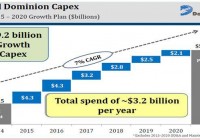
Summary Company’s accelerated investments in growth-generating projects are expected to drive earnings trajectory and revenue base in upcoming years. Sturdy investments will improve company’s free cash flow productivity. Free cash flow productivity will help increase dividends in coming years. Dominion Resources (NYSE: D ) has carved out its plan to excel in the long term through its heavy investments in several growth projects, directed at improving its infrastructure and expanding power generation capacity. As the company is actively pursuing growth projects, the future outlook of D’s revenues growth looks impressive. Also, healthy growth prospects of these projects will significantly improve the company’s free cash flow productivity, which will in turn enable D’s shareholders to enjoy secure and sustainable dividends. The company will continue to enjoy strong earnings growth due to its hefty investments in these long-term growth-generating projects. In addition, the stock currently offers a healthy dividend yield of 3.55%, which makes it attractive for dividend-seeking investors. Powerful Investments = Secure Long Term The U.S. utility sector has exited 2014 with healthy results, as utility companies are investing heavily towards infrastructure improvement and the expansion of its generation capacity. I believe the sector will deliver a much-improved performance throughout 2015 as well. As far as D is concerned, the company has laid out its $19.2 billion capital expenditure (CAPEX) plan, which involves spending approximately $3.2billion/year over the next six years in several long-term growth-generating projects, shown in the graph below. Source: Analyst Day Meeting Slide Presentation Under the $19.2 billion growth CAPEX plan, D has significant growth projects, such as solar, offshore wind, liquefied gas export and construction of more pipelines. As far as the company’s solar projects are concerned, D has laid out its plan to construct several solar projects in Virginia for $700 million . The facilities where D is planning to invest $700 million will enable it to power 100,000 homes and are expected to be operational by 2020. Moreover, these facilities will produce approximately 400MW of solar energy, bringing D’s total solar energy generation capacity to 744MW. Owing to the recent increase in regulatory restriction by the government to lower carbon emissions while producing electricity, I believe the company’s increased focus on generating solar energy is commendable. Moreover, Virginia solar assets are regulated, which means increased solar investments in Virginia will bring healthy rate base growth for D, helping its revenues improve and cash flows to grow at a decent pace. Moreover, the company has received regulatory approval to begin construction on its promising gas generating project “The Cove Point Liquefaction Project”. The project is expected to be operational in late 2017, and by far, its facilities in Maryland are complete, 74% from engineering and 77% from procurement prospects. Owing to the fact that the Cove Point Liquefaction Project will enable D to export LNG outside Louisiana and Texas, I believe the completion of this project will boost the company’s financial performance. D has already entered into a 20-year LNG delivery agreement with Gail India and Japan’s Sumitomo Corporation, which will mean significant upside for the company’s top-line and bottom-line numbers. Along with Cove Point, there’s a lot of work going on building a natural gas infrastructure. In a 550-miles natural gas project, Atlantic Cost Pipeline (ACP), where the company owns a 45% stake, almost 55% of procurement has been completed. And by the time the ACP project will be operational by late-2018, D will be able to purchase significant capacity of pipeline to transport natural gas through 20-year take or pay contracts. The significance of the ACP project lies in improving the company’s natural gas transmission capacity, which means more upside for its future earnings and revenue base. Owing to the healthy growth prospects of D’s robust investments, the company believes that over the next six years, these long-term growth-generating projects will drive 6%-7% of its earnings growth/year. Also, analysts have anticipated that over the next five years, D’s earnings will grow at an average annual rate of 5.79% Secure and Sustainable Dividends D has a long history of making healthy cash returns to its income-seeking investors through hefty dividend payments. As a matter of fact, the company’s healthy earnings growth prospects have been helping it generate strong cash flows, which have been backing its dividend payment policy. D currently offers an attractive dividend yield of 3.55% . As the company’s healthy growth projects have accelerated its cash flows, D recently announced a quarterly dividend payment of 64.75 cents , which results in a yearly dividend rate of $2.59/share. And this new dividend rate corresponds with an increase of 8% from the 2014 dividend rate. Along with approving the dividend increase for 2015, the company’s board has given their consent to maintain the dividend increase at the 2015 growth level for upcoming years, enabling it to achieve a compound annual dividend growth rate of 22% in the next five years. The longevity of D’s healthy growth projects highlight that the healthy dividend payments will make the management’s anticipated payout ratio of 70%-75% achievable in 2015. The following table shows the company’s healthy dividend per share and dividend payout ratios for the last three years and for the years ahead, based on my estimates. 2012 2013 2014 2015(NYSE: E ) 2016( E ) Dividend Per Share $2.11 $2.25 $2.40 $2.59 $2.80 Dividend Payout Ratio 69% 69% 70% 71% 76% Source: Company’s Yearly Earnings Reports & Equity Watch Estimates Risks The company’s future growth prospects are exposed to increased risk of regulatory restrictions, power and gas price deterioration and adverse commodity prices fluctuations. Moreover, unfavorable economic changes and the management’s mishandling could undermine the potential of D’s heavy investments in several growth projects, affecting its future stock price performance. Conclusion I am bullish on D. The company’s accelerated investments in growth-generating projects are expected to drive its earnings trajectory and revenue base in upcoming years. Moreover, these sturdy investments will improve the company’s free cash flow productivity, helping it to increase dividends in the coming years. I recommend long-term growth-seeking investors buy D, as the company offers secure long-term growth. Disclosure: The author has no positions in any stocks mentioned, and no plans to initiate any positions within the next 72 hours. (More…) The author wrote this article themselves, and it expresses their own opinions. The author is not receiving compensation for it (other than from Seeking Alpha). The author has no business relationship with any company whose stock is mentioned in this article.