Tag Archives: pro

Own The Strongest Dividend Growers With This ETF
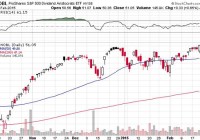
Summary Dividend aristocrats, or blue-chip companies that consistently raise their dividends, tend to outperform the broader market over long periods. Dividend increases are positive predictors of future corporate performance. Dividend aristocrats are unique due to the fact that most companies are unable to increase dividends when facing business cycle downturns and capital market shocks. By offering consistently increasing payouts on a long-term basis, dividend aristocrats act as a hedge against economic uncertainty and provide downside portfolio protection. Dividend aristocrats, or blue-chip companies that consistently raise their dividends , tend to outperform the broader market over long periods. To be considered a dividend aristocrat, a company must typically have raised its dividend for at least 25 consecutive years. Dividend aristocrats are unique due to the fact that most companies are simply unable to continually boost dividend payouts when facing business cycle downturns and capital market shocks. Dividend increases are positive predictors of future corporate performance. By offering consistently increasing payouts on a long-term basis, dividend aristocrats act as a hedge against economic uncertainty and provide downside portfolio protection. The ProShares S&P 500 Dividend Aristocrats ETF (NYSEARCA: NOBL ) tracks the S&P 500 Dividend Aristocrats Index, which only includes companies that (1) are members of the S&P 500 and (2) have increased their dividends for at least 25 consecutive years . If an existing member cuts, or even freezes its dividend, it is dropped from the index. Rebalancing takes place quarterly with an annual reconstitution, taking place during the January rebalance. Only the very best dividend payers are permitted to remain in this elite club. (click to enlarge) What should excite you about NOBL is the fact that the vast majority of companies that comprise this ETF have raised their dividends during some tough times, including the financial crisis of 2008. I don’t know about you, but I find this kind of financial strength and predictability intoxicating, in fact, almost irresistible. The 53 companies in this ETF are equally weighted and they’re diversified across a variety of sectors, such as consumer staples, consumer discretionary, industrials, materials, and many others. Unlike many dividend-oriented ETFs, NOBL does not have the majority of its exposure in financial, telecom or utility stocks, which makes it especially attractive, considering how poorly these stocks perform in a rising interest rate environment. Sector weights are capped at 30% each. NOBL’s current dividend yield is 1.60% and its annual expense ratio is just 35 basis points. An abundance of historical data going back to 2005, when Standard & Poor’s first constructed the S&P 500 Dividend Aristocrats Index, confirms its superior performance over the S&P 500. Over the past 12 months, the S&P 500 Dividend Aristocrats ETF has produced a total return of 17.82% vs. 14.92% for the SPDR S&P 500 Trust ETF (NYSEARCA: SPY ): (click to enlarge) Conclusion The S&P 500 Dividend Aristocrats Index is made up of some of the highest-quality, income-producing stocks available to investors today. Even if you are a risk-averse investor, you may still find NOBL to be an attractive core holding since it’s comprised of companies with stable earnings which produce less volatile returns. NOBL held up better than the S&P 500 during the last bear market. The Aristocrats Index lost -22% during the 2008 financial crisis while the S&P 500 Index fell -37%. NOBL, since late January, is outperforming many “defensive” funds, most of which typically hold utility companies. The Dow Jones Utility Average (DJUA) peaked on January 29th at 652. Now at 600, the DJUA has lost -8% while NOBL has gained +3%. Another potential benefit, because of NOBL’s very small exposure to the Utility sector, would likely be outperformance over most other dividend-paying funds in a rising interest rate environment . You may not be aware of the fact that the 10-year Treasury bond has risen from 1.67% to 2.11% since February 2nd. This move may be a prelude of what’s to come this year. So, bottom line, it may be time to “overweight” NOBL in your investment portfolio. Consider replacing the plain vanilla S&P 500 fund and potentially other “defensive” equity funds in your portfolio with NOBL to enjoy the consistent dividend-paying and defensive attributes of this elite ETF. Additional disclosure: George Kiraly Jr., CFP, MBA is the president of LodeStar Advisory Group, LLC, an independent Registered Investment Adviser located in Short Hills, New Jersey. George Kiraly, LodeStar Advisory Group, and/or its clients may hold positions in the ETFs, mutual funds and/or any investment asset mentioned above. The opinions offered herein are not personalized recommendations to buy, sell or hold securities. Disclosure: The author is long NOBL. (More…) The author wrote this article themselves, and it expresses their own opinions. The author is not receiving compensation for it. The author has no business relationship with any company whose stock is mentioned in this article.

The Backtest Called Buy And Hold

A backtested strategy is one that looks at historical market behavior and cycles, creates a trading rule, and then repeats that rule in a disciplined quantitative way. Buy and Hold is a backtest. All backtested strategies have cycles. “The one size fits all approach of standardized testing is convenient but lazy.” – James Dyson In my travels around the country presenting to and meeting with hundreds of financial advisors and individual investors, I’ve been fortunate to really get a clearer understanding of how people in the business of portfolio management think. Those who have attended my various Chartered Financial Analyst (CFA) and Market Technicians Association (MTA) Chapter presentations on our award winning papers come out of the sessions with a deeper understanding of how Utilities and Treasuries can help with predicting stock market corrections and volatility. The presentation has evolved over the past six months, now hitting on topics related to behavioral finance, false positives, anomaly persistence, and discipline in sticking to an investment strategy beyond the small sample we all live in. Occasionally in my one on one meetings with advisors discussing our research I receive a degree of skepticism about the strategies outlined in those papers. Some simply do not believe in backtesting market behavior, whereby historical price movement is analyzed and a strategy is created to better position for that path of equity or bond returns. Whenever I encounter disbelief in backtested results, I end up asking that person if he or she believes in buy and hold instead of backtested strategies. The answer is always yes. The next question I then ask is a simple one – isn’t buy and hold itself a backtest? Think it through. A backtested strategy is one that looks at historical market behavior and cycles, creates a trading rule, and then repeats that rule in a disciplined quantitative way. The results either show a persistent anomaly exists which can be exploited (momentum, small-cap effect, mean reversion, etc), or the backtest fails. Buy and hold is nothing more than a backtest as well. It is a trading rule with one decision: buy. In addition, one can argue buy and hold is an anomaly throughout time as well given how persistently doing nothing seems to outperform the vast majority of traders and investors who act on noise and not signal. Every backtested strategy, and every anomaly of course has its own cycles. No strategy works all the time. Even in the 2014 Dow Award winning paper on Beta Rotation (click here ), we show that the backtest of a rotation around Utilities (NYSEARCA: XLU ) and the stock market (NYSEARCA: SPY ) underperforms the stock market going back to 1926 around 20% of the time on a rolling 3 year basis. The anomaly documented in that paper which is what we attempt to take advantage of in our alternative and equity mutual funds and separate accounts itself has cycles, just like buy and hold does. This leads us to today. As mentioned in my last week in review writing (click here ) I alluded to the idea that rates may finally rise and the yield curve could steepen, simply as a contrarian trade to an unrelenting trend. That indeed has happened. Our inflation rotation strategy nicely took advantage of the January Treasury strength and held on to it as buy and hold of Treasuries (NYSEARCA: TLT ) so far in 2015 has largely given back those gains. Our beta rotation strategy was among the few US equity approaches positive in January as everything else fell hard, and continues its lead. Why? Because the cycle of volatility and risk management appears to re-asserting itself. Our entire approach is built on proven leading indicators of exactly those types of environments over time. There are some very powerful trades that we believe we have the ability to take advantage of this year as the indicators that drive our models begin to reassert themselves in a normalizing environment. If indeed our cycle is about to return, then the buy and hold backtest will itself have its own period of weakness. The timing of this makes some sense given the likelihood of the Fed raising rates this year. Perhaps the complete love of passive indexing which everyone seems to want now, but no one wanted in March 2009, is due to work less well. Diversification is nothing more than the process of combining low or uncorrelated backtests in a portfolio, attempting over time to smooth out returns and generate wealth. Some backtests in certain periods work better than others. That’s exactly why combining multiple strategies and asset classes in a portfolio over long periods of time tends to be superior to the trade of the moment. To that end, we are at the moment very excited for how intermarket relationships are now finally behaving. Disclosure: The author has no positions in any stocks mentioned, and no plans to initiate any positions within the next 72 hours. (More…) The author wrote this article themselves, and it expresses their own opinions. The author is not receiving compensation for it. The author has no business relationship with any company whose stock is mentioned in this article. Additional disclosure: This writing is for informational purposes only and does not constitute an offer to sell, a solicitation to buy, or a recommendation regarding any securities transaction, or as an offer to provide advisory or other services by Pension Partners, LLC in any jurisdiction in which such offer, solicitation, purchase or sale would be unlawful under the securities laws of such jurisdiction. The information contained in this writing should not be construed as financial or investment advice on any subject matter. Pension Partners, LLC expressly disclaims all liability in respect to actions taken based on any or all of the information on this writing.

My ONEOK Fourth Quarter Earnings Prediction

I’m predicting revenues of $3 billion and an EPS number of $0.35. The average analyst estimate is calling for $3.61 billion in revenue and $0.36 on earnings. The precipitous drop in natural gas prices has me a little worried for the guys and that’s what made me a bit more pessimistic than usual. As earnings season continues we haven’t heard much from the utilities companies but we have an important one reporting early this coming week with Oneok (NYSE: OKE ). Oneok has been moving down precipitously with the price of natural gas and I’ve been buying along the way. I selected this stock for my portfolio of thirty back in August of 2014 because I felt it was one of the better growth stocks in the utilities industry at the time. With that said I’d like to make my prediction for Oneok for the fourth quarter of 2014 that the company will be announcing on February 23, 2015 after the market closes. ONEOK INC INCOME STATEMENT Fiscal year ends in December. USD in millions except per share data. 2014-12 2014-09 2014-06 2014-03 2013-12 2013-09 Revenue $3,005 $3,120 $3,067 $3,163 $4,140 $3,572 Cost of revenue $2,514 $2,583 $2,571 $2,653 $3,488 $3,011 Gross profit $491 $537 $495 $511 $652 $561 Operating expenses Operation and maintenance $148 $153 $153 $127 $236 $209 Depreciation and amortization $73 $75 $72 $67 $108 $94 Other operating expenses $18 $18 $19 $22 $13 $28 Total operating expenses $239 $246 $244 $217 $357 $331 Operating income $252 $291 $251 $294 $295 $230 Interest Expense $87 $86 $89 $95 $90 $82 Other income (expense) -$14 -$53 $29 $21 $35 $39 Income before income taxes $151 $152 $191 $220 $239 $187 Provision for income taxes $33 $38 $42 $15 $55 $39 Net income from continuing operations $118 $114 $149 $205 $184 $148 Net income from discontinuing ops $0 $0 -$8 $2     Other -$46 -$50 -$79 -$113 -$93 -$85 Net income $73 $64 $62 $94 $91 $62 Net income available to common shareholders $73 $64 $62 $94 $91 $62 Earnings per share Basic $0.35 $0.31 $0.29 $0.45 $0.44 $0.30 Diluted $0.35 $0.31 $0.29 $0.45 $0.43 $0.30 Weighted average shares outstanding Basic 208 209 209 209 206 206 Diluted 210 211 211 210 211 210 I have revenue coming in at $3 billion while the average analyst estimate for the quarter is $3.61 billion with a low of $2.88 billion. So I appear to be a bit pessimistic for the quarter on revenue than the average analyst. I guess I am a bit pessimistic because of the drop in natural gas prices over the past three months. On a GAAP basis I’m predicting earnings to be $0.35 while the average estimate is $0.36 with a low of $0.26. I’m actually a penny below estimates because I’m assuming great operating efficiencies to be realized during the quarter. We’ll have to wait and see what happens in a few days, but one thing is for sure, I have been buying the stock pretty much on a weekly basis since November because I believe it has been unjustly punished. The stock began to rebound at the middle of January and I hope that it can continue the move upwards from here on out. Disclaimer: This article is in no way a recommendation to buy or sell any stock mentioned. This article is meant to serve as a journal for myself as to the rationale of why I bought/sold this stock when I look back on it in the future. These are only my personal opinions and you should do your own homework. Only you are responsible for what you trade and happy investing! Disclosure: The author is long OKE. (More…) The author wrote this article themselves, and it expresses their own opinions. The author is not receiving compensation for it (other than from Seeking Alpha). The author has no business relationship with any company whose stock is mentioned in this article. Are you Bullish or Bearish on ? Bullish Bearish Neutral Results for ( ) Thanks for sharing your thoughts. Submit & View Results Skip to results » Share this article with a colleague