Tag Archives: pro

Health Care ETF: XLV No. 2 Select Sector SPDR In 2014

Summary The Health Care exchange-traded fund finished second by return among the nine Select Sector SPDRs in 2014. As it did so, the ETF posted the second best annual percentage gain in its 16-year history. Seasonality analysis indicates the good times may continue rolling in the first quarter. The Health Care Select Sector SPDR ETF (NYSEARCA: XLV ) was ranked No. 2 in 2014 by return among the Select Sector SPDRs that carve the S&P 500 into nine slices. On an adjusted closing daily share price basis, XLV ballooned to $68.38 from $54.64, a swelling of $13.74, or 25.15 percent. As a result, it behaved better than its parent proxy SPDR S&P 500 ETF (NYSEARCA: SPY ) by 11.68 percentage points and worse than its sibling Utilities Select Sector SPDR ETF (NYSEARCA: XLU ) by -3.59 points. (XLV closed at $70.84 Thursday.) XLV ranked No. 4 among the sector SPDRs in the fourth quarter, when it led SPY by 2.50 percentage points and lagged XLU, the Consumer Discretionary Select Sector SPDR ETF (NYSEARCA: XLY ) and the Consumer Staples Select Sector SPDR ETF (NYSEARCA: XLP ) by -5.79, -1.25 and -0.86 points, in that order. However, XLV ranked No. 8 among the sector SPDRs in December, when it performed better than the Technology Select Sector SPDR ETF (NYSEARCA: XLK ) by 0.78 percentage point and worse than SPY by 1.15 points. Overall, XLV posted the second best annual percentage return in its 16-year history: Its record was set in 2013, when it astounded by skyrocketing 41.41 percent. Figure 1: XLV Monthly Change, 2014 Vs. 1999-2013 Mean (click to enlarge) Source: This J.J.’s Risky Business chart is based on analyses of adjusted closing monthly share prices at Yahoo Finance . XLV behaved a lot better in 2014 than it did during its initial 15 full years of existence based on the monthly means calculated by employing data associated with that historical time frame (Figure 1). The same data set shows the average year’s weakest quarter was the third, with a relatively large negative return, and its strongest quarter was the fourth, with an absolutely large positive return. Inconsistent with this pattern, the ETF had excellent gains each and every quarter last year. Figure 2: XLV Monthly Change, 2014 Versus 1999-2013 Median (click to enlarge) Source: This J.J.’s Risky Business chart is based on analyses of adjusted closing monthly share prices at Yahoo Finance. XLV also performed a lot better in 2014 than it did during its initial 15 full years of existence based on the monthly medians calculated by using data associated with that historical time frame (Figure 2). The same data set shows the average year’s weakest quarter was the third, with a relatively small negative return, and its strongest quarter was the fourth, with an absolutely large positive return. Meanwhile, there is a historical statistical tendency for the ETF to do well in Q1. Figure 3: XLV’s Top 10 Holdings and P/E-G Ratios, Jan. 8 (click to enlarge) Note: The XLV holding-weight-by-percentage scale is on the left (green), and the company price/earnings-to-growth ratio scale is on the right (red). Source: This J.J.’s Risky Business chart is based on data at the XLV microsite and FinViz.com (both current as of Jan. 8). The health-care sector in general and XLV in particular progressed from a sweet spot to a sweeter spot to an even sweeter spot between June 2012 and October 2014. As discussed elsewhere previously, it appears XLV’s share price was driven by these key factors: Obamacare: The Affordable Care Act’s constitutionality was established in the landmark National Federation of Independent Business v. Sebelius decision handed down by the U.S. Supreme Court June 28, 2012, as documented by the court. Quantitative Easing: The Federal Open Market Committee announced the launch of the U.S. Federal Reserve’s latest QE program Sept. 13 the same year, as noted in “SPY, MDY And IJR At The Fed’s QE3+ Market Top.” Sector Rotation: A signal for such rotation, the beginning of the end of the Fed’s QE3+ program was announced by the FOMC Dec. 18, 2012, as pointed out in “Building A Martin Zweig-Like Fed Indicator Integrating Innovations Of The 21st Century.” The FOMC announced the completion of asset purchases under the QE3+ program last Oct. 29, so QE will not be a key driver of XLV in the first quarter. However, the other two factors may continue to be in play. A big risk to XLV and its constituent companies is the Obamacare-related King v. Burwell case currently before the U.S. Supreme Court. The justices most likely will hear arguments in March, according to the SCOTUSblog . They are expected to deliver a decision by July, with the ruling constituting a binary event for the Health Care ETF, as follows: If the decision is favorable to Obamacare, then its effect on XLV’s share price may be relatively small and short lasting. One analog might be the move in SPY between Dec. 17 and Dec. 29, associated with the FOMC statement on the former date. If the ruling is unfavorable to Obamacare, then its impact on XLV’s share price may be absolutely large and long lasting. One analog might be the move in the Energy Select Sector SPDR ETF (NYSEARCA: XLE ) from June 20 to the present, associated with the crude oil price attaining either a long term or a cycle peak on the former date. Incredibly, the health-care sector’s and XLV’s awesome performances the past couple of years have not resulted in too many absurd valuations, as indicated by the above chart (Figure 3) and numbers reported by S&P Senior Index Analyst Howard Silverblatt, Dec. 31. At that time, Silverblatt indicated the P/E-G ratio of the S&P 500 healthcare sector was 1.38, which may look a little dear to growth and value folks like me but a lot cheap to normal people. Disclaimer: The opinions expressed herein by the author do not constitute an investment recommendation, and they are unsuitable for employment in the making of investment decisions. The opinions expressed herein address only certain aspects of potential investment in any securities and cannot substitute for comprehensive investment analysis. The opinions expressed herein are based on an incomplete set of information, illustrative in nature, and limited in scope. In addition, the opinions expressed herein reflect the author’s best judgment as of the date of publication, and they are subject to change without notice.
UNG Remains Around $15 – Will It Recover?

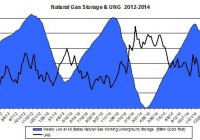
Summary The natural gas storage is projected to be lower than normal by the end of March. The short-term weather outlook is uncertain, but suggests warmer-than-normal weather, which could bring UNG back down. The extraction from storage is expected to be lower than normal this week. The price of The United States Natural Gas ETF (NYSEARCA: UNG ) ended the year with another tumble, as it dipped below $15 at one point. Currently, the price is around $15 – the lowest level UNG reached in the past couple of years. The high uncertainty around the weather forecasts for January didn’t stop investors from pulling out of UNG. The hotter-than-normal weather and slow rise in production maintains UNG at its current low level. Keep in mind, however, the natural gas storage is still low for the season, and is likely to remain low by the end of March. Storage extractions remain slow The last few storage reports showed that the extractions were very low for this time of the year. We could start seeing a trend developing in recent weeks. The chart below presents the changes in the natural gas underground storage and the price of UNG in the past couple of years. (Data Source: EIA, Google Finance) As you can see, the slope in storage this winter seems less steep than in previous winters. This could indicate that the natural gas market doesn’t heat up as it did last winter. The natural gas futures markets also show a trend – the once-high Backwardation for the four-month contracts recorded at the end of November has almost entirely dissipated. Currently, the future markets are mostly still in Backwardation, however, the gaps are very small. (Data Source: EIA) So the markets still expect a modest gain, at best, in the price of natural gas in the near term. After all, the EIA still expects the spot price to average at $4 during January. Long-time investors in natural gas know that this market view could change very promptly if the weather conditions change or any other unexpected event were to come to fruition. Looking forward, the EIA projects inventories will reach to 1,431 Bcf by the end of the extraction season (the end of March), which is still 225 Bcf below the 5-year average. Some analysts still expect the storage levels will rise to 4,000 Bcf by the end of the year – I remain skeptical about this outlook. Next week’s extraction from storage is likely to be lower than normal again, because last week’s deviation from normal temperatures was, on average, 7.12. This measurement tends to have a strong positive correlation (0.62) with the changes in the gap between the 5-year average extraction and current extraction. Another issue to consider is the ongoing growing natural gas production – current estimates are for a 3.1% gain in output in 2015, year over year. This growth rate will be slower than in 2014, but will still reduce the pressure on UNG prices. The rise in production continues, albeit the number of rigs remains low: Based on the recent update from Baker Hughes , the natural gas rotary rig count rose by 2 rigs to reach 340 rigs – nearly 9% below the levels recorded back in 2013. The drop in natural gas prices also had an adverse impact on natural gas producers such as Chesapeake Energy (NYSE: CHK ) – the company’s stock dropped by 11% during the past couple of months. For Chesapeake Energy, the plunge in oil prices also took its toll on its stock in recent weeks. Over the next two weeks, temperatures are expected to be above normal in the west and normal in other parts of the U.S., including the Northeast and the Midwest. Based on the National Oceanic and Atmospheric Administration , January’s weather remains highly uncertain, however. By the middle of January, the NOAA projects higher-than-normal temperatures in many parts of the U.S., including the West and the Northeast. NOAA also estimates below-normal temperatures in some regions, such as central and southern Great Plains. The hotter-than-normal weather and the slow extraction from storage are keeping UNG down. But the natural gas market won’t need much to drive UNG back up, including sharp changes in weather, a slowdown in output or a rise in the pace of depletion. For more see: ” Is Chesapeake Regaining Our Confidence? ”

PPL Corp. To Reward Investors In 2015

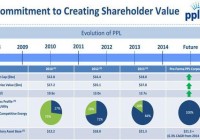
Summary A low treasury yield environment and efforts to reduce competitive energy operations will support PPL’s performance. Efforts to reduce competitive energy operations will positively affect bottom-line numbers and cash flows. PPL is likely to give full-year 2015 earnings guidance during its Q4 2014 earnings call. Utility stocks’ high dividend yields make them attractive investment options for dividend-seeking investors. The utility sector, including PPL Corp. (NYSE: PPL ), performed better than the S&P 500 in 2014. The outperformance of the utility sector was mainly due to the low treasury yield environment. In 2015, I believe PPL will deliver a healthy financial performance due to the ongoing low treasury yield environment and efforts made by the company to lower its competitive energy operations, which will bode well for its EPS. The company has been aggressively working to sell and reduce competitive energy operations, as the competitive energy operations remain challenging. Also, the company offers a healthy dividend yield of 4.3%, supported by its cash flows, which makes it a good investment option for dividend-seeking investors. All Set for 2015 In 2014, the utility sector performed better than the S&P 500. The better performance can be mainly attributed to the low treasury yield environment. In 2015, the utility sector will continue to deliver a healthy performance due to the low yield environment and efforts undertaken by utility companies, including PPL, to reduce their competitive energy operations. The following table shows the performance of the S&P 500, the utility sector ETF (NYSEARCA: XLU ) and PPL. S&P 500 XLU PPL 2014 Performance 12% 25% 22% Source: Bloomberg.com. Due to the weak commodity prices and capacity revenues, competitive energy operations of U.S. utility companies have remained challenging in recent years. In the current environment, utility companies are choosing to reduce their competitive energy operations and making efforts to grow regulated operations. PPL has also been expanding its regulated operations and reducing competitive energy operations, which will positively affect its EPS. The company opted to spin off its competitive energy business operations. The spin-off is expected to be completed in the first half of 2015. The spin-off will allow PPL to focus and expand its regulated business operations. The company is anticipating cost savings of $75 million from the transaction. Also, PPL has finalized a deal to sell its Montana hydro assets to NorthWestern Energy for $0.9 billion . PPL is expected to use cash from the sale to invest in the expansion of its regulated operations. Separately, PPL is taking measures to expand its regulated transmission operations. The company has announced its plans to build a transmission line, and is expected to make capital expenditures of approximately $5 billion over the life of the project. The company has planned to start building the line in 2016-17, and it should be in service by 2023-25. The capital expenditure PPL is planning to make will positively affect its top- and bottom-line growth in the long term. The company will have 100% exposure to regulated business operations in the coming years, which will positively affect its financial performance. The chart below shows that the company has been making consistent and aggressive efforts to reduce its competitive energy operations, and PPL’s regulatory rate base is expected to grow by 6.3% on average from 2014-18. (click to enlarge) Source: Company reports. As the company is expanding its regulated business and is in the planning phase, it will give its 2015 EPS guidance range in the Q4 2015 earnings call next month. Also, the company is likely to update its long-term EPS guidance, which I believe will be in a range of 4%-6%. Along with the earnings growth potential, PPL offers a safe dividend yield of 4.3% , backed by its cash flows. Its attractive dividend yield makes it a good investment for dividend-seeking investors. The company has consistently increased dividends over the years. In the coming years, dividends offered by the company will grow as an increase in its regulated operations will portend well for its bottom-line numbers and cash flows. The following chart shows the dividend per share, dividend payout ratio and dividend coverage ratio for PPL from 2012-2014. (Note * Dividend coverage ratio = operating cash flow/annual dividends, and 2014 figures below are based on estimates). Dividend Per Share ($) Dividend Payout Ratio Dividend Coverage* 2012 $1.44 60% 3.3x 2013 $1.47 60% 3.25x 2014* $1.49 64% 3.2x Source: Company reports and calculations. Conclusion PPL is set to deliver a healthy performance in 2015. The low treasury yield environment and efforts to reduce competitive energy operations will support PPL’s performance in 2015. The company’s efforts to reduce competitive energy operations will positively affect its bottom-line numbers and cash flows. Also, the company is likely to give its full-year 2015 earnings guidance during the Q4 2014 earnings call, which will improve earnings visibility and bode well for the stock price. Also, the stock offers a safe dividend yield of 4.3%. Due to the aforementioned factors, I am bullish on PPL.