Tag Archives: pro

GDF Suez Shares Should Get Re-Rated

GDF Suez is uniquely positioned to capture the benefits of changing energy markets. Its vertical integration mitigates against the fallout from commodities, especially in LNG. The shares should see a re-rating as management delivers growth ahead of the sector. One of my core names for exposure to the mega trends of energy. The positioning of GDF Suez in global energy across various value chains is unique. Management has highlighted an area of strength and taken the next strategic step in the current energy cycle: Return to growth. That should see a positive reaction and lead to a re-rating of the shares. GDF Suez has highlighted its areas of strength for growth , Asia, Middle East and Africa. The company is building these as core growth regions. That makes sense given its already strong position in those regions and above average growth. Looking through current weakness, energy demand growth will likely exceed 7% CAGR to the end of the decade (source: IEA). Management also has proactively moved to the post deleveraging phase by committing to new growth. The company targets growth capex of Eur6.5-7.5bn for 2014-18. It is looking to dedicate about 20-30% of growth capex spend to Asia, Africa, and the Middle East. With that, GDF Suez stands out, not only amongst European utilities who are undergoing slow and painful transitions in order to identify new growth opportunities. It also stacks up very well against the global oil and gas sector that is struggling to deliver reserve growth whilst cash flows are strained by weak commodities. Asia, Africa, the Middle East are regions of strong new growth so it makes sense that they are at the core for GDF Suez. IPP, LNG and energy services are the key growth businesses, in line with its tested strategy. The company’s target regions account for over 80% of global energy growth over the next 20 years. The latest guidance implies power capacity growth in the above target regions of 6% CAGR, 2P reserves growth of 8.8% CAGR and energy services revenue growth of 7.9% CAGR to 2020 on the target areas. The regions currently account for c 7% of Ebitda. Visibility on growth is very good. The pipeline provides for 30% power capacity growth to 2020. I would only consider capacity under construction at this stage, which is just short of 1GW. The IPP model is tried and tested and merchant risk very low. GDF Suez has a very good track record of securing PPA’s at good conditions and in strong local partnerships. I expect that and the strong execution capability to continue to as the basic earnings driver. E&P reserves growth of 5-7% is at the high end of the sector, and the gas focus in line with the broader sector. But I see GDF Suez better hedged than the average of the E&P sector, because of its vertical presence all the way through the chain. With that, I think it stands a better chance of profitable reserves conversion to earnings growth to 2020. LNG is a risky sector at this moment. Asian demand weakness and weak oil prices are leading to price falls. Over-capacity is creeping into the market. New capacity build risks not meeting its hurdle rates. Suez currently has a feasibility study under way for an Indonesian LNG terminal. There I see risk of delay. The same goes for the floating LNG terminal project in India. I also see risk of lower utilization of the US terminals. The US Cameron liquefaction terminal may escape the heart of the storm, it won’t come to market before 2018. But the company’s vertically globally integrated business provides for mitigation. Pricing risk for the Japan and Taiwan LNG contracts is in my view relatively low as they were concluded at very tight pricing in the first place. Eventually, gas demand in Asia will recover. On average, the IEA estimates demand growth of 4%pa to 2035 with corresponding infrastructure investment requirement. The industry estimates over USD 100bn of liquefaction and storage capex requirement alone. And for that, the company’s positioning across upstream, infrastructure and power generation is second to none. The changing structure of energy markets with distributed generation, renewables and gas/power convergence are all playing to the company’s strength. The energy services business will be a major beneficiary and additionally deliver strong synergies to these new growth businesses. It will also be a growth driver in its own right in China and a door opener for other business development. GDF Suez has a unique advantage through the combination of its IPP, global gas and energy services business. That is in my view the true attraction of the company. Sentiment will likely be cautious on commodities, but should increasingly return to reflect the early move and strong position on long term growth. This is one of my core names for exposure on the global energy mega trends. The shares trade on a 20% discount to the European utilities sector and offer a well supported 5% yield. Editor’s Note: This article discusses one or more securities that do not trade on a major exchange. Please be aware of the risks associated with these stocks.

Atlanta Fed Lockhart Ambiguity And GLD

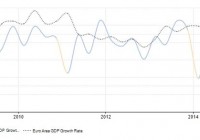
Summary Lockhart will be a new voting FOMC member this year and his first speech of 2015 starts off with a bullish note which justifies rates normalization. Strategic ambiguity of rate hikes in the middle of the year and Lockhart worries about mixed signals in first half of 2015. On mixed reading and to be on the safe side, Lockhart will advocate a later FOMC rate hike and downplays the importance of actual rate hikes. Lockhart concedes that the FOMC Majority view of liftoff date might be earlier than his preference and is willing to be different. GLD short position should be pared down on increased uncertainty over the outlook on FOMC tendency and supported by recent GLD price direction. Changing FOMC Landscape The shortcut in investment is to ask for an answer as if these answers are pre-determined at the back of the textbook. This is the path towards mediocre investment results at best, losing investment results at worst. The investment landscape is fluid and ever changing. The best example would be the Federal Open Market Committee (FOMC) which would be deciding on the first liftoff of Federal Funds Rates and the market consensus would be in the middle of 2015. The FOMC has emphasized again and again that the exact date of liftoff are data dependent. The general market agreement is that the recovery since 2009 to 2014 has been excellent in the United States and the data dependent refers to U.S. economic data for the first half of 2015 given the soft global growth conditions. Another change for the start of 2015 is the changing voting members of the FOMC itself. The regional presidents of Dallas, Minneapolis, Cleveland and Philadelphia will make way for the regional presidents of Chicago, Richmond, Atlanta and San Francisco. Lockhart Bullishness and Support of Rates Normalization In this article, we will focus on the recent speech of Atlanta President Dennis Lockhart given to the Rotary Club of Atlanta on 12 January 2015. As he will have a deciding vote in the FOMC this year, this speech adds on a new significance and his opinions matter more now. His opinions are not easily discernible from his speech and it contains both hawkish and dovish elements in it. Both sides will be presented in this article and I will leave it to readers to decide for themselves before I present my opinion and recommended actions. It has been said that everyone is entitled to their own opinions but not to their own facts. At the beginning of this speech, Lockhart mentioned the strong recovery of the U.S. from 2009 to 2014: As I look back on 2014 and look ahead to 2015, I can comfortably assert that, more and more, the U.S. economy is hitting on all cylinders. The recovery that began in 2009 is well-advanced, and we are getting closer to a point where the Fed’s Federal Open Market Committee (FOMC), the body that formulates monetary policy, can begin a process of normalizing the interest-rate environment. That process will begin with so-called “liftoff”-that is, the first increase in the policy rate. (click to enlarge) Lockhart’s assessment can be backed up from the chart above. The United States GDP growth is indicated by the solid line and the left hand side growth scale while Europe is represented by the dotted line and the right hand side growth scale. The U.S. growth is strong by itself as seen from the -6% recovery in the depth of the crisis to 5% for the third quarter of 2015. The full year growth for 2014 is expected to come in at more than 4%. Europe in contrast dropped by almost -3% and its growth is still below 1% in 2014 after 5 years. Strategic Ambiguity of Actual Rate Hikes While this forms the basis for the normalization of interest rates by the Fed, we are still unsure when the actual liftoff date will be and on the pace of the increase of interest rates. The pace refers to whether the next increase will be the normal 25 basis points or will the FOMC surprise the market with a 50 basis points increase. This is not addressed in Lockhart speech but interested readers can refer to my 2 part articles, here and here . Lockhart speech does give us a time frame for his expected next rate hike which he deploys the use of strategic ambiguity purposely in the quote below: If that is indeed the case, I believe the first action to raise interest rates will in all likelihood be justified by the middle of the year. The phrase “middle of the year” is admittedly not very precise. That’s purposeful on my part. This would represent the mid point of his desired window of the next rate hike from the 16-17 June 2015 to 28-29 July 2015 meetings. However, Lockhart has made it clear that this is not entirely clear as it would depend greatly on the ‘noise’ or mixed reading in the market. He has made it clear that even though he sees that the market has made a strong recovery at the very start of the speech, he is not keen to jump start the liftoff unless he has a clear picture of the recovery in the first half of 2015. This would mean that the economic data for the first 3 months of 2015 will be crucial to Lockhart given the time lag of economic report which can be from 1 to 2 months. Lockhart’s Slightly Dovish Tendencies If the economic reading remains to be mixed or ‘noisy’ as he calls it, then he will be tempted to delay his vote until the third quarter of 2015 or further. Indeed he downplayed the importance of the actual month of the liftoff taking the long term view that over the long term, the actual date of the liftoff wouldn’t matter. If Lockhart started his speech on a bullish note cheering the recovery of the economy ever since 2009, he ended with a slightly dovish note, he noted that there are economic fundamentals that are not yet resolved despite the economy recovery. The economic recovery did not fully address the issues of long term fiscal challenges, the strength and prospects of the workforce, skill, capacity and health of the workforce (which may explain the falling wage pressures despite the drop in unemployment; more people are finding work in low skill and lowly paid jobs), infrastructure quality and innovation funding. While Lockhart acknowledge that these challenges are beyond the reach of monetary policy, monetary policy has a role to play to facilitate the recovery of these economic fundamentals. To me, this is the most dovish aspect of Lockhart’s speech. Of course, these economic fundamentals do not have direct connection with the Fed’s mandates of price stability, maximum employment and financial stability. The primary gauge for price stability is the inflation figures, unemployment rate for maximum employment and the lack of bad news for financial stability. Of course, the Fed can use wage pressures to force up inflation and we will be in for a long period of accommodation but this will put a strain on its financial stability mandate. In its recent December 2014 press conference, the Fed has made it clear that they are willing to wait until 2017 to reach their 2% inflation target. Hence it would appear that even when the Fed is urging patience in its next rate hike, it is also showing patience in achieving its inflation target. FOMC Majority View This is repeated again in Lockhart speech in a slightly different form: The key liftoff decision criteria ought to be closely linked to the FOMC’s two principal policy objectives-maximum employment and low and stable inflation. In my view, the biggest factor influencing the actual timing of a liftoff decision should be the Committee’s confidence that these objectives will be achieved in an acceptable timeframe and, especially, that inflation will move at deliberate speed toward the target of 2 percent per annum. Lockhart is aware that his view on the timing of the liftoff may be different from the majority view of the FOMC. Influential members of the FOMC such as FOMC Vice Chair William Dudley and Fed Vice Chair and FOMC Member Stanley Fischer had indicated last month of their more bullish outlook for the economy. Conclusion and Investment Action My conclusion is that Lockhart is signaling a slightly less bullish tendency to hike rates overall despite his bullish opening statements to his speech. The first quarter of 2015 will be crucial to his decision to raise rates in the June and July 2015 FOMC meetings. We saw a record of 3 dissents in the December 2014 meeting by the regional presidents of Dallas (Fisher) and Philadelphia (Plosser) in the bullish camp and Minneapolis (Kocherlakota) in the dovish camp. All 3 regional presidents will be rotated out of the FOMC this year and will lose their vote. The upcoming FOMC leanings are still unknown and we will know soon on 28 January 2015. Given the uncertainty of the FOMC leanings and this slightly dovish but unclear tendency of this new FOMC voter, one should stay on the sidelines until there is clarity from the FOMC meeting later this month. The SPDR Gold Trust ETF (NYSEARCA: GLD ) is heavily influenced by the FOMC meeting as a gauge of the direction of further inflation trends. GLD is used as a inflation hedge and it will likely appreciate when there is threat of higher inflation. Europe is in the edge of deflation and it remains to be seen that Japan will be successful in fighting deflation. The only major source of inflation would come from the United States and the Fed has indicated its willingness to endure below target inflation until 2017. The case for a bearish GLD comes from the tightening of the Fed rates which will increase investment cost and reduce inflation. Although we know that the FOMC will raise rates sooner or later, it is the timing that will affect the short term price action of GLD. Although my view slightly biased towards earlier, this speech has pushed it slightly to later. Hence the more prudent approach will be to wait and watch the next FOMC by the sidelines for more clarity before deciding our next move. (click to enlarge) We can see the market uncertainty in the price of GLD as seen in the chart above. We have seen nascent strength in GLD in the past 6 trading days. This could represent the market pricing in the possibility of a later rate hike than the June 2015 rate hike with the possibility of third or fourth quarter rate hike. This could also mean that GLD is ranging in uncertainty as it awaits new trading signals. GLD remains the best instrument to trade the price of gold despite critics disillusion with GLD by pointing out on the red flags in its prospectus with regards to audit issues which has been repeatedly mentioned in the comments page in my past articles. GLD has a market capitalization of $28.08 billion and last daily transaction volume of 8.3 million. This is the most liquid equity on the New York Stock Exchange that you can find for trading fluctuations in gold prices. For investors who have accumulated short positions on GLD from my previous opinion pieces, this is the time to pare them down until further clarity can be found at the end of the month.

If I Could Invest In Only One Fund . . .

Which fund is my #1 pick out of 7,000 mutual funds? Attributes of my top fund: low fee, low turnover, low risk of strategy obsolescence. Value beats Growth; Small Cap beats Large Cap. If I could invest in only a single fund . . . . . . and I had to invest all of my equity investment dollars in this fund . . . and I could only own this single fund for the rest of my life . . . which fund would I pick? Given that there are roughly 7,000 mutual funds available in the U.S. today, the above scenario of having to invest in only a single fund is admittedly not realistic. However, if you can come up with a good answer for it then you have probably found yourself a fund that deserves a significant share of your investment dollars. For me, I am looking for a fund that has a combination of the following attributes: 1. A time-tested, consistent and successful investment strategy based on empirical evidence of what actually works in investing. The strategy must also have low risk of obsolescence over time. (Thus, it must be a numbers-driven strategy). 2. Broad diversification – I can’t have the risk of too much money in a single stock 3. Low fees – I want a very cheap fund that is an excellent business proposition. 4. Tax efficiency – I need a fund that has very low turnover (trading)-and consequently high tax efficiency and very low drag on returns. Here is my personal investment profile: I am a long-term oriented and risk tolerant investor looking to maximize wealth over decades, not in any one year. Given my investment objective and my fairly high tolerance for risk, the fund I would choose for myself out of the 7,000 possibilities if I were able to invest in only one fund for the rest of my life is the Dimensional Small Cap Value Portfolio (MUTF: DFSVX ). Why does this particular fund top my list? There are many reasons, but here are my biggest 5: 1. Value Beats Growth The first reason is the fund’s value focus. Investors everywhere should understand a basic historical fact of stock markets: Value stocks-stocks that are cheap by financial measures-have outperformed growth stocks, their more expensive, glamorous and news-worthy cousins, by a wide margin. This is true both in the U.S. and in overseas stock markets. Does value outperform growth every year? No. Is there any guarantee that value will outperform growth in the future? No. But that’s a risk I’ll happily take. The data are compelling. And this Dimensional fund takes value seriously: the average price-to-book value ratio of its individual holdings is a mere 1.16x. It’s chock full of cheap stocks. 2. Small-Cap Beats Large-Cap The second reason is the fund’s small-cap focus. Here’s another thing all investors should know: it is a matter of record that historically small company stocks have delivered better investment performance than large company stocks, albeit with more volatility. For me, the extra volatility is ok. Remember, I’m a long-term investor looking to maximize my wealth over the coming decades-not in any one year. Any big swoons will just be opportunities for me to increase my small-cap value holdings. And as with the value versus growth comparison, the phenomenon of small-caps outperforming large-caps is true in both U.S. and overseas stock markets. Do small-caps outperform large-caps every year? No. (In fact, U.S. small-caps lagged large-caps in 2014-after beating them handily in 2013. Does the fact that large-caps beat small caps in 2014 do anything to diminish my confidence in the long-term outlook for small caps? No.) 3. Broad Diversification The Dimensional Small Cap Value Portfolio is also very well diversified-much more so than the vast majority of small-cap funds. The fund currently holds more than 1,200 stocks, thereby greatly reducing the possibility that the performance of any single stock will dramatically affect overall fund performance. It is important to understand that the fund’s objective is to efficiently capture the returns of the world’s top performing equity segment-small-cap value stocks-not hit a home run on any single stock. The fund’s numerous underlying holdings enable it to do just that. 4. Consistency of Strategy and Low Risk of Obsolescence If I’m going to be locked into an investment for the next 50 years (I hope), I want it to have a consistent, reliable, data-driven strategy that does not depend on the investment acumen of any human (or group of humans). My chosen fund is managed according to quantitative factors. Stocks enter or exit the portfolio based on their quantitative value or size characteristics, not because of a judgment someone had to make. It is of course true that humans created Dimensional’s investing algorithms, but now the strategy has 30-plus years of successful performance history under its belt and requires minimal tinkering (in my opinion). 5. Very Low Costs It is critical for investors to mind the costs of their funds. The range of expenses among funds is very wide and fees are often disclosed only deep in mind-numbing fund prospectuses. The net expense ratio of my chosen fund is a mere 0.52%, however, which is a significant discount to the average fund. In addition, my chosen fund has annual turnover of only 14%. Its light touch on trading keeps a lid on costs and makes the fund more tax-efficient as well. Portfolio turnover (buying and selling) creates costs for a fund but such trading costs are not disclosed explicitly and cannot be predicted accurately. Many mutual fund managers turn their funds over in excess of 100% per year (i.e. only hold the average stock for one year), and in the process rack up huge costs that are passed through to the underlying investors. In some cases investors may be squandering 2%-3% per year of performance right out of the gate simply by owning a high-turnover fund. To sum it up, Dimensional Small Cap Value Portfolio has the right combination of attributes that make it my top pick out of 7,000 funds if I were required to put all of my money into a single fund for the rest of my life. Investors considering taking a similar approach to me but with ETFs instead of mutual funds may want to check out the iShares Russell 2000 Value ETF (NYSEARCA: IWN ) or the iShares S&P Small Cap 600 Value ETF (NYSEARCA: IJS ). For an option that has a more large-cap focus but useful rebalancing methodology, the Guggenheim S&P 500 Equal Weight ETF (NYSEARCA: RSP ) might be worth some consideration. Investors should take note that the average market cap of the holdings in each of these funds is substantially higher than that of the holdings of the DFA Small Cap Value Portfolio, however. To learn more about Dimensional Funds and how we employ them in client portfolios, please visit us at www.orionportfolios.com .