Tag Archives: nreum

3 Funds To Buy As Consumer Sector Trends Up

The consumer sector is currently experiencing a robust run. Among the S&P 500 industry groups, the Consumer Discretionary (NYSEARCA: XLY ) has the best gains in the past 6 months and the second best gains year to date. The consumer sector’s strong performance comes at a time when many others are finding it tough to fight market volatility. For example, Utilities, Energy and Industrials are down for the year so far. The consumer sector is having a good run on the back of moderate economic recovery, better job prospects, improved business and renewed optimism. Rising wages and cheaper fuel are the other positives. Commodity costs have in many cases stabilized. Consumers are also expecting lower inflation primarily due to lower gas prices. A decline in commodity prices may improve profit margins for certain staples companies. To help the momentum, recent consumer data including retail sales and consumer sentiment have been very encouraging. Amid the positives, let’s look into some mutual funds that are focused on the retail or consumer sector. Consumer Sentiment Improves The University of Michigan and Thomson Reuters’ preliminary reading of consumer sentiment was at 94.6 in June. This was more than the consensus forecast of an increase to 91.2 as well last month’s figure of 90.7. This encouraging report comes despite an increase in petroleum prices. Higher petroleum prices in turn fueled an increase in PPI for the month of May. PPI gained 0.5% in May, more than the consensus estimate of an increase by 0.4%. This was the highest increase recorded in more than 36 months. Retail Sales, Consumer Credit Rise Retail sales increased 1.2% in May from the previous month to $444.9 billion. This rate of growth was significantly higher than April’s revised gain of 0.2%. The auto sector, which accounts for around 20% of retail sales, was one of the main catalysts behind the surge. May’s figure increased 2.7% from the year-ago level. Meanwhile, March’s gain was revised upward to 1.5%, marking the highest monthly gain in almost five years. Sales in the auto sector also played an important role in boosting sales in May. Sales at motor vehicle & parts dealers rose 2% from the previous month, compared to 0.7% rise in April. It surged 8.2% from year-ago level. The auto industry witnessed its best May ever in terms of light vehicle sales. Strong demand for light trucks along with crossovers and SUVs boosted auto sales in May. Low level of oil prices and a low-rate environment helped the auto sector to register strong gains. Additionally, another report revealed consumer credit increased at a seasonally adjusted annual rate of 7.25% in April. Non-revolving credit increased at an annual rate of 5.75%. Revolving credit also increased at an annual rate of 11.5%. 3 Mutual Funds to Buy Below we present 4 mutual funds focused on retail or consumer sector that either a Zacks Mutual Fund Rank #1 (Strong Buy) or Zacks Mutual Fund Rank #2 (Buy) as we expect the funds to outperform its peers in the future. Remember, the goal of the Zacks Mutual Fund Rank is to guide investors to identify potential winners and losers. Unlike most of the fund-rating systems, the Zacks Mutual Fund Rank is not just focused on past performance, but the likely future success of the fund. They also have encouraging year-to-date and 3 and 5-year annualized returns. The minimum initial investment is within $5000 and they carry no sales load. The Fidelity Select Retailing Portfolio (MUTF: FSRPX ) invests a minimum of 80% of its assets in securities of firms involved in merchandising finished goods and services to consumers. FSRPX currently carries a Zacks Mutual Fund Rank #1 and has year-to-date and 1-year gains of 6.6% and 23.7%. The 3 and 5 year annualized gains stand at 22.5% and 21.1%. The annual expense ratio of 0.81% is lower than category average of 1.48%. The Rydex Retailing Fund (MUTF: RYRAX ) seeks growth of capital. RYRAX invests almost all its assets in equities of US-traded retail companies. Apart from investing in small to mid-cap retailing companies, RYRAX may also buy ADRs to get exposure to foreign retailers. RYRAX may also invest in derivatives and US government securities. RYRAX currently carries a Zacks Mutual Fund Rank #2 and has year-to-date and 1-year gains of 6% and 17.9%. The 3 and 5 year annualized gains stand at 18% and 17.7%. The annual expense ratio of 1.83% is however higher than category average of 1.48%. The Fidelity Select Consumer Discretionary Portfolio ‘s (MUTF: FSCPX ) objective is capital appreciation. FSCPX normally invests at least 80% of its assets in companies mostly involved in the manufacture and distribution of consumer discretionary products and services. FSCPX currently carries a Zacks Mutual Fund Rank #1 and has a year-to-date and 1-year gains of 5.3% and 15.3%. The 3 and 5 year annualized gains stand at 20.5% and 18.2%. The annual expense ratio of 0.79% is lower than category average of 1.48%. Separately, investors may also focus on Putnam Global Consumer Fund A (MUTF: PGCOX ) and ICON Consumer Staples Fund A (MUTF: ICRAX ), both carrying a Zacks Mutual Fund Rank #3 (Hold). PGCOX has gained 8.8% over the last one year and its 3 and 5 year annualized gains stand at 17.4% and 15.2%. ICRAX’s 1-year gain is 11.5%, whereas the 3 and 5 year annualized gains stand at 12.8% and 7.4%. Originally published on Zacks.com
GTAA Is For Real (Part 3): Why VBINX Is The Wrong Benchmark

To judge a strategy, it is critically important to identify an appropriate benchmark. For several reasons, comparing tactical strategies to “balanced portfolios” like VBINX is inappropriate. The Global Market Portfolio meets all the criteria for a proper benchmark, making it is the most appropriate baseline for assessing GTAA strategies. At our research blog, we recently posted an article discussing how many noteworthy investment commentators either misunderstand or misconstrue the salient qualities of Tactical Asset Allocation strategies. We encourage you to read the entire piece, but today’s post will be limited to the topic of benchmarking. One of the most common failings of the investment industry is the prevalence of poorly specified benchmarks. This is of critical importance because it’s easy for a knowledgeable but disingenuous professional to manipulate the facts in order to make any point they want. Want a simple way to boost results? Choose an easy benchmark for comparison. Want to dismiss performance? Choose a challenging benchmark. Recall that at root, a well specified benchmark should meet the following criteria: It is passive; It is investible, and; It reflects the investing opportunity set of the manager. While all of these criteria are individually valid, they are unified by a simple and profound benchmarking philosophy: The best benchmark for a tactical manager is the one they would own if everyone were forced to invest all their assets in a single, passive portfolio. Axiomatically, this portfolio would represent the average positions of all market participants, and would hold each asset in a percentage equal to its proportion of total market capitalization. This is not a new concept; U.S. large cap equity managers are typically benchmarked against a market cap weighted index of large-cap U.S. stocks. U.S. Investment Grade bond managers are benchmarked against a market cap weighted index of U.S. listed investment grade bonds. Cap weighted indexes are common and intuitive when they are constructed within a major asset class. But it is not immediately intuitive how to extend the concept to multi-asset universes like those employed by GTAA managers. As a result, GTAA strategy benchmarks often seriously misrepresent the risks and opportunities of the underlying strategies. Investment commentators who dismiss TAA often compare the results of GTAA strategies to a U.S. 60/40 balanced fund like the Vanguard Balanced Index Fund (MUTF: VBINX ). And this benchmark does have one thing going for it, especially if a commentator’s goal is to malign GTAA strategies: it is a very tough benchmark to beat over the past one, three and five years – perhaps the toughest in the world in USD terms. Unfortunately, it’s hard to see how this portfolio represents an appropriate bogey for GTAA strategies over the long-term. For one, this portfolio is insulated from global currency effects, which have been especially pronounced in the past few years with global QE programs in effect. Second, it ignores non-U.S. equity beta; while a focus on U.S. equities at the expense of international stocks has been a lucky bet for the past few years, it ignores the broader scope of GTAA strategies. Also, since the goal of GTAA strategies is to harvest premia from as many liquid global sources as possible, the strategies often incorporate alternative investments, like REIT and commodity ETFs, into their investible universe. These are not represented in a U.S. balanced fund benchmark. Fortunately, some analysts take a more enlightened view. In their quarterly ” ETF Managed Portfolios Landscape Summary ” report, Morningstar proposes a much more globally diversified benchmark. The report’s Global All Asset benchmark, copied below, is composed of 55% global stocks, presumably distributed geographically by market cap; 35% global bonds, split evenly between U.S. and international; and 10% commodities. Source: Morningstar Clearly the folks at Morningstar are trying to be more representative of the GTAA space, and their mix is certainly in the right ballpark. But it is also still rather arbitrary – how did they arrive at their weights? Have they weighted toward historical GTAA holdings? If so, is there any guarantee that historical holdings will be representative of future holdings? These are dynamic strategies after all. Do commodities deserve a 10% strategic weighting or is this informed by recency bias? In addition, the Morningstar benchmark is over 80% weighted to U.S. dollars. Does this represent a neutral currency policy? We stated above that it isn’t immediately obvious how to extend the market cap weighted benchmarks applied to traditional single-asset portfolios, such as equity or bond funds, to a multi-asset context. This isn’t strictly true. In a multi-asset situation, we would expect a passive portfolio to hold all asset classes in proportion to their respective market capitalizations. Consider a simple example where the aggregate global market has a value of $100 trillion, where $50 trillion is stocks and $50 trillion is bonds. In this case, a passive investor would hold 50% of their portfolio in bonds and 50% in stocks. Every participant in the markets could hold this exact portfolio without changing the overall composition of the market, so it is the only passive, neutral portfolio. As discussed in prior posts (see here and here ) Doeswijk et. al. determined the actual market value of every global financial asset (as of year-end 2012) and published their relative market capitalization weights in a 2014 paper. These weights describe the most passive global portfolio possible: the global market cap weighted portfolio (GMP). This portfolio reflects the average portfolio positions of all investors globally. Fortunately, an investible version of this portfolio can be very closely replicated with low-cost, U.S. listed ETFs (see Figure 5.) This portfolio uniquely meets all the criteria for an appropriate benchmark: it is definitionally the only passive portfolio; it is definitionally investible; and it covers the investible opportunity set for GTAA mandates because it includes all global investible assets. Figure 5. Investible Global Market Portfolio. (click to enlarge) Source: Interpreted from Doeswijk et. al. We would note that the global market cap weighted portfolio definitionally holds all assets in their native currency, and therefore reflects currency fluctuations in non-domestic asset classes. Over 50% of both global equity and bond sleeves in our proposed global market portfolio is impacted by non-U.S. currency exposure (the foreign equity exposure is hidden inside our global equity ETF). We believe this is the most appropriate benchmark for GTAA strategies. In the next and final chapter of our series on GTAA, we will examine the performance of a robust cross-section of live strategies, and show how GTAA strategies have delivered measurable alpha against well specified benchmarks, even over this most difficult phase of the market cycle. Disclosure: I/we have no positions in any stocks mentioned, and no plans to initiate any positions within the next 72 hours. (More…) I wrote this article myself, and it expresses my own opinions. I am not receiving compensation for it. I have no business relationship with any company whose stock is mentioned in this article.

In A Rising Natural Gas Market Dynegy Is Worth Considering

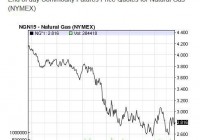
Summary DYN is an electricity generation company with coal fired power plants. The Utility sector is a very challenging space right now for a variety of reasons. Experts project a 19% upside at current price levels. Dynegy (NYSE: DYN ) is an electricity generation company whose generation portfolio is primarily coal fired power plants. The company is weathering a difficult business environment for Utilities. Coal fired plants cannot compete with natural gas fired plants at such low natural gas prices. However, if the price of natural gas rises to historical norms, then DYN’s coal fleet will see operating margins increase, which will have a positive impact on DYN’s stock value. Market Overview and Trends: The electricity market is going through a challenging period of government regulation, low electricity prices, increased churn and demand stagnation. The increasing concern for climate change has spurred a wave of regulation in the Utility sector. Not only are these regulations fluid and complex, they are expensive. Cross-State Air Pollution Rule , MATS , CO2 Emissions , and Byproducts, Wastes, Hazardous Materials and Contamination, just to name a few. The price for electricity is set by baseload generation facilities which are natural gas fueled Combined Cycle Gas Turbines (CCGTs) which historically have had lower operating margins than coal fueled facilities, but with natural gas prices at near historic lows, CCGTs produce power at lower prices than coal. When CCGTs produce at a lower price than coal, coal facilities stop producing and start losing money. Innovations in how consumers measure and exchange electricity have become much more sophisticated over the last 20 years. For example, in the ERCOT market, people have the ability to switch retail providers instantly through the Internet. It has never been easier for a retail customer or business customer to switch providers, because of this, the industry is experiencing increased rates of customer churn. Energy efficiency across many levels of society have caused the general demand for electricity to grow at slower rates than ever before. People use more electricity than ever, but increases in efficiency have caused the growth rate for the electricity market as a whole to slow. * from the NASDAQ Business Positioning and Summary: Dynegy is primarily an electricity generation company. The company’s fleet consists of 15 power plants in five states. All nine of Dynegy’s baseload generation plants are coal and are located in the state of Illinois. The lion’s share of the other generation facilities are fueled by natural gas. As a final point, it is worth noting that DYN does not provide dividends. (click to enlarge) * from the 10-k Growth Strategy: from the 10-k Customer Focus: DYN’s commercial strategy seeks to lock in near-term cash flows while preserving the ability to capture higher values long-term as power markets improve. Further the company reduces market risk by linking generation directly to customer load which reduces the need to hedge. In the wholesale and retail spaces DYN plans little change. Continuous Improvement: The company has invested approximately $1 billion towards ensuring their facilities are safe, reliable, cost-efficient and environmentally compliant. The company also continues to employ their three year cost and performance improvement initiative, also known as PRIDE, which is expected to finish a year ahead of schedule. PRIDE’s targets were $135 million in operation improvements and $165 million in balance sheet efficiencies. Capital Allocation: The company’s foremost capital allocation strategy is to maintain an appropriate leverage and liquidity profile and to make the necessary capital investments to maintain the safety, compliance and reliability of our fleet. Additionally the company plans to expand their first lien collateral program to include additional hedging counterparties and lines of credit. Risk Management: Competition: There is increasing regional competition in the power markets due to an increase in the penetration and economic viability of distributed and renewable energy sources. The company plans to stay competitive by maintaining a low cost of production through managed fuel costs and reliability. Further the ability to compete effectively will be impacted by regulatory reforms designed to reduce GHG emissions. Current and Future Government Regulation: DYN is subject to a myriad of government regulations and environmental laws. The legal landscape is complex and ever changing and DYN will have to stay up to code on all of these issues. Here is a list of the major issues which impact DYN: The Clean Air Act, Cross-State Air Pollution Rule, MATS rule, NAAQS, The Clean Water Act, Coal Combustion Residuals, Climate Change. Market Liquidity and Counterparty Risk: The company transacts hedges in the Natural Gas, Coal and Power markets. If any of the counterparties experience deteriorating credit, then DYN’s hedges may not be honored. This would adversely impact the company. DYN tries to manage this risk by only transacting hedges with highly liquid counterparties and also by diversifying hedges across many different counterparties. Natural Gas Market Exposure: DYN purchases fuel for its Natural Gas power generation facilities under short-term contracts or on the spot market. As a result the company faces the risks of supply interruptions and fuel price volatility. Further profitable operation of the company’s coal-fired generation facilities is dependent upon coal prices and coal transportation rates. The company tries to mitigate these risks by entering into long-term transportation and supply contracts. Expert Opinion: (click to enlarge) * from Yahoo Finance The experts following DYN have moved from bearish sentiments in 2010-2012, to bullish in 2013-2015. Analysts have a median price target of $39.50 per share which gives the company a 19.33% upside at the current price of $33.31 per share. * from Yahoo Finance Analysts project DYN revenues to grow 22.1% between 2015 and 2016. Further the company has shown extremely strong sales growth of 86.7% and 158.3% year-over-year for the current quarter and the quarter ending Sept. 15th, respectively. Out of context the sales numbers look extremely bullish, however, they are more inline with expected levels and DYN had a poor year last year. Recent News: Dynegy Amends Employment Agreement with CEO Robert Flexon Dynegy Completes Duke Midwest Acquisition ; Transformational Growth for company Dynegy Completes EquiPower and Brayton Point Acquisitions from Energy Capital Partners C onclusion : Dynegy is an electricity generation company which derives much of its revenues from coal fired generation. Coal fired generation margins increase as the price of natural gas increases. I would recommend Dynegy to an investor looking for a very specific type of risk exposure. The investor needs to be looking for an asset that produces a predictable valuation, has less volatility in value than the general market and wants to gain from an increase in natural gas prices. Currently the beta of DYN is 0.11, which means that movement of DYN’s stock is relatively independent to the movements of the market at large. Further, natural gas prices have moved whip-saw market with a high bound of $3.1 and a low of $2.60 since the beginning of 2015. Additionally the experts see a 19% upside with DYN’s current stock price. So, if you find that you are an investor who wishes to gain an indirect and conservative exposure to a rising natural gas market, consider DYN. Disclosure: I/we have no positions in any stocks mentioned, and no plans to initiate any positions within the next 72 hours. (More…) I wrote this article myself, and it expresses my own opinions. I am not receiving compensation for it (other than from Seeking Alpha). I have no business relationship with any company whose stock is mentioned in this article.