Tag Archives: nreum

Growth And Upside Potential Highlight American Electric Power’s Bullish Credentials Going Forward

Summary Company has encouraging fundamental outlook due to increased efforts on getting a broader regulated asset base. Continuous investments in regulated operations such as transmission business give it huge opportunity for future rate base growth. AEP’s on-track cost containment plan will better its future earnings growth prospects. I have a bullish stance on American Electric Power (NYSE: AEP ); the company’s focus on getting a broader, regulated asset base and its escalated growth investments in the transmission business will better its long-term growth trajectory. In addition, the resolution of the company’s previously filled rate cases with West Virginia and Kentucky by the end of this month will strengthen its future top-line and cash flows. Owing to the attractive outlook of AEP’s future cash flows, I believe its dividend payment will remain attractive for investors. Moreover, the company’s on-track cost savings plan, “Lean deployment”, will continue improving its bottom-line. Furthermore, my price target calculation suggests a potential upside of approximately 25% for AEP. AEP’s Strategic Growth Drivers Remain Intact In the recent past, increased focus on infrastructure development investment by utilities has been positively affecting the industry fundamentals and performance. For 1Q’15, the earnings growth of the U.S. Utility Industry was 8.4% , well above the S&P-500’s growth of only 2.4% year-on-year. As far as AEP is concerned, the company has made great strides in becoming a high-quality regulated utility, with improved execution and better management of its intelligent strategic growth efforts. One of the most important strategic growth drivers, increased focus on regulated asset base, has been helping its financials grow at a decent pace. In fact, AEP’s management has reiterated their intentions to sell the company’s unregulated business under its plan of growing its regulated utility business; the decision is on hold until state regulators make a final decision about the company’s proposal regarding state subsidized purchase power agreement that will help it maintain 3,100MW of coal-fired capacity. AEP has requested regulators make the final decision regarding this matter, at least by October ’15. The prevailing uncertainty around the acceptance of the PPA agreement and the recent industry merchant divestitures make me believe that the company will either sell or spinoff its Ohio-based power generating subsidiary and the proceeds from the sale would be reinvested to support its growth-generating regulated transmission business. In fact, one of its former competitors, Dynegy, is interested in buying AEP’s unregulated assets. Since the transmission business is one of the most promising businesses of AEP, I believe reinvesting cash proceeds from the unregulated business sale in the transmission business will strengthen its long-term growth potentials. Moreover, the sale of Ohio plants (unregulated assets) will support its strategic move, which is away from de-regulated operations to regulated ones. In fact, the company has several multibillion-dollar projects in place for the next five-to-ten years, in order to grow its regulated asset base by improving the operational performance of its transmission business. Currently, AEP stands tall in the U.S. utility business with its major stake in several advanced transmission projects, and moving ahead, further increases in transmission project-related investments will improve its fundamentals. As part of its long-term growth plan, AEP has announced hefty investment of almost $4.8 billion in transmission projects from 2015 to 2017; I believe that these up-scaled investments in the transmission business will help the company’s rate base expand, which will increase its future cash flows and ROE. Moreover, increase in its earned returns will better AEP’s EPS growth. Furthermore, the company’s previously filed rate cases in West Virginia and Kentucky are expected to gain approval at the end of this month. AEP has requested a $227 million rate increase in West Virginia and a $70 million rate increase in Kentucky, which will allegedly go into effect on 1st July 2015. I believe that these recent rate hikes will portend well for raising the level of earned returns for the company and will add towards the certainty of its cash flow base success in the years ahead. On the bottom-line, AEP’s multi-year cost saving plan “Lean deployment” is working really well to get it a leaner cost base. Thus far, the company has completed the implementation of lean deployment at 13 distribution districts, whereas work at almost 19 more is still in process. Moreover, on the transmission business side, AEP has completed work on just one area and four more are scheduled for completion, this year. Given the fact that the implementation of lean deployment is keeping the company’s operational and management (O&M) expense down, I believe with the ongoing execution, cost efficiency gains from the lean deployment plan will keep on improving AEP’s earnings growth level. Safe & Sustainable Returns AEP’s strong growth prospects have been helping its cash flows grow and support its management’s dividend policy. With the increasingly healthy cash payments under its attractive dividend payment policy, the company has earned a strong five-year dividend growth rate of around 4.87%. Keeping track of its attractive dividend payment plan, AEP had recently announced another quarterly dividend payment of $0.53 , which translates into a dividend yield of 3.95% . Given the company’s strong strategic growth prospects and due to its management’s strong commitment towards paying healthy dividend payments, I believe AEP will have cash flows available to make and increase dividends in the years ahead. Guidance The company’s management has reaffirmed its guidance for 2015. AEP expects full year 2015 EPS to be in a range of $3.40-to-$3.60 . Also, it has maintained its stance about achieving long-term earnings growth in a range of 4%-to-6%. Thus far, the company has done pretty well in achieving allowed ROEs at its regulated subsidiaries; I believe its correct growth efforts and cost controls will help AEP achieve its anticipated 4%-to-6% growth rate in the years ahead. Risks The company’s future growth prospects will continue to face the risk of potential negative regulatory restrictions in its service territory. In addition, AEP’s inability to pull off well-timed, constructive regulatory rate base approvals by negotiating with FERC might pressurize its future growth prospects. Moreover, the company’s ongoing and planned development plans, if not properly executed, might burden its bottom-line with cost overruns. Furthermore, unfavorable temperature trends, environmental regulations and unforeseen negative economic changes are key risks hovering over its stock price performance. Price Target I reiterate my previously calculated price target of $69 for AEP, which was calculated using a dividend discounting method. In my price target calculations, I used cost of equity of 6% and nominal growth rate of 3%. Based on my price target, the stock offers potential price appreciation of 25%. Conclusion The company has an encouraging fundamental outlook due to its increased efforts on getting a broader regulated asset base. In fact, continuous investments in regulated operations such as the transmission business give it a huge opportunity for future rate base growth, which increases certainty about its future cash flows and earnings base. Moreover, the company’s on-track cost containment plan will better its future earnings growth prospects. As a matter of fact, the healthy future earnings growth will strengthen its cash flows, which will support its dividends. Furthermore, my price target calculations suggest a potential upside of approximately 25% for the stock. Analysts have also anticipated a healthy next five-years growth rate of 4.92% for AEP. Due to the aforementioned factors, I am bullish on AEP. Disclosure: I/we have no positions in any stocks mentioned, and no plans to initiate any positions within the next 72 hours. (More…) I wrote this article myself, and it expresses my own opinions. I am not receiving compensation for it (other than from Seeking Alpha). I have no business relationship with any company whose stock is mentioned in this article.
Review Of 10 Themes Shaping Markets In 2015

Summary Semi-annually, I list my unfiltered investment themes and determine if I should tilt my asset allocation. This article is a review of my themes from the beginning of 2015 and a preview of my themes for the back half of the year. This process still leaves me with a muted tone for domestic assets and wary of increasing volatility. In early January, I wrote an article laying out my ” Ten Themes Shaping Markets in 2015 “. Stepping back from the day-to-day volatility of the market and writing down your own investment themes can be a valuable tool to framing your market expectations and setting your tactical asset allocation. As I began to write a semi-annual refresh of my market themes, I wanted to first revisit the market premises underpinning my positioning at the beginning of 2015. I hope that this retrospective look back at my beginning of year themes, and why my prognostications have or have not come to fruition, can be introspective to portfolio positioning for the remainder of the year. In bold, I have listed my beginning of year themes. Below these ten items, I discuss my view of how these themes have played out in the first half of 2015. 1. Deviating economic growth rates globally and attendant diverging paths of monetary policy will create new global imbalances, creating volatility and investment opportunity. In a global financial system that has become more linked over time, a failure for rates and currencies to converge in the short-run could lead to greater imbalances over longer time periods. As the U.S. mortgage crisis begat a global financial crisis which in turn exacerbated a European sovereign debt crisis, we have seen volatility cascade around the world. It is no wonder that the International Monetary Fund and World Bank have asked the Federal Reserve to forestall rate increases. The Fed, which has a dual mandate for maximum employment and stable prices in the United States , is being asked to be mindful of the global impact of its policies. This theme will be unchanged in my second half view, and could stay with financial markets for some time. 2. Financial market volatility has been at an unnatural trough. Sustained economic growth would lead to reduced monetary accommodation, precipitating volatility as interest rates climb. Conversely, weakened economic growth could lead to a sharp re-pricing of risky asset classes. In the first half, we saw weakened domestic economic growth and higher interest rates. While domestic economic growth contracted modestly in the first quarter, the market viewed the lull as driven by temporal factors like unseasonably cold weather and the sharp fall in oil prices on investment without a direct offset in higher consumption. Through the first half, we have managed to stay in this Goldilocks period of growth that is neither too fast to force the removal of Fed support nor too slow to lead to force a re-pricing of securities. Eventually the porridge will become too hot or too cold. 3. Global inflationary pressures remain quite subdued as witnessed in commodity prices, providing ballast for long interest rates. Disinflation risks remain in Europe and Japan. Falling domestic unemployment will continue to be slow to translate into wage growth in the United States given a generationally low labor force participation rate. While oil prices have rebounded since the beginning of the year (+9-11%), base metals have continued to move lower, a sign of sluggish global demand. Inflation readings in Europe and Japan, while positive, continue to be paltry at +0.3%. While the headline unemployment rate (5.5%) is approaching the estimated natural rate of unemployment, the labor force participation rate (62.9%) is still 3.5% below its peak in early 2007, equivalent to nearly 9 million of missing jobs. Inflation fears remain muted. 4. While the Federal Reserve is likely to raise the Federal Funds rate in the back half of 2015, the unwind of monetary accommodation will continue at a measured and data-dependent pace given little headroom for incremental support if the economy suffers an exogenous shock from foreign markets. The June FOMC statement was released last Wednesday, and the committee upgraded its assessment of economic activity, describing it as “having expanded moderately” versus having “slowed” in the April statement. Job growth was characterized by a “diminishing underutilization of labor market resources.” While the committee was more constructive on economic growth in its statement, the committee members view of the path of monetary policy as expressed through the oft discussed “dot plot” showed median expectations that flattened, with Fed Funds projections falling by 25bp on average for year-end 2016 and 2017 to 1.625% and 2.875% respectively. The qualitative discussion of an improvement in the economy and labor markets was met with quantitative depictions of a slower path of monetary policy normalization, signaling the Fed will remain data dependent on both the timing of the first interest rate hike and the pace of subsequent tightening. We are approaching the nine-year anniversary of the last Federal Reserve rate hike on June 29, 2006 when the Federal Reserve boosted its target Federal Funds rate 0.25% to 5.25%. In the lead up to the recent Federal Open Market Committee (FOMC) meeting, the market had begun to increasingly price in a September rate increase. Those odds have diminished somewhat as the market took the Fed’s commentary as generally bullish for rates. I continue to believe we will move off of the zero bound at the December meeting, and believe that the market’s attention should turn from the timing of the first rate increase to the pace of future rate increases, which I expect to continue to be slower than the current Fed expectations. 5. Stretched equity multiples domestically will necessitate that valuations be driven by changes in earnings, tempering further price gains. Speculative grade credit may offer better risk-adjusted returns than domestic equities. One of my principal takeaways from my January themes were that forward domestic assets returns were likely to be subdued. With my expectation for the central tendency of domestic equity returns to be in the high single digits, high yield bond returns, which I expected to be in the 6%-7% range after the oil-driven selloff in late 2014, looked good on a relative basis. While the strong equity market performance and recent fixed income sell-off have put domestic equity returns in front of the high yield bond market, the path has been smoother for junk bonds than domestic equities. Below is a graph comparing the year-to-date cumulative total return of the S&P 500 ETF (NYSEARCA: SPY ) versus the SPDR Barclays High Yield Bond ETF (NYSEARCA: JNK ), demonstrating how this theme has played out in 2015. (click to enlarge) Sources: Bloomberg, Standard and Poor’s 6. Lagging returns for risky assets in Europe post-crisis and the likelihood of an increase in quantitative easing could lead to absolute outperformance relative to the U.S., but the variability of outcomes abroad is much wider. Given lower equity multiples and more accommodative monetary policy in Europe than the United States, higher return expectations abroad appear warranted. As the escalating Greek drama has highlighted, the European experiment has challenges unique to the United States. Europe has posted much higher equity returns thus far in 2015… (click to enlarge) Sources: Bloomberg, Standard and Poor’s …but when translated into U.S. dollars, the outperformance has been much less material. (click to enlarge) Sources: Bloomberg, Standard and Poor’s 7. This comparison extends to emerging markets, which could benefit most directly from rebounding economic growth, but remain exposed to global fund flows and the higher beta nature of their commodity-intensive economies. Emerging markets had outperformed for most of the year until the recent swoon. EM stocks have fallen by ten percent in just the last six weeks. (click to enlarge) Sources: Bloomberg, Standard and Poor’s 8. Within emerging markets, return dispersion will widen and could be defined by a given locale’s level of political unrest, fiscal or current account deficit, or exposure to commodities or a slowing China. A surprise uptick in global growth would make most markets winners, but there are many paths to another year of lackluster returns. We have seen historically strong returns from the Shenzen Composite Index (+93%), but negative returns in other Asian economies tied strongly to the Chinese economy. 9. Rising income and wealth inequality, excess global savings, and demography are combining to disrupt normal cyclical demand growth and increasing the risk of secular stagnation. Inequality will become a thematic constant that will inform global politics and policy. Like the first theme on global imbalances, socioeconomic imbalances are likely to remain a continued theme in financial markets and impact politics. 10. With stock prices near all-time highs and bond prices boosted by low interest rates, forward returns will be subnormal. As we head later into the business cycle, investors may wish to move towards a more defensive posturing, lower volatility investments, or look to lock-in cheap tail risk hedges. Domestic equity markets have squeezed out modestly positive returns in the first half, but the expectation for subnormal forward returns remains. While investors have unique time horizons, risk profiles, and risk tolerances, an honest discussion of their personal investment themes should be used to frame their tactical asset allocation. From this review of these first half themes, I expect to publish my themes for the second half in the near-term. I welcome feedback as I sharpen my themes for the second half of 2015. Author’s Disclosure My articles may contain statements and projections that are forward-looking in nature, and therefore inherently subject to numerous risks, uncertainties and assumptions. While my articles focus on generating long-term risk-adjusted returns, investment decisions necessarily involve the risk of loss of principal. Individual investor circumstances vary significantly, and information gleaned from my articles should be applied to your own unique investment situation, objectives, risk tolerance, and investment horizon. Disclosure: I am/we are long SPY. (More…) I wrote this article myself, and it expresses my own opinions. I am not receiving compensation for it (other than from Seeking Alpha). I have no business relationship with any company whose stock is mentioned in this article.

The Power Sector Powers Up UNG

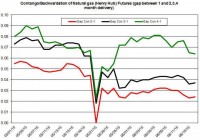
Summary The production in natural gas is higher than last year, despite the drop in natural gas rigs. Warmer weather is projected to keep the consumption of natural gas in the power sector high. The Contango in the future markets is likely to keep UNG underperforming natural gas prices. Even though the demand for natural gas in the power sector continues to rise, the price of The United States Natural Gas ETF (NYSEARCA: UNG ) has only slightly increased during the past week. The recent natural gas storage report showed an 89 Bcf injection – a bit lower than expected. Looking forward, the Energy Information Administration still expects the storage to reach higher than normal levels by the end of the injection season on account of higher production. For UNG investors, the ongoing Contango in the future markets is likely to keep the price of UNG below the price of natural gas due to roll decay. But will natural gas pick up again? (click to enlarge) Source of data taken from EIA Over the short term, we could keep seeing modest gains in the price of UNG due to higher demand for natural gas in the power sector. Albeit the impact of the changes in the weather on the price of UNG and the injections to storage play a smaller role this time of the year relative to the winter time. Baker Hughes (NYSE: BHI ) reported, yet again, the number of operating natural gas rigs nearly didn’t change and reached 223 by the end of last week – only 2 rigs higher than the previous week. Source of data taken from Baker Hughes Nonetheless, the U.S. natural gas production is still up for the year by nearly 5%, albeit it has slightly declined by 0.7% during last week, week over week. This year, the average output is still expected to rise by 4.2 Bcf per day, according to the latest EIA monthly report . This growth rate outlook, however, is lower by 0.3 Bcf per day than previously estimated. From the demand side, the EIA still expects the U.S. consumption will reach 76.7 Bcf per day or an increase of 4.3%, year over year. This gain will mostly be driven by higher consumption in the power and industrial sectors: The power sector’s natural gas consumption is estimated to rise by 13.7% compared to 2014 – this spike in demand is driven by low natural gas prices. In the industrial sector, the demand is projected to rise by 3.6% this year. Despite the higher demand for natural gas in the power sector, the storage is still expected to pick up at a faster pace than normal and pass the 3,900 Bcf – according to the EIA. So far during this injection season, the average injection was 32% higher than the 5-year average. If we were to assume the injections to remain 10% higher than normal for the rest of the season, the storage will pass 3,900 Bcf by the end of October. The higher storage by the end of the injection season is likely to keep pressuring down the price of natural gas. Over the short term, however, the ongoing hotter than normal weather mainly in the West is likely to augment the demand for electricity. Based on the latest cooling degree days projections, they are expected to remain higher than normal – another indication for higher demand in the power sector. Shares of UNG are expected to underperform the price of natural gas on account of the Contango in the future markets. Warmer weather could, over the short run, drive up the demand for natural gas. But over the coming months, higher production and rising storage levels are likely to keep UNG from recovering to former high levels. For more see: Has the Weakness in Oil Fueled the Decline of UNG? Disclosure: I/we have no positions in any stocks mentioned, and no plans to initiate any positions within the next 72 hours. (More…) I wrote this article myself, and it expresses my own opinions. I am not receiving compensation for it (other than from Seeking Alpha). I have no business relationship with any company whose stock is mentioned in this article.