Tag Archives: nreum

Solid Growth Outlook Is One Reason Among Many To Buy PPL Corp.
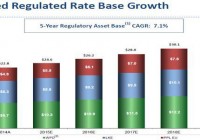
Summary Growth investments directed at becoming a regulated utility company and recent competitive business spin-off will ensure earnings growth in the years ahead. Transformation into 100% regulated utility will ensure cash flow stability and strengthen EPS. PPL currently offers an attractive dividend yield of 4.90%, and remains on track to consistently increase dividends in years ahead. I reiterate my bullish stance on PPL Corporation (NYSE: PPL ); the company is moving ahead with its long-term growth generating investments in order to better its operational performance and keep its financial growth momentum healthy. Moreover, with the completion of its competitive business unit spin off, PPL has increased its focus on regulated utilities, which will mean more upside for its future earnings growth. Considering the fact that the company has been improving its regulated operations and is continuing with growth investments to expand them further, I believe PPL’s cash flows will remain strong in the years ahead, which will ensure the sustainability of its future dividend payments. Furthermore, the company’s future dividend growth is expected to improve. Growth Initiatives Remain On Track In the recent past, utility companies have been making infrastructure development spending to expand their operational bases. As per EIA reports, utility companies’ growth investments will help increase electricity generation in the U.S. by 1.1% and 0.9% in 2015 and 2016, respectively. Moreover, EIA reports have predicted that the increased generation capacity will help utilities raise retail residential prices in 2015 by 1.1% and in 2016 by 1.8%. Given this constructive utility sector’s rate outlook, I believe that utility companies will continue with their infrastructure development projects, which will portend well for earnings and cash flow growth of the industry in the years ahead. As far as PPL is concerned, under its robust strategic growth efforts, the company has been making growth investments towards the development of its transmission and distribution networks in order to capitalize on the available growth potentials. In the past decade, PPL had invested almost $4.7 billion for network rebuilding and up-gradation and it expects to make an additional $5.7 billion of investment over the next five years. As part of its growth investment plan, the company had previously invested in the Susquehanna-Roseland power project, which will strengthen its regulated transmission operations in the region. Moreover, the $1.4 billion power-line construction project will benefit the customers by delivering them power without putting an extra burden on other regional power lines. Moreover, PPL’s $563 million worth Kentucky-based combined natural gas cycle plant Cane Run 7 will be operational soon. These ongoing investments in construction projects will serve as an important means of regulated rate base growth in the years ahead, which will benefit the company’s top-line and will strengthen its cash flows. The following chart shows that PPL’s management expects healthy, regulated rate base growth over the next five years. Source: Company’s Earnings Presentation Making its moves towards generating regulated rate base growth, PPL has filed a rate base increase case with the Pennsylvania Utility Commission (PUC) on an estimated ROE of 10.95%; if approved, the rate hike will add revenues of almost $167.5 million per year, after coming into effect on 1st January 2016. I believe that the rate increase will in fact improve its cash flows, which will back its ongoing growth investments. Moreover, the company, combined with other parties of LG&E and KU generation stations, has reached a settlement agreement of raising electric and gas rates by $132 million. Effective from 1st July 2015, the new rate hike will help it recover the cost of constructing Cane Run natural gas plant and will better its long-term earnings growth prospects. Furthermore, as part of its plan to focus on a broader regulated asset base, PPL recently completed the spinoff of its competitive energy business by combining with River Stone Holdings, and formed a separate entity named Talen Energy Corporation. I believe that after the spinoff, PPL being solely focused on regulated asset base, will strengthen its top-line and bottom-line numbers, and its cash flow certainty will improve, which will support its dividend growth. Safe & Sustainable Dividends PPL has been making attractive cash returns to its shareholders by regularly returning cash flows in the form of dividends. During 1Q’15, dividend payments made by the company were $250 million, up 6.8%, year-over-year. Moreover, PPL had recently announced its quarterly dividend payment of $0.3725 per share , which translates into a healthy dividend yield of 4.90% . Moving ahead, AEP’s cash flow will improve, which will help PPL make regular dividend payments. Owing to the company’s correct growth measures, I believe the company’s future cash flows will remain strong, which will allow the company to consistently increase dividends. Guidance Due to the company’s strong financial performance and due to its attractive, planned infrastructure development projects, the management’s confidence in PPL’s earnings growth prospects have been restored, due to which they have reiterated their previously earnings guidance. The company continues to believe that its EPS for full year 2015 will remain in a range of $2.05-to-$2.25 . Moreover, PPL’s management remains confident about achieving its long-term annual earnings growth rate 4%-to-6%. Risks The company’s future financial performance remains exposed to a risk of increase in regulatory restrictions. Moreover, any laxness shown by the management during the execution of its well thought-out capital expenditure plan will hurt PPL’s long-term earnings growth potentials. In addition, unforeseen negative economic changes, currency headwinds and unfavorable weather changes are key risks that might hamper the company’s future stock price performance. Conclusion I am bullish on PPL; the company has an attractive growth outlook. PPL’s growth investments directed at becoming a regulated utility company, and the recent competitive business spin-off have directed it in the direction of earning better revenues and experiencing earnings growth in the years ahead. In fact, transformation into a 100% regulated utility will ensure cash flow stability and strengthen its EPS, which makes it attractive for dividend-seeking investors. The company currently offers an attractive dividend yield of 4.90%, and remains on track to consistently increase dividends in the years ahead. Disclosure: I/we have no positions in any stocks mentioned, and no plans to initiate any positions within the next 72 hours. (More…) I wrote this article myself, and it expresses my own opinions. I am not receiving compensation for it (other than from Seeking Alpha). I have no business relationship with any company whose stock is mentioned in this article.

25 Things I Wish I Learned Before I Opened My First Brokerage Account

Portfolio strategy, ETF investing, foreign companies “}); $$(‘#article_top_info .info_content div’)[0].insert({bottom: $(‘mover’)}); } $(‘article_top_info’).addClassName(test_version); } SeekingAlpha.Initializer.onDOMLoad(function(){ setEvents();}); Brett Arends had a great post about what he wished he’d learned before graduating high school. With a nod to Arends; things people should know about finance and investing before they start and should be reminded of every so often as they go along. When someone wants to give you free money, like your employer in your 401k, take it. Brett Arends had a great post about what he wished he’d learned before graduating high school . It was a great mix of financial nuggets, points about not wasting time or money and some other generally sound ideas. With a nod to Arends; here is my list of things people should know about finance and investing before they start and should be reminded of every so often as they go along. Don’t rack up credit card debt but if you do, make a priority of getting out quickly and then staying out. Have an emergency fund that will tide you over X number of months but don’t put it into something that can go down a lot (or at all) in value. X should equal your comfort level. When someone wants to give you free money, take it… like your employer in your 401k. Put in enough to at least max out the match. If a 10% contribution from you is matched by your employer with an additional 3% that is like getting a 30% return. Fund your Roth IRA every year in addition to a 401k or similar workplace plan. Start saving when you are young, the older you will be grateful. The more you save the more options you will have later, you have no idea what the future you might want to do so give him some flexibility. Make an extra mortgage payment every year, the future you will be grateful. Live below your means. Have respect for whatever you did to accumulate however much you have saved. Your savings is one of hopefully several byproducts of your career, don’t disrespect that effort by speculating carelessly. A great advisor will absolutely have your best interests at heart but it is not possible for that advisor to care about your money more than you. If you are going to be a do-it-yourselfer, care enough to have at least some regular engagement with markets, investment products and your portfolio. Occasionally the stock market goes down a lot and scares the hell out of a lot of people. It has happened many times before and I promise will happen again. After it goes down a lot it will then make a new high, the only variable is how long it will take. Your ability to control your emotions when others have had the hell scared out of them will be a huge determinant to your long term investing success or lack thereof. (see number 12) You don’t need to beat the market. You need an adequate savings rate, you need to avoid panic selling (see number 12) and your investments just need to be relatively close to the performance of the indexes. Proper asset allocation is crucial. Finding out you had too much in the “wrong” asset class after it just blew up is a bad place to be. Avoid investment dogma, you don’t need to take up the shield to staunchly defend an investment strategy, a diversified portfolio probably means having several different strategies. If you come to realize you are too afraid of the stock market to invest in it then you need to be prepared to save a lot more or work a lot longer. Never confuse luck with skill. It is human nature to forget what large declines feel like and then conclude “this one is different.” Have some sort of financial plan, even if it is just a spreadsheet with projections and check it regularly. Be prepared to adapt if your financial plan doesn’t end up where you expect it to. Take the time to learn how Social Security works, it is far more complicated than you realize. Take the time to learn about the 4% rule and then remember it is only a guideline. If you have retirement assets in different types of accounts then tax efficiency may dictate depleting one account and then moving on to another and that will be uncomfortable. You may think you don’t need insurance products, and maybe you don’t, but take the time to learn about them so you make an informed decision. Don’t drink soda, get a dog and then get a dog for your dog. Bonus #1 Learn as many handyman skills as you can. Bonus #2 Never underestimate the utility of duct tape. Disclosure: I/we have no positions in any stocks mentioned, and no plans to initiate any positions within the next 72 hours. (More…) I wrote this article myself, and it expresses my own opinions. I am not receiving compensation for it. I have no business relationship with any company whose stock is mentioned in this article. Additional disclosure: To the extent that this content includes references to securities, those references do not constitute an offer or solicitation to buy, sell or hold such security. AdvisorShares is a sponsor of actively managed exchange-traded funds (ETFs) and holds positions in all of its ETFs. This document should not be considered investment advice and the information contain within should not be relied upon in assessing whether or not to invest in any products mentioned. Investment in securities carries a high degree of risk which may result in investors losing all of their invested capital. Please keep in mind that a company’s past financial performance, including the performance of its share price, does not guarantee future results. To learn more about the risks with actively managed ETFs visit our website AdvisorShares.com . AdvisorShares is an SEC registered RIA, which advises to actively managed exchange traded funds (Active ETFs). The article has been written by Roger Nusbaum, AdvisorShares ETF Strategist. We are not receiving compensation for this article, and have no business relationship with any company whose stock is mentioned in this article. Share this article with a colleague

5 Buy-Ranked Financial Mutual Funds

Most of the recently released economic data, including encouraging job numbers, a flurry of positive housing market data and improving consumer sentiment, suggested that the economy is gradually gaining strength. This raised the possibility of a rate hike in the near future. It is speculated that the Fed will raise interest rates by the end of this year. The rate increase will expand margins for brokerage firms, insurance companies, banks, and money managers. Further, the increased interest rates would enable banks to earn more on the spread between interest rates for savings accounts and certificates of deposit. Meanwhile, the financial sector witnessed an encouraging first quarter earnings season. In this favorable environment, investors may find it profitable to invest in financial mutual funds that are poised to benefit from a possible rate hike. Below we will share with you 5 financial mutual funds . Each has earned either a Zacks #1 Rank (Strong Buy) or a Zacks #2 Rank (Buy) as we expect these mutual funds to outperform their peers in the future. Franklin Mutual Financial Services Fund A (MUTF: TFSIX ) seeks capital growth. TFSIX invests a lion’s share of its assets in undervalued companies that are involved in the financial services domain. TFSIX may also invest in merger arbitrage securities and securities of distressed companies. TFSIX may invest a significant portion of its assets in non-US securities. The Franklin Mutual Financial Services Fund A fund returned 15.4% in the last one year. As of March 2015, TFSIX held 88 issues with 3% of its assets invested in American International Group Inc. (NYSE: AIG ) Schwab Financial Services Fund (MUTF: SWFFX ) generally invests in equities of financial services companies. These companies may include asset management firms, brokerage companies, commercial banks, insurance companies and real estate investment trusts (REITs). The Schwab Financial Services Fund returned 12.6% in the last one year. SWFFX has an expense ratio of 0.90% as compared to the category average of 1.52%. Fidelity Select Insurance Portfolio (MUTF: FSPCX ) seeks capital growth over the long run. FSPCX invests a large chunk of its assets in companies that are involved in operations including underwriting, selling, distribution of insurances related to property, casualty, life, or health. FSPCX focuses on acquiring common stocks of companies throughout the globe. FSPCX considers factors including financial strength and economic conditions before investing in securities of a company. The Fidelity Select Insurance Portfolio fund is non-diversified and returned 10.8% in the last one year. Peter Deutsch is the fund manager and has managed FSPCX since 2013. T. Rowe Price Financial Services Fund (MUTF: PRISX ) invests a major portion of its assets in common stocks of companies from the financial services sector. PRISX may also invest in other companies that earn a minimum of half of its revenues from finance sector. PRISX uses bottom-up analysis to invest in companies that are believed to have an impressive growth potential. The T. Rowe Price Financial Services Fund returned 17.5% in the last one year. PRISX has an expense ratio of 0.87% as compared to the category average of 1.52%. Davis Financial Fund A (MUTF: RPFGX ) seeks long-term capital appreciation. The Davis Investment Discipline is utilized to invest a majority of RPFGX’s assets in companies involved in the financial services industry. Companies that have the majority of their assets related to financial services or derive a minimum of half of their revenues from the financial services domain are selected by RPFGX’s advisors for investment. Davis Financial Fund A returned 13.8% in the last one year. Christopher Cullom Davis is the fund manager and has managed RPFGX since 2014. Original Post