Tag Archives: nreum

REM Offers A Dividend Yield Of 13.23%, But Is It Safe?
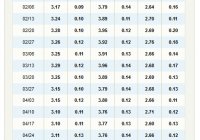
Summary Increasing rates on MBS will result in book value losses for the underlying mREITs. Increasing rates on the LIBOR curve will create gains to book value, but the LIBOR rate curve is increasing too much relative to the rates on MBS. Since REM is holding most of the mREIT industry, investors in REM could benefit substantially if interest spreads widened by MBS rates increasing by more than swap rates. One way that could happen for REM would be for the individual mREITs to repurchase their shares at a discount to book value rather than reinvesting in new MBS. A decline in buyers for new MBS would (at least in theory) result in new MBS being issued with higher rates or mREITs paying a smaller premium to face value. The iShares Mortgage Real Estate Capped ETF (NYSEARCA: REM ) is offering a beastly dividend yield, but the fund is delivering that massive yield through heavy investments in mREITs. Investors that aren’t familiar with mREIT industry need to learn the risk factors that are influencing REM. The biggest risk for investors in REM is that the value of the underlying holdings, the mREITs, could change quite substantially. The ETF holds a reasonably diversified batch of mREITs, though I wouldn’t mind seeing the ETF reduce the weight it puts on Annaly Capital Management (NYSE: NLY ), which is 14.44% of the assets of the ETF. The thing most mREITs have in common is that the RMBS (residential mortgage backed securities) is the primary investment tool. Some of them use other derivative investments, but the main exposure is the RMBS. Some mREITs are using larger positions on ARMS (adjustable rate mortgages), some focus on the 15-year RMBS or the 30-year RMBS, and some go into smaller segments of the market such as lending on jumbo mortgages or non-agency securities. When we boil it down, everything comes back to the rates on MBS and the spreads between short-term rates and long-term rates. Mortgage rates I grabbed the following chart to look for the latest rates across MBS: For 15-year and 30-year securities Interest rates have increased significantly since the end of the first quarter, but they ended the first quarter down from the start of the year. For ARMs The interest rate on new ARMs decreased during the first quarter and has been relatively flat during the second quarter. You might wonder why ARMs have seen interest rates getting soft while they are increasing on other securities. The simple reason is that mREITs are finding adjustable rate mortgages to be more attractive due to expected increases in the interest rates offered by the Federal Reserve. If the Federal Reserve is going to increase interest rates, then mREITs holding adjustable rate mortgages would theoretically be preferable in the short term since the rates they receive will increase. Share price declines Despite the mREIT sector taking a pretty bad beating on share price over the last year, investors in REM are actually flat on their investment because the dividends covered the decline in price. (click to enlarge) When investors hear the dividends are just covering the decline in share price, it may sound like a return of capital. That isn’t the case though. The underlying securities for the ETF are the shares in mREITs and many mREITs are trading at substantial discounts to their own book value. If investors could picture REM as an enormous mREIT with incredibly diversified holdings of the securities that the mREITs are holding, then REM would be trading at a substantial discount to book value. Since REM’s NAV is established by the share price of the mREITs, investors don’t see the huge discount when looking at REM. The mREITs hedge their exposure to rising interest rates through swaps, swaptions, and Eurodollar Futures. The chart below uses the latest publicly available data to establish the interest rates in the LIBOR market: (click to enlarge) The increasing LIBOR rates indicate that most mREITs will have substantial unrealized gains on their interest rate swaps. The gains on swaps should partially offset the losses they will report on MBS. The favorable development for mREITs is that the yield curve is becoming substantially steeper. The one-year rate has increased by about 11 basis points, but the rate on other years is increasing substantially more. An increase of 11 basis points is small relative to the increase in the rates on 15-year and 30-year MBS. On the other hand, the increase in interest rates during the quarter on maturities around 5 years is substantially less attractive. While the mREITs will see substantial gains on their interest rate swaps during the second quarter, initiating new swap positions will require paying these higher rates which in some cases are increasing by closer to 60 basis points. In my opinion, this is one of the biggest challenges to REM. A large portion of the holdings are mREITs that need positions in swaps with durations of 3 to 10 years and the interest rate due on those swaps has increased by more than the yield on MBS securities. Three possible favorable developments for REM REM would have enormous upside if three things happened. The first is that long-term MBS rates inch upwards and the second is that LIBOR rate increases for the first five years of the curve become substantially smaller. The gains on interest rate swaps are nice, but over the next few years, mREITs don’t want to find themselves paying higher rates on new swaps. The third option would be a way to cause the first two things to happen. If the mREIT industry saw substantially more repurchasing shares and less issuing shares, there would be a net outflow of money from the mREIT industry. That would be very beneficial to investors holding the entire industry, because the mREITs would have less capital available to bid for new MBS. A decrease in mREITs bidding on new MBS would mean less competition in that part of the market. Either MBS would be acquired at lower premium to face value or the originators of MBS would increase the interest rates they were charging borrowers to make the MBS more attractive to mREITs to encourage them to a pay a large premium to face value. Either paying a smaller premium to face value or having higher interest rates on the MBS would be extremely favorable developments for mREITs even though it would result in a loss on book value. The loss of book value would be material, but the increase in net interest margins would make dividends substantially more sustainable and encourage investors to buy the underlying mREITs to receive dividend yields that were both large and sustainable. In that case, an investor in REM would expect to see increases in share prices and in dividends. On the other hand, if LIBOR rates rise across the curve and MBS rates increase by less than the LIBOR rates, then the cost of financing for mREITs may increase by more than their yield on assets. Conclusion I’m bullish on the mREIT industry and expect positive returns to shareholders of REM over the next few years. I can’t provide an endorsement of the ETF because I believe the expense ratio is too high. There are a few competing ETF options, but none of them meet my threshold for attractive expense ratios and all of them have at least somewhat unfavorable weightings for the different mREITs in the ETF. Despite those concerns, it may be a good fit for the investor that wants exposure to the mREIT industry, but does not have a large enough portfolio to buy several positions in individual mREITs for diversification. For investors interested in my personal favorites, I like CYS Investments (NYSE: CYS ) and Dynex Capital (NYSE: DX ). I believe at the current discount to book value, American Capital Agency Corp. (NASDAQ: AGNC ) is also very attractive. I find Bimini Capital Management ( OTCQB:BMNM ) to be the most undervalued company in the space, but it is highly illiquid, and I like it for the external manager fees it receives rather than the composition of the portfolio. Disclosure: I am/we are long DX. (More…) I wrote this article myself, and it expresses my own opinions. I am not receiving compensation for it (other than from Seeking Alpha). I have no business relationship with any company whose stock is mentioned in this article. Additional disclosure: Information in this article represents the opinion of the analyst. All statements are represented as opinions, rather than facts, and should not be construed as advice to buy or sell a security. Ratings of “outperform” and “underperform” reflect the analyst’s estimation of a divergence between the market value for a security and the price that would be appropriate given the potential for risks and returns relative to other securities. The analyst does not know your particular objectives for returns or constraints upon investing. All investors are encouraged to do their own research before making any investment decision. Information is regularly obtained from Yahoo Finance, Google Finance, and SEC Database. If Yahoo, Google, or the SEC database contained faulty or old information it could be incorporated into my analysis.
Hedging The 10-Year? Consider DTYS

Summary DTYS provides a well correlated hedge for 10-year treasury bonds. DTYS, like most alternative investments, is associated with significant risks and is intended for achieving short term goals. Recommended for investors who believe interest rates will rise dramatically over an intermediate time frame. Basic Information The iPath U.S. Treasury 10-year Bear ETN (NASDAQ: DTYS ) is an exchange traded note (ETN). ETNs are unsecured, unsubordinated debt securities. This type of debt security differs from other types of bonds and notes because ETN returns are based upon the performance of a market index minus applicable fees, no period coupon payments are distributed and no principal protections exist. DTYS is intended to move inversely (-1x) to The Barclays Capital 10Y U.S. Treasury Futures Targeted Exposure index. The Barclay’s index is tied to U.S. treasury yields. DTYS seeks investment results for a single day only, not for longer periods. A “single day” is measured from the time the Fund calculates its net asset value (“NAV”) to the time of the Fund’s next NAV calculation. The return of the Fund for periods longer than a single day will be the result of each day’s returns compounded over the period, which will very likely differ from the inverse (-1x) of the return of The Barclays Capital 10Y U.S. Treasury Futures Targeted Exposure index for that period. For periods longer than a single day, the Fund will lose money when the level of the Index is flat, and it is possible that the Fund will lose money even if the level of the Index falls. Longer holding periods, higher index volatility, and inverse exposure each exacerbate the impact of compounding on an investor’s returns. During periods of higher Index volatility, the volatility of the Index may affect the Fund’s return as much as or more than the return of the Index. Expense Ratio: .75% + Portfolio turnover (currently 0% because cash instrument and derivative transactions are not included). How Could it be used? If you are looking for a 10-year hedge, DTYS could be a very beneficial to your portfolio. It is highly correlated to the market, and it is a useful tool any skilled investor should consider. In this article, I’ll attempt to illuminate the risks of investing in an ETN, but with adequate forethought DTYS is not a bad strategy, especially with the threat of rising interest rates. Principal Investment Strategy All investment strategies are used in combination to achieve similar daily return characteristics as -1x of the index: Derivatives – financial instruments whose value is derived from the value of an underlying asset or assets, such as stocks, bond, funds, interest rates, or indexes. Swap agreements – Contracts entered into primarily with major global financial institutions for a specified period ranging from a day to more than one year. In a standard “swap” transaction, two parties agree to exchange the return (or differentials in rates of return) earned or realized on particular predetermined investments or instruments. The gross return to be exchanged or “swapped” between the parties is calculated with respect to a “notional amount,” e.g., the return on or change in value of a particular dollar amount invested in a “basket” of securities or an ETF representing a particular index. Futures Contracts – Standardized contracts traded on, or subject to the rules of, an exchange that call for the future delivery of a specified quantity and type of asset at a specified time and place or, alternatively, may call for cash settlement. Money Market Instruments U.S. Treasury Bills – that have maturities of one year or less and supported by full faith and credit of the U.S. government. Repurchase Agreements – Contracts in which a seller of securities, usually U.S. government securities or other money market instruments, agrees to buy them back at a specified time and price. Repurchase agreements are primarily used by the Fund as a short-term investment vehicle for cash positions. These are the Principal Risks associated with TBX Risks Associated with the Use of Derivatives Compounding Risk Correlation Risk Fixed Income and Market Risk Counterparty Risk Debt Instrument Risk Interest Rate Risk Intraday Price Performance Risk Inverse Correlation Risk Liquidity Risk Early Close/Late Close/Trading Halt Risk Market Price Variance Risk Valuation Risk Non-Diversification Risk Portfolio Turnover Risk Short Sale Exposure Risk As you can see below, estimated returns are volatile, and the funds actual results may be significantly better or worse than the underlying index. Bolded values, not including the x and y axis percentages, are where the fund performed worse than expected. This is meant to illuminate the possibility of under or over performance. Theoretical Fund Returns Index Performance One Year Volatility Rate One Year Index Inverse (-1x) of the One Year Index 10% 25% 50% 75% 100% -60% 60% 147.50% 134.90 94.70 42.40 (8.00) -50% 50% 98.00 87.90 55.80 14.00 (26.40) -40% 40% 65.00 56.60 29.80 (5.00) (38.70) -30% 30% 41.40 34.20 11.30 (18.60) (47.40) -20% 20% 23.80 17.40 (2.60) (28.80) (54.00) -10% 10% 10.00 4.40 (13.50) (36.70) (59.10) 0% 0% (1.00) (6.10) (22.10) (43.00) (63.20) 10% -10% (10.00) (14.60) (29.20) (48.20) (66.60) 20% -20% (17.50) (21.70) (35.10) (52.50) (69.30) 30% -30% (13.80) (27.70) (10.10) (56.20) (71.70) 40% -40% (29.30) (32.90) (44.40) (59.30) (73.70) 50% -50% (34.00) (37.40) (48.10) (62.00) (75.50) 60% -60% (38.10) (41.30) (51.30) (64.40) (77.00) Correlation to 10-year yields I aligned DTYS with 10-year treasury yields. Essentially, DTYS is perfectly correlated to yields. Since bond prices react inversely to yields, it is easy to see why DTYS would be a good choice for hedging rising interest rates. Their are other alternative investment tools like the ProShares Short 7-10 Year Treasury ETF (NYSEARCA: TBX ) . DTYS, in my opinion. is the best direct tool for hedging rates. When rates spike, however, their are a number of other options to consider . My advice for any investor is to expose yourself only to risk you feel comfortable with. Conservative plays often pan out better than risky ones in the long run. DTYS is certainly a risky investment with potential for mediocre to negative returns. Conclusion If you are trying to hedge your investment on 10-Year Treasury yields, then DTYS is probably an ETN you ought to consider. However, it is important for any smart investor to weigh the risks associated with any ETN before jumping into any investment long or short. Disclosure: I/we have no positions in any stocks mentioned, and no plans to initiate any positions within the next 72 hours. (More…) I wrote this article myself, and it expresses my own opinions. I am not receiving compensation for it (other than from Seeking Alpha). I have no business relationship with any company whose stock is mentioned in this article.

Momentum In High Yield Has Shifted: Buy Some Protection

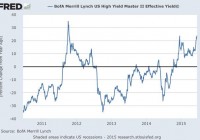
Summary Since bottoming on May 27, junk bond yields have begun steadily rising again. Corporate profits indicate that yields will continue to rise. With default risk increasing, buy credit protection for high upside. Starting around the latter half of 2014, one of the major changes to take hold in the market (besides the rise of the dollar index and collapse in oil prices) has been with bond yields. Junk bond yields have been rising substantially and quickly over the past few months. Much of the change has been due to oil prices, but another cause has been the weakening of corporate profits starting in 2014. With the trend continuing strong through the first half of 2015, there is still time to buy protection against rising yields. As profits fall and oil prices stay low, rising default rates are likely in the future. In fact, default rates in junk bonds have risen to their highest level in 6 years. This article will examine the current state of the junk bond market, the sustainability of current trends, and also recommend a way to play the rising yields and default risks using a credit default swap ETF. Current State of Bond Yields (click to enlarge) Since the European Debt Crisis, which peaked in 2012, junk bond yields had been steadily falling outside of a small blip in 2014. Starting around the end of 2014, however, the increase in yields began in earnest and is now accelerating to the quickest pace since 2011. Yields are spiking, and while this is still far from what is seen during a credit crisis, the warning signs are there. Junk bond yields are now more than 20% higher than they were just a year ago, and there is no sign of an impending correction. On the contrary, the fundamentals seem to be pointing toward a further rise in junk bond yields. Explaining Recent Price Action (click to enlarge) Much of the current trend in junk bond yields can be explained by referring back to oil prices. As oil prices started to fall in 2014, yields immediately began to rise in response. When the oil price bottomed at the start of 2015, yields steadied a bit, though the trend toward rising yields remained. There was hope that oil prices would continue to rebound in the second quarter of the year, but those hopes have been dashed as oil has stood its ground around $60 a barrel. At this point, yields have responded by rising even more and accelerating. While oil explains much of this phenomenon, the increase in yields cannot be blamed totally on the black liquid. (click to enlarge) Another major trend that came about starting in 2014 has been falling corporate profits. These numbers have been showing consistent deterioration since then, and while the Q1 2015 numbers give a sign of possible hope, the historical record does not look good. The last time that corporate profits fell this much, bond yields soared in response after about a year and a half. If that sets any precedent, then bond yields are again about to soar either at the end of this quarter or in the next, especially if corporate profits are weak yet again. Given the past, now is absolutely the time to buy protection against rising yields and bond defaults. The ProShares CDS Short North American HY Credit ETF (BATS: WYDE ) may be the perfect way to play the current situation. As the ETF is short high yield credit, it profits when default rates rise, as the ETF owns a broad basket of high yield credit default swaps. While offering protection against default risk, WYDE has also shown itself to protect against time decay. Since its inception in August of 2014, WYDE has lost less than 5% of its value. CDS protection does have a cost over time, and given that it has lost so little over the time, WYDE is a safe way to play the high yield bond market with little time decay. Summary and Action to Take Junk bonds are a risky proposition right now. Oil prices look to have stalled and a quick recovery to previous levels looks a long way off. In addition, corporate profits have been weak and have been deteriorating at a pace not seen since the onset of the financial crisis. Now is the perfect time to buy protection against a spike in junk bond yields by buying credit default swaps. For the small retail investor, CDS exposure is difficult, and thus gaining exposure via the WYDE ETF may be the perfect way to do so. Disclosure: I am/we are long WYDE. (More…) I wrote this article myself, and it expresses my own opinions. I am not receiving compensation for it (other than from Seeking Alpha). I have no business relationship with any company whose stock is mentioned in this article.