Tag Archives: nreum

Investors – Your Hair Is Not On Fire, You Don’t Have To Get Out Of The Market
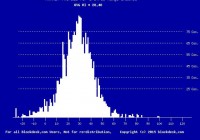
Summary The media woods (including Seeking Alpha) are full of dire predictions of market corrections, retrenchment, collapse, from anticipated Fed interest rate hikes, Greek intransigence in the EU, Putin’s Ukranian grab. Oh, woe! It’s all bad. ISIS amok. Massive panicked African emigration to Europe. Police stations and bible study groups becoming shooting ranges. Our own government and AT&T telling lies. Wouldn’t you think folks who help big-$-fund Portfolio Managers realign their holdings would see a market decline coming? But they sure don’t behave like they believe it’s so. What’s the matter with them? Or is it with us? Rational Behavior under threats The normal actions of informed humans sensing impending danger is to erect defenses and plan strategies to deflect or overcome attacks. That is what market-makers [MMs] do in their ordinary course of moving a large part of a trillion dollars of equity investments each day from one set of hands to another. To get balance between buyers and sellers where volume transactions in stocks involve tens and hundreds of $-millions, the MMs usually have to put firm capital at risk temporarily. Hundreds of times a day, every day. They are no strangers to risks and threats. They are highly skilled practitioners of hedging and arbitrage. Those art forms are integral to their enviable successful progress in protecting their capital from harm. So what are they doing to protect against market declines? Nothing out of the ordinary. Just what they have been doing, day-in and day-out. That includes world-wide watching, listening, questioning, reporting, recording, evaluating, communicating. It’s strange that organizations so well resourced and disciplined would miss the threats that so many others claim to be about to harm all of us. Yet MMs continue to behave in the same manner, hedge to the same degree, pay for protection about the same amounts, in deals structured the same way as they have been, over many past months. We have been watching their behavior for decades They clearly behave quite rationally, rather systematically, given what they know at various times. In our recent SA article of “Worry, worry, worry” we demonstrated the differences present as they sense impending problems or ongoing good times. Our behavioral analysis of their hedging practices daily has not changed over decades. It shows the asymmetry of their price change expectations for 3,000 or more stocks day after day. For each stock we produce what they must think their serious, powerful clients are likely to do to the prices of stocks the clients want to own in the future, and to ones they no longer want to own. And to the price points where the clients might change their minds. The ranges of possible price prospects get described by a single simple measure, the Range Index. Its job is to tell the balance between upside price change potentials and downside price change exposures. Each stock, ETF, or equity market index has a Range Index [RI] whose number tells what percentage proportion of that subject’s likely coming price range lies below its current market quote. A low RI suggests limited downside, ample upside. So the RI becomes a common denominator for price expectations, a very useful yardstick to compare the expectations of many varied issues. And, in the aggregate, to have a sense of what the market outlook overall might be. That’s what is shown at various stages of market price change anticipations in the “Worry, worry, worry” article. Figure 1 updates that distribution of informed professional expectations to last night. Figure 1 (click to enlarge) (used with permission) The average Range Index of the 2,500+ names covered in this picture is 28, meaning that the typical stock has better than twice as much upside as downside. A 50 RI would make the odds of up vs. down a coin-flip. How many in Figure 1 have that kind of prospect, or worse (a higher RI than 50)? A negative RI means that the subject’s current price is lower than the bottom of the price range regarded as likely or justifiable. That condition sounds like “cheap” to many Graham & Dodd folks. Figure 2 tells what has happened to stock, ETF, and market index prices in the 16 weeks following the daily observation of Range Indexes for this population during the past 4-5 years. Some 2,959,450 observations built this display. Figure 2 (click to enlarge) That 1 : 1 blue row of Figure 2 is the overall population average, positioned at the 50 RI level. That’s where up and down price change prospects are held equally likely. The green rows above are of progressively lower Range Index (or cheaper) forecasts, and the red rows below the blue row are of progressively more expensive RIs. The maroon-count row just above the blue row is coincident with today’s population average. But we should be more interested in what can be done to improve an existing investment portfolio than in speculating about what might happen to the market as a whole. Play the game better What is of interest to active investment managers is the potential payoffs and odds for success in buys of those stock or ETF RI forecasts up in the top rows of the table. And what might best be purged from a portfolio where the holding’s RI is among those below the 50 blue-row level – higher RIs than 50. For perspective, take a look back at Figure 1. Today, just as in most daily experiences, there are many promising prospects for purchase off to the left in the Figure 1 distribution. To the extent that these have proven to be reliable, credible forecasts, then it is likely that what happens to the market as a whole has little impact on their near-term future. And it is their near-term future that active investors should be concerned with. In today’s global, high-tech, communicative and competitive networks of business activity, reaching out with forecasts as much as a year or more is not investing, it is just speculating. While overall-market forecasters are speculating as to where the averages will be a year or more from now, active investors will have the opportunity to have capitalized on interim opportunities, compounding their triumphs (often 3-4 times in a year) net of their mistakes (typically 1 in 2 years) to produce rates of gain that may be multiples of what the market averages may have produced in capital gains. Those kinds of odds, 6 out of 8, or 7 out of 8 wins in two years for each allocation of capital, are quite doable when good guidance is provided. Usually the rates of gain in the wins are well above those of the market, and the effect of compounding can multiply the progress in wealth-building well beyond the (now highly competitive and economical) transaction costs or infrequent loss. As an example, using market-maker forecasts to compare over 2,500 equities daily, and ranking them based on how well prior forecasts similar to the current-day forecast have performed, over 1900 opportunities have been identified so far in this 2015 year at a rate of 20 a day. Following a time-efficient discipline standard of portfolio management to all, of the closed out positions (more than half) the average annualized rate of net gains are +31%, compared to that of SPY at +5.1%. Conclusion There are nearly always attractive stocks or ETFs to buy, regardless of overall market prospect appearances. The diversity of opportunities among over 3,000 potential quality portfolio investment candidates provides a rich field of perpetually price-renewed prospects. But investors need to have a portfolio management strategy and discipline urging them to be frequently aware of developing opportunities and maturing prior actions in need of reinvesting. This is called active investing, and will involve more attention and time commitment than many investors are willing or need (the most fortunately capitalized) to make. The rewards for active investing are demonstrably far better than most investors of all types have been led to believe. Those investors faced with impending capital-requirements having fixed time deadlines may find that the only way now that will satisfy their needs makes adoption of active investing a most sensible practice. Disclosure: I/we have no positions in any stocks mentioned, and no plans to initiate any positions within the next 72 hours. (More…) I wrote this article myself, and it expresses my own opinions. I am not receiving compensation for it (other than from Seeking Alpha). I have no business relationship with any company whose stock is mentioned in this article.

The Long Norway/Short Sweden Pairs Trade – Still Viable In Light Of Declining Markets?

Macro, currencies, arbitrage, statistical analysis “}); $$(‘#article_top_info .info_content div’)[0].insert({bottom: $(‘mover’)}); } $(‘article_top_info’).addClassName(test_version); } SeekingAlpha.Initializer.onDOMLoad(function(){ setEvents();}); Norway’s stock market has come under short-term pressure owing to growth concerns arising from lower oil prices. I still maintain that Norway’s stock market is undervalued relative to Sweden’s. However, it could take longer than anticipated for the Norwegian market to reach fair value. On June 3 , I had published an article arguing that a possible pairs trading opportunity exists through taking a long position on the Norwegian stock market through the iShares MSCI Norway Capped ETF (BATS: ENOR ) and a short position on the Swedish stock index through the iShares MSCI Sweden Index Fund* (NYSEARCA: EWD ). However, for this month we have seen the Norway ETF decline by 3.35 percent from $25.02 to $24.18, while the Swedish ETF has also declined by 2.57 percent from $34.97 to $34.07. The drop in Swedish stock market performance was not surprising and in line with my initial expectations. I had previously anticipated that lower than expected growth could translate to lower stock market returns as a result, and this has been the case for the month of June; with the consumer confidence indicator falling to 97.9 this month from a previous 99.0 in May. However, the decline in Norwegian stock market activity was less anticipated. Firstly, it appears that the Norwegian economy as a whole is still sensitive to oil price fluctuations, as the overnight deposit rate was cut to 1 percent this month as the effects of lower oil prices begin to take their toll on economic growth. Moreover, while lower wage growth remains a concern, house prices continue to rise in Norway which may give rise to speculation of a credit bubble similar to that of Sweden. For instance, it is anticipated that on the whole, Norwegian citizens now owe creditors twice as much as they make in disposable incomes. Additionally, house prices have increased by 7.5 percent in May from the previous year. In this regard, does the aforementioned pairs trading strategy still hold merit? It does if you have patience. Norway’s stock market remains undervalued on a P/E basis, and a major reason behind my bullish view on Norway was that various companies in the oil and financial sectors trade at lower than average P/E ratios while continuing to show impressive returns. However, it could take longer than anticipated for fair value to be reached as Norway grapples with short-term economic problems. In this context, this pairs trading strategy is best oriented over a longer-term horizon; i.e. 1 year or longer. *Note: The iShares MSCI Sweden Index Fund is not an inverse ETF and an investor would need to short-sell to take a short position in this instance. Disclosure: I/we have no positions in any stocks mentioned, and no plans to initiate any positions within the next 72 hours. (More…) I wrote this article myself, and it expresses my own opinions. I am not receiving compensation for it (other than from Seeking Alpha). I have no business relationship with any company whose stock is mentioned in this article. Share this article with a colleague

Michael Kors: An Unfashionable Portfolio Accessory

Summary Management needs to act to regain investor confidence and improve the stock’s performance. Shares were hammered with a massive 24% drop on recent earnings release. Stock valuation is difficult to rationalize even when comparing to struggling luxury retailer Coach. Introduction It’s been about a month since I decided to start covering a new portfolio here on Seeking Alpha that uses cash secured put options to invest in the market. This article provides an update on portfolio performance along with some thoughts and analysis on one particular holding that has proved to be a frustratingly poor stock of late, Michael Kors (NYSE: KORS ). The portfolio concentrates on companies that exhibit strong cash flow and reasonable valuations. I don’t necessarily need a stock’s price to increase dramatically to make money, I just need it to not drop dramatically in price to make money. Portfolio Performance Overall portfolio performance is on pace for a potential 16.74% annualized return (returns calculated based on current moneyness of options) and a total of $8,556.08 in option premium has been received with a total capital requirement of $81,650. Current portfolio positions are outlined in the following tables. Cash Secured Puts STOCK CURRENT PRICE PUT SELL DATE PUT EXPIRY PUT STRIKE PREMIUM RECEIVED PREMIUM % OF STRIKE CURRENT ANNUALIZED RETURN DAYS TO EXPIRY REQUIRED CAPITAL AAPL 12660 01/29/15 10/16/15 $125.00 $1,088.00 8.70% 12.99% 119 $12,500.00 EMC 2707 02/06/15 07/17/15 $27.00 $152.00 5.63% 13.61% 28 $5,400.00 2 POSITIONS KORS 4660 01/29/15 08/21/15 $72.50 $714.00 9.85% -37.08% 63 $7,250.00 LVS 5306 01/29/15 09/18/15 $55.00 $589.00 10.71% 11.96% 91 $5,500.00 QCOM 6688 03/10/15 10/16/15 $72.50 $496.00 6.84% -1.50% 119 $7,250.00 DFS 5875 05/11/15 10/16/15 $60.00 $337.34 5.62% 8.52% 119 $6,000.00 WDR 4931 05/01/15 09/18/15 $50.00 $344.00 6.88% 15.42% 91 $5,000.00 IVZ 3890 05/20/15 10/16/15 $41.00 $214.34 5.23% 0.26% 119 $4,100.00 UAL 5325 05/21/15 09/18/15 $55.00 $484.34 8.81% 18.65% 91 $5,500.00 F 1511 05/23/15 12/18/15 $16.00 $150.65 9.42% 6.96% 182 $4,800.00 3 POSITIONS GLW 2094 05/01/15 11/20/15 $21.00 $160.00 7.62% 14.09% 154 $4,200.00 2 POSITIONS MO 4932 06/10/15 09/18/15 $49.00 $220.34 4.50% 17.83% 91 $4,900.00 Put Spreads STOCK CURRENT PRICE PUT SELL DATE SHORT PUT STRIKE LONG PUT STRIKE PUT EXPIRY SHORT PUT PREMIUM LONG PUT PREMIUM PAID CURRENT ANNUALIZED RETURN DAYS TO EXPIRY REQUIRED CAPITAL QCOM 6688 01/29/15 $62.50 $50.00 07/17/15 $424.35 $27.63 98.34% -42112 $1,250.00 FB 8251 01/29/15 $75.00 $45.00 10/16/15 $689.34 $22.68 36.59% -42099 $3,000.00 AAPL 12660 01/29/15 $115.00 $75.00 10/16/15 $1,039.33 $43.63 41.81% -42059 $4,000.00 GILD 11980 02/18/15 $105.00 $95.00 08/21/15 $979.34 $46.64 533.14% -42069 $1,000.00 The Gilead position was converted to a put spread given strong momentum in share price. Added positions include cash secured puts sold on shares of Ford, Invesco, Discover Financial, United Continental, and Altria. More information regarding Discover and Altria can be found here and here . Michael Kors My position in Michael Kors has been a disaster so far and my worst performing stock by a mile. The company was punished severely during the last earnings release. Comparable same store sales went negative in the US market and that was not well received…at all. Shares were hammered with a massive 24% drop. While certainly disappointing, I thought the reaction was a little overdone. I knew that poor results could lead to a large drop in share price but never imagined a 24% move. It’s practically a given now that I’ll be put shares of KORS come August, which I am fine with for now. My current thoughts on KORS are that management needs to do something significant to regain investor confidence and improve the stock’s performance. Failure to show a concerted effort regarding these issues will only further support the growing belief among investors that KORS is a value trap. The company’s management already has a black eye from the head scratching deal struck with Michael Kors Far East Holdings (MKFEH) that gave away the retail market in China through 2041. That was a very bad deal for investors…well, except for the two former Michael Kors board members and a couple of others who own the Far East Holdings company. Despite all of the negativity surrounding Michael Kors right now, I am willing to take and wait and see approach and give management a chance to redeem themselves and the stock. The company isn’t losing money or on the verge of bankruptcy. Quite the contrary, it continues to deliver solid top and bottom line double digit growth. While the 24% drop on earnings was terrible, it also took a lot of risk out of the stock in my opinion and the valuation is difficult to rationalize, especially when compared with Coach (NYSE: COH ). The Coach Argument Many have made the argument that Michael Kors will go the way of Coach and that may very well be the case. However, evaluating the multiples applied to both companies suggests the market believes Michael Kors’ future prospects are much dimmer than Coach. Coach currently trades at a forward P/E multiple of 19.14 and PEG ratio of 2.30. That’s for a company with a five year EPS growth forecast of 8.33%. Michael Kors, on the other hand, has a five year growth forecast of 19.89% and trades at a forward P/E of 14.12 and PEG ratio of 0.71. How can the market’s view of Kors’ future potential be any more bleak right now? Coach’s suffering has been accompanied by a loss in perception of its status as a “luxury” retailer through discounting and also by a shift in consumer preferences, which can change as quickly as the wind changes direction. Even if Michael Kors is to suffer the same fate, I would gladly have Coach’s valuation applied to Kors which would currently make it an $80+ stock based on 2016 EPS estimates. Summary Despite the poor performance of Michael Kors, the portfolio is performing well overall. I will be looking to open additional positions once the current Greek debt situation becomes a little more clear. Also, I will be keeping a very close eye on the bond market as the Fed comes ever closer to increasing rates. I would expect to see long term rates begin to rise as an expected Fed rate hike nears, otherwise a flattening yield curve poses a major risk. As evidenced by the last two market crashes, flattening and inverted yield curves served as a warning of danger ahead. Disclosure: I am/we are long KORS. (More…) I wrote this article myself, and it expresses my own opinions. I am not receiving compensation for it (other than from Seeking Alpha). I have no business relationship with any company whose stock is mentioned in this article.