Tag Archives: income

Brookfield Infrastructure Offers Investors A 5% Dividend Yield And 13% Discount To Intrinsic Value
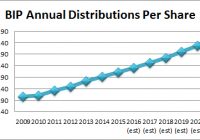
Summary BIP recently increased its dividend by 10% and now sports a 5% dividend yield. We believe BIP’s long-term dividend growth rate is 9%, up from 7% in our previous report. BIP’s shares are still 13% below its fair intrinsic value and we expect its intrinsic value to steadily increase as BIP steadily grows its FFOs per share. BIP’s disciplined approach to investing and its ability to continually identify new investment opportunities. We expect 15% FFO/share growth in 2015 and at least 6.5% growth thereafter. Brookfield Infrastructure Partners (NYSE: BIP ) recently announced it increased its dividend distribution by 10%. Although it was lower than our previous single year dividend growth in 2015, it was higher than our previous 7% estimated long-term dividend growth rate. BIP’s dividend increased by 13% annually since its 2008 IPO and BIP expects its long-run dividend growth rate will be 5%-9%. We believe that future dividend growth will be closer to the higher end of its forecasted range as it offers strong, steadily growing cash flow funds from its operations, which enables BIP to provide investors with strong dividend yields and dividend growth. BIP offers investors a 5% dividend yield and we believe its share price is 13% undervalued relative to its fair intrinsic value. For these reasons, we reiterate investors accumulate shares in BIP, especially income-oriented investors as BIP continues its consistent performance . Source: BIP’s Investor Relations and Our Estimates Companywide Highlights: BIP’s Q4 2014 FFOs/unit was $.86, slightly missing analyst expectations for the fourth time in the last 5 quarters but increasing by 3.6% versus Q4 2013. Key drivers of this performance were as follows Incremental contributions from the mid-August close of its investment in Vale’s cargo transportation division VLI, Improved volumes at its UK ports and Australian railroads, Soft volume demand from its North American energy transmission businesses due to mild weather and The absence of incremental contributions from its former Australasian regulated distribution operations, which BIP sold last November. Source: BIP’s Q4 2014 Report Business Segment Highlights: BIP Transport saw a 20% increase in its FFO’s for 2014 versus 2013 primarily driven by contributions from the additional investment in BIP’s Brazilian toll road in Q3 2013 as well as increased volume from its ports division and a partial quarter’s contribution from its investment in Vale’s cargo transportation VLI. Not only is this a high-quality asset, but Vale provided BIP with a minimum return mechanism to ensure that a minimum return is achieved over a period of up to six years from closing. As the Brazilian economy is facing some negative headwinds , this minimizes the risk of BIP failing to generate a positive return from its investment in VLI. Highlights from BIP Transport’s business units were as follows: BIP Transport’s Ports business enjoyed 21.4% FFO growth due to improved volumes from its UK port operations and incremental contribution from its newly acquired North American container port acquired during the year. BIP Transport’s Railroad business’s FFOs increased by $14M year-over-year (7.5%) because of a partial year’s incremental contribution from its Q3 2014 investment in Vale’s cargo transportation division as well as increased harvest grain volumes from its Australian railroad operations. BIP Transport’s Toll Road business saw its FFOs increase because of additional investment in its Brazilian toll roads completed in Q3 2013. On a “same-store basis”, toll revenues increased by 8% year-over-year due to tariff increases and higher volumes on Chilean roads. Source: BIP’s 2009-14 Annual Reports BIP Utilities saw a 2.65% decrease in its 2014 FFOs versus 2013 on a reported basis but increased 12% on an adjusted comparable continuing operations basis. The decrease in reported FFOs was primarily attributable to the sale of its Australasian regulated distribution operations on November 30, 2013. Excluding the impact of the sale, the segment’s FFOs increased by $39M versus the prior year as of the result of improved performance at BIP’s UK regulated distribution business. Source: BIP’s Financial Reports, Supplemental Reports BIP Utilities’ maintenance capital expenditures in 2014 were $14M and were $27M less than YTD 2013. BIP Utilities’ Regulated Terminal grew by 2.2% as negative movements in foreign exchange offset incremental pro forma operating income growth due to additions to its rate base. BIP Utilities’ Electricity Transmission business increased its FFOs by 7.4% due to inflation indexation, commissioning of projects into rate base and lower operating costs, partially offset by impact of foreign exchange. BIP Utilities’ Regulated Distribution’s adjusted FFOs from continuing operations grew by 22.5% as its United Kingdom regulated distribution operations benefited from a higher rate base, inflation indexation, lower costs and higher customer connections revenue. Source: BIP’s 2009-14 Annual Reports BIP Energy’s FFOs decreased by $2M year-over-year as incremental contribution from the acquisitions district energy businesses during the last 12 months was not enough to offset lower transportation volumes at its Energy Transmission, Distribution & Storage Business. BIP North American gas transmission business continues to see headwinds from the weak natural gas market, which resulted in a $275M asset impairment charge in 2013. Although BIP Energy’s performance has been flat since 2011, at least its capital expenditure backlog more than doubled during the year, which signals potential future growth. Other sources of potential future growth for BIP Energy include the closing of three previously announced acquisitions including gas storage businesses in California and Texas and a district energy system in Seattle. BIP also acquired a district energy business in Australia recently and is closing the acquisition of another one as well. Source: BIP’s 2011-14 Annual Reports BIP’s Corporate and Administrative segment’s FFO decreased by $12M (13%) in the year as increased interest and distribution income and reduced financing costs were offset by the absence of BIP Timber’s results as BIP sold BIP Timber in H1 2013 and higher management fees paid to Brookfield Asset Management. Corporate highlights include the following: BIP’s previously announced acquisition of a 23% interest in the French communications tower infrastructure firm TDF is expected to close in March 2015. BIP Corporate refinanced $4B of its debt in 2014 in order to capitalize on the historically low interest rate environment. BIP’s weighted average cost of debt is 5.9% and the average maturity profile is over 10 years, with minimal maturities over the next 5 years. BIP identified $1B in non-core assets that it seeks to sell in order to redeploy towards areas of growth and core operations, on top of its $1B capital-recycling program in 2013. BIP finished the year with $2.1B worth of total liquidity through its cash and available credit facilities. BIP has a BBB+ credit rating and it expects strong demand for its future offering $300M-$500M corporate debentures, which it seeks to bring to market in H1 2015. BIP’s opportunities for investment Government Privatizations-In Australian alone, BIP identified $50B worth of potential privatizations by the federal and state governments there Brazilian Construction Companies-BIP recognizes that many Brazilian construction companies are facing financial challenges and may seek to part with high-quality infrastructure related assets in order to shore up liquidity. Corporate deleveraging and carve-outs-BIP had success in acquiring utility assets from capital constrained European companies and is now Maturing Infrastructure Funds- Many investment funds raised between 2005 and 2008 are approaching the expiry of their funds. BIP has started to see the first wave of divestitures from this ownership group. Lastly, BIP focuses on investing capital to meet its long-term return targets of 12%-15% and will not reduce its return thresholds to make it easier to acquire assets Conclusion: In conclusion, investors looking for high yields and non-equity correlation should consider accumulating a position in BIP due to its portfolio of unique, hard-to-replicate assets. BIP provided unit-holders with strong returns from capital appreciation and partnership unit distributions since it went public in 2008. BIP offers a 5% dividend yield and its unit price is within 13% of its fair intrinsic value. We expect BIP’s FFOs to increase by at least 6.5% annually over the next seven years and its dividend distributions to increase by at least 9%. We can see why over 50% of BIP’s shares are held by leading asset managers such as Brookfield Asset Management, Legg Mason, BAMCO, Principal Global Investors and Scotia Bank’s asset management divisions. For these reasons, we believe investors should realize that BIP is a great alternative to the S&P 500 and traditional utilities as represented by the XLU and take advantage of market weaknesses to strategically accumulate units of BIP. Source: FactSet Marquee and our Estimates Disclosure: The author has no positions in any stocks mentioned, and no plans to initiate any positions within the next 72 hours. (More…) The author wrote this article themselves, and it expresses their own opinions. The author is not receiving compensation for it (other than from Seeking Alpha). The author has no business relationship with any company whose stock is mentioned in this article.
Southern Company: Taking A Pass On This Quality Utility Name

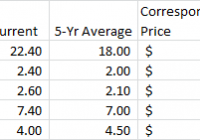
Buffett’s words should be heeded concerning Southern Company: “Price is what you pay. Value is what you get”. Compared to 5-yr average fundamentals, Southern Company looks expensive. While not a seller, I would not be a buyer either. However, investors should evaluate their dividend reinvestment position. Many readers know I have been bullish on Southern Company (NYSE: SO ) for some time. Over the previous two years, I have written eight articles focused on SO. With the recent spike in price to the $53 range, SO is now overvalued. At its current price, while I would not be a seller, I would not be a buyer either. “Price is what you pay. Value is what you get,” says Warren Buffett. While SO is a strong utility with a bright future, the value investors are buying is not as attractive as a few months ago. Below is a comparison of current valuations vs SO 5-yr average. The corresponding price is the valuation of SO at each of these 5-yr averages. As shown, these fundamentals indicate SO is overvalued compared to its averages since 2009. Source: Morningstar, MyInvestmentNavigator.com Earnings have been reduced recently due to write-offs of cost overruns at their Kemper project. There are questions being raised as to first $900 million cost overruns on the Vogtle power plants as the resolution has now been passed to the courts. The consensus belief is SO will win these lawsuits based on the terms of their contract. However, delays from the planned fourth-quarter 2017 and fourth-quarter 2018 start dates seem inevitable, and could lead to future charges against earnings. Southern Company still has several very positive trends that should continue to reward shareholders. The regulatory environment is quite favorable in its service territory. Return on invested capital ROIC is one of the best in the business at a 5-yr average of 6.75%, even after a dismal 2013 at barely over 5%. Unlike many of its peers, SO’s ROIC is above its weighted average cost of capital WACC of 4.2%. Southern Company has earned an A- rating by S&P Capital IQ for 10-year consistency in earnings and dividend growth. The rating puts SO in the top 3.3% of all companies reviewed by S&P and in the top five management teams for the entire utility sector. These are very admirable qualities for long-term investors. Concerning distributed generation, CEO Fanning is on record as embracing this potentially disruptive power trend. In an interview last year, he is quoted, Fanning touts efforts by Southern subsidiary Georgia Power to promote both utility-scale solar as well as distributed generation. “If somebody wants to buy distributed generation, I want to sell it to ’em. I’m completely happy to do that.” To support that effort, rate structures will have to be redesigned, something Fanning thinks state regulators will be “constructive” about supporting. “You need to do it fairly. There are three components of that. One is revenue , which should be done at avoided cost. Second — it is not net metering; that is a flawed concept. Second is a fair charge for connection to the network, and third is a fair charge for the backup generation and the energy when the wind is not blowing and the sun does not shine. As long as you do that right, we’re 100 percent in,” Fanning said. “This is something where we’ve got to play offense.” Morningstar rates SO with only 2 Stars, not a very compelling value. Their unique Bulls and Bears comments from the latest update in early Dec are: Bulls Say: Southern operates in the business-friendly Southeast, where its traditionally low power prices and sterling reputation help to foster a constructive and stable regulatory atmosphere. As of mid-November, Southern’s dividend yield was 4.5%, well above its peers’ [Author’s note: with the recent run-up in prices, yield is 4.0%]. With a stronger business model and premium returns, the yield premium is appealing in an otherwise overvalued sector. Business investment continues to head to the Southeast, which bodes well for the region’s economy and Southern’s customer base even though residential demand has remained tepid. Bears Say: Southern burns a lot of coal, so complying with carbon emissions and coal ash regulations could require significant investments that would raise customer bills, discourage usage. We include $500 million of potential cost overruns at Vogtle that we project Southern will not be able to recoup in rates and $200 million in extra owners’ costs. These figures could go much higher in a worst-case scenario. Utilities suffer in times of inflation and rising interest rates. Inflation erodes the value of the rate base on which a utility’s allowed returns are calculated. This is where an automatic dividend reinvestment program becomes a bit dicey. Although I wrote a book on DRIPs in 2001 for McGraw Hill, All About DRIPs and DSPs , reinvesting dividends in SO at the current price seems a bit risky. Accumulating the dividend in a cash account for reinvestment in other income stocks may be preferred until SO’s fundamentals improve. While Southern Company is replacing its coal generating capacity with low-cost nuclear, has one of the best management teams in generating Net ROIC, is in a growing service territory with friendly regulators, and is embracing distributed solar generation, the current share valuation leaves much to be desired. Waiting for a better valuation would be prudent. Author’s Note: Please review disclosure in Author’s profile.

An Interesting Contrarian Utility Selection

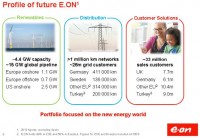
E.ON is Germany’s largest electric utility and has announced it is splitting into two separate companies. Low commodity pricing since 2009 has decimated earnings and dividends. Analysts are warming up to the companies after the split, but for dramatically different reasons. If you think our electric utility sector is a mess with the potential of disruptive alternative power and distributed power, Germany is in worse shape. According to government goals, all nuclear power plants are to be shuttered by 2022 and coal plants are being phased out as well. Replacing this generating capacity, the German authorities are mandating an increase of renewable generating capacity to 40% of total generating capacity. In addition, the government has found another source of income for taxes – electric bills. According to the US Energy Information Agency, Germany has the second highest residential electricity rate in Europe, with 50% of the residential bill representing taxes and fees collected by the government. Of the $0.39 per kWh average residential price in Germany for 2013, $0.20 is taxes levied by the government to subsidize renewable power generation. The US, for comparison, has a national average residential electricity price of $0.12/kWh including taxes. E.ON SE ADR ( OTCQX:EONGY ) is the largest electric utility in Germany and could be considered a contrary selection facing insurmountable headwinds from several directions. However, management is splitting the company into two separate firms, much like a “good” utility and a “not-so-good” utility. The “good” utility will own the company’s renewable and natural gas power generation assets, its transmission business and its retail electricity and gas business including technology such as smart meters, also known as “customer solutions”. The “not-so-good” utility will own the nuclear, coal and hydro power plants, LNG terminals, oil and gas production, and energy trading. The former will carry the E.ON brand and the latter will be renamed. The split is anticipated in mid-2016 with a majority of the spin-off being distributed to shareholders. E.ON will carry all the debt (expected to be about €18 billion after reduction from recent asset sales proceeds). The new company will initially carry no debt, but a huge contingent liability of about €14 billion for closing the remaining nuclear and coal power plants. Turkish assets will go with E.ON while Russian and Brazilian assets will be transferred to the new company. Ms. Venkateswaran, an analyst at Royal Bank of Canada, estimates of the €9.3 billion in pretax profits in 2013, nearly €5 billion, or 53%, is from the greener, more predictable business that will retain the E.ON brand and €4.4 billion, or 47%, is from business units under the new company. E.ON said it expects to post a net loss in 2014 on expected impairment charges of €4.5 billion in the fourth quarter because of its operations in southern Europe and its conventional generation assets. Underlying 2014 profits before one-time charges are expected to be between €1.5 billion and €1.9 billion. A graphic depiction of the split is offered in their presentation outlining the proposal, with a general profile of each entity. (click to enlarge) (click to enlarge) A detailed explanation is offered on E.ON website through the investor’s presentation linked above. Investors should review this presentation prior to investing as it lays out the future path for E.ON. Much like Exelon (NYSE: EXC ), E.ON’s massive power generation capacity is sold utilizing shorter-term power agreements, with the longest usually 4 years, and puts E.ON at the mercy of commodity power pricing. In the US, long-term power purchase agreements are used, except in the Northeast, Mid-Atlantic, and eastern Midwest. Below is a graph of power prices in Germany going back to 2002. As shown, Day-Ahead Base Load pricing has fallen from €70 in 2008 to €31 currently. (click to enlarge) Source: ISE Fraunhofer pdf Power prices are directly impacted by the low fuel costs of wind and solar, and renewables take a top priority in delivery. Renewables usually comprise an average of 27% of total demand and ranges daily between 10% and 50%. On May 11, 2014, there was a record reached – of sorts. At mid-day, Germany generated the highest percentage of total demand using renewable power at 73% of its electrical needs. It is important to realize that a few days earlier, renewables generated only 12% of customer demand. A description of this event is offered by energytransition.de: Wind power peaked at around 21.3 GW at 1 PM on Sunday, with solar simultaneously coming in at 15.2 GW. Add in the roughly 3.1 GW of hydropower and 3.7 GW of electricity from biomass that Germany usually has, and the output of conventional power plants was pushed down to 26 GW at 1 PM on Sunday. Power demand, however, was only at 59.2 GW, meaning that only 15.9 GW of conventional power was needed to serve domestic demand. The remaining more than 10 GW was for export – a clear indication of how foreign demand for German power is rescuing the conventional sector. However, the article goes on to report wholesale power prices turned negative and power companies were paying customers €65 MWh to consume electricity. It is difficult to make a profit when a company is paying customers to take its product. More information on how the power markets operate in Germany can be found here . Negative power pricing is not just an issue in Germany. In 2013, an Exelon official commented that its two northern Illinois nuclear power plants operate 8% to 15% of off-peak hours with a negative pricing model. German power prices are low, and could go lower. E.ON management has hedged its production for this year and next in anticipation of low prices. 12-month forward pricing is at 10-yr lows of €31, and Germany has 18 gigawatts of unprofitable power plants, according to Sanford C Bernstein Ltd. According to Bloomberg, the 12-month benchmark could drop 4.6 % this month to below 30 euros, a level not seen since late 2003, according to trading companies from Mainova AG in Frankfurt to CF Partners U.K. LLP in London. Last year, power prices in Europe’s biggest economy dropped for a fourth consecutive year, sliding 10 percent in 2014. Low wholesale prices are hurting the utility’s bottom line and E.ON needed an action plan to counter the dramatic turn in profits. As Germany turns to higher and higher amounts of renewables, replacing core base-load with intermittent-load, fast-starting power generation will be at a premium. Nuclear and coal require too much time to ramp up production after being idled, leaving mainly natural gas as the preferred fuel source. Splitting the company is management’s answer to the problem. Earnings and dividends have been falling the past few years. Operating EPS in 2013 were €1.12, is expected to be €0.66 in 2014, and is estimated to rebound this year to €0.92, but fall in 2016 to €0.85. However, the company is expecting to write-down assets in the fourth qtr. 2014 by €4.6 billion and will report a net loss for the year. Just a few years ago, the dividend was €1.33, but management has announced a dividend distribution for this year and next of €0.50. The corporate split is receiving mixed reviews in the media. Morningstar, which has a 5 Star rating on E.ON, recaps the differing of opinions in its unique analysis: Bulls Say: Creative share swaps, divestitures, and cuts in its investment program in response to the European recession suggest that management is intently focused on value-creating growth. Before E.ON’s 33% dividend cut in 2011, dividends had increased an average of nearly 13% per year since 2004. Management is taking steps such as selling non-core assets, cutting back investment, and targeting operating cost cuts to preserve the current dividend. Bears Say: We estimate the German nuclear plant shutdowns will result in about EUR 2.1 billion of lost after-tax profits by 2022. European Union regulators and nationalist interests have limited E.ON’s worldwide growth opportunities and distorted wholesale power markets. Any investments that do not meet the company’s double-digit return on capital hurdle rate will destroy shareholder value. Forbes published an article examining the split. Their take on the move is: It is a compelling plan for many reasons. The first, of course, is that E.ON had to do something. Declining wholesale power prices in Germany, among other factors, has eviscerated the company’s margins. The company will take a $5.6 billion in the fourth quarter and report for the year “substantial negative net income,” which I think is the German phrase for loss. Last year, it reported a net income of $3.1 billion on revenue of $154 billion. The prevalence of solar at peak power times combined with increased efficiency have made large capital projects riskier. But just as important, it’s an interesting deal because it presents a living lab for viewing the future of the energy industry. The “fossil” side of E.ON will now be unencumbered by debates over efficiency. It will be free to sell as much power as it can across Europe. If traditional energy advocates are correct, these assets will grow in value over time. Renewables will prove to be too intermittent, efficiency measures won’t work as promised and the dwindling base of centralized power plants will make these assets even more valuable. Etc. etc. On other hand, If renewable advocates are correct, you will see the Triumvirate of S-software, storage and solar-continue to get cheaper and more reliable. People will use less and not notice the inconvenience. Meanwhile, E.ON will enjoy a better return on investment on these modular assets. Management provided an update just after the announcement to split. From an article on 4-Tradrs.com: UBS analyst Patrick Hummel said he believed that a EUR7 billion cash transfer into the unit with the nuclear plants would be needed to back up nuclear liabilities and ensure an investment-grade rating. Markus Wessel, an energy lawyer in private practice, said the concerns that the costs of decommissioning nuclear power plants will be dumped on taxpayers are unfounded. “Only if there’s an insolvency would there be a risk that the costs would fall on the taxpayers, though an insolvency is very improbable,” Mr. Wessel said. Companies are obliged by the law to prove that they have the necessary financial security to pay for the costs of dismantling and decommissioning to receive a license to operate the nuclear power plant. Mr. Wessel said that because the permission is tied to the company itself, E.ON’s new company would have to go through this same process to have the permits transferred. “If they want to be smart about it, the government will make both of E.ON’s companies liable for the costs before they allow the transfer of permits,” Mr. Wessel added. Mr. Teyssen, CEO of E.ON, said that both companies will be “highly attractive for investors” after the split. For the new entity, “we see strategic potential because small companies will withdraw” from the fossil and nuclear power market and “there will be a world in which one can consolidate and reach market leadership,” he added. As well as the power plants in Germany, the new company would also own large water power assets, natural gas plants, lignite plants, pipelines, the largest system of natural gas storage facilities in Europe and one of the Continent’s largest trading houses, the chief executive said. A big concern is the unprecedented nature of tasks that lie ahead for E.ON. “There are a lot of uncertainties as to the cost of the liabilities,” said Equinet analyst Michael Schaefer. “We also don’t have much experience when it comes to shutting down nuclear reactors over a span of a decade and the costs include all phases of dismantling and decommissioning, including cooling and storage.” “The real question is whether the new company will have sufficient assets in the long-term to generate cash flows that would cover future obligations,” Mr. Schaefer said. “If wholesale prices for conventional energy remain low, will be hard to cover cash outflows.” Reuters offers an interest perspective in its opinion that the split makes the new E.ON more attractive as an acquisition target. Institutional investors are seeking investments that balances government regulated utilities and high dividend payout potential. Following the spin-off in 2016, nearly two thirds of E.ON’s profits will come from distribution assets – grids whose returns are set by regulators and usually move within the mid to high single-digit percentage range. Roughly a quarter will come from end-customer services and the rest from solar and wind power, the fastest-growing sector within the energy industry. “The bottom line is that pension funds could certainly live with this kind of earnings profile,” said Torsten Graf, fund manager at Frankfurt-based MainFirst and a holder of 61,000 E.ON shares. Macquarie estimates that under the new set-up E.ON will have an equity value of 19.6 billion euros and net debt of about 18.6 billion, with an enterprise value to forecast core earnings (EV/EBITDA) ratio of 8.4, a premium to E.ON’s current 7.8 as well as to the 6.9 of its biggest European peers. The company will own 4.4 gigawatts (GW) of renewable capacity, equal to about four nuclear plants, control more than 1 million kilometres in distribution grids in Europe and have 33 million customers. Core earnings of the future E.ON group are expected to grow by nearly a fifth to 5.5 billion euros by 2020, according to Deutsche Bank estimates. In contrast, the unit to be spun off is seen trading at a much lower 5.6 times EV/EBITDA, mainly due to concerns over the quality of its assets, most notably 51 GW of conventional generation capacity, that have earned it the label of a “bad utility”. Bankers estimate that even though the unit to be spun off will be initially debt-free, it will have a much harder time attracting investors, mainly due to the 14.5 billion euros in provisions it will have to shoulder for nuclear decommissioning. According to 4-traders.com , timeliness consensus from analysts is improving. Of the 31 analysts that follow E.ON, consensus recommendations are: Buy or Outperform 32%; Hold 42%; Underperform or Sell 26%. The graphic below outlines these recommendations. The consensus price goal is €15.20 with a range of €12 to €19, vs. a current price of €13.60. At the high target, capital appreciation could be up 49%; at the consensus, appreciation could be up 15%; and the low target would represent share prices down 9.4%. The second graphic compares share prices and consensus price target going back two years. As shown, the share price decline over the past year coupled with the rise in price targets offers the best potential opportunity in the past two years. Stock price is in black, consensus target is in green Source: 4-traders.com Fastgraph depicts the pain suffered by E.ON shareholders since its peak in share price in 2008. Share prices for EONGY has dropped from $75.65 to a current $15.36. Source; fastgraph.com Return on invested capital ROIC is in line with US-based industry peers. Over the previous 5-years, E.ON has generated an average 4.9% ROIC. Below is a 15-yr graph of ROIC, courtesy of fastgraphs.com. (click to enlarge) Source: fastgraph.com The headwinds for E.ON are many, with some stronger than others. In order for E.ON to do well over the next few years, the following events most likely need to transpire: 1) The dollar declines against the euro. The higher the USD goes, the lower the share price and dividend are when converted back to USD. 2) The euro has to survive the current financial crisis of low growth and pre-recession data. The Greek elections empower those that are anti-austerity and endorse more government spending. 3) Electricity prices need to improve in Germany, probably in tandem with a reduction of additional base-load capacity and a premium paid for reliability. 4) The issues of higher distributed generation and a heavy intermittent generation profile are reconciled with the base load needs of customers. 5) Demand for electricity picks up. Investors need to appreciate the impact of a falling euro/rising USD. At the current €1.12 = $1 USD, the annual €0.50 dividend is worth $0.56, and share prices are $15.32. If the euro were to drop to parity, as predicted by some, the dividend would be worth $0.50 and share prices would be $13.62, based on today’s close in Europe. With the current uncertainty, taking a small position would be advisable as there could be better opportunities over the next 12 months. Author’s Note: Please review full disclosure on Author’s profile. Editor’s Note: This article discusses one or more securities that do not trade on a major exchange. Please be aware of the risks associated with these stocks.