Tag Archives: function

3 Incredible Value ETFs For Outperformance

While the U.S. stock market has shown strong resilience this year overcoming a mountain of woes, it might be on a tough ride in the months ahead. This is because rate hike now seems much closer given the robust job market and a slew of better-than-expected economic data. Inflation – an important factor in raising rates – has also started picking up slowly. In addition, lofty stock valuations, a strong U.S. dollar, an aging bull market, fading consumer confidence, slowdown in China, sluggish growth in emerging markets and Greece failure to reach a debt deal with its international creditors are weighing on investors’ sentiments, keeping the stock prices at check. Further, a sharp rise in Treasury yields in recent weeks has tempered the appeal for riskier investments as a higher borrowing cost would eat away corporate profits and hurt economic recovery. Apart from these, last week, the World Bank lowered the global growth forecast from 3% to 2.8% for this year, citing that lower commodity prices and interest rate hike risk would severely crimp growth in developing markets. The bank also downgraded its growth outlook for the world’s largest economy to 2.7% from 3.2%. Amid these uncertainties, value investing appears safe and appealing to investors. The strategy includes stocks with strong fundamentals – earnings, dividends, book value and cash flow – that trade below their intrinsic value and are undervalued by the market. Why Value Investing A Better Play? Value stocks often overreact to both positive and negative news, resulting in share price movement that does not reflect the company’s true long-term fundamentals. This creates buying opportunities in such stocks at depressed prices and provides potential for capital appreciation when the stock finally reflects its true market price. As a result, value stocks have the potential to deliver higher returns and exhibit lower volatility compared to growth and blend counterparts. In fact, these stocks outperform the growth ones across all asset classes when considered on a long-term investment horizon and are less susceptible to trending markets. Given this, investors may want to consider a nice value play in the current volatile market environment. While looking at individual companies is certainly an option, a focus on cheap value ETFs could be a less risky way to tap into the same broad trends. Below we have highlighted three ETFs with favorable Zacks Rank of #1 (Strong Buy), 2 (Buy) or 3 (Hold) with a Medium risk outlook that look most attractive in terms of valuation (P/E) compared to the P/E 17.09 for the broader iShares S&P 500 Value ETF (NYSEARCA: IVE ). Any of these could make for a compelling choice for a long-term portfolio. Guggenheim S&P 500 Pure Value ETF (NYSEARCA: RPV ) This ETF offers pure exposure to the large-cap value segment of the U.S. equity market by tracking the S&P 500 Pure Value Index. The fund is widely diversified across 119 securities as none of these make up for more than 2.18% of total assets. From a sector look, the ETF is heavily concentrated on financials at 34.7% while energy and consumer discretionary round off the top three spots with double-digit allocation each. The product has accumulated around $1 billion in AUM and trades in volumes of around 190,000 shares per day on average. Expense ratio came in at 0.35%. The fund has a P/E ratio of 14.73 and has added about 1% in the year-to-date time frame. It has a Zacks ETF Rank of 3. First Trust Mid Cap Value AlphaDEX Fund (NYSEARCA: FNK ) This product offers exposure to the mid-cap value sector of the U.S. equity market and employs the AlphaDEX stock selection methodology to select stocks from the S&P MidCap 400 Value Index. Holding 180 stocks in its basket, the fund provides a nice balance across each sector and securities, preventing heavy concentration. Financials make up for the top sector at roughly 17.2% share while none of the securities hold more than 1.32% share in the basket. The ETF is unpopular and illiquid in the mid-cap space with AUM of $81.8 million and average daily volume of 18,000 shares. It charges 73 bps in annual fees and expenses and has a P/E ratio of 14.51. FNK has gained 3.3% so far in the year and has a Zacks ETF Rank of 3. PowerShares Dynamic Large Cap Value Portfolio (NYSEARCA: PWV ) This fund tracks the Dynamic Large Cap Value Intellidex Index, which seeks to provide capital appreciation while maintaining value exposure. The index applies a 10-factor style isolation process and then evaluates stocks on price momentum, earnings momentum, quality and management action. This approach results in a basket of 50 securities with none holding more than 3.50% of total assets. About one-fourth of the portfolio is allotted to financials, followed by 15.9% to information technology, 10.9% to energy, and 10.2% to industrials. The fund has amassed $1.1 billion in its asset base while sees solid volume of 142,000 shares a day on average. It charges 57 bps in annual fees and has P/E ratio of 13.48. PWV is up 0.64% in the year-to-date time frame and has a Zacks ETF Rank of 3. Bottom Line Investors should note that growth stocks are currently leading the way higher in the current market. While this is true, value stocks generally outperform during periods of muted market performance, which are likely in the coming weeks especially with the collapse of the Greece deal and uncertainty surrounding the rate hike. As such, investors shouldn’t forget the value space and should take a closer look at a few of the attractive value ETFs in this segment for excellent exposure and some outperformance in the months ahead. Original Post
The Little Worm That Is Destroying Capitalism

By Jason Voss, CFA In response to the Great Recession, central banks continue to engage in massive monetary stimulus to artificially depress the costs of capital. Many commentators have expressed concerns (and I concur) about the inflationary forces they believe must naturally be building up because of this stimulus. Yet, very few commentators have discussed the consequential little worm that is destroying capitalism, and the mindset thus birthed. Costs of Capital Generations of business schools have taught – and business leaders have implemented – capital budgeting philosophies based on expected rates of returns and weighted average cost of capital (WACC). First, cash flows over a time horizon are estimated for a proposed project. On the positive cash-flow side, these may include additional revenues created or future expenses saved. Either way, there is some benefit to a business of the proposed project. Netted against these benefits are the negative cash flows – the expenses – that are expected to be incurred to implement the project. Next, the net flows over time are discounted by the WACC, and the assumed risks of successfully implementing the project are built into this discount rate. If the net present value (NPV) of this calculation is positive, then businesses are supposed to proceed with the project. Still, others prefer to compare their expectations for internal rate of return (IRR) to the WACC. Either way, the process is the same. The Little Worm But this entire framework has a problem – the little worm that is destroying capitalism, albeit slowly. Namely, in calculating cost of debt and cost of equity for businesses, market-based rates are used, and with the misnamed “risk-free rate” serving as the root of all other costs of capital. What happens though when central banks’ loose monetary policy creates too much capital and artificially holds down root costs of capital? Companies adjust their required rates of return down, too. In fact, one could argue that this is a principal reason for why central banks are holding root costs of capital so low: to spur business investment. Yet when WACC is held artificially low, many projects are accepted that previously would never have been considered viable under normal circumstances. Put another way, the problem is using relative values – not absolute values – in calculating costs of capital. Examples of such projects providing marginal benefits are: improving financial reporting systems through better information technology, minor tweaks to supply chain logistics, cutting back on marketing or increasing low-cost advertising (like social media), “rationalization” of head count, holding average wages as low as possible, squeezing suppliers a little bit, not repatriating earnings to stave off taxation, refinancing rather than retiring debts, and the share buyback that is insensitive to a company’s current stock price. I could go on. It is not that these marginal WACC projects are unworthy and shouldn’t be done, it is that the lifeblood of capitalism is creative destruction. It is fiery and intense. Capitalism is supposed to be more like a volcano than a hot plate keeping the coffee warm! Evidence that the worm is eating away at capitalism is that revenues continue to grow much more slowly than do earnings per share (EPS) . Furthermore, revenues continue to miss consensus estimates even though EPS continue to beat estimates. Also, EPS continue to grow so quickly due mostly to a shrinking denominator (i.e., big share buybacks). Ask yourself: When was the last time you heard genuine risk-taking behavior on the part of your portfolio of businesses? I think you will agree that only a handful of companies are engaged in proper game-changing capitalistic risk taking. Normalized Cost of Capital In the developed nations, I estimate a normalized long-term project after-tax WACC of around 6.5%, versus an estimated late 2014 WACC of only 3.0%. Even if you disagree with my estimates, I believe if you calculate your own, you will find that current costs of capital are about less than half of a normalized figure. That means you should expect at least 100% more projects being approved than under normal cost of capital scenarios. Yet this high figure may actually understate the number of excess projects being funded. This is because as cost of capital asymptotically approaches zero (i.e., ” to negative nominal yields and beyond!” ), the actual number of projects thought of as viable may follow a power law distribution instead of behaving linearly. In other words, businesses are currently in the process of destroying what was, once upon a time, a precious resource to be conserved: capital. A Remedy? If you agree with me, I propose, as a simple remedy, that costs of capital for a business begin to be evaluated on an absolute, normalized basis, rather than on a relative basis. And, I would add, treating externalities as free/not considering economic, social, and governance (ESG) is not going to cut it either. As a shareholder – or prospective shareholder – you do not need to wait for a company to engage in this behavior. Instead, you can begin to use normalized costs of capital in your own estimates of fair value. This may shrink your universe of investible assets, so be wary of diversification being worse. Fear the Worm My big fear is that even once costs of capital begin to rise/normalize, a generation of gutless business leaders is being hatched in the current gutless business culture. In short, artificially low costs of capital are eroding the capitalist’s risk-taking, return-generating mindset. Yikes! In conclusion, which company would you rather invest in: the one using normalized costs of capital in capital budgeting, or the company just using traditional methods? Thought so! Disclaimer: Please note that the content of this site should not be construed as investment advice, nor do the opinions expressed necessarily reflect the views of CFA Institute.

This 9.5% Yielding CEF Is The Gift That Keeps On Giving

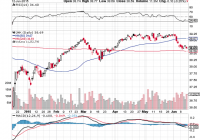
“Taper tantrums” in the credit markets are giving investors another ideal buying opportunity with junk bonds. The “smart money” remains bullish on junk bonds for 2015. Junk bond ETF’s make sense, but bargains and higher yields are possible with closed end funds that trade at a discount. My favorite closed end fund trades for a 7% discount to net asset value, it yields 9.5%, and it pays shareholders every month. Here we go again, the markets are having another “taper tantrum” and that has caused some selling pressure in junk bonds. We have seen pullbacks in the junk bond sector many times in the past few years and each one has been a great buying opportunity. This recent sell-off appears to be another golden opportunity to buy high-yielding assets from investors who are either uninformed or just plain overly focused with short-term thinking. Let’s take a look at the chart of a popular junk bond ETF below: (click to enlarge) As the chart above shows, the SPDR Barclays High Yield Bond ETF (NYSEARCA: JNK ) is now trading near the 200-day moving average of $38.59, which is a potentially strong support level. At this level, the potential downside risk could be limited and that makes this an even more attractive buying opportunity. Furthermore, there are other good reasons to be buying junk bonds now: The market has been so overly focused on this potential rate hike that it seems like many investors are acting very irrational over the fear of any rate hike. However, a closer look reveals that there is really nothing to fear, because like just about everything in this economic “recovery”, any rate hike is likely to be very minimal. One analyst in a recent Washington Post article describes the potential rate hike as being “bupkis” or “absolutely nothing” in terms of the size. The article states: “I don’t expect that they’ll do more than a quarter point,” said Ed Yardeni, president and chief investment strategist of his own advisory firm Yardeni Research. ” Bupkis as we say in New York,” he added, using a Yiddish word that has come to mean ‘absolutely nothing’ in English. “I think they’ll do the bare minimum,” he added, “for credibility sake. To show they can. They haven’t had any practice.” He predicted that the Fed’s action will be described as “one and done.” The reality is that the stock market and high yield bonds could rally as soon as the “rate hike” takes place as the certainty of this event could calm irrational investor fears and allow the market participants to realize that even after a quarter point hike, stocks and high yield bonds are still the only game in town. All this hand-wringing over a quarter point hike is irrational because it is nowhere near enough to make savings accounts, money market accounts or CD’s, a competitive asset class when compared to dividend stocks or high yield bonds. It appears that the “smart money” sees this and that is why firms like Goldman Sachs (NYSE: GS ) are bullish on junk bonds for 2015 . Another long-term positive factor is that the European Central Bank’s new bond buying program is creating more demand for high yield assets. A recent Bloomberg article , states that the European Central Bank’s bond buying program (quantitative easing) is pushing yields below zero on nearly $1.7 trillion worth of debt and that is also creating more demand for high yield assets. Furthermore, the fact that interest rates can move up a little (ok, barely) is a bullish sign for the overall economy. A stronger economy means that junk bond default rates could decrease and credit ratings could increase thereby making the bonds more valuable and lower risk. I believe it makes sense for investors to accumulate shares in JNK but there is another way to get an even higher yield and a bargain…… and that is to consider closed end funds, or CEF’s, which can trade for a discount to net asset value. In this sector, my favorite closed end fund is the Pioneer Diversified High Income Trust (NYSEMKT: HNW ). This is a CEF which primarily invests in high yielding bonds. For numerous reasons, this remains one of my favorite ways to invest in junk bonds: It is well diversified, it trades at a discount to net asset value, it pays a dividend every month, the payout appears secure, plus it yields 9.5%. The Pioneer Diversified High Income Trust has around 432 holdings which indicates it is well diversified. This fund has an average duration of just 3.02 years, which means that duration risk is very low and that is another reason why this fund is very attractive. The Pioneer Diversified High Income Trust has average earnings per share of more than 16 cents per month . This means the monthly payout of 13.5 cents per months appears very solid. (click to enlarge) The chart above shows that the share price is now a bargain at just about $17, because the net asset value (as of June 11, 2015) is $18.32. The current share price represents a discount of about 7% below net asset value. That is a large discount and it is one that has not historically lasted for long as rebounds have typically quickly followed these types of pullbacks. I believe that the market is overly focused on a “bupkis” rate increase and that means investors will once again be looking to buy high yield assets. A quarter point increase is not enough to make the generous 9.5% yield that the Pioneer Diversified High Income Trust any less attractive to most investors who desire income. The 7% discount to net asset value makes it a real bargain. Plus, with the generous yield, and with the dividend payout being made to investors every month, this closed end fund is like a gift that keeps on giving. Here are some key points for the Pioneer Diversified High Income Trust: Current share price: $17.10 The 52 week range is $16.43 to $21.63 Annual dividend: $1.62 per share (or 13.5 cents per month), which yields about 9.5% Here are some key points for SPDR Barclays Capital High Yield Bond: Current share price: $38.69 The 52 week range is $37.26 to $41.82 Annual dividend: about $2.40 or (20 cents monthly) per share which yields 6% Data is sourced from Yahoo Finance. No guarantees or representations are made. Hawkinvest is not a registered investment advisor and does not provide specific investment advice. The information is for informational purposes only. You should always consult a financial advisor. Disclosure: The author is long JNK, HNW. (More…) The author wrote this article themselves, and it expresses their own opinions. The author is not receiving compensation for it (other than from Seeking Alpha). The author has no business relationship with any company whose stock is mentioned in this article.