Tag Archives: earnings-center

The AlphaClone Alternative Alpha ETF May Be The Safest Equity Ticker
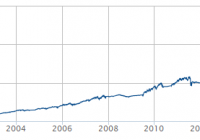
ALFA is a dynamically managed ETF based on hedge fund replication. It embeds a timing rule to hedge its holdings in market-neutral mode. Investors can use the asymmetry in risk-reward offered by this rule. The AlphaClone Alternative Alpha ETF (NYSEARCA: ALFA ) relies on the idea that a collective brain of famous fund managers should deliver a significant and steady return. ALFA selects fund managers based on their past performances after publication of their holdings. It uses a “clone score”, described as below in the factsheet: A proprietary scoring method that measures the efficacy of following a manager based on their public disclosures. AlphaClone’s clone score for each manager is based on the monthly returns in excess of a broad market index and a fixed hurdle rate exhibited by the manager’s follow strategies over time. Clone scores are recalculated bi-annually. In other words, past performances must be good, and also replicable. ALFA has diversification rules: the minimum number of holdings is 13, no single one can be more than 15% of NAV and the largest 5 holdings together cannot be more than 50%. When I write this, the largest holding is Apple (NASDAQ: AAPL ) with 7.43%, the top 5 holdings represent 20.46%. ALFA takes only long positions on individual stocks, it doesn’t follow short sales nor implements other strategies. The Global X Guru ETF (NYSEARCA: GURU ) tracks another index based on a similar duplication model. The main reason why I prefer ALFA over GURU is a hedging rule putting the portfolio in market-neutral mode when the S&P 500 index falls below its 200-day simple moving average. The index can vary between being long only and market hedged (50% short exposure to the S&P 500 index). The hedge is triggered on or off when the S&P 500 crosses its 200-day moving average at any month end. (excerpt of the factsheet) The decision to enter, quit or maintain the hedge is made at the end of each month for the next full month. This blog post by Alphaclone’s CEO explains the choice of an end-of-month timing to avoid whipsaws, with a study on past data since 1950. ALFA was launched on 5/31/2012 and the underlying index in October 2011, but the latter has been calculated starting in 2001. The next hypothetical equity curve shows that ALFA would have been in market-neutral mode during the worst periods of the 2 last recessions, after the flash-crash of 2010 and also the August 2011 correction (chart from solactive.com ). Alphaclone index guidelines specifies that the market-neutral state is attained by Shorting a security that tracks the S&P 500 Index in an amount equal to the market value of 100% of the index’s long positions. No mention is made of selling holdings, so we can suppose that the hedge is taken on margin. When the hedge is on, the ETF returns the alpha of a stock portfolio chosen by some of the best fund managers. ALFA is dynamically hedged smart money. It is possible to make it even safer by buying it at specific times. The risk is lower when the S&P 500 is below or close to its 200-day moving average. It is also lower at the end of the month, just before the hedging decision is made. If the benchmark falls or stays below the moving average, the drawdown is small (except in a flash crash scenario), and the ETF will be protected in market-neutral mode for the next month or more. If the trend is reverted, it may profit by the upside. When adding on an existing position, it is also possible to play on the quantity to control the new average buy price. For M shares at $P per share and N shares at $Q per share, the average price is (MP+NQ)/(M+N). The idea is to calculate N so that it stays below the 200-day moving average. Given the correlation (0.74) and beta (1.08), ALFA follows the market moves quite closely. Using its own 200-day moving average to evaluate the level where the hedge would be triggered is a reasonable rule-of-thumb. It also provides a safety margin when ALFA is in a better position than the SPDR S&P 500 Trust ETF ( SPY) relative to the moving average, like recently. Of course, the price can fall lower before the end of the month. The next table gives an idea of the maximum drawdown before the hedge is activated when we are 1 day, 1 week or 1 month before the next hedging decision, with the confidence interval offered by 87 years of data. It shows the maximum losses of the Dow Jones Industrial Average (NYSEARCA: DIA ) and the S&P 500. Numbers can be multiplied by 1.1 to take the beta into account. Maximum loss… DJIA since 1928 S&P 500 since 1950 …on a single day -22.61% -20.47% …on a single week -18.15% -18.2% …on a single month -30.7% -21.76% When buying in the last week of the month, the maximum drawdown before activating the hedge should be no more than 25% with a good confidence interval. Once in market neutral, ALFA returns its stock portfolio’s alpha whatever happens in the market until the next bullish trend. The long moving average and the monthly trigger are supposed to avoid whipsaws. Conclusion : Past data are not a guarantee for ALFA future returns, but the structure of its underlying index makes it a good buy-and-hold investment with a strong asymmetric bias. Its hedging rule reduces possible drawdowns, and also allows to build a position step by step with a better control of the value-at-risk. Disclosure: I am/we are long ALFA. (More…) I wrote this article myself, and it expresses my own opinions. I am not receiving compensation for it (other than from Seeking Alpha). I have no business relationship with any company whose stock is mentioned in this article.
Look To Taiwan For Stability And Low Valuation

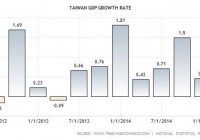
Summary The iShares MSCI Taiwan ETF has extremely low valuation at the moment. Taiwan experienced a large drop in exports in June, while exports are expected to begin increasing in the 3rd quarter of 2015; this has created a buy opportunity. Taiwan is a very stable country to invest in; there has been conservative economic growth, low inflation, consistent trade surpluses, and negligible exchange rate movements. In previous articles, I have mentioned investment opportunities into fast growing economies such as the Phillipines and Indonesia through ETFs, and believe these regions have ample potential. However, Taiwan presents itself as a more stable investment option, and valuation is extremely attractive at the moment. I have decided to turn my attention to the iShares MSCI Taiwan ETF (NYSEARCA: EWT ), as a means for investors to gain exposure to Taiwan. GDP Growth GDP growth in Taiwan can be characterized as very consistent and moderate. Future projections provide the same results more or less, with a slightly more beneficial outlook; GDP growth is expected to rise 2.7% year on year until 2019 . Other forecasts, after assessing China’s threat to Taiwan’s exports, have lowered GDP growth projections from 3.78% to 3.28% in 2015 . The benefit with Taiwan thus can be characterized as stability, coupled with moderate and consistent growth projected for the future. (click to enlarge) Source: Trading Economics. FX Risks One benefit of investing in Taiwan is its extremely stable currency and low inflation rate. The exchange rate movement for this currency has been negligent, with an average rate of 31.25 since 1979, and has most recently been consistently close to 30 in recent years. Inflation has also been very low, and has mostly recently been -0.56% in June 2015. Towards the end of 2015, inflation averaged between 0.6% to 2%. Taiwan has the comparative advantage of low inflation and negligent exchange rate movement, when compared to other countries in Asia. The rise of Taiwan’s currency, which is rising faster than Japan, South Korea, and China, does present a threat to its tech exports , as this contributes vastly to its economy. Consistent Trade Surplus As a strong tech export country, it is favorable to note that Taiwan’s balance of trade has been on the rise in recent years. Projection for future balance of trade in Taiwan provides mixed results: Demand from developed markets continues to improve, mainly in the USA and Europe. This is balanced with caution, as the demand from emerging countries such as China has been decreasing. June has been a particularly challenging month for Taiwan, as export demands decreased by 13.9% , the largest decrease since February of 2015. (click to enlarge) Source: Trading Economics. Exports in Taiwan are projected to grow at a moderate rate for the next year. TWD Million Last Q3 2015 Q4 2015 Q1 2016 Q2 2016 Exports 709,860 752,876 755,280 754,089 751,775 Investors wishing to profit off of growth in exports, may find it beneficial to develop a short strategy, by waiting until the 4th quarter of 2015 when exports increase by 6.4%. While exports do not have substantial potential for growth based on these projections, having moderate growth in an export heavy country, with a stable currency and low inflation, makes this investment very conservative. Moreover, the valuation is incredibly low, and investors may determine it beneficial to hold this stock longer, and to choose a higher exit P/E. Economic Cooperation Framework Agreement The Economic Cooperation Framework Agreement , a significant trade deal completed with China in 2010, has already proved to be a catalyst for economic growth; the agreement has not been able to expand beyond its initial stages, due to protests beginning in March last year. The agreement was created to reduce tariffs and commercial barriers between the two countries. Currently, statistics have shown that the trade agreement has saved Taiwan $2.4 billion on tariffs and could boost the country’s GDP by 1.5% if fully implemented. With decreased demand from China and high dependency on exports for revenue, the full implementation of this agreement clearly has the ability to give Taiwan’s economy the boost necessary to achieve further growth. Taiwan Stock Market One last benefit of investment in Taiwan has been the consistent rise of the stock market since late 2014, coupled with the recent index plunge beginning in May of 2015. The Taiwan Stock Market is expected to increase to 9,390.06 points in 2016 , which represents a 5.3% increase. A moderate increase in the TSWE will be attractive, especially after examining the fast financial performance of the fund’s holdings later in this article. (click to enlarge) Source: Trading Economics. Diverse Growth Taiwan has had substantial growth in a wide variety of industries and areas in 2015: Taiwan’s industrial production index gained 6.49% year on year in March of 2015. During this time, construction also grew by 15.06%, and manufacturing of electronic components rose by 11.41%. Machinery and Equipment grew by 14.4% and chemical materials rose by 13.6%. Food services and retail both gained 1.9% and 1.3% respectively. Consumer spending has been significantly increasing since 2012, with a most recent annual increase of 2% in the 1st quarter of 2015. Taiwan’s manufacturing sector also reached an all time high in 2014, with a 3.5% year on year increase in revenue . Increased consumption and exports from Taiwan’s tech sectors have all contributed to the country’s economic growth. Moreover, increased wages has also been a catalyst for increased consumer spending, further contributing to economic growth. Taiwan has a strong advantage as a high tech export company, that domestically also has a very favorable outlook. While it is certainly not at its most strategic growth point, there is still growth ahead, and investors can feel confident regarding the country’s past economic performance. Moreover, the growth in manufacturing in Taiwan is crucial, as this will be another factor that will boost the economy and increase consumer’s confidence. Buy Opportunity EWT data by YCharts Things started to look less favorable in Taiwan beginning in June, when industrial production dropped -3.18%, as oppose to the 1.21% gain anticipated. As previously mentioned exports also decreased substantially during this month, at a two year record low. Poor performance in June attributed to the drop in the fund price; this creates a short term opportunity for the anticipated increase in exports and also an opportunity for long term investors to take advantage of the low valuation this has created. Price/Earnings 12.93 Price/Book 1.74 Price/Sales 0.94 Source: Yahoo Finance . Conclusion While Taiwan certainly has major threats ahead and will be no means among the fastest growing economies, the country can be characterized as a conservative country to invest in, that has acceptable levels of growth ahead. The current valuation of this fund is a key reason to invest in Taiwan at the moment, while investing in equity in Taiwan with higher valuation is not a very strategic investment objective; the economic environment in Taiwan is favorable, but there is not enough growth ahead to justify investing in companies with moderate or high valuation. Therefore, the investment approach to Taiwan should be considered accordingly, as it may not be the best environment for long term investment. Unless there is a considerable boost in Taiwan’s position as a tech export country, with increased exports to emerging countries specifically, it is best to sell this fund once the valuation is high or even average. Disclosure: I/we have no positions in any stocks mentioned, and no plans to initiate any positions within the next 72 hours. (More…) I wrote this article myself, and it expresses my own opinions. I am not receiving compensation for it (other than from Seeking Alpha). I have no business relationship with any company whose stock is mentioned in this article.

Arckaringa Basin Shale Provides Huge Potential For Linc Energy

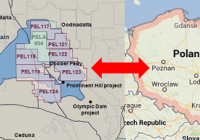
Summary The Arckaringa Basin is estimated to hold billions of barrels of oil. Linc Energy has almost exclusive rights to this region and its vast reserves. The company has had a difficult time recently but has huge future potential. Introduction The Arckaringa Basin is an endorheic basin – that is a closed drainage basin that does not allow the outflow of water. Located in Southern Australia, the basin used to be seen as a giant 31,000 square mile chunk of land. That was until they discovered oil. Arckaringa Basin v. Poland – Property Correspondent The Arckaringa Basin is quite huge with the above map showing a comparison to the country of Poland. More so, the basin already has some huge mining projects in place. On the bottom right of the map you see the Olympic Dam Project, which is a mining project run by BHP Billiton. The mine area contains the world’s single largest uranium deposit and fourth largest copper deposit. Oil Discovery Before we go onwards to talking about the potential of the Arckaringa Basin and its huge oil reserves, we must first talk about the discovery of oil in the region. Oil was first discovered in the region by a company known as Linc Energy (OTCQX: LNCGY ). The company first discovered oil in the region in 2010 and then underwent further analysis of the oil it found in 2011. Current estimates for the total amount of un-risked prospective resources in the basin are at 95 billion barrels of oil equivalent. On a risked basis, based on the probability of geological success, the area is expected to have roughly 3.5 billion barrels of oil on a risked basis . Oil Location and Amount Either way you slice it, this is an impressive amount of oil for a company currently trading with a market cap of less than $100 million. Should the company manage to recover only a hundred million barrels of oil – a pittance compared to the estimated reserves, the company could earn its entire market cap back earning just $1 per barrel. More realistically assuming a 10% recovery rate and $10 per barrel (roughly half of what the majors make) that would still turn out to almost $4 billion in profit for such a small company. (click to enlarge) Arckaringa Basin Licenses and Infrastructure – Linc Energy SAPEX The above map shows the current map of the area along with the different infrastructure in place along with the locations where Linc Energy has either a petroleum exploration license or is currently in the process of applying for one. One important thing to note is the company already has most of the basin covered in terms of licenses. Linc Energy Situation Now that we have talked about Linc Energy’s stake in the Arckaringa Basin along with talking about the discovery of the formation it is now time to talk about Linc Energy’s situation specifically. Linc Energy’s stock has seen a difficult time with much fluctuation. The company saw its stocks hit highs of $43.50 per barrel in 2008 before dropping down to as low as $7.36 during the crash lows. The company then saw a broader recovery in its stock price following the 2010 discovery up to a high of $30.83 in 2011. The company then saw its share price crash down to settle at around $7 for the second-half of 2012. The company then saw a spike to $29.55 in 2013. However, since then, and continuing throughout the current oil crash, the company has seen its stock price drop down over time to recent lows of $1.30 per barrel. Invest Linc Energy has been a falling knife in terms of share prices especially over the past two years where the company has lost almost 96% of its value. However, the company has a present market cap of just $79.3 million. Much of the long-term crash has been a result of the company’s delay in investing in the Arckaringa Basin. However such a delay will not last forever. Assuming the company continues working, it will eventually start producing significant amount of oils in the region which should provide a significant boost in the company’s stock price. More so, the current oil crash has helped exacerbate the trouble that the company’s current stock price is facing. That means that the company’s stock price is artificially low even based on its current troubles and as a result, the company represents a solid investment at current prices. Conclusion Linc Energy has had a difficult time recently. However, the Arckaringa Basin where it has significant shale stakes with impressive potential for future growth. The company has taken its time developing this resource but currently has all of the necessary permits in place to properly use it (with the exception of a few that are currently in process). More so, due to other major projects in the region, significant infrastructure already exists for when the project gets running and the company can start producing oil. For investors looking for a relatively risky investment with huge potential, Linc Energy represents one great choice. Editor’s Note: This article covers one or more stocks trading at less than $1 per share and/or with less than a $100 million market cap. Please be aware of the risks associated with these stocks. Disclosure: I/we have no positions in any stocks mentioned, and no plans to initiate any positions within the next 72 hours. (More…) I wrote this article myself, and it expresses my own opinions. I am not receiving compensation for it (other than from Seeking Alpha). I have no business relationship with any company whose stock is mentioned in this article.