Author Archives: Scalper1

Why You Should Be Playing Defense In This Market
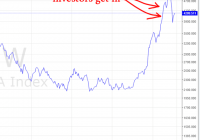
Summary Why you should always be thinking about protecting your assets. Why holding cash is always a good idea. What you can learn from history and China about playing defense for maximum wealth generation. Ouch. That’s how I felt in 2008 when my portfolio was down 28.6%. The S&P was down 37% that year but I certainly didn’t care about having beaten the market. I’m supposed to be indifferent to how the market is doing and to take a long term focus. After all, that’s what I tell people all the time. But I remember it clearly. I was in Seoul, Korea getting married while the market was crashing. Obviously, I wasn’t concerned because I was sweating bullets while waiting at the altar. Also, being on the other side of the world helps drown out the noise. Then it was straight to the honeymoon and by the time I woke up, the market was in ashes. I was excited though and I had to sneak away to the resort lobby and hurriedly put in some trades before my newlywed wife noticed that I was missing. But despite all that, when 2008 came to an end, my portfolio was hurting by 28.6%. It wasn’t hurt from losing money. The hurt was due to the wasted opportunities I couldn’t take advantage of because I was 100% invested. The Current Situation At the moment, I have 20% in cash which provides flexibility and the opportunity to act if needed. Here’s what Prem Watsa, “Canada’s Warren Buffett”, once said during a conference call about having a high cash position. As far as the 30% cash, remember, that can change. So in 2008, and we had this position in 2007, in 2006. 2008, things turned the financial markets. Stock markets dropped… about 50%… And Tom, the only people who could benefit from that were the people who had cash or government bonds. And so we are conscious of that in our history. Cash gives you options, gives you the ability to take advantage of opportunity but you have to be long-term. We have built our company with a long-term view. Our long-term results are excellent. For example, in 2007, ’08, and ’09, the 3 years, 2007, 2008, 2009, we made $2.8 billion after tax, our book value went up by 150%. Since that time, we haven’t done a lot. But we’ve said to our shareholders that we are long-term focused, our results are lumpy and we never know when it can change. But the cash gives us a huge advantage in terms of taking advantage of opportunity as and when they come. It’s not just in the stock market. People who had the cash to scoop up cheap real estate, businesses or even liquidated inventory to flip have all done well while other people were running scared. Warren Buffett says something similar. We always keep enough cash around so I feel very comfortable and don’t worry about sleeping at night. But it’s not because I like cash as an investment. Cash is a bad investment over time. But you always want to have enough so that nobody else can determine your future essentially. So are you 100% invested or do you have some room to take advantage of opportunities if it comes up? Are you willing to sacrifice 1-2% in potential returns by holding cash, or are you trying to squeeze out every basis point possible without considering what could happen? Cash Does Nothing and Is a Bad Investment True. If you’re talking about a long term horizon greater than 10 years, that is. Holding cash isn’t a popular choice because you feel like you are missing out on opportunities while everyone else is making money . Instead of holding cash, financial commentators prefer to recommend defensive companies, even after the stock market plummets when fear is supreme. But that’s the worst time to be buying defensive stocks anyways because everyone else is thinking the same thing. Plus, it assumes you have the cash to buy defensive stocks to begin with. If cash isn’t your thing, then the next best thing would be rebalance your portfolio from speculative growth picks to recession proof businesses and sleep well at night. Ditto. Learn from History and the Current Chinese Market In Howard Marks memo titled “Ditto”, there’s a section that outlines the cycle in attitude towards risk. 1. When economic growth is slow or negative and markets are weak, most people worry about losing money and disregard the risk of missing opportunities. Only a few stouthearted contrarians are capable of imaging that improvement is possible. 2. Then the economy shows some signs of life, and corporate earnings begin to move up rather than down. 3. Sooner or later , economic growth takes hold visibly and earnings show surprising gains. 4. This excess of reality over expectations causes security prices to start moving up. 5. Because of those gains – along with the improving economic and corporate news – the average investor realizes that improvement is actually underway. Confidence rises. Investors feel richer and smarter, forget their prior bad experience, and extrapolate the recent progress. 6. Skepticism and caution abate; optimism and aggressiveness take their place. 7. Anyone who’s been sitting out the dance experiences the pain of watching from the sidelines as assets appreciate. The bystanders feel regret and are gradually suckered in. 8. The longer this process goes on, the more enthusiasm for investments rises and resistance subsides. People worry less about losing money and more about missing opportunities. 9. Risk aversion evaporates and invests behave more aggressively. People begin to have difficulty imagining how losses could ever occur. When you look at how Howard Marks explains this cycle, it’s clear that history may not repeat, but it does rhyme. And it’s currently rhyming in China. (click to enlarge) My mother-in-law theory is that when my mother-in-law wants to get into the stock market or starts to recommend stocks as an investment, it’s time to move to cash. That’s what happening in China though. But look to history. (click to enlarge) The US market is different to the Chinese market, but it’s a lesson nonetheless and something to keep at the back of your mind. How Far Will the Market Continue Going Up? I consider myself an optimistic person and many times, it has worked against me. A lot of the times, I don’t want to think about the bad things that could happen and I end up pushing it under the bed. And this market isn’t easy to invest in. Most hedge funds aren’t even in positive territory after fees this year. But will the market continue to go up forever? Don’t think so. There has to be a crash correction. My way of playing defense is to be alert and not contempt. I don’t trust or listen to market news or forecasters because they are just as clueless as me about what the market will do next. All I can say about forecasters and market predictions is to quote the following. There are two kinds of forecasters: those who don’t know, and those who don’t know they don’t know. – John Kenneth Galbraith How Do I Play Defense? Here’s how I do it. I’ve printed out Seth Klarman’s thoughts on holding cash and read it regularly or whenever I feel like I’m missing out. Read Howard Marks memos, Buffett letters and other papers and book on behavioral finance. I highly recommend What I Learned Losing a Million Dollars . It’s one of those books that make you grow. But reading books outside of investing keeps me fresh and always provides new insight on how I can improve. I don’t talk about stocks with non value investing people, which means I never talk about stocks at all in day to day life. Maintain a buy list. Remind myself to stop overpaying because valuation matters more than ever . There is a time for offense, but right now, I’m playing more defense. Offense wins games, but defense wins championships. So where are you at the moment? Offense or defense? Disclosure: I/we have no positions in any stocks mentioned, and no plans to initiate any positions within the next 72 hours. (More…) I wrote this article myself, and it expresses my own opinions. I am not receiving compensation for it. I have no business relationship with any company whose stock is mentioned in this article.
Apple No. 1 smartwatch vendor, but sales estimates vary

Apple (AAPL) didn’t reveal how many smartwatches it sold in the June quarter, but research firms guesstimated and crowned Apple the top vendor in Q2. Juniper Research on Thursday estimated that Apple sold 2 million to 2.5 million Apple Watch units last quarter. It divined that range from comments by Apple executives and sales in the company’s “other products” category, which includes iPod, Apple TV, Beats headphones and accessories. “Depending on the average selling price of Apple Watch, the year-over-year revenue increase (in ‘other products’) indicates between 1.5 million and 2.5 million units,” Juniper said in a statement. “Apple CFO Luca Maestri also remarked that the Watch has sold more than the first iPhone or the iPad in a comparable period — that is 87 days. The first iPad was the better selling of these two, and sold 2 million in 60 days.” Juniper estimates Apple Watch generated about $1 billion…

Duplicating The All-Weather Fund Using Low-Cost ETFs

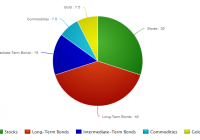
Summary Tony Robbins’ newest book reveals the asset allocation of Ray Dalio’s All-Weather Fund. The allocation is designed to balance the percentage of risk rather than the percentage of money to each asset. This strategy can be replicated using low-cost ETFs, but the biggest challenge is in sticking with the allocation as the years go by and each asset performs differently. Everyone in the business knows Ray Dalio is the manager of the world’s largest hedge fund, but his portfolio strategy has not always been very accessible by the public. Dalio has not added any clients in ten years, and even then, the only way to get access to the fund was with a net worth of at least four billion dollars and a minimum investment of 100 million dollars. Luckily, when Tony Robbins sat down with Dalio to interview him for his latest book , Ray shared the specifics of how he allocates the All-Weather fund. So this article will look at how to replicate that portfolio using a series of low-cost ETFs. Keep in mind that the fund does use leverage to increase the returns, and this allocation does not include any of the hedging activities. The large percentage allocated to bonds is a surprise to most, but the reasoning behind it is based on balancing the percentage of risk rather than the percentage of money put into each asset. Stocks are three times more volatile than bonds, so putting a higher percentage into bonds balances the risk in a way that putting 50/50 stocks and bonds wouldn’t. So the 15% in gold and commodities works the same way, as these are more volatile than both stocks and bonds. This approach is not all that different from Harry Browne’s permanent portfolio concept, which is a little more simple with 25% stocks, 25% bonds, 25% cash, and 25% gold. Swiss investor Marc Faber also recommends a similar allocation , 25% stocks, 25% bonds/fixed income, 25% real estate, and 25% gold. Dr. Faber’s portfolio is more suited towards very wealthy individuals, and it is closer to the “one third, one third, one third” concept that Jim Rickards talks about in regards to how wealthy families keep their wealth intact over many generations. The allocation is one third in land, one third in gold, and one third in fine art. This particular strategy takes a VERY long-term point of view and looks to protect and preserve wealth against any and all crises from depressions, wars, to hyperinflation. Dalio’s All-Weather fund is not centered around hedging against inflation/hyperinflation as much as the portfolios mentioned above, but the 15% in gold and commodities shows that he does have some concerns about inflation even though he might not think severe inflation is inevitable and imminent. In fact, it was the historic event in 1971 of President Nixon taking the US off the gold standard for good that greatly shaped Ray’s “all weather” strategy and realization that no one can really predict which investments will do best in the future. So here are the best choices of ETFs for replicating the All-Weather portfolio: 40% Long-Term Bonds Vanguard Long-Term Bond ETF (NYSEARCA: BLV ) With assets totaling 1.2 billion dollars, this fund invests in both government and investment-grade corporate long-term bonds. The mix of corporate bonds helps to give the yield a boost that one would not get by going only with government bonds. Of course, when you go with any Vanguard ETF, you are usually getting the lowest expense ratio in the industry, and with this particular ETF, the ER is only .10%. The yield is 4.05%. 15% Intermediate-Term Bonds Vanguard Intermediate-Term Bond ETF (NYSEARCA: BIV ) This popular fund is even bigger with total assets of 5.95 billion dollars. There are not too many differences between this fund and BLV, except that this fund of course holds only shorter-term bonds. The yield is 2.73%, and the expense ratio is also a very low .10%. For this 15% portion, you could also split it into two, with BIV on one side and a TIPS ETF on the other. 30% Stocks Vanguard S&P 500 ETF (NYSEARCA: VOO ) Only 30% in stocks seems very low compared to conventional wisdom. Again though, Dalio’s strategy puts the assets with the most volatility as a lower percentage of the portfolio. VOO is a large fund with 34.41 billion in assets . The expense ratio is .05%, which is very important for the long-term investor and the highlight of this ETF. The yield for VOO is 2.01%. In some of my recent articles, I have been highlighting ETFs that can provide income that would be cushioned from a major crash in the US, which I anticipate, although I won’t put a time on it. So, in that vein, I would add to this by splitting the equities portion of this strategy into two parts; one, domestic equities, and the other, international equities. For the international exposure, I think the Vanguard FTSE All-World Ex-US ETF (NYSEARCA: VEU ) is the best choice within this strategy. This ETF has 14.82 billion in assets , an expense ratio of .14%, and the yield is 2.81%. 7.5% Gold and 7.5% Commodities iShares Gold Trust ETF (NYSEARCA: IAU ) and PowerShares DB Commodity Index Tracking ETF (NYSEARCA: DBC ) This allocation to gold and commodities again goes against conventional wisdom. Considering the most recent downturn in gold, it would be even more difficult for most people to consider gold and commodities in their portfolio. It is easily the most hated commodity in world today, or at least it is the most hated in the financial mainstream media. Gold and the whole natural resource sector have been in a deflation since 2011, but that does not change the fact that since the late 90s, gold has outperformed the Dow, the S&P 500, as well as Berkshire Hathaway (NYSE: BRK.A ) (NYSE: BRK.B ). (click to enlarge) So, for this portion of the portfolio, IAU works best for the gold portion, because it has the lowest expense ratio of any gold ETF at .25%, as well as plenty of liquidity. For the commodities, DBC is a good choice. It tracks the DBIQ Optimum Yield Diversified Commodity Index Excess Return™ which has exposure to 14 of the most heavily traded commodities. While the expense ratio is higher than I would like at .85%, the fund offers exposure to the futures market without going through the actual trading process yourself. SA contributor Dan Bortolotti points out that this allocation did not provide mind-blowing returns over the past three decades (9.7% annualized returns) and that most people could not stomach any one asset going through turmoil while another asset is rising. The problem lies in the emotions of individual investors though, not in the actual portfolio. However you slice it up, it is going to be very difficult for most people to sit by while any part of their portfolio is not performing very well. The natural instinct is to sell the portion that is underperforming and be overweight the portion that is doing good. How many of the people who were 90% stocks and 10% bonds stuck with that strategy in 2008 when the crisis was going on? What about putting all your eggs in one basket, would that not cause tremendous pain when that one asset inevitably goes through a bear market? All that most people will need is basic asset allocation of their assets and the ability to stick with the allocation over a period of decades. Even for the person who is not a financial expert, the better option is to keep a core portfolio of low-cost and commission-free ETFs instead of letting a mutual fund do the same thing but with extra fees attached. Disclosure: I/we have no positions in any stocks mentioned, and no plans to initiate any positions within the next 72 hours. (More…) I wrote this article myself, and it expresses my own opinions. I am not receiving compensation for it (other than from Seeking Alpha). I have no business relationship with any company whose stock is mentioned in this article.