Tag Archives: utilities

Separation Of Volatile Merchant Business Will Lead American Electric Power To Outperform
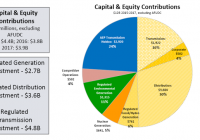
Summary Separation of volatile merchant business will lead to multiple expansion. Higher capex spend to support growth in the weaker environment. Transmission business is expected to be a significant contributor to AEP’s growth in the near future. Healthy balance sheet to trigger M&A opportunities for AEP. Above industry average dividend growth with room for growth may support stock in low power pricing environment. Company description American Electric Power (NYSE: AEP ) is one of the largest electric utilities in the United States (US), delivering electricity to more than 5.3m customers in 11 states. AEP ranks among the nation’s largest generators of electricity, owning nearly 38,000MWs of generating capacity in the US. AEP also owns the nation’s largest electricity transmission system, a more than 40,000-mile network that includes more 765-KV extra-high voltage transmission lines than all other US transmission systems combined. Investment highlights Separation of merchant generation business to improve multiples I expect AEP to sell/spin off its volatile merchant generation business later this year. The company’s management has already confirmed its commitment to make the company a pure regulated utilities business. I see the separation of merchant generation business as a positive catalyst in two ways: 1) AEP as a pure regulated utilities company commands higher multiple and 2) the current stock price doesn’t reflect the merchant generation business. At current levels, AEP trades in line with Duke Energy Corporation (NYSE: DUK ) (15.5x FY15 EPS) excluding any value for its merchant generation business (DUK has already sold its merchant generation business to Dynergy for $2.8bn). Unlike DUK, AEP has no exposure to international risk so commands higher multiple. High capex to support growth Over the next 3 years, AEP plans to invest $12bn (96% to regulated businesses), with nearly $5bn in transmission, $3.6bn in regulated distribution, and $2.7bn into its regulated generation fleet. This drives a 6.6% rate base CAGR across the regulated businesses (including transmission) for 2015-2017. The rate base growth combined with cost cutting measures will definitely help the company reach the target EPS growth of 4%-6% annually. AEP’s future capex plan: (click to enlarge) Source: June 2015 Investor presentation of AEP Transmission business to be a significant contributor to growth I believe the company’s 4%-6% EPS growth rate target is quite achievable and the transmission business is going to be the main contributor to growth, providing $0.15/yr of EPS growth through 2018. With management focused on capital allocation for its businesses, i expect transmission to get the incremental investment from any sale proceeds (sale proceeds from merchant business). AEP’s Transmission Business revenue growth estimate: (click to enlarge) Source: June 2015 Investor presentation of AEP Strong balance sheet AEP is safely levered at present, given regulatory requirements at most of its utility subsidiaries and covenants that require AEP to maintain debt/total capitalization at a level that does not exceed 67.5%. Going forward, i expect the company to remain in safer zone due to stable cash flows from the regulated business. Total debt/capital was 54.4% as of year-end 2014 and i expect it to remain relatively constant going forward despite high investment plans. In addition, AEP has ample liquidity with $163m of cash and $3.5bn of borrowing capacity under its credit facility commitments as of year-end 2014. I view AEP’s dividend as safe and expect the dividend payout ratio to remain at 60%-70%. Source: June 2015 Investor presentation of AEP Experienced management Nick Akins, the sixth CEO in AEP’s 100-year history, became the CEO in 2011. Before his promotion, Mr. Akins served as the executive VP of AEP’s generation unit. He has also led the company’s Southwestern Electric Power unit and was vice president of energy marketing services in his 30 years with the company. Brian Tierney, the executive VP and CFO, has been with AEP since 1998. The experienced management will definitely focus on growing regulated business post separation from volatile merchant business. Strong dividend growth During the 12 months ending 3/31/2015, AEP paid dividends totaling $2.09/share. Since the stock is currently trading at $54.23, this implies a dividend yield of 3.9% (higher than NextEra Energy Inc , AES Corp , NRG Energy, Inc., which have a current dividend yield between 2.3% and 2.9%). AEP has increased its dividend during each of the past 5 years (in 2009, the dividends were $1.64/share). The company has a payout ratio of 60.1% which is expected to reach 70% going forward. AEP’s dividend history and estimate Source: June 2015 Investor presentation of AEP Valuation My price target of $61.26 for AEP is based on a 3.2% premium to the industry target average P/E multiple of 15.5x on 2016 EPS estimate of $3.60. I assign the premium to reflect an improved regulatory environment in most of AEP’s service areas, a visible long-term earnings growth profile in its transmission segment, expected sale of merchant generation business , as well as benefit from PJM’s Capacity Performance proposal. I recommend investors to take position in AEP at current level of $54.23 to get a return of 16.7% (13% price appreciation+3.7% of dividend yield) in one year. AEP’s Regulated Business FY16 Adj EPS P/E multiple Price/share Utilities $2.82 15.8x $44.42 Transmission $0.74 16.8x $12.40 Other $0.04 15.8x $0.63 Total Equity/share $3.60 16.0x $57.44 AEP’s Competitive Gen. Business FY16 Adj EBITDA, $m EV/EBITDA Multiple   Generation co. 360 8.0x 2,880 Debt, $m     1,006 Equity value, $m     1,874 Number of shares, m     490 Equity/share     $3.82         Total Equity/share     $61.26 Current trading price     $54.23 Upside     13.0% Disclosure: I/we have no positions in any stocks mentioned, and no plans to initiate any positions within the next 72 hours. (More…) I wrote this article myself, and it expresses my own opinions. I am not receiving compensation for it (other than from Seeking Alpha). I have no business relationship with any company whose stock is mentioned in this article.
Exelon Cements Credentials As A Long-Term Stock

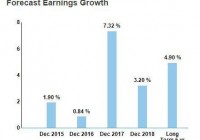
Summary Growth investments directed at improving generational assets and growing regulated asset base will ensure rate base growth and earnings stability for the company in the long run. Recent POM acquisition approval is signaling that EXC’s regulated EPS growth will improve in coming quarters. Future cash flows remain strong due to EXC’s efforts to have a large, regulated asset base. I reiterate my bullish stance on Exelon Corporation (NYSE: EXC ); the company is making good progress on its plan to have an extended regulated asset base through acquisitions and investments. EXC’s ongoing capital investments in several infrastructure development projects will add value to shareholder wealth, which will portend well for the stock price. Moreover, the company’s nuclear operation divesture plan is still under consideration; the plan, if approved, will strengthen EXC’s competitive position in the long run. The company’s rapidly growing regulated asset base provides a foundation for stable earnings and cash flow base, which will support dividend growth in future years. EXC currently offers an attractive dividend yield of 3.9%. Attractive Long-Term Growth Path Since the start of 2015, the volatile interest rate environment has weighed on utility stocks, and the utility sector underperformed the broad market in 1H’15. Owing to improving economic conditions in the U.S., the Fed is likely to increase short-term interest rates in 2H’15, which will put pressure on the stock prices of utility companies, including EXC. Despite the fear of a rise in interest rates, I believe EXC’s performance in the coming quarters will stay strong, mainly supported by the correct strategic efforts of the company. EXC, along with other utility companies in the industry, including American Electric Power (NYSE: AEP ) and PPL Corp. (NYSE: PPL ), have a robust capital spending outlook, which will support earnings growth in the next five years. EXC is following the industry norm by making hefty growth investments and acquisitions in regulated business to secure its long-term growth. During 2014, EXC spent almost $1.78 billion on several infrastructural growth-related projects, up 46.6% year-over-year. As per its recent sustainability report, the company has invested around $3.1 billion for electric and gas utility infrastructure, which includes a $500 million investment in the installation of smart meter technology during 2015. I believe the company’s recent approach to provide safe and reliable energy is bringing convenience for customers in a way that creates value for it over the long term. Another important area of investment has been EXC’s increased focus on improving its power generation capacity through the expansion and improvement of the gas business. In this regard, the company’s previously acquired 6 natural gas power plants in Maryland have started operations from June 28. The 128MW power plants will benefit EXC by improving its natural gas production capacity in the Maryland state and will ultimately add towards its rate base growth and positively affect the stock price. Moreover, the company has recently received approval for the much-awaited PEPCO Holdings (NYSE: POM ) merger from the Delaware Public Service Commission (PSC); the $6.8 billion merger is expected to complete in 2H’15, which will strengthen the company’s regulated operations and will positively affect the stock price. The upside of this merger rests in improving the EXC business and financial risk profile, as its regulated operations will increase; the company’s management expects that the merger will add nearly 15 cents-to-20 cents to EXC’s EPS during the first full year of operation. In fact, a rate base of nearly $26 billion has been projected for the combined entity, which indicates significant upside for its future ROE and cash flows. Moving ahead, under its plan of making strategic investments in diversifying the power generation portfolio, the company is planning to spend around $16 billion over the next five years, which I believe will enhance EXC’s future financial performance. On the other side, the company’s plan to shut down its loss making, Illinois-based 6 out of 11 nuclear power plants is still on hold. Recently, five of these nuclear units have failed to clear PJM’s base residual auction; despite the inability of its nuclear units to qualify for the PJM rate base auction, analysts are hoping that EXC will generate $150 million more in capacity revenue during 2017-2018 than it would have attained if all of its capacity had cleared the auction. However, the failure to qualify for the PJM auction has strengthened the company’s case before legislatures to shut down the nuclear plants. So, either the FERC should support them or LCPS standards should be changed to support its nuclear operations. While EXC is still in talks with the FERC to lower LCPS standards, I continue to believe that the closure of nuclear power plants is positively affecting the company’s performance in the long term, and will allow the company to focus more on stable regulated operations. EXC has an attractive dividend payment plan, which is strongly backed by its healthy cash flow base. Thus far, its healthy dividend payments have earned the company a decent dividend yield of 3.9% and a modest payout ratio of 48% , which indicates that there is significant room left for further dividend hikes, if the company opts to increase the payout ratio. Given EXC’s strong commitment to having a large, regulated asset base, I continue to believe in the security and sustainability of EXC’s future cash flow base, which ensures dividend stability and dividend growth in the years ahead. I recommend investors to keep track of the upcoming 2Q’15 earnings, as the company will provide an update on its capital expenditure outlook and will discuss its plans to increase regulated operations, which could have a significant impact on the stock price. According to the company’s guidance, EXC is expected to report EPS in a range of $0.45-$0.55 for Q2’15. In contrast, analysts are anticipating EPS of $0.51 for 2Q’15. The following table shows analysts; EPS forecast for EXC’s 2Q’15. Consensus EPS Forecast Low EPS Forecast High EPS Forecast 2Q’15 $0.51 $0.48 $0.55 Source: Nasdaq.com Risks The company continues to face operational and financial risk from its nuclear energy generation assets. Moreover, uncertainty about regulatory rate approvals, changes in national energy demand, stringent environmental standards and unforeseen negative economic changes are key risks that might hamper EXC’s future stock price performance. Conclusion I am bullish on EXC and believe the company will deliver a healthy performance in the long term. The company’s growth investments directed at improving its generational assets and growing its regulated asset base will ensure rate base growth and earnings stability in the long run. Furthermore, the recent POM acquisition approval is signaling that EXC’s regulated EPS growth will improve in the coming quarters. Moreover, the company’s future cash flows remain strong due to its efforts to have a large, regulated asset base, which will support dividend growth and make dividends more stable. Analysts have also projected a healthy next five-years earnings growth of 4.9% for EXC, as shown below in the chart. Source: Nasdaq.com Disclosure: I/we have no positions in any stocks mentioned, and no plans to initiate any positions within the next 72 hours. (More…) I wrote this article myself, and it expresses my own opinions. I am not receiving compensation for it (other than from Seeking Alpha). I have no business relationship with any company whose stock is mentioned in this article.

Exelon Should Be Considered For Income And Long-Term Growth

The company will benefit as the regulations are tightened to reduce the carbon emissions. Exelon’s robust capital spending plans will position the company well for future growth over the next 5-7 years. Merger with Pepco will result in immediate growth in earnings as well as cash flows. Exelon’s (NYSE: EXC ) competitive position has become less attractive following a crash in the natural gas and coal prices. This has resulted in lower earnings and dividends. However, Exelon may benefit in future when EPA (Environmental Protection Agency) will impose additional costs on thermal power plants. As Exelon is using nuclear power and abiding by the clean air rules, it will not have to face such higher fines and closure of its operations. The continued decline in solar energy prices will make it competitive with other natural resources (coal, oil and gas), in large parts of the world. As anticipated, solar prices will keep on falling in the future, this is a cause of concern for the utility companies solely focusing on fossil fuels for power generation. It is predicted that by the end of 2019, solar energy will be competitive and it will be able to compete with the other sources of electricity. Some of the smarter utilities such as NRG Energy (NYSE: NRG ), have already started to shift towards solar energy, and have also set up solar installation services in competition with SolarCity (NASDAQ: SCTY ) and Vivint Solar (NYSE: VSLR ). However, Exelon is relatively better placed than the others to survive this change. The company relies on nuclear energy, which is cleaner than coal or natural gas. Also, nuclear power is not very expensive, and can provide backup to disturbed wind and solar energy power. Conversely, Exelon faces operational and financial risks from its nuclear energy generation assets, such as strict environmental regulations by the government that will remain a threat to the company’s future financial performance. All these factors are out of control of the company and it cannot do much to control them. Also, any changes in demand or fuel prices may have an impact on the stock performance of the company. Moving forward, high bond yields are also a risk to Exelon stock price. As the 10 year bond yields have climbed up sharply, there is a huge pressure on EXC as government bonds become more attractive. This is a factor that should be considered by investors before making investment in the company. However, despite the fear of a rise in interest rates, EXC still remains attractive due to its dividend yield and company’s strong financial position. On the growth front, Exelon has plans to invest capital into regulated assets such as transmission and distribution of energy. However, it is shutting down 6 out of 11 nuclear plants due to their underperformance. It has also been invited to operate in the UK, which will boost its growth in the near future. To achieve the target of expansion, the company has allocated more than $5 billion for the current year. Exelon plans to achieve growth through acquisitions and investments in the utility industry. The recent acquisition of Pepco Holdings is an example of the strategy followed by the company. The merger will provide operational and financial synergies to the combined business. As a result, it will improve the post-acquisition earnings of Pepco-EXC, and also its cash flows for the years ahead. The combined business is expected to have a valuation of around $26 billion. Moreover, the earnings growth rate for the next 5 years is expected to be at 4.40%, which will have a good impact on the stock valuation of Exelon. The company is constantly improving its operational efficiency by improving the electricity generation capacity. The company will add more power generation plants to its portfolio by the end of 2018. However, the two new plants are expected to add 195 MW to its capacity. Furthermore, Exelon’s strong strategic growth initiatives and the management’s commitment to making healthy dividend payments make it an attractive pick for the long-term income investor looking at conservative growth. The stock offers a dividend yield of 3.70%, with dividends paid quarterly. The utilities solely reliant on fossil fuels might be at a risk as the regulations regarding lower carbon emissions and the rise of the renewable energy sources will take a toll on these companies. However, renewable energy will not be enough to meet the demand in the short-medium term (4-7 years). As Exelon is focused on clean nuclear energy, it will still play a big role, and in fact, it will benefit from the strict regulations for the utilities reliant on fossil fuels. The merger with Pepco will result in increased EPS and cash flows which should bode well for dividends. Also, Exelon has a robust capital investment plan for the next five years that will improve the company’s business risk profile and will result in stock valuation expansion. All of these factors make Exelon a safe and promising investment opportunity for income and growth investors. Disclosure: I am not a registered investment advisor and the views expressed in this article are my own. These views should not be taken as an investment advice or recommendation to buy or sell the shares. Investors should conduct their own due diligence before making an investment decision. Disclosure: I/we have no positions in any stocks mentioned, and no plans to initiate any positions within the next 72 hours. (More…) I wrote this article myself, and it expresses my own opinions. I am not receiving compensation for it (other than from Seeking Alpha). I have no business relationship with any company whose stock is mentioned in this article.