Tag Archives: utilities

Northwest Natural Gas: A Solid Dividend Record Doesn’t Overcome Poor Growth Prospects
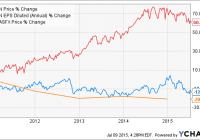
Summary Northwest Natural Gas offers a favorable dividend yield and very strong dividend increase record to yield-seeking investors. The company’s growth prospects are less attractive, however, due to its poor earnings history, high dividend payout ratio, and relatively low capex plans. The presence of warm weather conditions later in the year could make it difficult for the company to achieve management’s EPS guidance for FY 2015 and FY 2016. Its shares are overvalued and do not provide potential investors with a sufficient buffer to offset its poor prospects for earnings and dividend growth. Potential investors should look elsewhere. The share price of Oregon-based public natural gas utility Northwest Natural Gas (NYSE: NWN ) recently approached a 5-year low (see figure) as investors turned bearish on dividend stocks and the company reported disappointing results for Q4 2014 and Q1 2015. Its shares have vastly underperformed the gas utilities sector as its earnings have steadily fallen since FY 2011, excluding a modest increase in FY 2013. While management’s guidance is for its non-adjusted earnings to continue this downward trend, analysts are forecasting back-to-back increases on an adjusted basis for FY 2015 and FY 2016. This article evaluates Northwest Natural Gas as a potential long investment in light of the current operating environment and these forecasts. NWN data by YCharts Northwest Gas at a glance Headquartered in Portland, Oregon, Northwest Natural Gas provides natural gas and related services to more than 700,000 customers in the western half of that state and southwest Washington. It is Oregon’s largest natural gas utility with 14,000 miles of mains and service lines. While its regulated natural gas utility operations represent its primary business segment, the company also owns 31 Bcf of underground natural gas storage capacity and 2 Bcf of LNG storage capacity, the latter of which could be expanded by an additional 10 Bcf in coming years. Its natural gas operations provide the vast majority of its revenue and earnings, however, reaching 98% in recent quarters. The natural gas operations have also benefited from the presence of a moderately favorable regulatory scheme in Oregon that provides weather normalization and decoupling mechanisms to minimize the impact of extreme weather periods on earnings. Finally, the natural gas operations have also benefited from moderate customer growth, with the total number increasing by 4% over the last five years, due to natural gas having only a 60% market share of the heating market in the company’s service area. Northwest Gas has been a stalwart provider of dividends (see figure), with the company stating that its Q4 2014 dividend increase represented its 59th consecutive annual hike. The company’s forward yield of 4.22% is higher than the gas utility sector median , although this has come at the cost of a dividend payout ratio of 0.85 in the most recent fiscal year, well above the sector average. While many utilities are actively working to increase their payout ratios, the presence of such high ratios over a sustained period indicates that Northwest Natural Gas sees few opportunities for substantial future capex, rate base, and ultimately earnings growth. Further evidence of a lack of growth opportunities is provided by the fact that the company’s annual diluted EPS peaked in FY 2010 and has steadily declined in every subsequent year but one. Dividend growth has slowed to a crawl recently as well, with the most recent increase to $0.465 on a quarterly basis representing a mere 1.1% change over the previous quarter and 7% increase over the previous five years (by contrast, peer Southwest Gas (NYSE: SWX ) recently increased its dividend by 11% ). NWN Dividend (Annual) data by YCharts Q1 earnings report Northwest Natural Gas reported underwhelming results for Q1 in May due to a combination of an unfavorable regulatory decision and warm winter weather. Its revenue fell by 10.8% YoY from $293.4 million to $261.7 million, missing the analyst consensus by $42.2 million. The decline was primarily the result of a 19% YoY decline to the company’s natural gas sales and transportation volumes, which was in turn due to an average Q1 temperature that was 22% warmer than the previous year and 20% warmer than the long-term average. The consolidated revenue number was also negatively impacted by last year’s steep fall in the price of natural gas, which coincided with the expiration of the company’s storage segment’s long-term, high-priced storage contracts. These were ultimately replaced with short-term contracts containing lower prices, pushing the segment’s revenue down by $2.5 million YoY from $7.8 million. Northwest Natural Gas Financials (non-adjusted) Q1 2015 Q4 2014 Q3 2014 Q2 2014 Q1 2014 Revenue ($MM) 261.7 240.3 87.2 133.2 293.4 Gross income ($MM) 136.0 120.5 55.0 74.9 138.2 Net income ($MM) 28.5 28.5 (8.7) 1.1 37.9 Diluted EPS ($) 1.04 1.04 (0.32) 0.04 1.40 EBITDA ($MM) 73.1 79.7 14.9 33.0 94.6 Source: Morningstar (2015). Consolidated operating income fell from $75 million to $53 million YoY. While the impact of the fall in consolidated revenue on gross margin was mostly offset by a 1.3% increase to the number of customers over the trailing twelve month period, the fall in operating income was primarily due to an increase to O&M expenses of $18.7 million. This increase was the result of a regulatory decision to disallow the recovery of $15 million of environmental costs, resulting in a $9 million after-tax charge to the company. The operating income result was boosted to the tune of $21.8 million by the aforementioned weather normalization mechanism, however, offsetting much of the negative impact of the quarter’s warm weather. Net income came in at $28.5 million, down from $37.9 million the previous year. Adjusted for the regulatory disallowance, however, net income came in at $37.6 million. Non-adjusted diluted EPS fell to $1.04 from $1.40 the previous year, while adjusted diluted EPS was $1.37. While only a slight decline YoY, the adjusted result still missed the consensus estimate by $0.14. The natural gas utility segment’s EPS increased by $0.04 YoY while the storage segment’s EPS fell by $0.06 over the same period. Most disappointing to investors was the continued decline of the company’s ROE,which fell to 6.3% TTM. In addition to being well below its FY 2009 level of 9.1%, the trailing result is also substantially lower than the company’s allowed ROEs of 9.5% and 10.1% in Oregon and Washington, respectively. The company’s operating cash flow fell substantially in Q1 from $220.1 million in the previous year to $118.2 million. This was attributed to the receipt in Q1 2014 of a $91 million environmental insurance recovery payment, however. While the cash reserve fell to $5.2 million from $17.9 million YoY, management stated during the Q1 earnings call that the company ended Q1 with strong liquidity, as evidenced in part by the fact that it had only $621.7 million in long-term debt and a current ratio of 0.79, up slightly YoY. Outlook Management affirmed during the Q1 earnings call its FY 2015 EPS guidance range of $1.77-$1.97 on a non-adjusted basis and $2.10-$2.30 on an adjusted basis (the annual adjustment being the same as the Q1 adjustment resulting from the regulatory disallowance). This guidance range assumes that customer growth will maintain its recent pace and that weather conditions during the rest of the year will be the same as the long-term average. Investors should be aware of the sensitivity of both of these assumptions to conditions that are outside of the company’s control, however, given their importance to its earnings. Having recently completed comprehensive safety upgrades and with little in the way of short-term capacity expansion planned, Northwest Natural Gas expects to achieve total capex in FY 2015 of $145 million, down from FY 2012 and FY 2013. Investment in storage capacity and pipeline expansions to meet possible industrial demand growth for natural gas is, in addition to not being certain, still several years out. Earnings growth in the next two years will therefore depend on the service area’s weather and economic conditions. In terms of weather, the El Niño event has finally appeared after going missing last year and federal scientists now believe that it could be one of the strongest such events on record. Great news for drought-plagued California could be bad news for Northwest Natural Gas, as El Niño events are historically associated with warm winter weather in the Pacific Northwest as the polar jet stream is pushed north. An earlier NOAA analysis found that Q1 and Q4 temperatures in Oregon and Washington were much warmer than normal during past events, suggesting that higher temperatures will be present in the company’s service area during the coming winter. While Oregon’s weather-normalization mechanism will mitigate the negative impact of these temperatures on the company’s earnings in the event that they are present, they are unlikely to completely offset them. On the plus side, the economies of Oregon and Washington have greatly improved in recent years after lagging behind the U.S. average. The unemployment rate in both states was higher than the U.S. average from 2010 until 2015, at which point the rates in both states fell below the national average (see figure). Likewise, GDP growth in both states recently moved above the national average (see second figure). Both developments are positive for Northwest Natural Gas since households with steady incomes consume more natural gas and are less likely to miss payments. They also indicate that housing construction will increase, resulting in more potential natural gas customers. Oregon Unemployment Rate data by YCharts Oregon Change in GDP data by YCharts These economic advantages are supported by the presence of much lower natural gas prices in 2015 to date than in the same period of the previous year. Electricity for heat has a substantial presence in Oregon and Washington and part of Northwest’s customer growth strategy is to convince residential consumers to convert to natural gas heating. This process is made easier when natural gas is expensive compared to electricity, as has been the case over the last several months (see figure). Oregon citygate natural gas prices at the time of writing are down 47% from their level a year ago, whereas Oregon’s electric retail rate is 16% higher over the same period. Cheap natural gas hurts the earnings from the company’s storage operations, to be sure, but at least this impact is offset by favorable customer growth conditions. Oregon Electric Utility Retail Price data by YCharts Valuation The consensus analyst estimates for FY 2015 and FY 2016 diluted adjusted EPS have fallen over the last 90 days in response to a recent increase to Oregon’s unemployment rate. The FY 2015 estimate has decreased from $2.24 to $2.19, while the FY 2016 estimate has decreased from $2.31 to $2.26. Based on the company’s share price of $43.37 at the time of writing, its trailing P/E ratio on non-adjusted and adjusted bases is 24.1x and 20.4, respectively. Its forward ratios for FY 2015 and FY 2016 are 19.8x and 19.2x, respectively. All of these are high relative to both the sector trailing average of 17.3x as well as the company’s own historical ranges (see figure). In fact, the upward trend of the company’s P/E ratios is incongruous with its declining earnings over the same period; unlike most of its peers, which have seen their shares’ P/E ratios follow their prices higher, the increasing P/E trend of Northwest’s share has been the result of earnings shrinkage rather than a strong share price. NWN PE Ratio (NYSE: TTM ) data by YCharts Conclusion Natural gas utility and storage company Northwest Natural Gas has been moving in the wrong direction in recent years, reporting steadily lower earnings and achieving ROEs that are well below the results allowed by its regulators. Its main attraction as a potential long investment is its extremely impressive track record of (admittedly small in recent years) dividend growth and decent forward yield. Furthermore, both the company’s management and analysts expect it to break its declining earnings streak and report consecutive annual earnings increases on an adjusted basis for the first time in several years in FY 2015 and FY 2016. I am not convinced that these attributes result in a compelling long argument, however, for two reasons. The first is that the earnings growth estimates are predicated on continued customer growth and average temperatures over the next six quarters. While the former is possible, a recent increase in Oregon’s unemployment rate aside, all indications are that Q4 and Q1 in the company’s service area will be substantially warmer than normal, negatively impacting its earnings in those quarters. Furthermore, the company’s share valuations have been pushed to an overvalued level due to its falling earnings in recent years, preventing potential investors from acquiring a buffer against El Niño negative earnings impacts. Between minimal capex growth, unfavorable weather conditions, and overvalued shares, I do not consider Northwest Natural Gas to be an attractive long investment at this time. Yield-seekers may wish to consider it, but I recommend that they instead consider those utilities with superior growth prospects such as IDACORP (NYSE: IDA ), Alliant Energy (NYSE: LNT ), or DTE Energy (NYSE: DTE ).
Southwest Gas: A Weak Service Area Economy Snaps A Multi-Year Earnings Growth Streak

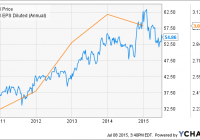
Summary Southwest Gas saw its earnings growth streak snapped last year by a weakening service area economy. The company’s share price rebounded recently as market volatility has pushed investors into defensive stocks such as utilities. While its historical performance is impressive, continued signs of weakness in its service area threaten to dampen future earnings growth for the company. Given the company’s relatively low forward dividend yield and lack of clearly undervalued shares, I recommend that investors seeking to reduce their volatility look elsewhere in the sector. Natural gas utility and construction service provider Southwest Gas (NYSE: SWX ) welcomed Q3 with a rebounding share price following a 17% decline in the first half of the year (see figure). While the company’s earnings have faltered of late, most recently with a Q1 earnings miss, much of its share price’s poor performance can be attributed to the prospect of U.S. interest rates being increased by the Federal Reserve for the first time in almost a decade. By contrast, Q3 to date has been beset by volatility arising from the high likelihood of an imminent “Grexit” and China’s recent stock market crash, both of which have driven investors back to bonds and utilities. Southwest Gas is finding its own earnings outlook under pressure due to slowing economic growth in much of its service area. This article evaluates the company as a potential long investment in light of these recent conditions. SWX data by YCharts Southwest Gas at a glance Operating as a public company since 1956, Nevada-based Southwest Gas provides natural gas and related services to its 1.9 million customers located in Arizona, Nevada, and eastern California. It has expanded significantly in recent decades and is now the largest natural gas provider in Arizona and Nevada. The company’s operations are split into two business segments. Its natural gas operations, which are regulated, generate approximately 87% of its consolidated earnings via transmission and distribution services. While the segment supplies natural gas to a wide customer base, with 53%, 37%, and 10% of them located in Arizona, Nevada, and California, respectively, 99% of them are residential and commercial in nature. Likewise, the segment generates most of its operating margin from Arizona and Nevada (56% and 34%, respectively). The second segment, named Centuri, which expanded last September following $185 million worth of acquisitions , provides construction services. This segment is divided between four construction subsidiaries: NPL construction, which installs underground piping, mostly in the western U.S.; Link-Line Contractors, which is a Canadian natural gas distribution contractor; W.S. Nicholls Construction, which engages in industrial construction projects in Canada; and Brigadier Pipelines, which installs midstream pipelines, primarily in Pennsylvania. While Centuri is a relatively small contributor to the company’s consolidated earnings, the firm believes that it has substantial growth opportunities due to demand for natural gas pipelines and distribution infrastructure in the wake of the advent of shale gas. Southwest Gas experienced strong earnings growth in the aftermath of the Great Recession as inexpensive shale gas and growing population in its service area drove consumption. Its annual diluted EPS increased by 38% between FY 2010 and FY 2013, although it declined slightly in FY 2014. This earnings growth in turn drove regular dividend increases, and the company’s annual dividend has increased by 62%, or a 10.1% CAGR, since FY 2010. The most recent increase came in the form of an industry-beating 11% boost that was announced earlier this year. Investors not surprisingly responded very positively to this record of earnings and dividend growth, pushing the company’s share price up by almost 100% between January 2011 and January 2015, handily beating the sector indices (see figure). Investors have lost some of their enthusiasm for the firm of late, however, following a disappointing Q1 earnings report and broader bearish sentiment across the utilities sector. SWX data by YCharts Q1 earnings report Southwest Gas reported a mixed bag of earnings for Q1 in May, beating on revenue but missing on EPS. Revenue came in at $734.2 million, up an impressive 20.7% from $608.4 million the previous year and beating the analyst consensus by $67.3 million. Several factors contributed to this YoY increase, including the company’s addition of 26,000 natural gas customers (an increase of 1.4%) over the trailing twelve months and the reporting of revenues from its construction services acquisitions (the latter resulted in a $30 million increase to revenue). The company’s natural gas operations segment did particularly well, increasing its revenue by 14% YoY, although this was mostly offset by a substantial increase to its cost of gas sold. Operating income rose slightly to $129.6 million from $127.1 million, with a $7.4 million increase by the natural gas segment being mostly offset by a $5 million decrease by the construction segment. The increase to the former was primarily driven by regulatory rate relief while the latter was hurt by a combination of poor weather conditions in its service area (Canada is not hospitable to Q1 construction work even in the best of times, which this year’s especially cold quarter was not). Integration expenses associated with last year’s acquisitions also hurt the construction segment’s operating income compared to the previous year, although these can be expected to decline in coming quarters. The company’s consolidated net income rose by 1.7% YoY from $70.8 million to $72.0 million (see table). Diluted EPS came in at $1.53 compared to $1.51 the previous year, missing the consensus estimate by $0.07. The natural gas segment did especially well, increasing its net income from $72.6 million to $78.9 million. The gain was the result of a higher operating margin resulting from the aforementioned rate relief and lower O&M expenses. The construction segment reported a net loss that widened from $1.8 million in FY 2014 to $6.9 million in the most recent quarter, with the poor performance being attributed to acquisition expenses and a required loss reserve of $5 million on one of its industrial projects. Southwest Gas Financials (non-adjusted) Q1 2015 Q4 2014 Q3 2014 Q2 2014 Q1 2014 Revenue ($MM) 734.2 627.7 432.5 453.2 608.4 Gross income ($MM) 129.6 112.4 18.3 26.8 127.1 Net income ($MM) 72.0 58.7 2.0 9.6 70.8 Diluted EPS ($) 1.53 1.25 0.04 0.21 1.51 EBITDA ($MM) 199.3 185.4 80.3 88.9 191.6 Source: Morningstar (2015). Southwest Gas reported a couple of regulatory developments from Q1 that will likely affect its future earnings. It received approval from California regulators for a $2.5 million margin increase that was established at the beginning of the year. It also received approval from Nevada regulators for the replacement later this year of $14.4 million worth of vintage plastic pipes with safer contemporary versions. Finally, it received preliminary environmental approval from federal regulators for a $35 million pipeline expansion project. Finally, the company’s management stated during its Q1 earnings call that it was not impacted by the extraordinary drought conditions in California during the quarter and does not expect this to change in coming quarters. While not surprising given the company’s focus on natural gas distribution rather than, say, hydroelectric generation, it is still good news for its investors. The company’s balance sheet ended the quarter in solid shape with $38.0 million in total cash and a current ratio of 1.1. It had very little short-term debt at $18.3 million and $1.5 billion in long-term debt, the latter down $131 million from the previous quarter. With a debt rating from the S&P 500 of BBB+ and a stable outlook, the company should have little difficulty financing its planned capex. Furthermore, management intends to increase the company’s dividend payout ratio from its current value of 48% closer to the industry average (68% TTM as of Q1 ), indicating that it has substantial room to increase if permitted by earnings growth. Outlook Management was comfortable enough with its results despite the earnings miss to reaffirm its full-year guidance during the earnings call. Population growth in the service area is expected to lead to 1.5% natural gas customer growth, a slightly higher rate than was reported the previous year. This in turn is expected to lead to operating margin growth of 2% despite higher assumed operating and pension costs, the latter resulting from the adoption of new mortality tables reflecting longer life expectancies. More importantly, the company expects to incur capex of $445 million in FY 2015, up from $315 million in FY 2013 and $350 million in FY 2014, with the increase driven by the replacement of existing infrastructure (such as the aforementioned vintage pipes) and an expansion of its service area. Beyond this year, the company expects to incur a total of $1.3 billion in capex through FY 2017. This spending will be driven by multiple investments, including a liquefied natural gas [LNG] storage facility that has received pre-approval from Arizona regulators and is expected to be operational within 30 months of receiving final approval. As with the aforementioned pipeline expansion, these investments will support the company’s rate base increase proposals in the coming years, ideally providing further room for earnings and dividend increases in the process. Future customer growth and natural gas demand will depend in large part on the economic health of the company’s service area, the outlook of which has dimmed recently. The unemployment rates of Arizona, Nevada, and California have fallen well below their post-recession highs but, despite this, all three remain above the U.S. average (see figure). Worse, Nevada’s rate has actually held steady at 7% over the last two quarters and, according to a recent report , fully 33% of the state’s population lives in “economically distressed communities,” making it the most distressed state in the U.S. Worse, its rate of employment growth in Q1 fell from 3.8% last year to 2.8% this year. Arizona, from which Southwest Gas derives the majority of its customers, has the third-highest unemployment rate in the country if underemployed workers are also counted. While its employment rate grew in Q1 compared to the previous year, it still only managed to achieve a measly 2.6%. Arizona and Nevada, which are together responsible for the majority of the company’s operating margin, have achieved slower GDP growth over the last several years (see second figure). Southwest Gas will struggle to reverse its declining ROE, both from its natural gas operations and its consolidated operations, so long as its service area economy remains weak, mitigating the advantage conferred by its relatively favorable ROEs allowed by regulators. Arizona Unemployment Rate data by YCharts Arizona Change in GDP data by YCharts Valuation The analyst estimates for Southwest Gas have declined over the last 90 days in response to its Q1 earnings miss. The FY 2015 and FY 2016 consensus estimates have declined from $3.18 and $3.39 to $3.14 and $3.35, respectively. Based on the company’s share price of $54.86 at the time of writing, its shares are trading at a trailing P/E ratio of 18.6x and forward FY 2015 and FY 2016 ratios of 17.5x and 16.4x, respectively. All three of these ratios have declined substantially, although the forward ratios would need to fall to roughly 15x for the company’s shares to be considered undervalued based on their historical valuations (see figure). SWX PE Ratio (TTM) data by YCharts Conclusion Natural gas utility Southwest Gas has been one of the sector’s better performers in recent years, benefiting from cheap natural gas and customer growth. While its records of sustained earnings and dividend growth make the company look attractive from a historical perspective, economic and employment growth in its service area have faltered in recent quarters. Furthermore, earnings growth aside, the company has reported declining ROEs over the last three fiscal years, which is a trend that it will struggle to reverse so long as its service area’s economy remains weak. At this time, its construction services segment is too small to be likely to offset the natural gas segment’s declining ROE in the next year or two, although its individual multi-year growth potential should be noted. I am not bearish on the firm and believe that it could outperform the broader market, especially if China’s market volatility and a looming Grexit cause investors to move toward defensive stocks. That said, in the absence of a compelling argument that its shares are undervalued (defined here as a share price below $47, or 13x estimated FY 2016 earnings), I recommend that potential investors look instead at those utilities firms with superior earnings growth prospects and dividend yields such as IDACORP (NYSE: IDA ), Alliant Energy (NYSE: LNT ), or DTE Energy (NYSE: DTE ). Disclosure: I/we have no positions in any stocks mentioned, and no plans to initiate any positions within the next 72 hours. (More…) I wrote this article myself, and it expresses my own opinions. I am not receiving compensation for it (other than from Seeking Alpha). I have no business relationship with any company whose stock is mentioned in this article.

Analysis Of PURA’s Draft Decision In The Proposed UIL/Iberdrola USA Merger

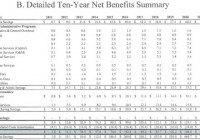
Summary Connecticut regulators issued a draft decision denying UIL and Iberdrola USA’s merger request. While unfavorable, the decision provides a roadmap for the Applicants to obtain approval with a new application. Substantial value will be created through the merger, so investors should expect the merger process to continue. Last week Connecticut’s Public Utility Regulatory Authority (PURA) issued a draft decision denying Iberdrola ( OTCPK:IBDSF ) and subsidiary Iberdrola USA’s (IUSA) proposed acquisition of UIL Holdings (NYSE: UIL ). After the draft decision UIL requested a two month extension to address PURA’s concerns. The extension was also denied, but PURA said that UIL could file a new merger application. On July 7, UIL withdrew their first merger application, and notified PURA that they will soon file a new one. While the denial was a setback, it is not an insurmountable one. The Applicants had expected the merger to be complete by year end. Considering the speed by which PURA reached this draft decision, it seems that the process could be restarted and finished in time to meet that goal. The merger agreement has a walk away date of December 31, 2015, but three-month extensions are available if all closing conditions have been met other than regulatory approvals. So this draft decision has not created a timing problem that will kill the deal. The draft decision is very critical of the Applicants, but PURA has essentially given UIL and Iberdrola a roadmap to obtaining merger approval. The value this deal creates for shareholders and customers should give the companies enough incentive to keep this deal moving forward. IUSA’s tax assets are a big value creator for this merger. Note 20 of IUSA’s 2014 financial statements shows over $1.5B in NOLs and tax credits. These credits were primarily generated by IUSA’s large investments in wind generation. Acquiring UIL gives them more income to be shielded from taxes, leading to faster monetization of these credits. The credits help explain why Iberdrola is willing to pay $10.50/share in cash to UIL shareholders to do the deal. With this huge incentive it is no surprise that the Applicants plan to come back with a new proposal. Down the road, shareholders of the combined company may also be able to benefit from turning some of IUSA’s renewable assets into a yieldco. Yieldcos such as NRG Yield (NYSE: NYLD ) and NextEra Energy Partners (NYSE: NEP ), have been hot lately, as investors hunt for opportunities with better yields. So the cash payment as well as new value streams really give current UIL investors reasons to be in favor of the deal. PURA’s issues with the Applicants are summarized in this excerpt from the draft decision: No compelling evidence was presented by the Applicants that proves this change of control transaction is the best solution for UIL’s plan to grow or become financially stronger, improve performance in a way that provides additional measurable and enforceable benefits to ratepayers, the public service companies themselves or the State. You can bet that UIL and Iberdrola will strongly address these issues in their next application. One big criticism from PURA was there was no synergy savings estimate from the Applicants. These are always tricky to develop because some savings will be from needing fewer employees, but PURA probably wouldn’t look too fondly on a big decline in jobs. Still, there should be savings that comes about from other means besides fewer workers. The NU/NSTAR merger of 2012 gives an example of a synergy savings analysis that was well received by PURA. Here is a summary of the 2012 NU/NSTAR merger estimated benefits: (click to enlarge) (Source: Exhibit 13 of NU/NSTAR merger application ) UIL should expect savings in many of these areas and should be able to come up with something similar. For example, common advertising campaigns can be developed for all of the combined utilities, eliminating duplication. Obviously this will take some work, but with merger experience at both UIL and IUSA over the last few years, a similar analysis should be possible. In the draft decision PURA lists some conditions that were included in the settlements of recent merger cases, and seemed to imply that similar commitments could get this merger over the finish line. These items were: Residential rate freeze of 36 months after the transaction closing Commitment to accelerate the pole inspection cycle Rate credit allocated to retail customer classes Commitment to improve non-storm and storm related service quality performance at a minimum of the 10-year historical average Commitment to open space land Seven year commitment to not move headquarters out of Connecticut Net benefit analysis of synergy savings So if similar commitments and information could be provided it should go a long way toward getting PURA’s acceptance. The Applicants had already proposed no rate cases for 12 months. Since the merger would likely create some type of operational savings, it should give the Applicants the ability to stay out longer than their original proposal. Subsidiary Connecticut Natural Gas (CNG) completed their last rate case in 2014, and subsidiary United Illuminating (UI) finished theirs in 2013. Southern Connecticut Gas’ (Southern) last case was in 2009, and they actually received a rate decrease at the time, so it might be a bit more difficult to extend at that subsidiary, but it seems like the other utilities should be able to last longer than one year. UIL also offered to give a $5M rate credit to some residential customers. It appears that PURA wants these credits spread over a wider range of residential customers. In the NU/NSTAR case, CL&P gave $25M of credits to all residential customers. Since CL&P is bigger than the UIL companies, the Applicants could likely get by with something smaller. One item that was a big sticking point in PURA’s argument against the merger but not in the above list was ring fencing. There was actually no ring fencing in the NU/NSTAR merger from a few years ago, and PURA’s request for these conditions is basically unprecedented in Connecticut. The Applicants did agree to some ring fencing type items in their merger request, but now that they know how important this is to PURA they will likely add a few more. PURA also implied that one primary issue led to their draft denial of the application. In their analysis they said: The Authority need only look to its Decision dated November 10, 2010 in Docket No 10-07-09, …[ UIL purchase of Southern and CNG (2010 Decision) ]… for the exact reasons why the Proposed Transaction should be denied. (emphasis mine) PURA then references P.5 of the 2010 Decision, which said immediate benefits at the time would include: Local control, long-standing record of commitment to the state and region, experience with Connecticut regulation and legislation, expertise in conservation and load management, and the change to Connecticut as the base for services currently provided to CNG and Southern from outside Connecticut. PURA also references items from the 2010 Decision estimating savings in overhead costs of over $11M. PURA then writes: The proposed transaction looks to remove these stated benefits just five years later. Therefore, to approve the Proposed Transaction would be a direct contradiction to what the Authority previously determined was in the public interest. PURA then mentions concerns about the Applicant’s commitment to their venture over the long term. They cite Iberdrola’s sale of CNG and Southern just two years after acquisition as evidence that their dedication to Connecticut could be shaky. While PURA makes some points, they should be addressable by UIL and IUSA. By taking best practices from both companies, those shared services costs that were so high five years ago during the gas acquisition should be decreasing. And if not, it seems like the merging parties could commit to limiting the allocated costs that are collected through rates for a number of years. Secondly, regarding the commitment issues, take a look at the following information from the utility operating companies of the Applicants: The three gas companies are dramatically smaller than the other three utilities Iberdrola obtained (NYSEG, RGE, and CMP) when they bought Energy East in 2008. Back in 2010 these gas companies would likely have been lost in a company focused on New York and Maine, so they were sold to UIL where they could receive acceptable attention and not fall through the cracks. Bringing all of the new UIL into the IUSA fold adds a company that is on par with IUSA’s Maine and New York operations. IUSA’s self-interest in desiring success at this now important part of the company should take care of these commitment concerns. PURA shouldn’t hold it against Iberdrola that these were trimmed back in 2010, because it really didn’t make sense for IUSA to own them at the time. PURA also seemed overly critical in a few areas, likely because the application was lacking in the areas mentioned above. For one thing, PURA criticized the Applicants for not providing any specific best practices that could be implemented. Obviously determining which companies have the best practices in different operations takes time and sharing intimate details of how companies operate probably should not be done until the merger is complete. The NU/NSTAR merger approval does not list specific best practices and says: This merger will provide the inherent benefits of bringing together two corporations … which will create opportunities to identify and implement best practices. So there is precedent that a merger can be approved before the identification of specific best practices to implement has been completed. The Applicants also committed to develop plans to optimize resources to respond to storms and emergencies. PURA said they give the applicants no credit for this because PURA “… assumes that these types of responses are a normal course of business and not an incentive to approve the transaction .” While it is true that utilities all around the country work together to help during storms, the integration of response teams can be much more thorough if they are part of the same company. So PURA really should be giving the Applicants some credit here. Conclusion: It appears that this merger will create substantial benefits for both shareholders and customers. PURA seems to want a more quantifiable commitment from the Applicants about the benefits customers will receive, and PURA has essentially given the Applicants a roadmap to do this. Investors should not consider the recent denial of the merger an overwhelming challenge to getting the deal done. Editor’s Note: This article discusses one or more securities that do not trade on a major U.S. exchange. Please be aware of the risks associated with these stocks. Disclosure: I/we have no positions in any stocks mentioned, and no plans to initiate any positions within the next 72 hours. (More…) I wrote this article myself, and it expresses my own opinions. I am not receiving compensation for it (other than from Seeking Alpha). I have no business relationship with any company whose stock is mentioned in this article.