Tag Archives: seeking-alpha

Energy ETF: XLE No. 9 Select Sector SPDR In 2014
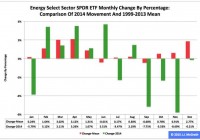
Summary The Energy exchange-traded fund finished ninth by return among the nine Select Sector SPDRs in 2014. The ETF was extraordinarily strong in the first half and even more extraordinarily weak in the second half. Seasonality analysis may be irrelevant until the commodity price of crude oil shows signs of stability. The Energy Select Sector SPDR ETF (NYSEARCA: XLE ) in 2014 ranked No. 9 by return among the Select Sector SPDRs that split the S&P 500 into nine segments. On an adjusted closing daily share-price basis, XLE dipped to $79.16 from $86.68, a drop of -$7.52, or -8.68 percent. As a result, it behaved worse than its sibling, the Utilities Select Sector SPDR ETF (NYSEARCA: XLU ) and parent proxy, the SPDR S&P 500 Trust ETF (NYSEARCA: SPY ) by -37.41 and -22.14 percentage points, in that order. (XLE closed at $72.86 Thursday.) XLE also ranked No. 9 among the sector SPDRs in the fourth quarter, when it performed worse than XLU and SPY by -25.29 and -17.00 percentage points, respectively. And XLE ranked No. 5 among the sector SPDRs in December, when it led SPY by 0.04 percentage point and lagged XLU by -3.79 points. Figure 1: XLE Monthly Change, 2014 Vs. 1999-2013 Mean (click to enlarge) Source: This J.J.’s Risky Business chart is based on analyses of adjusted closing monthly share prices at Yahoo Finance . XLE behaved a lot worse in 2014 than it did during its initial 15 full years of existence based on the monthly means calculated by employing data associated with that historical time frame (Figure 1). The same data set shows the average year’s weakest quarter was the third, with a relatively small negative return, and its strongest quarter was the first, with an absolutely large positive return. Inconsistent with its pattern last year, the ETF had a little gain in Q1, a big gain in Q2 and big losses in Q3 and Q4. Figure 2: XLE Monthly Change, 2014 Versus 1999-2013 Median (click to enlarge) Source: This J.J.’s Risky Business chart is based on analyses of adjusted closing monthly share prices at Yahoo Finance. XLE also performed a lot worse in 2014 than it did during its initial 15 full years of existence based on the monthly medians calculated by using data associated with that historical time frame (Figure 2). The same data set shows the average year’s weakest quarter was the second, with a relatively small positive return, and its strongest quarter was the third, with an absolutely large positive return. Meanwhile, I suspect seasonality analysis may be irrelevant until the commodity price of crude oil displays signs of stability. Figure 3: XLE’s Top 10 Holdings and P/E-G Ratios, Jan. 15 (click to enlarge) Notes: 1. “NA” means “Not Available.” 2. The XLE holding-weight-by-percentage scale is on the left (green), and the company price/earnings-to-growth ratio scale is on the right (red). Source: This J.J.’s Risky Business chart is based on data at the XLE microsite and Yahoo Finance (both current as of Jan. 15). With the possible exception of Schlumberger Ltd. (NYSE: SLB ), XLE’s top 10 holdings appear to range from fairly valued to overvalued (Figure 3). However, the numbers on the S&P 500 energy sector reported by S&P Senior Index Analyst Howard Silverblatt Dec. 31 indicated its valuation seems comparatively reasonable, with its P/E-G ratio at 1.16. Speaking of Schlumberger, the 2014 financial report it released Thursday was replete with evidence of the effects that the cratering in the commodity price of crude oil has had on the company in particular and, by extension, on the energy sector in general. Here are three of the highlights, or lowlights, of the report: [1] Although the functional currency of Schlumberger’s operations in Venezuela is the U.S. dollar, a portion of the transactions are denominated in local currency. Schlumberger has historically applied the official exchange rate of 6.3 Venezuelan Bolivares fuertes per U.S. dollar to remeasure local currency transactions and balances into U.S. dollars. Effective December 31, 2014, Schlumberger concluded that it was appropriate to apply the … exchange rate of 50 Venezuelan Bolivares fuertes per U.S. dollar as it believes that this rate best represents the economics of Schlumberger’s business activity in Venezuela. As a result, Schlumberger recorded a $472 million devaluation charge. [2] In response to lower commodity pricing and anticipated lower exploration and production spending in 2015, Schlumberger decided to reduce its overall headcount to better align with anticipated activity levels for 2015. Schlumberger recorded a $296 million charge associated with a headcount reduction of approximately 9,000. [3] Schlumberger determined that, primarily as a result of the recent decline in commodity prices, the carrying value of its investment in [a Schlumberger Production Management] development project in the Eagle Ford Shale was in excess of its fair value. Accordingly, Schlumberger recorded a $199 million impairment charge. I suspect many other energy-sector firms will be making similar announcements in the weeks, months and quarters to come. Figure 4: EUR/USD, Crude Oil And XLE, 2014 Daily Prices (click to enlarge) Note: The crude-oil and XLE scale is on the left, and the EUR/USD scale is on the right. Source: This J.J.’s Risky Business chart is based on analyses of adjusted closing daily share prices of XLE reported by Yahoo Finance ; closing daily prices of the New York Mercantile Exchange’s Cushing, OK Crude Oil Future Contract 1 reported by the U.S. Energy Information Administration ; and daily foreign-exchange rates of the euro/U.S. dollar, or EUR/USD, currency pair reported by the Federal Reserve Economic Data site of the Federal Reserve Bank of St. Louis. As indicated previously , I believe XLE’s upward movement in the first half of last year was primarily driven by market participants’ concern about the battle over control of Middle Eastern crude-oil assets between Islamic State of Iraq and the Levant, or ISIL, fighters on the one side and Iraqi government, Kurdish and aligned forces on the other side. I think the ETF’s downward movement since then has been primarily driven by market participants’ concern about the battle over monetary policy between major central banks: The U.S. Federal Reserve is oriented toward tightening, while the Bank of Japan, European Central Bank and People’s Bank of China all are oriented toward loosening. This bias divergence at the biggest central banks in the world already has had major effects on multiple markets, ranging from currencies (e.g., the euro/U.S. dollar cross, or EUR/USD) to commodities (e.g., crude oil) to the energy sector of the equity market (e.g., XLE), as suggested by Figure 4. Along this line, the amazing disappearance of about 18.79 percent in the euro/Swiss franc cross, or EUR/CHF, Thursday was but the latest manifestation of the wobbles in financial markets around the world. Measured by the daily prices of the components of the above chart, the EUR/USD currency pair peaked at $1.3927 March 13 (revisiting the area May 6), crude oil per barrel peaked at $107.26 June 20 and XLE per share peaked at $100.77 June 23. Their respective declines since then are clearly related, statistically speaking. Their lockstep movements appear likely to continue unless the Federal Open Market Committee makes clear it will delay the anticipated announcement of its interest-rate hikes April 29 and that it is preparing to carry out asset purchases under its fourth formal quantitative-easing program of the 21st century, aka QE4. The FOMC may be hard-pressed to present a convincing rationale for those actions, given the conditions described in “SPY Slips And U.S. Economic Index Slides In December.” But, without them, XLE may continue to be the equivalent of a canary in coal mine where things are looking darker by the day. Disclaimer: The opinions expressed herein by the author do not constitute an investment recommendation, and they are unsuitable for employment in the making of investment decisions. The opinions expressed herein address only certain aspects of potential investment in any securities and cannot substitute for comprehensive investment analysis. The opinions expressed herein are based on an incomplete set of information, illustrative in nature, and limited in scope. In addition, the opinions expressed herein reflect the author’s best judgment as of the date of publication, and they are subject to change without notice.
The SNB Catalyst For GLD

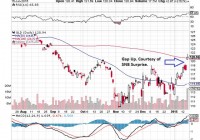
Summary SNB surprised the market by its sudden decision to abandon the EURCHF floor and reduce its deposit rate further to -0.75%. Existing push factor of GLD such as current deflation, strong USD and holding cost is being pushed aside by negative interest rates and market concern about market stability. Global negative interest interest rates is attracting bids for GLD especially when conservative investors cannot hold their funds in safe deposit and bonds without attracting a penalty. Deeper market concerns over the ability to grow the economies of Europe and Japan without destabilizing the economic system. SNB Surprise served as a catalyst to bring these concerns to the front of investors mind and is responsible for the gap up of GLD. The Swiss National Bank (SNB) surprised the market on 15 January 2015 by announcing the abandonment of the floor of the Swiss Franc (CHF) 1.20 to the euro. In addition, the SNB announced that it has reduced its sight deposit rate from -0.25% to -0.75%, effective 22 January 2015. The rationale that the SNB imposed this floor in 2012 is to prevent importing deflation from Europe but it has done it at the cost of a ballooning balance sheet to GDP from at least 60% to 85%. The SNB has finally accepted that deflation of -0.1% for this year and have made it clear that even if they do prevent deflation from Europe, they can’t prevent deflation from the U.S. through a strengthening USD. In this article, we will look at how the conflicting pull and push factors which affect the attractiveness of gold. In my previous articles, I have been bearish on gold as I consider opportunity cost of holding gold when the U.S. economy is rising and the fact that the strengthening USD will weaken gold. In addition, I have considered the fact that there is very little inflation worldwide given the low energy price. Hence gold would lose its allure as an inflation hedge, especially when it is increasingly clear that major economies like Japan and Europe is nearer to deflation than inflation. Negative Interest Rates Even as I consider these factors to be relevant, it would appear that other factors are now raising to the forefront to challenge these push factors of gold. The most prominent factor would have to be the negative interest rates. We are seeing a number of major countries imposing negative interest rates. The latest and deepest negative interest rates come from the SNB at -0.75% of deposit rates. The European Central Bank (ECB) has set its deposit rate to -0.1% and there are Japanese Treasury Bills that are having negative interest rates . This is because investors prefer these treasury bills even when key interest rates are zero and they are willing to pay a premium for it. Negative interest rate means that investors have to pay the banks to keep their money and this has offset the cost of gold purchase. For investors who are conservative, they are not likely to invest into equities which they perceive to be of high risk. Given that they can’t deposit their money safely in banks or bonds without attracting a penalty, they are more likely to be attracted to gold as a store of value. Market Concern about Economic Stability Then there is the risk of unintended consequences. With the ECB and Bank of Japan (BoJ) determined to ease monetary conditions further, they are increasing the risk that these actions will cause a bubble in the future. The issue is that inflation might surface in other form with all these QE efforts. These QE measures are described as emergency measures by the Fed and this is why they are being rolled back by the Fed right now. The question remains unanswered in the market as to whether a prolonged dosage of QE will actually help or harm the economy. We have to remember that the Fed used QE to purchase banks asset to restore confidence in the system and this is done with a bank stress test. The banks subsequently healed as investor confidence were restored and were able to lend as they have a clean balance sheet. They also have incentive to lend as the economy recovers amid a low interest rates environment. As the economy recovers, people consumes and we naturally see inflation which stands at 1.3% in December 2014. This will have been higher if not for low energy prices. There might be a question as to whether the banks started to lend first or the economy recovered and people consumed first before the banks were willing to lend. My opinion is that QE and the bank stress test cause the recovery in confidence first and the bank lending and consumption happened in tandem. The big question for Europe and Japan is that despite all these efforts in QE, we do not see a recovery in their economy. Europe is still having sub 1% growth and Japan has slipped into recession again with the second and third quarter of contraction in 2014. This might point to a bigger problem to their economies than what QE can solve. SNB Catalyst on GLD The SNB move to abandon the peg and lessen the deposit rate serves as a catalyst which brought the issue of negative interest rates to the forefront of investor’s mind. This is a signal to investors that there might be a paradigm shift in how major economies will operate from now on. The fact that the SNB has to surprise the market instead of following the usual central bank communications strategy which has been the norm for the past 10 years also hints at future uncertainty. In this environment, we are likely to see more demand from gold. We can see this from the SPDR Gold Trust ETF (NYSEARCA: GLD ) chart below. GLD tracks the performance of gold bullion after expenses and it is listed on the New York Stock Exchange. It is liquid with $27.54 billion of market capitalization and 17 million of last known daily transactions. (click to enlarge) Despite this liquidity, we see that GLD gap up on the SNB surprise. This is a clear sign that there are issues in the Europe and Japan which the market is concerned about. The market’s concern seems to be that despite the QEs, Japan and Europe would not be able to solve their issues. The side effect of these QE besides the massive purchase of securities, is to resort to negative interest rates which is forcing conservative investors out of safe deposit. These issues have always come along with QE and the market assumption has been that the recovery prospect will outweigh the risk involved as mentioned above. However the SNB surprise suggest otherwise and this is serving as a catalyst for these issues to surface and for GLD to gap up. Of course, the market has been wrong before and GLD was up from 2009 when the Fed started its first QE to 2011 when it was clear that the U.S. economy has recovered before GLD became bearish again. There is a possibility that this will be the start of a new bullish trend for the medium term if Europe and Japan is not able to get their act together. It would appear that even the strong USD cannot hold down GLD and this shows the depth of the market concerns.

NRG Energy: Kicking Its Residential Solar Segment Into High Gear

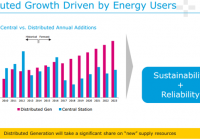
Summary Over the past few days, NRG Energy has further outlined its goals of residential solar domination. The company plans to be the second largest residential solar company by the end of 2015, which is a huge task considering its current 5th place position. NRG Energy’s management is surprisingly forward-thinking in its embrace of distributed residential solar, an industry inherently at odds with centralized fossil fuel generation. Residential solar has been growing at an astounding 40%-50% CAGR over the past few years, outpacing the growth of the broader solar industry. As the inherent advantages of distributed solar have become more clear, the switch from centralized energy to distributed generation has been a no brainer for many individuals. UBS AG (NYSE: OUBS ) has even stated , “By 2025, everybody will be able to produce and store power. And it will be green and cost competitive, i.e., not more expensive or even cheaper than buying power from utilities. It is also the most efficient way to produce power where it is consumed, because transmission losses will be minimized. Power will no longer be something that is consumed in a ‘dumb’ way. Homes and grids will be smart, aligning the demand profile with supply from (volatile) renewables.” While the vast majority of utilities have been bitterly opposing residential solar companies, NRG Energy (NYSE: NRG ) is looking to join them. NRG Energy, which is one of the largest fossil fuel utilities in the U.S., is surprisingly optimistic about home solar. While this viewpoint may seem contradictory given the opposing natures of centralized fossil fuel generation and distributed residential solar, NRG Energy certainly does not view it this way. NRG Energy has made its residential solar intentions much clearer in recent days. The company has announced that is planning to become the 2nd largest residential solar company, right after SolarCity (NASDAQ: SCTY ), by the end of 2015. This goal is indicative of NRG Energy’s incredibly ambitious distributed energy plans, as it has to increase its residential solar business by a number of magnitudes to accomplish this goal. While NRG Energy is currently ranked at a respectable 5th place in residential installs as of quarter 3, the gap between itself and 2nd place Vivint Solar (NYSE: VSLR ) is huge. NRG Energy still has a market share in the low single digit percentages as opposed to Vivint Solar’s approximately 15% market share. In fact, SolarCity and Vivint Solar make up for more than half of the residential solar industry’s market share. As a result, NRG Energy has started putting in enormous efforts to build and scale up its residential solar business in order to compete with the industry standouts. NRG Energy’s Unique Competitive Edge NRG Energy’s current position as one of the nations largest utilities gives it a financial clout and leverage never seen before in the emerging residential solar market. While all the top residential solar companies could have easily been classified as startups just a few years back, with SolarCity as no exception, NRG Energy is entering the industry as a proven and established business with countless billions on its balance sheet. The company’s huge finances and reputation as a proven business will give it an undeniable advantage over its competitors in the form of lower capital costs. Financiers could very well give NRG Energy cheaper access to capital due to the company’s already established brand. Of course, while most of NRG Energy’s cash will be tied its main business of centralized fossil fuel generation, having its huge fossil fuel business backing up its burgeoning residential venture will be invaluable for the company. NRG Energy could easily leverage its financial clout and well-established brand name to help achieve its grand solar ambitions. Forward-Thinking Management While it is extremely surprising to see a fossil fuels based utility focus so much attention on the distributed generation, this hints at NRG Energy’s extremely forward-thinking nature. Despite the fact that residential solar poses an existential threat to the company’s predominantly centralized generation model, NRG Energy’s management hold no bias against residential solar, and is in fact embracing this growing trend. The company’s enthusiasm about distributed residential solar starts at its CEO David Crane. He is so optimistic about residential solar that he has been qouted as saying, “We expect to convincingly persuade our investors that NRG has an embedded SolarCity within it,” and that “everyone is beginning to believe that residential solar is this trillion-dollar market that currently has about 1 percent market penetration.” David Crane is clearly all-aboard residential solar. Having a utility state that residential solar has the potential to be a trillion-dollar market is shocking to say the least, and would have been utterly unbelievable just a few years ago. His optimism is also a clear sign of residential solar’s promise. In fact, Crane sees so much potential in the company’s distributed residential solar segment that he is even considering creating a separate residential solar spin-off. Although a negligible percentage of NRG Energy’s revenue comes from residential solar, the company has been heavily emphasizing this aspect of their business in recent weeks. Just a few days ago, for instance, the company issued a press release and presentation touting residential solar’s immense potential, and the company’s plans for heavy future involvement in this industry. While residential solar currently makes up for less an 1% of the United States total energy generation, the company clearly believes in its exponential growth capabilities. NRG Energy’s recently released presentation constantly reminds investors of the emerging distributed generation. This specific graphical illustration from the presentation depicts the continually diminishing role of centralized generation as opposed to the growing role of distributed generation. (click to enlarge) Source: NRG Energy Risks Despite the immense promise of distributed residential solar, there is a considerable risk that the industry may not grow or mature as fast of NRG Energy has planned. In this case, the company’s would be in danger of losing sizable amounts of money on its massive residential solar infrastructure investments. The company is still, after all, making a huge bet on a relatively young industry with an abundant amount of uncertainty. Many factors pushing residential solar’s growth, such as subsidies or net metering policies, are largely out of the company’s control. Regardless of the risks, NRG Energy is likely making a wise decision by focusing on the residential sector, as most indicators point to distributed generation as the energy model of the future. The only obstacle truly holding distributed residential solar back from mass adoption is the lack of cost-effective storage devices. Even this though, will likely change in the future as battery innovations have sped up dramatically with the recent electric vehicle boon. Conclusion NRG Energy is changing with the times and embracing the shifting energy landscape. With solar power experiencing an exponential growth curve, the company is well-aware of residential solar’s future potential. NRG Energy’s valuation of $9B does not factor in the growth potential of distributed generation, and the company’s involvement in this highly promising arena. If distributed solar generation ends up replacing centralized generation as much of the evidence has suggested , NRG Energy will have a huge amount of upside given its early investment in the arena. While Vivint Solar is rapidly gaining on SolarCity in terms of marketshare, NRG Energy will likely be SolarCity’s true competition moving forward.