Tag Archives: seeking-alpha

Q3 2015 Sector Ratings For ETFs And Mutual Funds
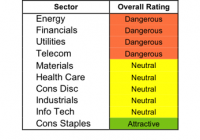
Summary Our sector ratings are based on the aggregation of our fund ratings for every ETF and mutual fund in each sector. The primary driver behind an Attractive fund rating is good portfolio management (stock picking) combined with low total annual costs. Cheap funds can dupe investors and investors should invest only in funds with good stocks and low fees. At the beginning of the third quarter of 2015, only the Consumer staples sector earns an Attractive-or-better rating. Our sector ratings are based on the aggregation of our fund ratings for every ETF and mutual fund in each sector. Investors looking for sector funds that hold quality stocks should look no further than the Consumer Staples and Information Technology sector. These sectors house the most Attractive-or-better rated funds. Figures 4 through 7 provide more details. The primary driver behind an Attractive fund rating is good portfolio management , or good stock picking, with low total annual costs . Attractive-or-better ratings do not always correlate with Attractive-or-better total annual costs. This fact underscores that (1) cheap funds can dupe investors and (2) investors should invest only in funds with good stocks and low fees. See Figures 4 through 13 for a detailed breakdown of ratings distributions by sector. Our fund rating methodology is detailed here . All of our reports on the best & worst ETFs and mutual funds in every sector are available here . Figure 1: Ratings For All Sectors (click to enlarge) Source: New Constructs, LLC and company filings To earn an Attractive-or-better Predictive Rating, an ETF or mutual fund must have high-quality holdings and low costs. Only the top 30% of all ETFs and mutual funds earn our Attractive or better ratings. The Fidelity Select Consumer Staples Portfolio (MUTF: FDFAX ) is the top rated Consumer Staples mutual fund. It gets our Very Attractive rating by allocating over 38% of its value to Attractive-or-better-rated stocks. PepsiCo Inc. (NYSE: PEP ) is one of our favorite stocks held by FDFAX and earns our Attractive rating. Over the last decade, PepsiCo has grown its after-tax profits ( NOPAT ) by 6% compounded annually. The company currently earns a healthy return on invested capital ( ROIC ) of 10%. Furthermore, PepsiCo has consistently generated positive economic earnings in every year of our model, which dates back to 1998. At its current price of $95/share, PEP has a price to economic book value ( PEBV ) of 1.2. This ratio implies that the market expects NOPAT growth of only 20% for the remainder of PepsiCo’s corporate life. These are low expectations considering that the company grew profits by 6% compounded annually for the past ten years. If Pepsi can continue to grow NOPAT by 6% compounded annually for the next decade , the stock is worth $127/share- a 34% upside from current valuations. The S aratoga Energy & Basic Materials Fund (MUTF: SBMBX ) is the worst rated Energy mutual fund. It gets our Very Dangerous rating by allocating over 45% of its value to Dangerous-or-worse-rated stocks. Making matters worse, it charges investors annual costs of 5.96%. Exxon Mobil (NYSE: XOM ) is one of our least favorite stocks held by SBMBX and earns our Dangerous rating. Since 2011, Exxon’s NOPAT has declined by 27% compounded annually. Exxon’s ROIC has fallen from 13% to a bottom quintile 5% in 2014. On a trailing twelve-month basis, ROIC has fallen even further to only 3%. Despite the issues Exxon has faced, the stock still remains overvalued. To justify its current price of $83/share, Exxon must grow NOPAT by 10% compounded annually for the next 13 years. This expectation seems optimistic given the current market landscape and Exxon’s inability to grow NOPAT at all over the last four years. Investors would be wise to steer clear of this oil & gas giant. Figure 2 shows the distribution of our Predictive Ratings for all sector ETFs and mutual funds. Figure 2: Distribution of ETFs & Mutual Funds (Assets and Count) by Predictive Rating (click to enlarge) Source: New Constructs, LLC and company filings Figure 3 offers additional details on the quality of the sector funds. Note that the average total annual cost of Very Dangerous funds is more than five times that of Very Attractive funds. Figure 3: Predictive Rating Distribution Stats (click to enlarge) * Avg TAC = Weighted Average Total Annual Costs Source: New Constructs, LLC and company filings This table shows that only the best of the best funds get our Very Attractive Rating: they must hold good stocks AND have low costs. Investors deserve to have the best of both and we are here to give it to them. Ratings by Sector Figure 4 presents a mapping of Very Attractive funds by sector. The chart shows the number of Very Attractive funds in each sector and the percentage of assets in each sector allocated to funds that are rated Very Attractive. Figure 4: Very Attractive ETFs & Mutual Funds by Sector (click to enlarge) Source: New Constructs, LLC and company filings Figure 5 presents the data charted in Figure 4. Figure 5: Very Attractive ETFs & Mutual Funds by Sector (click to enlarge) Source: New Constructs, LLC and company filings Figure 6 presents a mapping of Attractive funds by sector. The chart shows the number of Attractive funds in each sector and the percentage of assets allocated to Attractive-rated funds in each sector. Figure 6: Attractive ETFs & Mutual Funds by Sector (click to enlarge) Source: New Constructs, LLC and company filings Figure 7 presents the data charted in Figure 6. Figure 7: Attractive ETFs & Mutual Funds by Sector (click to enlarge) Source: New Constructs, LLC and company filings Figure 8 presents a mapping of Neutral funds by sector. The chart shows the number of Neutral funds in each sector and the percentage of assets allocated to Neutral-rated funds in each sector. Figure 8: Neutral ETFs & Mutual Funds by Sector (click to enlarge) Source: New Constructs, LLC and company filings Figure 9 presents the data charted in Figure 8. Figure 9: Neutral ETFs & Mutual Funds by Sector (click to enlarge) Source: New Constructs, LLC and company filings Figure 10 presents a mapping of Dangerous funds by fund sector. The chart shows the number of Dangerous funds in each sector and the percentage of assets allocated to Dangerous-rated funds in each sector. The landscape of sector ETFs and mutual funds is littered with Dangerous funds. Investors in Energy have put over 75% of their assets in Dangerous-rated funds. Figure 10: Dangerous ETFs & Mutual Funds by Sector (click to enlarge) Source: New Constructs, LLC and company filings Figure 11 presents the data charted in Figure 10. Figure 11: Dangerous ETFs & Mutual Funds by Sector (click to enlarge) Source: New Constructs, LLC and company filings Figure 12 presents a mapping of Very Dangerous funds by fund sector. The chart shows the number of Very Dangerous funds in each sector and the percentage of assets in each sector allocated to funds that are rated Very Dangerous. Figure 12: Very Dangerous ETFs & Mutual Funds by Sector (click to enlarge) Source: New Constructs, LLC and company filings Figure 13 presents the data charted in Figure 12. Figure 13: Very Dangerous ETFs & Mutual Funds by Sector (click to enlarge) Source: New Constructs, LLC and company filings D isclosure: David Trainer and Max Lee receive no compensation to write about any specific stock, sector or theme. Disclosure: I/we have no positions in any stocks mentioned, and no plans to initiate any positions within the next 72 hours. (More…) I wrote this article myself, and it expresses my own opinions. I am not receiving compensation for it. I have no business relationship with any company whose stock is mentioned in this article.
Q2 Portfolio Update

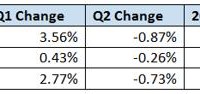
Summary Market was relatively unchanged during Q2. My portfolio saw moderate losses in Q2 due to outsized position in energy. Overall, my market strategy has been working with less volatility and slight SPY outperformance. (click to enlarge) Q2 for my portfolio saw my portfolio give back some of the strong gains I made in Q1. The market being approximately flat for Q2 is what I expected. Overall, the past six months has been characterized by the S&P 500 trading around the $207-208/share range for SPY. Breaks above 210 were short-lived in many cases, but pullbacks to 205/share were met with fierce buying. “Buy the dip” is the mantra, and thus far it has worked like a charm. (click to enlarge) Investors should expect this trend to continue through Q3, although I do finally expect SPY to break the 215 level and hold it going into year-end. Look for SPY to finish at around 217/share as we enter 2016, but not before testing 200/share in Q3, predicated on weakness going into the meat of Q2 earnings. So while the market behaved as I expected to, my picks for outperformance failed me. In many cases, this was simply me buying in too early. I look to see outperformance from my trades during periods of stagnant/declining markets. This is where portfolios with short exposure and solid picks should shine. However, my exposure to basic materials, a driver of performance in Q1, hamstrung my returns in Q2 even after closing some positions. The biggest weakness was my short positions which fared poorly outside of a few profitable trades. The trend is your friend was also a driving theme in Q2, with hot sub-sectors continuing to be hot and I unfortunately got burned a bit there. My sector diversification has remained relatively in-line with my prior update on this portfolio. The largest changes have been reductions in stakes in Basic Materials and Services while I have increased my Technology and Utility stakes. Consumer confidence has been up steadily as of late , but my feeling is this may end up being a short-lived trend. Domestic labor market weakness still troubles me. New Positions Tempur Sealy (NYSE: TPX ). Tempur Sealy is an activist target via HR Partners, but risks remain including commoditization of the company’s products which has been deeply impacting margins and poor top-level management. Overall, I think the company presents the opportunity to open a short position given its bleak prospects, heavy expectations, and current trading range near 52 week highs. I opened a short here on 7/1/15 at $67.15/share. Tyler Technologies (NYSE: TYL ) . I was looking for long exposure to an up-and-coming mid-cap technology company and Tyler Technologies jumped out at me as a fine choice. The company has a wide moat due to their focus on the public sector and a great reputation, but it has an unfortunate lack of analyst following. Shares will likely be a solid long-term play, even after the strength it has shown recently. My cost basis is $120.45/share. USG Corporation (NYSE: USG ) . USG Corporation has been divesting assets in its low-margin segments and focusing on the core business providing drywall. International expansion has begun through a key business partnership. This is a highly levered play that will benefit strongly if US housing can continue its slow turnaround, which I think it can. I recently opened a position with a $27.08/share cost basis. Closed Trades SDOW . On 5/22/15 I opened a position in SDOW at $17.89/share. I closed this position on 6/10/15 at $19.03/share. For those unaware, this is an inverse 3x ETF. So if the DOW is down 1% on a given trading day, this ETF looks to generate a positive 3% return. This was a short-term hedge that I opened as I felt the market was trading near resistance at its highs and I wanted broader short exposure than I had. I’ll occasionally make small short-term trades like this one (this was under 1% of portfolio weight). Wendy’s (NASDAQ: WEN ) . You can find my article on my Wendy’s short here . I opened this short @ $10.65/share and closed at $11.05/share for a small loss on 7/1/15. My choice to cover was almost solely based on not wanting to compete against management’s Dutch auction. Wendy’s has done these before and shares have outperformed after for some time before falling. I was looking to short again from a higher price. Unfortunately, the broad market downturn has hit Wendy’s hard and it looks like I may not get the opportunity. Shares now trade at $10.50/share as of this writing. Yelp (NYSE: YELP ) . Yelp is a short favorite of mine that I have written about before on Seeking Alpha . I went short at $49.76 share and covered at $38.45/share when news broke the CEO was not looking to sell, expecting the typical Yelp recovery post bad news. Thus far, that has not materialized and it looks like I may have left a little bit on the table on this one as shares are trading down near $35.00/share. Nordson (NASDAQ: NDSN ). This is a great stock that I have also written about on Seeking Alpha . My cost basis was $71.85/share and I closed my position at $80.98/share on 6/22/15. I think the company is great, but it trades at a premium in a currently weak sector. I felt it was one of my weaker positions and I wanted to raise additional cash. Shares are down nearly 6% since my trade. If shares come back down to around my original basis I will likely become interested in buying back in. LendingTree (NASDAQ: TREE ) . Every once in a while you get one terribly wrong. This is one of those. I went short TREE ( article here ) several months ago and have been thrashed since. I lost approximately 66% on this short with a cost basis of $44.98/share, finally covering at $74.91/share on 6/30/15. I’m still not a fan of the company and believe the valuation is out-of-wack, but sometimes it is best to cut your losses and move on, something I should have done long ago in this trade. Lesson learned. Even as a small position, this trade knocked 50 bps off my total returns. Aaron’s (NYSE: AAN ) . Like Nordson Corporation above, I’m still a fan of Aaron’s even after closing out my position. The company is making great strides, but the company has rallied strongly lately and even though I recently placed a $41 price target on the company for 2016 , I decided to close out this position for now at $36.50/share on 6/25/15. With a cost basis of $27.78/share under a year ago, this has been a strong pick for me and I would be interested in picking up shares in the company again at slightly cheaper prices. Helmerich & Payne (NYSE: HP ) . Helmerich & Payne is under most measures the most well-respected contract driller operating in the United States, but I had placed a limit order at $75.20/share to close out some exposure to the domestic energy production sector. I managed to close roughly half of my HP position at that limit. $75.25/share ended up being a recent high for the company and the shares have plummeted since then, now trading below $65/share. I think the company is best-of-breed but it will likely be a long road back up to $75/share again given the reversal in sentiment for oil. Current Positions Conclusion My trading activity was rather low this quarter. Overall, I’m happy with the positions I’ve set and the mix I have taken on, now it is time to sit back a bit and wait for each thesis to run its course. I expect the rest of summer to be mostly more of the same with averages staying within their respective trading ranges. As far as individual tickers go, I try to cover these tickers fairly well on Seeking Alpha and any move to sell will usually come with an article update on how and why my thesis has changed. Disclosure: I am/we are long AAL, AAPL, AES, AXP, BCR, BEAV, CPN, GWR, HP, OCN, PBI, PKX, PPC, PTEN, RDY, RF, SYNT, TRUP, TYL, USG, WCC, WLK, WSO, WYNN, ZBRA. (More…) I wrote this article myself, and it expresses my own opinions. I am not receiving compensation for it (other than from Seeking Alpha). I have no business relationship with any company whose stock is mentioned in this article.

5 Portfolio Moves For The Second Half

After a relatively calm few months, market volatility is back. In recent weeks, stocks have swung between ups and downs, as investors have attempted to digest the latest news out of Greece , the recent bear market in China and the growing likelihood that the Federal Reserve (Fed) will hold off on raising rates until after its September meeting. Some of this shouldn’t come as a surprise. At BlackRock, we have long been saying that the second half was likely to be characterized by more volatility, given increasing investor attention on the Fed’s next move. We also have long viewed China’s market as expensive. However, not everything has played to script, like some of the twists in Greece’s debt crisis and the possible delay of a Fed rate hike. That said, the big-picture economic themes we discussed in the beginning of the year still appear to be in place: slow but steady growth, low inflation and low rates. Even recent events in Greece and China aren’t likely to have a longer-term impact on the global economy or markets. Against this economic backdrop, we’re sticking with our basic market views. So, to help prepare your portfolio for the second half, investors can consider these five portfolio moves, as I write in the Mid-Year Update to The BlackRock List: What to Know and What to Do in 2015 . Favor stocks over bonds Stocks in general still look more attractively valued than bonds, but certain stock segments offer more value than others. We like international stocks over U.S. ones (more on that in the next bullet point). Meanwhile, within the U.S., we’re cautious on segments that will likely be most affected when interest rates go up, such as utilities. Greater value can be found in sectors positioned to benefit from economic growth, such as technology and financials. Consider more international equity exposure With the U.S. in the sixth year of a bull market, better value exists overseas, particularly in Europe and Japan. While it’s true that Europe is no longer cheap and faces political challenges, contagion from the situation in Greece is unlikely, and we still expect European equities to notch decent performance relative to pricier U.S. stocks. Europe and Japan should also continue to benefit from market-friendly central bank easing, while the U.S. is poised to raise rates soon. Within bonds, favor credit over duration. While bonds remain expensive, it’s important to have some exposure to fixed income. Given that rate volatility will likely remain elevated in coming months, investors may want to look to the high yield sector, which is typically less sensitive to rate movements than other fixed income sectors. We also like tax-exempt municipal bonds, which currently offer attractive yields. Look for tactical opportunities within fixed income Income seekers must keep in mind that rates around most of the world will remain low for some time despite any Fed action, so flexibility and selectivity are critical in fixed income asset allocation. Consider alternatives, but remain cautious on commodities Finally, in a slow-growth world where many traditional assets look pricey, you may want to consider casting a wider net toward alternative investments in an effort to optimize your portfolio’s results. Nontraditional asset classes such as infrastructure or real estate may be worth considering. Commodities, on the other hand, are likely to remain challenged, particularly if real rates continue to rise. The bottom line: As volatility continues, resist the temptation to abandon the markets. A better strategy for long-term investors would typically be to stay the course, assuming your portfolio is aligned properly. Source: BlackRock Original Post