Tag Archives: seeking-alpha

4 ETFs In Focus As Iran Reaches Nuclear Deal

The tension in the Middle East has eased following the historic nuclear deal between Iran and world powers. After decade-long negotiations, the Islamic Republic is ready to back down the development of nuclear weapons for over a decade in exchange for relief in oil sanctions imposed in the late 2000s. This seems to be a major development for Iran, the U.S. and the six world powers. The deal would open the doors for international oil and gas giants like Royal Dutch Shell (NYSE: RDS.A ), Total S.A. (NYSE: TOT ) and Eni SpA (NYSE: E ), previously barred under sanctions, to invest in the Iranian oil and energy sector thanks to Iran’s huge oil reserve. This is especially true as Iran is the world’s fourth-largest reserve holder of oil with 158 billion barrels of crude oil, according to the Oil & Gas Journal . Notably, it accounts for almost 10% of the world’s crude oil reserves and 13% of reserves held by the Organization of the Petroleum Exporting Countries (OPEC). On the other hand, any relaxation in sanctions would boost Iranian oil exports and production, adding to the global supply glut. However, it will take at least six months for the sanctions to be lifted due to vast legislative procedure involved in the historic deal. Additionally, the relief to oil sanctions will be gradual when it starts and thus could take years or more for Iran to increase oil production significantly or fully ramp up its export capacity. As per Fitch Ratings, Iranian oil production will increase in 2016 but will take a number of years to reach its previous peak. Iran currently exports about 1.1 million barrels per day, which more than halved from 2.6 million barrels per day exported in 2011. The development has put the spotlight on many corners of the investing world with investors keeping a close eye on them for the coming days. In particular, crude oil price has seen huge volatility following the historic nuclear deal. Crude price slumped as much 2.3% on the day but bounced back later to settle 1.6% higher at the close. As a result, we have highlighted four ETFs, which are especially in focus in the wake of nuclear deal: United States Brent Oil Fund (NYSEARCA: BNO ) Oil ETFs which directly deal in the futures market will be on the top of investors’ list. While there are many, the focus would be on Brent crude oil that serves as a major benchmark of oil worldwide instead of WTI, which is more of a benchmark for American prices. The fund provides direct exposure to the spot price of Brent crude oil on a daily basis through future contracts. It has amassed $95.4 million in its asset base and trades in good volume of roughly 215,000 shares a day. The ETF charges 75 bps in annual fees and expenses. BNO gained 0.5% on Tuesday trading session and is down about 9% in the year-to-date period. SPDR S&P Oil & Gas Exploration & Production ETF (NYSEARCA: XOP ) As Iran is expected to increase oil production after sanctions are lifted, a closer look at the exploration and production sector is warranted. XOP is one of the largest and popular funds in the energy space with AUM of $1.7 billion and expense ratio of 0.35%. It trades in heavy volume of more than 9.7 million shares a day on average. This fund provides an equal-weight exposure to 75 firms by tracking the S&P Oil & Gas Exploration & Production Select Industry Index. None of the firms accounts for more than 1.84% of the total assets. The product is skewed toward small cap securities, as these account for 56% share in the basket, while the rest is almost evenly split between large and mid caps. The ETF surged 3% on the Iran deal but is down 4.8% so far in the year. iShares U.S. Aerospace & Defense ETF (NYSEARCA: ITA ) A nuclear agreement could be a boon for the U.S. defense sector, as it will prompt the Mideast partners to seek improved defense systems from American contractors. While there are other two quality options in the defense space – PPA and XAR – ITA will garner huge investors’ interest for its liquidity and AUM. The fund follows the Dow Jones U.S. Select Aerospace & Defense Index and holds 36 stocks in its basket. It allocates higher weights to the top two firms – Boeing (NYSE: BA ) and United Technologies (NYSE: UTX ) – at over 8% share each. Other securities hold no more than 6.70% of total assets. The fund has accumulated $533.6 million in AUM while charges 44 bps in fees a year. The product is up 0.6% on Tuesday trading session and 6.4% so far this year. Market Vectors Gulf States Index ETF (NYSEARCA: MES ) The deal could be the game changer for the Middle East, as it would make the relationship with the Western countries smoother with increased investments, new business, and a pickup in other economic activities. Given this, MES having AUM of just $15.3 could be potential winner in the coming years. The fund provides exposure to the 63 largest and most liquid stocks in the Gulf region by tracking the Market Vectors GDP GCC Index. Emaar Properties, Qatar National Bank and National Bank of Kuwait occupy the top three spots with at least 6% share each. Other firms hold no more than 4.3% of total assets. From a sector look, financials dominates the portfolio with 66.7% share while industrials and telecom round off the next two spots with double-digit exposure each. The ETF charges 99 bps in annual feeds and trades in a paltry volume of about 6,000 shares. The fund added 1.3% on the day and over 4% in the year-to-date time frame. Original Post
3 Sector ETFs To Watch On Revenue Growth Potential

The ETF industry saw tremendous volatility in the April-June quarter of 2015 thanks to speculations over Fed tightening, global growth worries, horrendous equity sell-off in China, upheaval in the energy space and the nagging Greek debt deal saga. Though the Greek prime minister Tsipras finally managed to sign a bailout deal after month-long negotiations, his submission to stringent austerities proposed by international lenders brought unrest in the country. It is in such a backdrop that the Q2 earnings season has commenced this year. Overall, the second-quarter earnings season seems a resemblance of the last quarter as Q1 issues are very well present in Q2 with a combination of a strong greenback and a weak energy sector. Expectations for both earnings and revenue growth remain negative for the quarter. As per the Zacks Earnings Trends issued on July 6, 2015, earnings for the S&P 500 are expected to be down 6.7% in Q2 while revenues are likely to decline 6.1%. However, despite this depreciating background, some sectors managed to outperform, snapping the downing trend and look to offer decent returns in the ongoing quarter, even if volatility persists. While looking for these outstanding performers, we would like to emphasize on those sectors which are likely to post strong revenue gains. This is because, sales are harder to influence an income statement than earnings. A company can land up on decent earnings numbers by adopting cost-cutting or some other measures which do not speak for the companies’ core strength. But it is harder for a company to mold revenue figures by some measures. Below, we highlight three lucrative sector ETFs that could be used to book some profits in this volatile market. Each sector poses positive and strong revenue growth estimates for Q2 and offers intriguing fundamentals to protect investors’ portfolios in a tottering global investing backdrop: SPDR S&P Health Care Services ETF (NYSEARCA: XHS ) Medical or Health Care sector appears to be the best positioned with a 7% revenue growth estimate, the best in the universe of 16 S&P sectors categorized by Zacks. Rise in merger and acquisitions, Affordable Care Act, an aging global population and the sector’s non-cyclical nature amid a wave of uncertainty made the sector a true star. As a result, Health Care Services ETFs like XHS should log greater gains. XHS is up 17.4% so far this year (as of July 13, 2015) and has a Zacks ETF Rank #1 (Strong Buy) with a Medium risk outlook. iShares U.S. Home Construction ETF (NYSEARCA: ITB ) Though the first quarter was downbeat for the housing sector, spring sprung good news for the companies. In any case, its key selling season started in March and will run through the back-to-school season in September. A plunge in yields is another positive for the space. As of now, the Zacks Earnings Trend predicts 6.6% expansion in revenues from construction companies. ITB is up over 8% so far this year (as of July 13, 2015). The fund currently has a Zacks ETF Rank #3 (Hold) with a High risk outlook. SPDR S&P Retail ETF (NYSEARCA: XRT ) Though retail sales remained soft lately as evident by the lower-than-expected June sales data, the sentiment remains strong for both the job and the housing markets, helping many to feel better about their economic situation. With rebounding U.S. economic indicators since the start of the second quarter, cyclical stocks have begun to show signs of life. To add to this, the Fed has promised a slower rate hike trajectory once the step is actually taken, most probably sometime later on in 2015. This should favor a cyclical sector like retail. Moreover, the still-subdued oil price is another tailwind for the sector as it would add up to consumers’ fuel price savings and encourage them to buy more discretionary products. Retail/Wholesale is projected to register 5.4% revenue growth in Q2, the third best in the pack. XRT is up 6.1% so far this year (as of July 13, 2015) and has a Zacks ETF Rank #1 with a Medium risk outlook. Original Post

A Europe ETF For Coping With Greek Drama

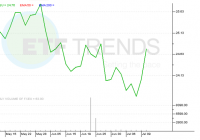
Summary Greece has been a major cause for concern in the Eurozone. Recent financial drama has contributed to increased volatility. Investors who are still interested in Europe exposure, but are wary of heightened volatility, can utilize a relatively new low-vol ETF option. Greece’s status as a member of the Eurozone is solidified, at least for now and at least until more financial problems crop up there. Eurozone leaders agreed to a third bailout package for Greece, helping the country once again stave off financial disaster and potential departure from the Eurozone Last week, the volatile Greek government submitted reform proposals to Eurozone officials in an effort to secure further bailout aid. Eurozone officials reviewed the package this weekend, potentially setting Greek stocks up for more early-week volatility next week. Without a third bailout, Greece likely defaults on its obligations and departs from the Eurozone. While the Greek crisis has tried investors’ patience when it comes to Europe, select exchange-traded funds offer investors the opportunity to remain long European equities while minimizing Greece exposure and volatility. A weakening euro is likely to play a prime role in the direction of European stocks in the coming months. “The 17% drop in the value of the euro relative to the US dollar since June 30, 2014, coupled with the tremendous run-up in European equities earlier this year, begs the question: Where do Eurozone equities go from here? Historically, the year-over-year change in the EUR/USD exchange rate has led the direction of the Euro Stoxx 50 Index by approximately one year. Therefore, euro weakness in the past portends continued upside for Eurozone equities, in my view,” according to a recent note from Invesco PowerShares . The PowerShares Europe Currency Hedged Low Volatility Portfolio (NYSEARCA: FXEU ) is one avenue to consider for investors looking to profit from a falling euro while minimizing European equity market volatility . FXEU tracks members of the S&P Eurozone BMI Index to form the S&P Eurozone Low Volatility USD Hedged Index that displayed the lowest volatility over the trailing 12 months. FXEU, which debuted in May, combines the red-hot themes of currency hedging and low volatility in one ETF. Investors have warmed to the concept as FXEU has hauled in $39.3 million in assets in barely more than two months on the market. “Given the potential upside of equity exposure to the Eurozone (for reasons outlined above), the risk associated with the rise in valuation levels and the ongoing uncertainty associated with a potential Greek exit from the Eurozone (or “Grexit”), I believe a volatility-managed solution may be a sensible approach for investors to gain exposure to this critical region. In addition, I believe the divergent monetary policy between the European Central Bank and the Federal Reserve highlights the downside risk to the value of the euro and emphasizes the need for investors to consider a currency hedge to mitigate the foreign exchange risk. A currency-hedged low volatility approach provides investors the opportunity to participate in the upside in the face of stretching valuations and exchange rate risk, as well as a downside risk mitigation smart beta strategy,” adds PowerShares. Not surprisingly, FXEU’s volatility-reducing efforts include eschewing Greek stocks. As of the end of the second quarter, the ETF’s underlying index allocated a combined 54.9% of its weight to Germany and France, the Eurozone’s two largest economies. Outside of a 12.3% weight to Spain, the index’s PIIGS exposure is light and does not include Greece or Portugal. PowerShares Europe Currency Hedged Low Volatility Portfolio (click to enlarge) Disclosure: I/we have no positions in any stocks mentioned, and no plans to initiate any positions within the next 72 hours. (More…) I wrote this article myself, and it expresses my own opinions. I am not receiving compensation for it. I have no business relationship with any company whose stock is mentioned in this article.