Tag Archives: seeking-alpha

Investing Lessons From Baseball’s Active Managers

By James T. Tierney Jr., Chief Investment Officer – Concentrated US Growth As the popularity of passive investing continues to gain momentum, take pause to think about a lesson from baseball. The question is: what kind of equity lineup creates a winning team? Nobody can deny the increasing shift of equity investors toward index strategies. Net flows to passive US equity funds have reached $21.7 billion this year through June, while investors have pulled $83.7 billion out of actively managed portfolios, according to Morningstar. In this environment, active managers are increasingly challenged to prove their worth and justify their fees. Building a Winning Lineup Baseball provides an interesting analogy for the active equity manager. Across all players in Major League Baseball, the batting average this season is .253 , as of August 6. Yet even in today’s statistics driven environment, you won’t find a single team manager who would choose to put together a lineup of nine players who all bat .253-even if it were possible. The reason is clear and intuitive. For a baseball team to be successful, you need to have at least a few hitters who are likely to get hits more often than their peers. And to create a really robust lineup, a manager wants a couple of power hitters who pose a more potent threat. Of course, some hitters will trend toward the average and slumping players will hit well below the pack. That’s why you need a diverse bunch. A team comprised solely of .253 hitters is unlikely to have the energy or the momentum needed to win those crucial games and make the playoffs. False Security in Average Performance So what does this have to do with investing? When an investor allocates funds exclusively to passive portfolios, it’s like putting together an equity lineup that is uniformly composed of .253 hitters. This lineup might provide a sense of security because returns will always be in synch with the benchmark. But it’s little consolation if the benchmark slumps. A passive equity lineup won’t be able to rely on any higher-octane performers to pull it through challenging periods of lower, or negative, returns. Still, many investors fear getting stuck with a lineup of .200 hitting active managers. We believe the best strategy to combat that risk is to focus on investing with high conviction managers, who have a strong track record of beating the market, according to our research . Passive and Active: The Best of Both Worlds Passive investing has its merits. Investors have legitimate concerns about fees as well as the ability of active managers to deliver consistent outperformance. The appeal of passive is understandable. Yet we believe that putting an entire equity allocation in passive vehicles is flawed. It leaves investors exposed to potential concentration risks and bubbles that often infect the broader equity market. And with equity returns likely to be subdued in the coming years, beating the benchmark by even a percentage point or two will be increasingly important for investors seeking to benefit from compounding returns and meet their long-term goals. There is another way. By combining passive strategies with high-conviction equity portfolios, investors can enjoy the benefits of an index along with the diversity of performance from an active approach, in our view. Baseball managers don’t settle for average performance. Why should you? The views expressed herein do not constitute research, investment advice or trade recommendations and do not necessarily represent the views of all AB portfolio management teams.
Vanguard 500 Index Fund: A Mutual Fund Anyone Can Appreciate In Their 401k

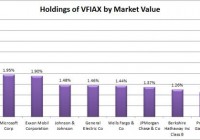
Summary VFIAX is a mutual fund designed to track the S&P 500 with a lower expense ratio than SPY. The mutual fund is a great holding for investors wanting to replicate the performance of “the market” without getting devoured by fees. This is a solid option for the retirement account. The Vanguard 500 Index Fund Admiral Shares (MUTF: VFIAX ) offer investors an excellent way to handle their investments. While I’m a huge fan of using ETFs in the construction of a portfolio, Vanguard is offering some mutual funds with very compelling expense ratios. The nice thing about these mutual funds is that investors are able to buy fractional shares which are excellent for dollar cost averaging. Volatility The standard deviation of returns (monthly) shows very similar levels of volatility to the S&P 500 index as tracked by (NYSEARCA: SPY ). Correlation is also running around 99.9%. The holdings are very similar, but these shares are offering a lower expense ratio and the ability to use dollar cost averaging very effectively. Expense Ratio The mutual fund is posting .05% for an expense ratio. There is really nothing to complain about here. It beats SPY and it beats most mutual funds and ETFs in existence. Largest Holdings The diversification within the fund is good. There are not as many holdings as the whole market index funds that I often prefer, but all around this is a very solid fund. (click to enlarge) Risk Factors The biggest issue for VFIAX is the risk that the S&P 500 is getting fairly expensive on many fundamental levels. For instance, the P/E ratio on the index is fairly high (running over 20). The high P/E ratio comes at a time when corporate profits after taxes are also very high relative to GDP. My concern is about the valuation level of the market. When it comes to ways to buy the market, VFIAX is one of the best funds to use for the task. When it comes to risk assessment, I’m not sure I’d go with Vanguard’s scale, shown below: Vanguard has a tendency to mark any primarily equity investment as being fairly high risk. Relative to other equity investments, the risk level here is very reasonable. The fund still scores high on risk for Vanguard’s scale because they are comparing it to other funds stuffed with lower risk securities than equity. Compared to a very short term high credit quality bond fund, I have to agree that VFIAX has substantially more risk. Compared to the broad universe of equity investments, VFIAX is doing a solid job of holding a diversified portfolio of large capitalization companies with solid histories. Other Things to Know Minimum investments for opening a position were $10,000 according to the Vanguard website. After that additional purchases could be in increments as small as $1. This is a solid fund for dollar cost averaging. Based on my macroeconomic views, I would want to use a fund like VFIAX for equity exposure but I also believing hold some cash on hand is wise given the potential for a reduction in equity prices. When it comes to using mutual funds, I think the best way to deal with them is to dollar cost average in. I like using ETFs to adjust my portfolio exposure but the mutual funds can be set as a “set it and forget it” investment vehicle. When making a meaningful contribution to a fund month after month without checking up on it, it would be wise to make sure the fund is reasonably diversified and that the expense ratios are low. The Vanguard 500 Index Fund Admiral Shares easily sail through both of those tests. Conclusion While I am concerned that market valuations are a little on the high side, I’m still investing each month. I choose to hold more in cash than I would if the market looked cheaper, but I still see dollar cost averaging into the right funds as a viable long term strategy. The biggest challenge for investors is to resist the urge to pull back when the market falls. We should all expect that the stock market will fall within the next 30 years. When those drops happen, investors need to be able to stomach stepping into the market to buy. Since those times are often very scary, one solution is to set up automatic purchases for a fund like VFIAX. To avoid overthinking things, I keep automatic contributions running as a baseline for investing. I use my other accounts to make additional purchases. If your employer sponsored plan offers VFIAX, it is a mutual fund worthy of consideration. Figure out your own risk tolerance and determine if the equity exposure is right for you. The biggest potential mistake an investor could make with buying VFIAX would be to put 75%+ of their portfolio in the fund when they are only a couple years from retirement and will be required to sell off shares to take distributions. So long as the total level of risk is appropriate for the investors, this is a great fund to use as the core of a passive retirement portfolio. Disclosure: I/we have no positions in any stocks mentioned, and no plans to initiate any positions within the next 72 hours. (More…) I wrote this article myself, and it expresses my own opinions. I am not receiving compensation for it (other than from Seeking Alpha). I have no business relationship with any company whose stock is mentioned in this article. Additional disclosure: Information in this article represents the opinion of the analyst. All statements are represented as opinions, rather than facts, and should not be construed as advice to buy or sell a security. Ratings of “outperform” and “underperform” reflect the analyst’s estimation of a divergence between the market value for a security and the price that would be appropriate given the potential for risks and returns relative to other securities. The analyst does not know your particular objectives for returns or constraints upon investing. All investors are encouraged to do their own research before making any investment decision. Information is regularly obtained from Yahoo Finance, Google Finance, and SEC Database. If Yahoo, Google, or the SEC database contained faulty or old information it could be incorporated into my analysis.

Best S&P 500 Utility Stocks According To A Winning Ranking System: A Look At Exelon

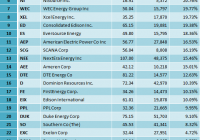
Summary Ranking the top twenty S&P 500 utility stocks according to a winning ranking system. Explanation and back-testing of the “ValueSheet” ranking system. Description and a buy recommendation for the first-ranked stock of the system: Exelon Corporation (EXC). S&P 500 utility stocks have given, on average, a similar return to that of the S&P 500 index over the last year. The average return of the 29 S&P 500 utility stocks that are included in the S&P 500 index (included dividends) in the last 52 weeks has been 10.51%, while the S&P 500 index has returned 9.77%. The table below shows all S&P 500 utility companies, ranked according to their 52 weeks return. A Ranking system sorts stocks from best to worst based on a set of weighted factors. Portfolio123 has a ranking system which allows the user to create complex formulas according to many different criteria. They also have highly useful several groups of pre-built ranking systems, I used one of them the “ValueSheet” in this article. The “ValueSheet” ranking system is quite complex, and it is taking into account many factors like; valuation ratios, growth rates, profitability ratios, financial strength, asset utilization, technical rank, industry rank, and industry leadership, as shown in Portfolio123’s chart below. In order to find out how such a ranking formula would have performed during the last 16 years, I ran a back-test, which is available by the Portfolio123’s screener. For the back-test, I took all the 6,651 stocks in the Portfolio123’s database. The back-test results are shown in the chart below. For the back-test, I divided the 6,651 companies into twenty groups according to their ranking. The chart clearly shows that the average annual return has a very significant positive correlation to the “ValueSheet” rank. The highest ranked group with the ranking score of 95-100, which is shown by the light blue column in the chart, has given by far the best return, an average annual return of about 18%, while the average annual return of the S&P 500 index during the same period was about 3.5% (the red column at the left part of the chart). Also, the second and the third group (scored: 90-95 and 85-90) have given superior returns. This brings me to the conclusion that the ranking system is very useful. After running the “ValueSheet” ranking system on all S&P 500 utility stocks on August 09, I discovered the twenty best stocks, which are shown in the table below. In this article, I will focus on the first-ranked stock; Exelon Corporation (NYSE: EXC ). (click to enlarge) On July 29, Exelon reported its second quarter 2015 results and narrowed its full-year operating earnings guidance to $2.35 to $2.55 per share. Exelon achieved earnings above its guidance range in the quarter, led by a strong financial performance at Constellation. The company beat EPS expectations in the last quarter by $0.05 (9.3%). The major drivers for the beat were reduced outages at ExGen’s nuclear plants and lower uncollectibles at Baltimore Gas & Electric. Revenue grew 5.1% to $6.51 billion in the period. Exelon showed earnings per share surprise in its last two-quarters after missing estimates in the previous quarter, as shown in the table below. Source: Yahoo Finance Despite low power prices and challenging market conditions in the wholesale power markets, I see healthy growth prospects for the company. The proposed all-cash acquisition, pending approvals, of Pepco (NYSE: POM ), will help to boost Exelon’s earnings growth rate. The merger continues to be conditioned upon approval by the Public Service Commission of the District of Columbia. Exelon expects the merger to be completed in the third quarter of 2015. On the regulated side, the forthcoming Pepco merger should bring opportunities for investment and operational improvement, as well as an additional regulated earnings stream to support the dividend. Also, the coming industry coal plant retirements will lower future reserve margins and would lead to higher electricity prices. In another development, the company plans, in September, to decide what nuclear plant will be retired due to uneconomic operational conditions. Exelon continues to evaluate the viability of three of its nuclear plants in Illinois (Byron, Quad Cities, and Clinton) given that the Illinois legislative session ended without a resolution on the low carbon portfolio. Valuation EXC’s stock has underperformed the market in the last few years. The stock is down 12.5% year-to-date while the S&P 500 index has increased 0.9%, and the Nasdaq Composite Index has gained 6.5%. Moreover, since the beginning of 2013, EXC’s stock has gained only 9.1% while the S&P 500 index has increased 45.7%, and the Nasdaq Composite Index has risen 67%. However, In my opinion, EXC’s stock is a clear value with the stock having faded more than its fundamentals and key catalysts. (click to enlarge) Chart: TradeStation Group, Inc. Exelon’s valuation metrics are excellent, the trailing P/E is very low at 11.97, the forward P/E is low at 13.40, and its price-to-sales ratio is also very low at 0.95. Furthermore, its Enterprise Value/EBITDA ratio is very low at 6.76, the lowest among all S&P 500 utility stocks. Source: Portfolio123 Exelon is paying a generous dividend. The forward annual dividend yield is pretty high at 3.82% and the payout ratio is at 45.8%. However, the annual rate of dividend growth over the past five years was negative at -10%. Summary Exelon delivered better than expected second quarter results and narrowed its full-year operating earnings guidance to $2.35 to $2.55 per share. Exelon achieved earnings above its guidance range in the quarter, led by a strong financial performance at Constellation. Despite low power prices and challenging market conditions in the wholesale power markets, I see healthy growth prospects for the company. The proposed all-cash acquisition, pending approvals, of Pepco, will help to boost Exelon’s earnings growth rate. Exelon has compelling valuation; its EV/EBITDA ratio of 6.76 is the lowest among all S&P 500 utility stocks. In my view, the recent retreat in its price offers an excellent opportunity to buy the stock at a cheap price. Disclosure: I/we have no positions in any stocks mentioned, and no plans to initiate any positions within the next 72 hours. (More…) I wrote this article myself, and it expresses my own opinions. I am not receiving compensation for it (other than from Seeking Alpha). I have no business relationship with any company whose stock is mentioned in this article.