Tag Archives: pro

SCHO: Who Says Cash Is King? SCHO Is My Replacement For Cash

Summary The Schwab Short-Term U.S. Treasury ETF offers investors liquidity, low expense ratios, and trading with no commissions in Schwab accounts. I would love to see better yields on treasury securities, but I’m looking for a place to park my cash while I look for more equity opportunities. Since I’m not big on paying high P/E ratios across the broad equity market, I’m looking at microcaps and waiting for better ratios. While yields are weak on treasury securities, SCHO looks like a nice place to park cash when an investor doesn’t know when new opportunities will be available. I’m planning to start using the Schwab Short-Term U.S. Treasury ETF in my portfolio. The Schwab Short-Term U.S. Treasury ETF (NYSEARCA: SCHO ) is exactly what it sounds like. The ETF is filled with short term treasury securities and pretty much nothing else. The weighted average maturity is under 2 years and the very low maturity combined with excellent credit quality results in a yield to maturity of only .63%. The low yield matches perfectly with a very low risk portfolio. Short term treasury yields have generally been terrible and with very weak expected yields it makes sense for fixed income investors to focus a great deal on the costs of their investments. Check Out Those Costs The expense ratio of .08% works great for me. Having SCHO as a Schwab fund with no commissions on trading also works great. Add in average volume of over 200,000 shares per day and the bid-ask spreads should remain tight so that investors are not getting screwed by moving in and out of the fund. Basically, this investment perfectly fills a specific niche in the investor’s portfolio. Over the rest of the year I plan to start pushing some of my new contributions to the portfolio into SCHO so I can hold them there while I wait for better prices on equity. Using The Schwab Short-Term U.S. Treasury ETF in a Portfolio As frequent readers may know, I’ve been looking for fixed income investments for my portfolio. I would like to find both a bond fund that offers reasonable yields with limited risk and a bond fund that makes a suitable replacement for having cash in my portfolio while offering a small yield. It would be interesting if I could find both of those things in one bond ETF, but I find that fairly unlikely. What I found today when I looked into the Schwab Short-Term U.S. Treasury ETF was a perfect option for replacing cash in the portfolio. The average yield to maturity of .63% isn’t going to make me rich, but the ETF will protect my cash while I look for suitable equity investments. Things I Like The portfolio doesn’t hold MBS securities. Most of the fixed income ETFs I’ve been looking at were using MBS as a meaningful part of the portfolio. Since I’m buying mREITs for less than NAV and cover them regularly, I don’t want or need MBS exposure in my bond ETF. That dramatically reduces the number of options but it works just fine with SCHO. Very low duration results in very little exposure to losses on increases in the yield curve. I don’t mind having some exposure to longer durations in exchange for higher yields, but that is more important for the longer term holdings. When it comes to a replacement for cash, the short duration is great for reducing volatility. I don’t want to see my cash equivalent portion of the portfolio taking a meaningful loss right when I’m looking to trade out to buy more equities. With an average maturity under 2 years, a substantial loss is very unlikely. I’m not worried about a fluctuation of 1% in the value of my cash holdings if it means they can earn some interest and are still able to be freed up for trading within a couple minutes. Credit risk is about as close to non-existent as it comes. The holdings indicate 99.8% of the portfolio is in treasury securities with the rest in cash. That works for me. I normally don’t mind some credit risk in exchange for higher yields, but I’m holding the cash position in anticipation of lower equity prices. If the market is turning south and providing me with better buying opportunities, I don’t want those opportunities to come at the same time as wider credit spreads driving down the value of my replacement for cash. Things I Don’t Like Treasury yields are weak. That is obviously not an issue with the ETF specifically, but it is the end of the list. I don’t see any other weakness and every investment in treasury securities is going to offer weak yields. That is just the macroeconomic environment. Conclusion The Schwab Short-Term U.S. Treasury ETF looks like my best option for holding cash in the portfolio while still getting some yield to offset some of the impacts of inflation. I could just hold cash, but I’m expecting to keep pouring money into my portfolios. If I was comfortable with making huge investments at very high P/E ratios, I would just keep allocating new investments to indexing the equity market. Since I’m growing less comfortable with that, I’m looking to hold more of my portfolio in cash so I can be ready to buy in to the market when there is a meaningful reduction in prices. I will also occasionally be looking for microcap investments. Since I don’t know when I’ll find ones that I feel are very compelling opportunities, being able to earn a small yield while being able to immediately withdraw my investment at a fair value is important. So far, I have not seen anything that can top SCHO in that category. Keep in mind I’m going to take advantage of trading SCHO without commissions and since I’m simply planning to allocate part of new investments to SCHO every month or two, keeping the trading costs low is very important. Disclosure: I/we have no positions in any stocks mentioned, but may initiate a long position in SCHO over the next 72 hours. (More…) I wrote this article myself, and it expresses my own opinions. I am not receiving compensation for it (other than from Seeking Alpha). I have no business relationship with any company whose stock is mentioned in this article. Additional disclosure: Information in this article represents the opinion of the analyst. All statements are represented as opinions, rather than facts, and should not be construed as advice to buy or sell a security. Ratings of “outperform” and “underperform” reflect the analyst’s estimation of a divergence between the market value for a security and the price that would be appropriate given the potential for risks and returns relative to other securities. The analyst does not know your particular objectives for returns or constraints upon investing. All investors are encouraged to do their own research before making any investment decision. Information is regularly obtained from Yahoo Finance, Google Finance, and SEC Database. If Yahoo, Google, or the SEC database contained faulty or old information it could be incorporated into my analysis.
NRG Energy Increases Its Solar Ambitions

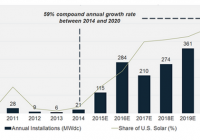
Summary NRG Energy is jumping into community solar, making it one of the first companies to enter into this promising market. NRG Energy holds many unique advantages in the community solar segment, making it highly competitive against even the likes of SolarCity. The company’s growing distributed solar operations comes with many risks, most notable in the form of long-term unknowns. The community solar concept is rapidly gaining steam, with some leading solar companies jumping into this space over the past few months. Given that community solar covers the renters’ market, which consists of 108 million individuals in the U.S. alone, its sudden emergence is not so surprising. Financing in the solar industry has finally reached a stage where community solar is not only feasible, but attractive for solar companies. While there are many more complexities involved in this solar market compared to the residential or utility-scale solar markets, it should still see explosive growth in the near term. NRG Energy (NYSE: NRG ) has been the latest company to enter into the community solar market, which is not surprising given its ambitions in distributed solar. The company recently launched a 1 MW project (connected to 200 homes), which will serve as a pilot to more community solar projects in the future. With 100 MW of shared community solar projects already in its pipeline, NRG Energy clearly has big community solar ambitions. This marks the first time that NRG Energy has been able to penetrate a major solar market so early on, which should add more upside to the company’s already undervalued stock. First Mover’s Advantage The community solar market has just recently opened up, which means that NRG Energy has a huge opportunity to cement itself early on as a dominant presence. Given the immense size of the U.S. renters’ market alone, the company should be able to experience some serious growth in this arena. While the current community solar market is nearly nonexistent, this market is expected to grow at ~60% per annum until 2020. This would mean that the community solar segment should grow approximately twice as fast as the general industry during this time period. While dominating the community solar segment will certainly not be easy for NRG Energy, the company has all the tools to do so. With the operational capabilities and expertise of its NRG Home and NRG Renew business segments, the company could even compete with the likes of SolarCity (NASDAQ: SCTY ) on this front. In fact, NRG Energy’s 100 MW community solar pipeline is equivalent to that of SolarCity’s . Given that SolarCity was the first company to make a truly impactful entrance into community solar, this shows how ambitious and forward-looking NRG Energy is. GTM Research predicts that community solar will be a half-GW market (annual) by 2020. (click to enlarge) Source: GTM Research Unique Advantages NRG Energy has some major advantages over its competitors on the community solar, and more generally, distributed solar front. First, the company already has a huge customer base off of which to leverage for its distributed/community solar business. The company also has stronger relationships with electricity companies compared to its solar pure play peers, which should allow it to expand its community solar segment more rapidly. Given that cooperation with utilities will likely prove key to dominating the community solar segment, NRG Energy definitely has an edge on this front. With NRG Energy’s enormous distributed solar ambitions, it is easy to forget that the company is one of the largest fossil fuel power companies in the world. In fact, the company has a whopping ~47 GW of operational assets, which would also give the company a financing edge over its pure play solar competitors. As such, NRG Energy will almost certainly be one of the front-runners in the highly promising community solar segment. While NRG Energy’s pure play solar competitors may be more well versed in the solar arena, NRG Energy’s own unique advantages more than make up for this. Obstacles The community solar segment is still basically unexplored, which means that first movers like NRG Energy are taking on more risk. Despite the sudden surge of competitors in this arena, the community solar business model is still new. As NRG Energy is planning to make the community solar segment a sizable portion of its business down the road, the company will likely funnel a lot of its resources into this arena. Given the unknowns associated with community solar, entering into this segment is relatively risky. More generally, there are also many long-term questions about the solar leasing model used by NRG Energy. How the long-term plays out for solar leases is incredibly important for the company as it is making a huge transition to renewables, and is planning to make distributed solar one of its focal points. Regardless of such unknowns, the potential rewards of involving itself in this solar segment far outweigh the risks. NRG Energy’s transition from a fossil fuel-centric power company to one more focused around renewables should prove to be extremely smart on balance. Conclusion NRG Energy has faced a yearlong downturn, which can largely be attributed to the instability experienced by the fossil fuels industry during this time. Although many investors still view NRG Energy as part of the fossil fuels sector, the majority of the company’s long-term prospects lie in its growing renewables sector, namely solar. Given the sheer potential of its distributed solar business alone, NRG Energy is undervalued at a market valuation of $7.2B . NRG Energy is slated to be one of SolarCity’s largest competitors, which speaks to the potential that NRG Energy’s solar segment holds. The company’s entrance into community solar just reinforces its place within the future energy landscape. Disclosure: I am/we are long SCTY. (More…) I wrote this article myself, and it expresses my own opinions. I am not receiving compensation for it (other than from Seeking Alpha). I have no business relationship with any company whose stock is mentioned in this article.

Low Volatility Anomaly: Buffett’s Alpha Example

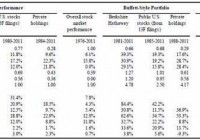
Summary This series offers an expansive look at the Low Volatility Anomaly, or why lower risk stocks have historically produced stronger risk-adjusted returns than higher risk stocks or the broader market. This article offers empirical evidence that one of the most successful investment minds of a generation has capitalized on this anomaly. By adding financial leverage to lower risk businesses, Berkshire Hathaway has generated higher risk-adjusted returns historically. Given the long-run structural alpha generated by low volatility strategies, I wanted to dedicate a more detailed discussion of the efficacy of this style of investing for Seeking Alpha readers. In recent articles, I have provided readers a detailed theoretical underpinning of the strategy. In this article and subsequent pieces, I am going to provide empirical evidence across markets that depicts the success of a low volatility bent. Empirical Evidence of the Low Volatility Anomaly Since the evolution of the Capital Asset Pricing Model (CAPM) in the early 1960s, it has been axiomatic in modern finance that expected returns are a function of an asset’s systematic risk, or beta, when the asset is added to a well-diversified portfolio. As discussed throughout this series thus far, the simplifying assumptions underlying CAPM provide frictions between model and market. These conventions underlying CAPM include that markets are wholly efficient, investors can lend and borrow unlimited amounts at the risk-free rate, trade fee of transaction costs and tax implications, and that the variance of returns is an adequate measure of risk in a world where asset returns are not normally distributed. Despite these shortcomings, the general CAPM framework has largely become broadly embedded in capital budgeting and, in part, market expectations. The presentation of empirical evidence on the Low Volatility Anomaly is greatly strengthened when you can demonstrate its role in the success of one of the greatest investors of our time. In 2013, Andrea Frazzini, David Kabiller, and Lasse Pedersen, each affiliated with hedge fund AQR Capital Management, published ” Buffett’s Alpha “, which deconstructed the return profile of Berkshire Hathaway (NYSE: BRK.A ) (NYSE: BRK.B ). From their analysis, the authors found: “the general tendency of high-quality, safe, and cheap stocks to outperform can explain much of Buffett’s performance and controlling for these factors makes Buffett’s alpha statistically insignificant.” That is a powerful statement. In a set-up to their attention-grabbing assertion, the authors demonstrated that of all stocks that traded for more than 30 years between 1926 and 2011, Berkshire Hathaway had the highest Sharpe Ratio. Buffett also magnified these risk-adjusted excess returns through the deployment of leverage estimated by the authors to be at a level of 1.6 to 1 on average. The leverage came both in the form of borrowings, which benefited from Berkshire Hathaway’s very high quality credit rating, and through float from his insurance subsidiaries. To demonstrate that Buffet’s tremendous performance was a function of this tendency to buy low risk stocks and employ conservative levels of investment leverage, the authors created tracking portfolios to mimic Buffett’s market exposure and active stock-selection themes, leveraged to the same active risk as Berkshire Hathaway. (click to enlarge) The Buffett-tracking portfolio performs comparably to the best-in-class performance of Berkshire Hathaway, demonstrating that Buffett is less a sage stock picker than a principled practitioner who has long understood the Low Volatility Anomaly and who had an investment vehicle that allowed him to avoid costly liquidations in times of stress. Note that Buffett’s average beta of his public stock holdings was just 0.77. In addition to the impressive long-run alpha demonstrated by Buffett’s leveraging of low volatility assets, another glaring failure of CAPM can be seen in the returns of the S&P 500 Low Volatility Index and the S&P 500 High Beta Index. These two indices form portfolios of the one hundred highest and lowest volatility stocks in the S&P 500 Index based on the standard deviation of price changes of the trailing 252 trading days. The indices are then rebalanced quarterly. The performance of these strategies was backtested to 1990, and demonstrates that returns would have been directionally opposite of what would be predicted by CAPM with low volatility stocks (replicated by the PowerShares S&P 500 Low Volatility Portfolio ETF (NYSEARCA: SPLV )) strongly outperforming high beta stocks (replicated by the PowerShares S&P 500 High Beta Portfolio ETF (NYSEARCA: SPHB )). (click to enlarge) Source: Standard and Poor’s; Bloomberg Joining these two examples, Buffett’s recent notable purchases have conformed to the idea of levering low volatility equities. When Berkshire Hathaway and 3G Capital combined to purchase H.J. Heinz in February 2013 , Heinz was the fifteenth largest constituent in the S&P 500 Low Volatility Index, putting the company in the 97th percentile of the S&P 500 in terms of trailing realized volatility. Buffett’s initial investment included an $8B preferred stake with a high fixed coupon, further dampening the volatility of the cash flow returns his enterprise received as part of the deal. The Berkshire/3G Capital combination would further expand their bet on the low beta packaged food sector in March 2015 with the purchase of a controlling stake in Kraft Foods Group (NASDAQ: KHC ). When Berkshire Hathaway’s Mid-American Energy unit purchased NV Energy in June of 2013 , the stock had a trailing twelve month beta of 0.73 and electric utilities were the largest individual sector weighting of the S&P 500 Low Volatility Index. When Berkshire’s utility unit had made an early purchase of Pacificorp in 2006, it was reported in Electric Utility Week that Buffett told Oregon regulators that owning utilities was “not a way to get rich – it’s a way to stay rich.” This quote came in the two years following Texas Pacific’s failed bid for Oregon’s Portland General Electric (NYSE: POR ) and KKR’s nixed acquisition of Arizona’s Unisource ( OTCPK:USRC ). Regulators at the time were concerned that these private equity firms would purchase the utility holding companies with excessive financing, the cost of which could be explicitly borne by customers in the form of higher rates and implicitly through backlogged maintenance, as capital expenditures were crowded out by debt service payments. With the notable exception of the disastrous TXU leveraged buyout in 2007, the industry has largely eschewed large scale leveraging transactions in favor of incremental releveraging through conservatively financed share repurchase plans and above market dividend rates. With regulated returns on equity, utilities generate stable and predictable cash flows for strong operators, making Buffett’s desire to lever the cash flow streams of these companies highly consistent with his long established track record of buying stable businesses. Warren Buffett’s tremendous long-run performance is in large part attributable to his early understanding of the relative outperformance of lower risk and stable businesses. In my next article in this series, I will demonstrate a way to capitalize on the Low Volatility Anomaly in the fixed income market. Disclaimer My articles may contain statements and projections that are forward-looking in nature, and therefore inherently subject to numerous risks, uncertainties and assumptions. While my articles focus on generating long-term risk-adjusted returns, investment decisions necessarily involve the risk of loss of principal. Individual investor circumstances vary significantly, and information gleaned from my articles should be applied to your own unique investment situation, objectives, risk tolerance, and investment horizon. Disclosure: I am/we are long SPLV. (More…) I wrote this article myself, and it expresses my own opinions. I am not receiving compensation for it (other than from Seeking Alpha). I have no business relationship with any company whose stock is mentioned in this article.