Tag Archives: management

The Trouble With Zero

On Tuesday afternoon, West Texas Intermediate Crude is up 6.5%, after having put in large gains the previous two days. Also typical of these types of headline grabbing moves is a parade of portfolio managers on CNBC who traded this exactly right and have no exposure. The point here is not to make a prediction about what oil will do, but to take this as a learning opportunity for market action that very frequently repeats. By Roger Nusbaum, AdvisorShares ETF Strategist As I write this on Tuesday afternoon, West Texas Intermediate Crude is up 6.5%, after having put in large gains the previous two days. Last Thursday it was around $44.58, and right now it is $52.76, which makes for an 18% gain in three trading days. We have watched the decline in crude, noting the slow decline that started in June that then turned into a crash starting at around $75 at Thanksgiving. The circumstances of crashes are always “different”, but the market action is very similar almost every time, and the oil market is showing the same pattern for now. The usual arc is a crash, which triggers an emotional response begetting more selling, and then the extrapolators coming out and telling us why the price move will go much further in the same direction; in this case, there were calls for $25-30 per barrel. Then, for no reason at all, the price turns in the other direction and snaps back very quickly. Also typical of these types of headline-grabbing moves is a parade of portfolio managers on CNBC who traded this exactly right and have no exposure. I imagine that if the move to $52 is sustainable or keeps going, then there will be another parade of portfolio managers on CNBC who all loaded up with overweight positions last Thursday below $45. The point here is not to make a prediction about what oil will do, but to take this as a learning opportunity for market action that very frequently repeats. I made a couple of small changes to the volatility of my energy exposure a couple of months ago, but nowhere close to zero exposure, because while I had no idea how low oil prices would go, the selling was clearly emotional – and emotional selling often stops for no apparent reason, and prices retrace some large portion of the crash very quickly (repeated for emphasis). It would have been great to have loaded up on energy stocks last Thursday, but I didn’t – but by not going to zero, I am capturing the lift that has been happening in the last three days. As one of the big market sectors, energy is a big portion of a diversified equity portfolio – and going to zero, as we’ve talked about many times before, is a big bet, and big bets by definition are risky. I looked at a couple of domestic energy sector ETFs which are both up about 7% in the last three days. Did any of the pundits with zero exposure last week buy today? If so, what happens to those ETFs if oil goes right back down to $44? If they did not buy back in, what will happen to those ETFs if crude goes back to $75 or $100? When do they get back in? This is a great example of why I believe zero is a big bet not worth making. Disclosure: The author has no positions in any stocks mentioned, and no plans to initiate any positions within the next 72 hours. (More…) The author wrote this article themselves, and it expresses their own opinions. The author is not receiving compensation for it. The author has no business relationship with any company whose stock is mentioned in this article. Additional disclosure: The point here is not to make a prediction about what oil will do but to take this as a learning opportunity for market action that very frequently repeats. AdvisorShares is an SEC registered RIA, which advises to actively managed exchange traded funds (Active ETFs). The article has been written by Roger Nusbaum, AdvisorShares ETF Strategist. We are not receiving compensation for this article, and have no business relationship with any company whose stock is mentioned in this article.
Is Cheap Oil Driving Transport Earnings And ETFs?

Transportation stocks have been the biggest beneficiaries of cheaper oil and an improving U.S. economy. This is easily reflected in their Q4 results as total earnings from 72.8% of the sector’s total market capitalization reported so far are up 20.6% on 5.5% revenue growth. Earnings surprises were impressive with 72.8% of the companies beating earnings estimates with a median surprise of 3.3 and 57.1% beating revenues with a median surprise of 0.4. In particular, earnings from several big players in the space like Union Pacific (NYSE: UNP ), Kansas City Southern (NYSE: KSU ), CSX Corp. (NYSE: CSX ), Delta Air Lines (NYSE: DAL ) and United Continental (NYSE: UAL ) have been encouraging. However, sluggish outlook from the bellwether United Parcel Service (NYSE: UPS ) had severely affected the broad space, erasing most of the stock gains made in the year. Transportation Earnings in Focus Earnings at the world’s largest package delivery company – UPS – were on par with the Zacks Consensus Estimate of $1.25 while revenues of $15.9 billion were marginally ahead of our estimate of $15.8 billion. The company projects earnings per share of $5.05-$5.30 for fiscal 2015, representing 6-12% growth on an annual basis. The mid-point is above the Zacks Consensus Estimate of $5.14. Further, the company reaffirmed its long-term earnings per share growth target of 9-13%. The share price of UPS grew about 0.4% on the day of its earnings release on February 2. The two largest U.S. airlines – DAL and UAL – flew higher after beating the Zacks Consensus Estimate on the earnings front. Both stocks surged 11.4% and 7.7% to touch new 52-week highs of $51.06 and $74.52, respectively, before being hit by UPS’ warnings. DAL is just up 0.4% to date since its earnings release on January 20 and UAL is down 1.8% following its earnings release on January 22. Earnings at Delta beat the Zacks Consensus Estimate by three cents while revenues of $9.65 billion edged past our estimate of $9.59 billion. On the other hand, earnings at United Continental came in at $1.20, outpacing our estimate by six cents, and revenues were $9.3 billion, on par with our estimate. UNP , the U.S. largest railroad, reported earnings of $1.61 per share, 10 cents ahead of the Zacks Consensus Estimate and 27% higher than the year-ago earnings. Revenues climbed 9% year over year to $6.2 billion, ahead of our estimate of $6.1 billion. The stock climbed 6.4% since its earnings announcement on January 22 before the market opened. Other major railroads like CSX and KSU have given mixed performances. While earnings at CSX meets our estimate of 49 cents, revenue of $3.19 billion exceed the Zacks Consensus Estimate of $3.18 billion. On the other hand, KSU earnings outpaced by 4 cents and revenues of $643 million lagged the Zacks Consensus Estimate of $658 million. Shares of CSX gained 3.3% to date post earnings on January 13 after the closing bell and KSU added nearly 1% since its earnings announcement on January 23 before the market opened. ETFs in Focus Given that the cheap fuel will continue to provide a big boost to transport earnings growth, investors should definitely tap the current beaten down prices in the form of ETFs with a lower level of risk. This is especially true as the transport sector actually has the best rank for any industry at the time of writing – about three-fourths of the industries under transport have Zacks Ranks in the top 37%, suggesting bullishness in the sector. iShares Dow Jones Transportation Average Fund (NYSEARCA: IYT ) The ETF tracks the Dow Jones Transportation Average Index, giving investors exposure to the small basket of 20 securities. The fund has a certain tilt toward large cap stocks at 49% while mid and small caps account for 31% and 19% share, respectively, in the basket. The product is heavily concentrated on the top five holdings, accounting for 42.8% of assets. From a sector perspective, railroad takes the top spot with less than half share in the basket, while air freight & logistics and airlines round off to the top three with double-digit exposure each. The fund has accumulated nearly $2 billion in AUM while sees good trading volume of around 490,000 shares a day. It charges 43 bps in annual fees and has lost 2.6% so far in the year. SPDR S&P Transportation ETF (NYSEARCA: XTN ) This fund uses the equal weight methodology to each security by tracking the S&P Transportation Select Industry Index. Holding 50 stocks in its basket with AUM of $623.4 million, each security accounts for less than 3.3% of total assets. The ETF is skewed toward small caps at 51% while mid and large caps account for 27% and 22% share, respectively. About one-third of the portfolio is dominated by trucking while airlines take another one-fourth share. Airfreight & logistics, and railroads also make up for a double-digit allocation. The fund charges 35 bps in fees per year from investors and trades in a moderate volume of more than 82,000 shares a day. XTN is down about 5.8% in the year-to-date timeframe. Bottom Line Investors should keep in mind that cheap fuel is currently a huge boon to the transportation sector. Better job conditions and an improving economy are also driving the growth in the sector. As a result, investors shouldn’t miss this opportunity to stuff these funds into their portfolio. Further, these funds could easily counter shocks from some of the industry’s biggest components like the recent UPS warnings.

Is The End Beginning For The Euro Dream?

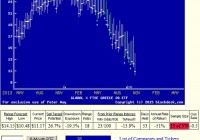
Summary Electing a “popular” populist government, the economically suffering population of Greece has brought the country’s future and involvement with the ECM to a showdown. This first, possibly of several, such confrontations makes clear that a common currency, the Euro, is only going to work where participants accept common rules of economic behavior. The ECB has told Greece the rules of the game, and Greece refuses to give up its National Sovereignty. The ECM’s February 28 deadline for Greece’s conformity is DOA. Greek PM Tspiras and ECM leaders (Germany’s Merkel) now are locked in the “chicken” game of who takes the blame (and loss) for a Greek national debt default. The Euro? or the (reverted-to) Drachma? US market-makers for the Greek ETF and the Euro ETF see no winners. A forecast for crumbling co-ordination of Europe’s economies? Greece: The Fat’s in the Fire; who takes the “fall”? Greece apparently has lived for years without the internal economic disciplines necessary to maintain a sound currency. Hiding behind a smokescreen of the “Euro” currency has finally pushed the European Common Market leaders’ patience to a point of resolution. Now it is apparent that for the ECM to actually work, bringing together several national interests in the expanding rivalry for world trade competition, its members have to either have productive internal disciplines, or become wards of those states that do. Many notable European countries made this assessment early in the ECM’s formation, and said “thanks, but no thanks” to the proposition of carrying the undisciplined nations via a common currency and common debts related to it. Not all Common-Market members are committed to acceptance and support of the Eurodollar. Not so strangely, those several nations unwilling to play the Euro-currency game were nations quite able to compete and support themselves without the encumbrance of being enablers to the undisciplined. We are amateur observers of international politics, incompetent to suggest how the Greece vs. ECM tussle will eventuate. But we do have the ability to track how the expectations of far-better-informed observers are trending. Ones who are willing to put some wallet-skin in the game, more than just mouth-skin. They are the market-makers [MMs] who help big-money-fund world investors shift the emphasis of their portfolios in search of capital-growth opportunities. Because the investment amounts are large they often stretch the capacity of established markets at times and prices to which other portfolio managers [PMs] are willing to commit. The MMs will commit temporary capital investments from their own funds to make up the differences if the risks involved can be adequately protected by hedging actions. What that price-change protection will cost gets included in the transaction price of the whole block trade being attempted. If it is too large for the PM issuing the trade order, the transaction is killed. When the cost is acceptable, the trade order is filled at a single price per share in its entirety. What the cost will be depends upon the buyer and seller of the protection coming to agreement upon just how much the trade order issue may change in price during the life of the hedge. These days the MMs are typically publicly-owned “investment banks” with extensive borrowing capacities well beyond the reach of 20th century exchange specialists and private hedging and arbitrage firms. Today’s MMs have for decades maintained world-wide information-gathering systems staffed 24x7x365 with reporters and researchers whose principal assignment is to keep the block trade desks (insurance buyers) and proprietary trade desks (insurance sellers) at least as well informed as the fund clients, and better, if possible. The MM firms bring to the transaction party skills and resources in information technology, arbitrage, and hedging that often are beyond those of their clients. What is paid for the price change insurance, and accepted by fund PMs tells just how far those concerned believe the issue’s prices might move. Because the insurance includes equally well-informed buyers and sellers, the resulting expectations are often not simply symmetrical expressions of uncertainty. The balance between upside and downside price change prospects can be a useful guide to coming actual price changes. In addition, the trends in how those price change ranges are moving brings further insights to each proposition. So what’s the current Greek and Euro picture? Not surprising, here is the past two years’ track of expectations for the Global X FTSE Greece 20 ETF (NYSEARCA: GREK ). The heavy-dot market price separates each once-a-week vertical line price range forecast into upside and downside price change prospects. (used with permission) Which looks a lot like the way prospects for the Euro are being reflected in the Currency Shares Euro ETF (NYSEARCA: FXE ). A similar trend of expectations, with more noise, appears in the Vanguard FTSE Europe ETF (NYSEARCA: VGK ), which tracks the index of stocks in Developed Countries of Europe. My first professional employ in the investment business after graduate school was at an eponymously-named NYC investment counsel firm led by a renowned economist. He once remarked “Only in America do they teach Economics, everywhere else they teach Political Economics.” At present there are political economic actions being undertaken by the ECB that have short to intermediate-term stimulating impact for Europe. The dream of a competitively-united “common market” provides the focus for such actions, through the ECB – at least at this point in time. But the potential for the dream’s accomplishment is getting a wake-up call from Greece where national identity and determination is being presented as a lever to achieve even further escape from real-world disciplines. Now other Common Market nations (as differentiated from “Eurodollar” nations) are further forced to anticipate becoming one of two coming alignments: Greece gets away with making the rest of the ECM be its present “sugar-daddy” and becomes the model for other like-minded states, for the rest of the Community to support (in perpetuity?), or The ECM forces Greece to accept its original terms, leading to a clear recognition of the National Sovereignty issues involved by all members, with potential voluntary departures of members essential to the ECM’s continuity. Conclusion This may be the inverse of a win-win situation. At present the professional investment community seems to think that’s possible, given their read of VGK. It is another example of ETFs being a part of the economic outlook. Disclosure: The author has no positions in any stocks mentioned, and no plans to initiate any positions within the next 72 hours. (More…) The author wrote this article themselves, and it expresses their own opinions. The author is not receiving compensation for it (other than from Seeking Alpha). The author has no business relationship with any company whose stock is mentioned in this article.