Tag Archives: management

The 7 Deadliest Words Of Investing And Why You Are Not Smarter Than The Average Bear

Summary Stay away from these 7 deadly words that we tell ourselves. See how investors can be classified into three types of lemmings. Discover a simple concept of what valuation really is to an investor. I’m a valuation nut. The methods I choose are not perfect because valuation involves art and science. But then again, what is the perfect valuation method? There’s no such thing. And that’s difficult for many people to grasp because we are taught to do things the “right” way, a “certain” way. One of the most difficult things with investing and any form of valuation is that there is no step by step guide. In any other industry there’s a clear process that you can follow from start to finish to accomplish a task Ikea furniture assembly instructions Photography tutorials How to tie a tie Learning to hang glide and so on But investing is like a choose your own adventure book that I loved to read growing up. A choose your own adventure book is one where you come to a section of the book and then get to choose which adventure you want to take. Depending on your choices, the ending is different. When it comes to investing, there is no clear single method of doing things and it can overwhelm, and frankly, freaks out some people. Instead of a straight path from A to B, the waves of decisions and new information you have to take in requires lots of work. And it’s too much for many people. That’s why you always see people asking strangers what their thoughts are on a stock they hold. But the truth is that people can invest successfully. People can value stocks properly. You’re just led to believe you can’t. It’s just that there are a ton of blogs, news and articles that discuss complex ideas, causing people to simply walk by obvious low risk ideas. I call these low hanging fruits. Bloggers, news reporters, financial analysts all want to write about the hard stuff to get recognized. The complex deals. Who wants to write about how a small, well run, industrial niche company in Nashville, with a 70 year long heritage that continues to gain business and generate cash when less than 400 people on the Internet will read it? Instead they could be writing about how Tesla (NASDAQ: TSLA ) is reinventing the auto industry and revolutionizing a new energy era, poring over PHD words and speculating about what the future could bring. It could go viral and look good on their writing stats. But… You’re led to believe that they must know something that you don’t. The 7 Most Deadly Words in Investing This is a video that I refer to now and then when I need to clear my head or when I start second guessing myself. I’ve marked the video to start from 1:57. Watch the next 2 minutes to around the 3:50 mark. Did you catch those 7 deadly words? They must know something that you don’t. If seasoned professionals fall into this trap, how much easier is it for regular investors to tell themselves the same thing? Especially when they read or hear people they regard as more intelligent as themselves disagreeing with their analysis and valuations. If you didn’t or can’t watch the video above, Prof Aswath Damodaran lays out a simple example that I certainly relate to. You value a company. Say you come up with a value of $50 per share. Let’s say the company is Amazon. Stock is trading at $278. One of the great stocks of the last decade. Your rational side is saying, “don’t buy that stock, it’s expensive”. But then you hear a voice at the back of your head. “They must know something that you don’t”. And when you hear that voice, magical things happen to your valuation. Your cash flows increase, your growth rates go up, your discount rates go down, $50 becomes $100, $100 becomes $150, and before you know it, guess what? You’re at $275, $300, justifying your need to buy. 3 Types of Lemmings Damodaran continues on to group investors into 3 groups of lemmings. After all, we are all lemmings to some degree. There is no such thing as a pure contrarian, because that just means you are a contrarian just for the sake of being a contrarian. Lemming #1: The Proud Lemming These are just momentum investors who are proud of following what’s hot. They don’t care what the company is or does. They look for a crowd and buy and sell whatever is being bought or sold. Lemming #2: The Yogi Bear Lemming Yogi Bear’s tagline is “smarter than the average bear” and it refers to the investors who like to think that they are able to pull out of a stock just before it crashes. The problem is that most people claim they are smarter than the average bear, but rarely are they able to jump ship of a momentum train before it crashes. If Isaac Newton, the father of advanced mathematics and mechanics couldn’t handle the charts, market and lemming fever, I have serious doubts about most of us. Isaac Newton Became a Lemming ( Photo Credit: Safal Niveshak ) Lemming #3: The Lemming with a Life Vest Valuation is simply a life vest. A compass. It’s something for you to hang onto when everyone else is doing something else. Buffett knew that dot com stocks were at stupid valuations in 2000 and held onto his life vest when Barron’s basically called him “old”. After more than 30 years of unrivaled investment success, Warren Buffett may be losing his magic touch. … To be blunt, Buffett, who turns 70 in 2000, is viewed by an increasing number of investors as too conservative, even passe. Buffett, Berkshire’s chairman and chief executive, may be the world’s greatest investor, but he hasn’t anticipated or capitalized on the boom in technology stocks in the past few years. Indeed, Buffett has even started taking flak on Internet message boards. One contributor called Berkshire a “middlebrow insurance company studded with a bizarre melange of assets, including candy stores, hamburger stands, jewelry shops, a shoemaker and a third-rate encyclopedia company [the World Book].” – Barrons I just love how Damodaran puts it because it’s exactly how I process it. Valuation slows the process down, gives your rational side a chance to mount an argument. Valuation is Simple. Don’t Complicate It. When you value stocks, you miss out on hundreds of opportunities. Most growth stocks go out the window. Forget about Tesla. Most investors don’t want to hear about valuation because it challenges their desire to hear what they want. But I love valuation and it’s the reason why the OSV Analyzer came to life in the first place. I love it and over 800 members have made great use of it because when facts and numbers over the past 5 years or 10 years are smack in front on your face, it’s difficult to trick yourself. Unless I can find a reason for why I have to increase my valuation from $50 to $300 without solid evidence, it’s easy to recognize I’m fooling myself. I could go into 101 reasons why everyone should use the analysis tool, but the more important thing is to start building a habit of valuing stocks. Investing is a game where you don’t win by making all the right calls. You can be right only 40% of the time. But if your conviction and position sizing is good, you can easily beat anyone out there. When I start chasing complicated stories, structures, deals, industries that I know nothing about, I’ve lost money every time. When I focus on valuation and follow it up with patiently waiting until the stock hits my margin of safety price, I’ve been rewarded more times than I’ve been wrong. You Can Win the Fight As a freebie, I have free valuation spreadsheets you can start with. It’s combined with an easy to digest mini valuation courses over email if you are a new subscriber. Just easy guides on how to value and analyze stocks using several different methods. Charlie Munger said that if he knew where he was going to die, he’d never go there. Well, you’ve just found the 7 deadliest words in investing. They must know something that you don’t. Let’s not go there. Disclosure: The author has no positions in any stocks mentioned, and no plans to initiate any positions within the next 72 hours. (More…) The author wrote this article themselves, and it expresses their own opinions. The author is not receiving compensation for it. The author has no business relationship with any company whose stock is mentioned in this article.

Duke Energy: Ramping Up Its Solar Ambitions

Summary Duke Energy has acquired a majority stake in REC Solar, which should allow Duke Energy to stake a foothold in the promising distributed solar markets. Duke Energy and REC Solar make for an incredibly synergistic partnership, with Duke Energy providing for cheap capital and influence, and with REC Solar providing for its experience an talent. Because REC Solar’s business directly conflicts with Duke Energy’s centralized fossil fuels business, such an acquisition will only be worthwhile if distributed solar eventually becomes the dominant electricity generation model. Duke Energy is smart to expand its renewable energy profile, especially in light of solar’s continually increasing cost-effectiveness and its exponential growth path. The fight between utility companies and distributed solar companies have heated up markedly over the past year. Some major utilities have even started resorting to underhanded tactics , such as influencing congressmen to do their bidding. While most utilities are trying to quash distributed solar, the savvy utility companies are embracing the change. Duke Energy (NYSE: DUK ) has been one of the rare few utilities that have actually seen the rise of distributed solar as a huge opportunity. Duke Energy is currently the largest electricity holding company in the U.S., and has assets all over North and South America. While Duke Energy has a huge reliance on fossil fuels, which has been essential for the vast majority of the its business, the company is slowly making a transition to solar. Unlike most other utilities, Duke Energy is incorporating solar not as a means of meeting federal requirements, but to ensure the company’s survival in a rapidly changing energy landscape. In fact, Duke Energy already has more renewable assets than many of the top renewable companies, with a sizable renewables portfolio consisting of around 1.8 GW worth of solar and wind assets . There are few other fossil fuel based utilities doing the same, with NRG Energy (NYSE: NRG ) being almost the sole exception. Duke Energy has reaffirmed its commitment to solar by acquiring a majority state in REC Solar , which focuses on distributed commercial installations. Duke Energy is willing to invest up to $225M into REC, with the clear intentions of trying to stake a foothold in the commercial solar sector. REC Solar will operate under Duke Energy Renewables(which is the green arm of Duke Energy) and should benefit tremendously from Duke Energy’s financial clout and low costs of capital. As per Duke Energy CEO Allen Bucknam, “We plan to extend the benefits of clean, distributed energy solutions to previously underserved small and medium-sized businesses,” and that “The Duke Energy relationship realizes our strategy to be the one-stop shop for commercial solar by securing a predictable and streamlined customer financing process.” This is what a typical commercial REC Solar install looks like. (click to enlarge) Source: REC Solar The Importance of Maintaining an Early Foothold The utilities sector has seen little to no change in over a century, which means that sudden industry change likely seems extremely threatening, and even alien to most utilities. This could explain why the majority of utilities have been violently opposed to the proliferation of distributed solar companies such as SolarCity (NASDAQ: SCTY ). Instead of working with these companies, which would likely end up being better for everyone involved, most of these companies are fighting tooth and nail to resist change. Duke Solar is clearly an anomaly in this sense, not only accepting such change, but actually transitioning its business model to become more solar friendly. The company’s majority stake in REC Solar leaves no doubt about the company’s renewable ambitions. Not only does REC Solar’s business model come in direct conflict with that of Duke Energy’s, but it also represents an existential threat to the company’s centralized business model. Instead of combating such REC Solar, Duke Energy has gone the infinitely wiser route of acquiring it. By controlling REC Solar’s commercial solar operations, Duke Energy will have a foothold into the promising ditsributed solar sector . Because the vast majority of Duke Energy’s business is based upon centralized fossil fuel generation, the acquisition of a distributed solar company seems counterproductive at best. That is, for every distributed solar customer that Duke Energy signs up, that is one less customer for its main centralized business. While this is a no-win situation for Duke Energy, the company is looking at the long-term energy landscape, where distributed generation may very likely replace centralized generation. Without staking a foothold in the distributed solar sector now, Duke Energy may become obsolete later on. At the relatively small cost of $225M, Duke Energy is setting itself up for future success in an immensely promising market. While $225M is a sizable sum of money for the solar sector, it is merely pocket change for the $60B valuated Duke Energy. Incredible Synergy Duke Energy’s acquisition of REC Solar should amount to some incredibly synergistic effects, especially in financial and political matters. Despite all the talk about distributed solar’s coming dominance, this form of electricity generation currently only amounts to below 1% of total electricity generation, which unfortunately results in a lack of perceived credibility and influence. This is of course where Duke Energy can fill the void, and in return, Duke Energy gets REC Solar’s talent and years of solar industry experience. The distributed solar industry has traditionally suffered from high capital costs , largely due to solar PV’s relatively novel technology. While solar PV has been around for 40+ years, the technology has not seen statistically significant adoption until the last decade or so. Because finance companies have had so little to work on in terms of accessing solar PV’s stability/reliance, such high capital costs are not at all surprising. REC Solar’s capital costs have been no exception in this regard, which makes its Duke Energy partnership perfect for this situation. Duke Energy Renewables has billions on its balance sheet, which should drastically lower REC Solar’s capital costs. Instead of trying to find outside funding for its commercial projects, REC Energy could now go directly to Duke Energy. A lowered cost of capital means that REC Energy would be able to increase its profit margins, expand its commercial operations, or both. This, of course, also benefits Duke Energy. What makes Duke Energy’s acquisition of REC Solar particularly intriguing is if/how Duke Energy will be able to leverage its financial clout to influence politics. For instance, the company’s renewable arm has the majority of its solar assets in North Carolina, which unfortunately does not allow for solar leases/PPAs. While traditional distributed solar companies have nowhere near the political clout to significantly alter North Carolina’s state policies/laws, Duke Energy has more than enough influence to do so(especially considering the fact that the company is based out of North Carolina). If Duke Energy chose to support the legalization of leases/PPAs in the state, REC Solar would benefit tremendously, which would in turn benefit Duke Energy. With such a powerful utility heavyweight entering the distributed solar game, it will be interesting to see how Duke Energy deals with policies negatively impacting solar leasing/PPA. On one hand, these policies help Duke Energy’s core business of centralized fossil fuel generation, but on the other hand, they would severely limit its distributed REC Solar business. Given Duke Energy’s seemingly forward looking nature, it is likely that the company will aid in trying to eliminate such policies, at least in its home state of North Carolina. Risks and Obstacles As was previously stated, REC Energy’s business comes in directly conflict with Duke Energy’s main business of centralized generation. If distributed solar does end up dominating the electricity generation scene, this will prove to be an ingenious acquisition. If such a scenario does not play out though, REC Solar would likely just be taking revenue from Duke Energy’s main business, resulting in a zero-sum game. This could even turn out to be negative-sum game considering all the time and effort that would likely be put into REC Solar. In addition, REC Solar’s business primarily deals with the distributed commercial sector, which has struggled to grow over the past few years. Duke Energy may have a harder time than anticipated in growing REC Solar’s commercial business due to the numerous problems plaguing the commercial solar sector(i.e. lack of efficiency, standardization, etc). While such problems are possible to overcome, they will nevertheless represent daunting obstacles for Duke Energy’s REC Solar acquisition. Conclusion Duke Energy is one of the largest energy companies in the world, having over 7 million customers in North America alone. Despite making its fortune on fossil fuels, the company is smart enough to realize that centralized fossil fuel dominance will not last forever. The company’s transition into renewables, and more importantly, distributed solar, will prove to be key for the company’s future success. With a valuataion of $60B and a P/E ratio of 19 , the company still has upside due to its increasing involvement in the immensely promising solar market. Disclosure: The author is long SCTY. (More…) The author wrote this article themselves, and it expresses their own opinions. The author is not receiving compensation for it (other than from Seeking Alpha). The author has no business relationship with any company whose stock is mentioned in this article.

Time To Bet Against Japan?

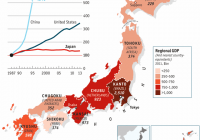
Summary Japan is struggling with economic decline, debt, and demographics. Abenomics has yet to show promised and needed progress. We see opportunity investing in a rising Dollar against a falling Yen. Global Context The world is presently full of economic and financial concern. Central banks in nations around the globe are trying to work their magic in order to increase economic growth and financial returns. A primary method of choice is currency devaluation. This simply means that countries are creating more currency with the goal of watering down its value. When this happens, it is easier to stimulate the economy and to sell and export goods and services to other countries. Why is that? Because your goods and services in your weakening currency are now cheaper for outsiders to buy in their stronger currency. The problem is that other countries also want to sell and export their goods. This is how we end up in what is known as a “currency war.” This means countries are fighting to have the weakest currency to boost exports and economic growth. We have seen this actively done in the U.S., Japan, China, and now Europe. Those also happen to be the four major economies in the world. In spite of the efforts of the U.S. Federal Reserve, the U.S. Dollar has been gaining strength since July 2014; gaining around 17% in that time frame. In contrast, since the beginning of 2013, the Japanese Yen has lost nearly 50% of its value compared to the U.S. Dollar. Since May of 2014, the Euro has lost around 18% of its value compared to the U.S. Dollar. Japan’s Three Struggles All of this information begs the question, is there still an opportunity to make money on these trends? We have been watching the falling value of the Euro and the Yen for a few months now. As we have waited, it appears we missed a pretty great opportunity to buy put options on the Euro via the CurrencyShares Euro Trust (NYSEARCA: FXE ). Unfortunately, that is the reality of investing sometimes. While there is still the potential for further downside in the Euro, the trade carries more uncertainty than when FXE was sitting around $125 as opposed to around $115 now. Unless someone expects the Euro to collapse or fail, shorting FXE has less certainty from here. What about the Yen and a short position on the CurrencyShares Japanese Yen Trust (NYSEARCA: FXY )? Japan currently faces three major problems: economic growth, debt, and demographics. Economic Growth (click to enlarge) As you can see from the chart, Japan has experienced either flat or negative economic growth over the last 25 years. Even so, it is still the third largest economy in the world behind the U.S. and China. After these “lost decades,” in hopes of reviving the economy, the Japanese people elected Shinzo Abe. Abe campaigned on the premise that he would enact a bold three-part plan of stimulus spending, monetary easing, and structural reforms that would turn things around. Together these are known as the “three arrows” of “Abenomics.” Debt So far, Abenomics has done much to boost the Japanese stock market, but little to boost the overall economy. In the process, Japanese debt has soared to nearly 250% of GDP, the highest debt to GDP ratio in the world. (click to enlarge) As spending and debt grow, the theory has been that taxes would also increase to help balance the equation. One tax increase has gone into effect, but future increases have been postponed because of economic weakness. To further complicate the issue, Japan is facing a losing battle of demographics. Demographics (click to enlarge) The population of Japan is shrinking, rather quickly. The current population of 127 million is expected to fall to 100 million by 2050. This means less people to work to provide economic growth and to pay taxes, and more elderly people dependent on government healthcare. In summary, Japan has a shrinking economy, shrinking population, and ballooning debt. That all sounds pretty bleak, but none of this is entirely new information. People have written of gloom for Japan for years, expecting decline and even collapse as the Japanese economy has marched on free of catastrophe. Japanese Desperation So, what makes this time potentially different? Two primary factors: By electing Abe the Japanese people have shown they are ready for change, even if it means drastic measures. Japan is no longer alone. Europe, China, and the U.S. are also fighting something between economic stagnation (U.S., China) and outright decline (Euro). Re-Election of Abe By electing and re-electing Abe, the Japanese people appear ready to do whatever is necessary to revive their economy. So far, their efforts have lead to a 50% decrease in the value of the Yen compared to the U.S. Dollar and there has been little to show for it on the economic front. Abe and Bank of Japan governor, Haruhiko Kuroda have made the eradication of deflation their chief gauge of success. They have concluded that inflation of 2% is what is needed to jump start Japan out of deflation. What is one of the prime means of fighting deflation? Boosting inflation. Creating more currency and thereby devaluing the Yen is among the preferred methods for creating inflation. Currency War To add even more challenge to Japan’s situation, they are now competing with other major economies to devalue their currencies in an attempt to stimulate growth and exports. This presents a scenario of competing desperation, commonly referred to as a currency war. So far, Abe has been true to his word with the first two arrows of Abenomics, but the third arrow of structural reform seems to still be in question. Corporate tax cuts are the latest announced move to help bring about the structural reform promised in the third arrow. Shooting Blanks not Arrows None of these measures can compensate for the major demographic problem that Japan is facing. How can an economy continue to grow when the population is shrinking? How can a shrinking population manage a ballooning debt that is already the largest in the world? Japan is in a desperate place, and the Japanese people have finally acknowledged it through their election and re-election of Abe. The primary methods of developed economies to stimulate growth have been stimulus spending and monetary easing. It seems to be a reasonable conclusion that a desperate Abe, with the backing of the Bank of Japan and the Japanese people, will only add more fuel to the fire in order to heat up their frozen economy. This means that the value of the Yen is very likely to continue to fall, particularly in relation to the strengthening U.S. Dollar. In addition, there is the possibility of an outright monetary or financial collapse in Japan. For the sake of the Japanese people, we hope it doesn’t come to that. As investors, it would be wise to consider and prepare for the possibility. Potential Opportunity How can investors respond to a declining Yen and a strengthening U.S. Dollar? We have chosen to invest simultaneously in the strengthening U.S. Dollar and a weakening Yen by buying put options on the CurrencyShares Japanese Yen Trust. One writer has put a target of around $70 on FXY by year-end; roughly a 15% drop from when I began writing this article. That level of decline could offer a nice gain and the potential of a significant one if the Yen experiences a major loss of confidence. Conversely, the likelihood of the Yen gaining much on the U.S. Dollar seems pretty low. That makes for a relatively low risk investment that offers a potentially high reward. Let us know if we have missed anything or if you have any questions. Note: All charts are from The Economist, 12/15/14, ” Japan in Graphics: Falling Blossom “. Disclaimer : This article is for information purposes only. There are risks involved with investing including loss of principal. All readers must be responsible for and make their own investing decisions. Each reader bears the full responsibility for any decision to buy, sell, or hold any securities, precious metals, real estate, or other asset class as well as any decision regarding the starting or running of a business. Nothing in this newsletter is to be considered investment advice, a formal recommendation, or solicitation to buy or sell any security. Investor in the Family LLC makes no explicit or implicit guarantee with respect to performance or the outcome of any investment or projections made. There is no guarantee that the goals of the strategies discussed by Investor in the Family LLC will be met. Investor in the Family LLC may receive payment for promoting some products found in this article. Even so, Investor in the Family LLC aims to promote products that it has tested and believes will add value to readers. Please see full Disclaimer . Disclosure: The author is long JAN 16 FXY PUTS. (More…) The author wrote this article themselves, and it expresses their own opinions. The author is not receiving compensation for it. The author has no business relationship with any company whose stock is mentioned in this article.