Tag Archives: load

Polaris Global Value, December 2014
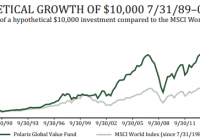
Editor’s note: Originally published on December 1, 2014 Objective and strategy Polaris Global Value attempts to provide above average return by investing in companies with potentially strong sustainable free cash flow or undervalued assets. Their goal is “to invest in the most undervalued companies in the world.” They combine quantitative screens with Graham and Dodd-like fundamental research. The fund is diversified across country, industry and market capitalization. They typically hold 50 to 100 stocks. Adviser Polaris Capital Management, LLC. Founded in 1995, Polaris describes itself as a “global value equity manager.” The firm is owned by its employees and, as of September 2014, managed $5 billion for institutions, retirement plans, insurance companies, foundations, endowments, high-net-worth individuals, investment companies, corporations, pension and profit sharing plans, pooled investment vehicles, charitable organizations, state or municipal governments, and limited partnerships. They subadvise four funds include the value portion of the PNC International Equity, a portion of the Russell Global Equity Fund and two Pear Tree Polaris funds. Manager Bernard Horn. Mr. Horn is Polaris’s founder, president and senior portfolio manager. Mr. Horn founded Polaris in April 1995 to expand his existing client base dating to the early 1980s. Mr. Horn has been managing Polaris’ global and international portfolios since the firm’s inception and global equity portfolios since 1980. He’s both widely published and widely quoted. He earned a BS from Northeastern University and a MS in Management from MIT. In 2007, MarketWatch named him their Fund Manager of the Year. Mr. Horn is assisted by six investment professionals. They report producing 90% of their research in-house. Strategy capacity and closure Substantial. Mr. Horn estimates that they could manage $10 billion firm wide; current assets are at $5 billion across all portfolios and funds. That decision has already cost him one large client who wanted Mr. Horn to increase capacity by managing larger cap portfolios. About half of the global value fund’s current portfolio is in small- to mid-cap stocks and, he reports, “it’s a pretty small- to mid-cap world. Something like 80% of the world’s 39,000 publicly traded companies have market caps under $2 billion.” If this strategy reaches its full capacity, they’ll close it though they might subsequently launch a complementary strategy. Active share Polaris hasn’t calculated it. It’s apt to be high since, they report “only 51% of the stocks in PGVFX overlap with the benchmark” and the fund’s portfolio is equal-weighted while the index is cap-weighted. Management’s stake in the fund Mr. Horn has over $1 million in the fund and owns over 75% of the advisor. Mr. Horn reports that “All my money is invested in the funds that we run. I have no interest in losing my competitive advantage in alpha generation.” In addition, all of the employees of Polaris Capital are invested in the fund. Opening date July 31, 1989. Minimum investment $2,500, reduced to $2,000 for IRAs. That’s rather modest in comparison to the $75 million minimum for their separate accounts. Expense ratio 0.99% on $290 million in assets, as of November 2014. The expense ratio was reduced at the end of 2013, in part to accommodate the needs of institutional investors. With the change, PGVFX has an expense ratio in the bottom third of its peer group. Comments There’s a lot to like about Polaris Global Value. I’ll list four particulars: Polaris has had a great century. $10,000 invested in the fund on January 1, 2000 would have grown to $36,600 by the end of November 2014. Its average global stock peer was pathetic by comparison, growing $10,000 to just $16,700. Focus for a minute on the amount added to that initial investment: Polaris added $26,600 to your wealth while the average fund would have added $6,700. That’s a 4:1 difference. It’s doggedly independent. Its median market cap – $8 billion – is about one-fifth of its peers’. The stocks in its portfolio are all about equally weighted while its peers are much closer to being cap weighted. It has substantially less in Asia and the U.S. (50%) than its peers (70%), offset by a far higher weighting in Europe. Likewise its sector weightings are comparable to its peers in only two of 11 sectors. All of that translates to returns unrelated to its peers: in 1998 it lost 9% while its peers made 24% but it made money in both 2001 and 2002 while its peers lost a third of their money. It’s driven by alpha, not assets. The marketing for Polaris is modest, the fund is small, and the managers have been content having most of their assets reside in their various sub-advised funds. It’s tax efficient. Through careful management, the fund hasn’t had a capital gains payout in years; nothing since 2008 at least and Mr. Horn reports a continuing tax loss carry forward to offset still more gains. The one fly in the ointment was the fund’s performance in the 2007-09 market meltdown. To be blunt, it was horrendous. Between October 2007 and March 2009, Polaris transformed a $10,000 account into a $3,600 account which explains the fund’s excellent tax efficiency in recent years. The drop was so severe that it wiped out all of the gains made in the preceding seven years. Here’s the visual representation of the fund’s progress since inception. Okay, if that one six quarter period didn’t exist, Polaris would be about the world’s finest fund and Mr. Horn wouldn’t have any explaining to do. Sadly, that tumble off a cliff does exist and we called Mr. Horn to talk about what happened then and what he’s done about it. Here’s the short version: “2008 was a bit of an unusual year. The strangest thing is that we had the same kinds of companies we had in the dot.com bubble and were similarly overweight in industrials, materials and banks. The Lehman bankruptcy scared everyone out of the market, you’ll recall that even money market funds froze up, and the panic hit worst in financials and industrials with their high capital demands.” Like Dodge & Cox, Polaris was buying when prices were at their low point in a generation, only to watch them fall to a three generation low. Their research screens “exploded with values – over a couple thousand stocks passed our initial screens.” Their faith was rewarded with 62% gains over the following two years. The experience led Mr. Horn and his team to increase the rigor of their screening. They had, for example, been modeling what would happen to a stock if a firm’s growth flat lined. “Our screens are pretty pessimistic; they’re designed to offer very, very conservative financial models of these companies” but 2008 sort of blindsided them. Now they’re modeling ten and twenty percent declines as a sort of stress test. They found about five portfolio companies that failed those tests and which they “kinda got rid of, though they bounced back quite nicely afterward.” In addition they’ve taken the unconventional step of hiring private investigators (“a bunch of former FBI guys”) to help with their due diligence on corporate management, especially when it comes to non-U.S. firms. He believes that the “soul-searching after 2008” and a bunch of changes in their qualitative approach, in particular greater vigilance for the sorts of low visibility risks occasioned by highly-interconnected markets, has allowed them to fundamentally strengthen their risk management. As he looks ahead, two factors are shaping his thinking about the portfolio: deflation and China. On deflation: “We think the developed world is truly in a period of deflation. One thing we learned in investing in Japan for the past 5 plus years, we were able to find companies that were able to raise their operating revenue and free cash flows during what most central bankers would consider the scourge of the economic Earth.” He expects very few industries to be able to raise prices in real terms, so the team is focusing on identifying deflation beating companies. The shared characteristic of those firms is that they’re able to – or they help make it possible for other firms – to lower operating costs by more than the amount revenues will fall. “If you can offer a company product that saves them money – only salvation is lowering cost more dramatically than top line is sinking – you will sell lots.” On China: “There’s a potential problem in China; we saw lots of half completed buildings with no activity at all, no supplies being delivered, no workers – and we had to ask, why? There are many very, very smart people who are aware of the situation but claim that we’re more worried than we need to be. On whole, Chinese firms seem more sanguine. But no one offers good answers to our concerns.” Mr. Horn thinks that China, along with the U.S. and Japan, are the world’s most attractive markets right now. Still he sees them as a potential source of a black swan event, perhaps arising from the unintended consequences of corruption crackdowns, the government ownership of the entire banking sector or their record gold purchases as they move to make their currency fully convertible on the world market. He’s actively looking for ways to guard against potential surprises from that direction. Bottom Line There’s a Latin phrase often misascribed to the 87-year-old titan, Michelangelo: Ancora imparo . It’s reputedly the humble admission by one of history’s greatest intellects that “I am still learning.” After an hour-long conversation with Mr. Horn, that very phrase came to mind. He has a remarkably probing, restless, wide-ranging intellect. He’s thinking about important challenges and articulating awfully sensible responses. The mess in 2008 left him neither dismissive nor defensive. He described and diagnosed the problem in clear, sharp terms and took responsibility (“shame on us”) for not getting ahead of it. He seems to have vigorously pursued strategies that make his portfolio better positioned. It was a conversation that inspired our confidence and it’s a fund that warrants your attention. Fund website: Polaris Global Value Disclosure : No positions
Portfolio Strategy For Someone Just Starting Out

Summary This article is meant for folks who are just starting out in stock investing. It focuses on how to make a beginner’s portfolio, which is well diversified, relatively safe, but at the same time offers flexibility, a learning curve and room for growth. There are other simpler and passive alternatives, like buying a few diversified ETFs, but if you like to invest in individual stocks, please read on. This article is not for everyone. I know a vast majority of Seeking Alpha readers are by and large mature investors, considering how often we see a healthy debate in the comments section. But then there are others who are just starting out and not sure how to approach investing. It could be someone fresh out of college who just started working, or someone in their early 30s (or even later) who never thought of investing until now. The first-time investor often does not know where to start. Should they invest all of their capital at once, or should they invest over time? How much do they really need to save to have a diversified portfolio and how many stocks should they invest in? Most folks, who are just starting out, will buy few random stocks based on some article or tip, without a plan. Once they have bought a few stocks, they have no long-term or exit strategy either. This article will focus on the importance of a strategy, even when you are starting out with a relatively small amount of capital and how to form a starter portfolio. Where to start: First things first. a) Determine how much money you want to invest: How much do you want to start with and how much you are going to contribute on going-forward basis? I always prefer a staggered approach to investing. – Initial Capital – Monthly contribution b) Determine your risk profile: It will depend on your age, type of job/ employment you are in, your emergency funds situation and most importantly, your risk-tolerance (% of investment capital you can afford to lose in a worst case scenario). Based on all these factors, put yourself into one of these categories – High-risk, above-average risk, moderate risk, low-risk or extreme conservative. For the last category, though, investing in individual stocks is not advised. c) Decide on a brokerage company: There are several to choose from in terms of deposit requirements, features, trading commissions and fees. Some examples are Fidelity, TD Ameritrade, E*Trade, TradeKing, Interactive Brokers, Scottrade etc. If your account size is small (less than $10,000), you would probably be better off with an ultra-low commission broker like Interactive Brokers. d) What kind of account you would want to open: This depends on your overall goals and factors like, how long can you afford to keep this money locked in? The account-types can be a simple individual taxable brokerage account, or a retirement type account like an IRA or Roth-IRA. The IRA or Roth-IRA accounts come with certain restrictions like yearly contribution limits and income limits. Also, there are restrictions as to when and under what circumstances you can withdraw from an IRA account without penalty prior to the age of 59½. Most brokerage firms list them when you attempt to open an account. Be sure you are aware of them or read them carefully. e) Write your investment goals: Yes, write them. You can choose whichever medium you would like, paper or electronic. But please, write your short-term and long-term goals for the investment portfolio you are about to start. If you are still with me, let’s begin: We will assume that you are starting out with at least $5000 (or more) and then will add some money every month to bring your first year total investment capital to $10,000. Divide your money in four buckets of 25% each. – We will call the first bucket as “Core.” – The 2nd bucket will be “Income” bucket. – The 3rd will be “Growth.” – Lastly the 4th bucket will simply be called “Cash.” This will be the money sitting in cash most of the time. 1. “CORE” Bucket: Depending upon the size of your bucket, this money should be invested in “Dividend Champions” or “Dividend Aristocrats.” The best place to start is the list called Dividend Champions maintained by SA contributor “David Fish.” This list consists of over 100 well known companies who have paid and increased dividends for at least 25 years. Some well known examples are Coca-Cola (NYSE: KO ), ExxonMobil (NYSE: XOM ), Johnson & Johnson (NYSE: JNJ ), Procter & Gamble (NYSE: PG ) etc. You could also look at the Dividend Aristocrats that are S&P500 constituents and have paid growing dividends for 25 consecutive years. If your investment money in this bucket is only $2,500, you could still buy 4 or 5 individual stocks ($500 or $600 each), provided your trading commission is minimal (say $1 per trade). If your brokerage charges $5 or more, you will be restricted to fewer companies to keep your trading costs low. 2. Income Bucket: Why income? Some might argue, “Why should someone who is just starting out care for income from the investment portfolio?” There are a couple of important reasons why I am suggesting this. First, this will allow us to diversify into alternative assets like REITs, MLPs, Bonds and Munis etc., which typically offer higher yields than the ordinary stocks, including the dividend paying stocks like JNJ, KO, PG etc. Second, the income stream can either be reinvested in the same securities to compound or accumulated to invest into new stocks. Thirdly, it adds more stability (less volatility) to the portfolio. Lastly, let’s face it – everyone likes income; it simply adds to the motivation. Below are just some examples for further research. These are not recommendations, but just a place to start your own research. REITs (Real Estate Investment Trust): Realty Income (NYSE: O ), HCP, Inc. (NYSE: HCP ), Cohen & Steers Total Return Reality (NYSE: RFI ) MLPs: Kayne Anderson MLP Investment (NYSE: KYN ), Duff & Phelps Select Energy MLP fund (NYSE: DSE ) One can choose individual MLPs, but one should be aware of the tax implications. Bond/Utility/Munis/ Preferred funds: PIMCO Dynamic Credit (NYSE: PCI ), PIMCO Dynamic Income (NYSE: PDI ), Nuveen Muni High Inc (NYSEMKT: NMZ ), Cohen & Steers Infrastructure (NYSE: UTF ), iShares US Preferred Stock (NYSEARCA: PFF ) High Yield Div Stocks: AT&T (NYSE: T ) Verizon (NYSE: VZ ) It may be best to choose one name from each of the categories above. 3. Growth Bucket: This is your money to invest in “growth,” or even somewhat speculative names, based on your individual experience, age, comfort level and risk profile. Just make sure your position sizes are small. For example, if the bucket size was $2500, do not invest more than $500 in any one stock. Basically, this is the money you can use to develop your learning curve. This is not the “buy and hold” bucket, so don’t be afraid to trade a little more frequently. Don’t be shy to sell when you can realize substantial profits. However, before you invest, always keep in mind your risk-profile, small position-sizing and due diligence. Below is one rather relatively safe strategy that you can deploy in a Bull Market. However, this will not work very well in a prolonged downturn. This is also called “momentum” trading. Every 4 to 6 months, pick the 3 most favored sectors (ETFs) of the market during the previous 3 months, and invest equal amounts in each of them. Repeat the process every 3 to 6 months. For example, in the last 3 months, the most favored sectors have been Consumer Staples, Healthcare and Technology. 4. CASH Bucket: This is your 25% cash position. In practical terms, this will vary between 15 to 20% of the total portfolio. Ideally, in a late Bull Market like we have today, this bucket should be overflowing, whereas in a downturn it can be used selectively to make good use of the opportunities that the market may offer (this means loaning money to other 3 buckets). As soon as it falls below 10-15%, a conscious effort should be made to bring it back to 20-25% level by way of diverting dividends/income or by adding fresh money. Now let’s see how well this portfolio will fare based on certain parameters: Safety: Investing can never be risk-free. However, we can manage the risk, by diversifying into different type of assets. Our (above) portfolio will have almost 50% of the capital in Cash and Core stocks. Another 25% is in alternative assets to some degree. This will provide the relative safety and low volatility during a down market. Growth: For anyone who is just starting out, “growth” is very important. Some would argue that for early stage investing (especially younger folks), 90-100% of the money should be invested in growth stocks. Theoretically this may be true, but it is easier said than done. Most folks do not have tolerance for high volatility and large drawdowns (the kind we saw in 2008) and they often end up exiting the market at just the wrong time. In contrast, this portfolio strategy is focused on investing discipline and asset diversification. The 25% cash position will provide the confidence to face any serious downturn, as it will provide opportunities to buy good companies at discounted prices. In addition, the CORE bucket should provide significant growth over a long period of time, assuming the dividends are re-invested. The 25% growth-bucket will provide better growth with time as the investor gets over the learning curve and becomes more experienced. Risks: The first risk is of course the market risk, which is true with any investment. Secondly, if you happen to invest at the tail end of the Bull Market, you are likely to face some headwinds. But one can only know this in hindsight. One way to mitigate this risk is to stagger your investments over a period of time. If you plan to contribute a regular amount on a monthly basis, this will automatically stagger your purchases. The third risk is that this portfolio is likely to underperform in a raging Bull Market (like we saw in 1990s or even in 2013), but at the same time, this will outperform in a down or sideways market. Concluding Remarks: For some, this strategy may look a little complicated for a small portfolio. However if your plan is long term and you would like to grow this into a large portfolio with regular contributions and portfolio growth, I believe this is the right approach. There are, of course, simpler and passive alternatives like buying a few diversified ETFs and these would be perfectly fine for someone who has no time or interest to study and research individual stocks. However, if you want to be an active investor, you need to have a strategy. I believe any strategy is better than none at all, since investing based on a well-defined strategy forces the investor to be more disciplined. The strategy outlined above is not perfect or complete by any means. Over time, as you develop your skills, you can make improvements and make it perform better to suit your individual temperament and needs. Full Disclaimer: The information presented in this article is for informational purposes only and in no way should be construed as financial advice or recommendation to buy or sell any stock. Every effort has been made to present the data/information accurately; however, the author does not claim 100% accuracy.

When To Rebalance Your Portfolio

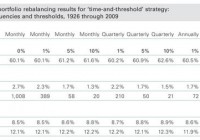
It’s that time of year again. Time to look at your portfolio and decide on your rebalancing strategy. Most investors know they should rebalance but many don’t do it or they get hung up on the detailed mechanics of rebalancing. In this post I’ll present a quick summary of rebalancing approaches and share my approach as well. We rebalance portfolios to improve risk adjusted returns over the long haul. In general, if portfolios are not rebalanced then the equity portion of the portfolio grows to dominate the overall portfolio and its risk. This is usually not something investors want especially as they age. After the decision to rebalance, the next question is how often. The frequency of rebalancing has to be traded off with the costs of rebalancing, transaction fees, commissions, etc… We also need to consider if we should rebalance if there is any difference at all in our target percentage allocations or wait until there is a significant enough difference to trigger an allocation decision. Say your target is 60% stocks and at the end the year you end up at 61% stocks. Does the benefit of rebalancing outweigh the costs? Probably not in this case. So, how does an investor choose the best approach? Fortunately, the great folks at Vanguard have done all the heavy lifting for us in this paper. Here is the summary table. (click to enlarge) As the above table shows basically there is not a big difference in rebalancing approaches, outside of never rebalancing. Even a monthly rebalance with a 0% threshold does not increase portfolio turnover and costs as much as you would expect. The last column also shows the results of never rebalancing – higher returns but with significantly higher volatility which leads to portfolio outcomes that most investors cannot stick with over time. These results also hold for quant portfolios. Whether implementing the IVY portfolios, the Permanent portfolios, Quant portfolios, the timing and threshold of the rebalance does not make a significant difference to long-term portfolio returns, e.g. see the IVY portfolio FAQ question #4. However, it is important to point out that there are periods where rebalancing does not work. Let me give you an example. The table below compares the returns of 60/40 stock bond and 70/30 stock bond portfolios with yearly rebalancing and no rebalancing over the last 5 years (2009 to 2013). (click to enlarge) As the table shows, yearly rebalancing increased returns for the 60/40 portfolio but yearly rebalancing actually decreased returns for the more aggressive 70/30 portfolio. This is typical in strong bull markets when stocks consistently outperform. This is maybe one of the reasons investors abandon rebalancing. But it is important to focus on the long term and more importantly on risk adjusted returns and stick to a rebalancing strategy. Personally, I rebalance once a year with a 1% threshold across all my portfolios regardless of strategy. But that is what I have found works for me. The best advice I can give anyone is to paraphrase the Vanguard advice – choose a regular periodic rebalancing approach that fits your investment style and that you can stick with over the long haul. This is most likely my last post for this year. Hope everyone has a Happy New Year! Here is to a great and prosperous 2015. At the beginning of the year I’ll be focusing on updating all the yearly returns for all the portfolios and strategies I track. I’m looking forward to sharing the results with everyone.