Tag Archives: load

The Security I Like Best: Cash

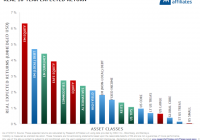
The five year bull market has pushed stock market valuations again into extreme territory. In John Hussman’s recent commentary ‘Hard-Won Lessons and the Bird in the Hand’, he said: Meanwhile, the S&P 500 is more than double its historical valuation norms on reliable measures (with about 90% correlation with actual subsequent 10-year market returns), sentiment is lopsided, and we observe dispersion across market internals, along with widening credit spreads. These and similar considerations present a coherent pattern that has been informative in market cycles across a century of history – including the period since 2009. None of those considerations inform us that the U.S. stock market currently presents a desirable opportunity to accept risk. we presently estimate prospective S&P 500 10-year nominal total returns of less than 1.4% annually . Investors are being offered the choice between a quite large and easily captured bird in the hand, or two ailing, elusive and possibly imaginary birds in the bush. The S&P 500 isn’t the only asset class with dismal projected future returns. Rob Arnott’s ‘Research Affiliates’ group estimates 10-year expected real returns for the major asset classes. Very few asset classes have expected returns greater than 2%. Arnott estimates U.S. Large Cap stocks at less than 1%: (click to enlarge) From Jeremy Grantham’s 3rd Quarter 2014 Letter to Shareholders ‘Bubble Watch Update’, And make no mistake about it, a world in which cash rates average 0% from here on out is a fairly hellish one. It is our belief that investors get paid for taking unpleasant risks. That compensation is in the form of a risk premium over the “risk-free” rate, and while there are no truly risk-free assets out there, T-Bills are a good enough approximation for many purposes. If that rate is going to be zero real, stocks, bonds, real estate, and everything else investors have in their toolkit should have their expected returns fall as well. In that world there are likely to be no assets priced to deliver as much as 5% real, and the expected return to a 65% stock/35% bond portfolio would drop from 4.7% real to about 3.4% real. I use these projected returns from investors such as Arnott, Jeremy Grantham, Hussman, and myself to generate my own asset allocation. The allocation to a particular asset class depends on its projected return against other assets (chiefly expected future inflation), and the asset volatility. My current allocation consists of: HealthyWealthyWiseProject – Current Asset Allocation (This allocation spreadsheet is kept on the Wealthy page of the website) At 21% of the portfolio, cash is currently my largest single asset class. Cash returns are, as we know, lousy; the little that one can get in liquid instruments inevitably being lower than the toll extracted by inflation. And the long-term returns on cash are terrible, lagging behind every asset class and investment strategy this side of setting money on fire. Still, cash is an option to buy value cheaply in the future. It’s premium price is inflation. Cash is worth holding because it is dry powder which gives the owner options. That optionality varies, of course, based on your view of how richly valued assets are, but it is always there. I note that Jeremy Grantham reported a 17% cash position in the 3rd Quarter. Again from Jeremy Grantham: As always, the prudent investor [..] should definitely recognize overvaluation, factor in regression to the mean, and calculate the longer-term returns that result from this process. More easily, such prudent investors can use our seven-year numbers, which have a decent long-term record measured when we have viewed markets as overpriced, as we believe they are today. A Note on the Presidential Cycle We’ve entered the third year of Obama’s presidency. Presidential Year 3 has been by far the most bullish historically. The average total return in year one has been 8 percent followed by 9.8 percent (Year 2), 21.7 percent (Year 3) and 12 percent (Year 4). Third-year stats have been especially impressive. The return has historically been more than double the average return in either years one and two and the S&P has finished down only once. There’s no guarantee that these aren’t just random patterns, but it’s often thought that third-year gains are a result of stimulus being added to the economy as Election Day approaches. It seems like a good time to prime the pump to put voters in a better mood. Jeremy Grantham respects the Presidential Cycle, and believes the Fed will engineer a fully fledged bubble (S&P 500 over 2250) before a very serious decline. The takeaway is – enjoy this last hurrah while it lasts, with an eye toward increasing your cash position as the year progresses.

RiverPark Structural Alpha Fund, December 2014

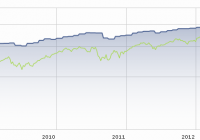
Editor’s note: Originally published on December 1, 2014 by David Snowball Objective and Strategy The RiverPark Structural Alpha Fund seeks long-term capital appreciation while exposing investors to less risk than broad stock market indices. The managers invest in a portfolio of listed and over-the-counter option spreads and short option positions that they believe structurally will generate exposure to equity markets with less volatility. They also maintain a short position against the broad stock market to hedge against a market decline and invest the majority of their assets in cash alternatives and high quality, short-term fixed income securities. Adviser RiverPark Advisors, LLC. RiverPark was formed in 2009 by former executives of Baron Asset Management. The firm is privately owned, with 84% of the company being owned by its employees. They advise, directly or through the selection of sub-advisers, the seven RiverPark funds. Overall assets under management at the RiverPark funds were over $3.5 billion as of September, 2014. Manager Jeremy Berman and Justin Frankel. The managers joined RiverPark in June 2013 when their Wavecrest Partners Fund was converted into the RiverPark Structural Alpha Fund. Prior to co-founding Wavecrest, Jeremy managed Morgan Stanley’s Structured Solutions group for eastern U.S.; prior to that he held similar positions at Bank of America and JP Morgan. Before RiverPark and Wavecrest, Mr. Frankel managed the Structured Investments business at Morgan Stanley. He began his career on the floor of the NYSE, became a market maker for a NASDAQ, helped Merrill Lynch grow their structured products business and served as a Private Wealth Advisor at UBS. They also graduated from liberal arts colleges (hah!). Strategy capacity and closure Something on the order for $3-5 billion. The derivatives market is “incredibly liquid,” so that the managers could accommodate substantially more assets by simply holding larger positions. Currently they have about 35 positions; by their calculation, a 100-fold increase in assets could be accommodated with a doubling of the number of positions. The unique nature of this market means that “more positions would decrease volatility without impinging returns. Given our portfolio structure, there’s no downside to growth.” Active share Not calculable for this sort of fund. Management’s stake in the fund Each of the managers has between $100,000 – 500,000 in the fund, as of the January 2014 Statement of Additional Information. RiverPark’s president is the fund’s single biggest shareholder; both he and the managers have been adding to their holdings lately. Two of the fund’s three trustees have substantial investments in the fund, which is particularly striking since they receive modest compensation for their work as trustees. In broad terms, they’ve invested hundreds of thousands more than they’ve received. We’d also like to compliment RiverPark for exemplary disclosure: the SEC allows funds to use “over $100,000” as the highest report for trustee ownership. RiverPark instead reports three higher bands: $100,000-500,000, $500,000-1 million, over $1 million. That’s really much more informative than the norm. Opening date June 28, 2013, though the preceding limited partnership launched on September 26, 2008. Minimum investment The minimum initial investment in the retail class is $1,000 and in the institutional class is $100,000. Expense ratio Retail class at 2.00% after waivers, institutional class at 1.75% after waivers, on total assets of $9.1 million. While that is high in comparison to traditional stock or bond funds, it’s competitive with other alt funds and cheap by hedge fund standards. If Wavecrest’s returns were recalculated assuming this expense structure, they’d be 2.0 – 2.5% higher than reported. Comments It’s time to get past having one five-word phrase, repeated out of context, define your understanding of an options-based strategy. In his 2002 letter , Warren Buffett described derivatives as (here are the five words): “financial weapons of mass destruction.” Set aside for the moment the fact that Buffett invests in derivatives and has made hundreds of millions of dollars from them and take time to read his original letter on the matter. His indictment was narrowly focused on uncollateralized positions and Buffett now has backed away from his earlier statement (“I don’t think they’re evil per se. It’s just, they, I mean there’s nothing wrong with having a futures contract or something of the sort”). His latest version of the warning is couched in terms of what happens to the derivatives market if there’s a nuclear strike or major biological weapons attack. I suspect that Messrs. Berman and Frankel would agree that, in the case of a nuclear attack, the derivatives market would be in trouble. As would the stock markets. And my local farmer’s market. Indeed, all of us would be in trouble. Structural Alpha is designed to address a far more immediate challenge: where should investors who are horrified by the prospects of the bond market but are already sufficiently exposed to the stock market turn for stable, credible returns? The managers believe that have found an answer which is grounded in one of the enduring characteristics of investor (read: “human”) psychology. We hate losing and we have an almost overwhelming fear of huge losses. That fear underlies our willingness to overpay for car, life, homeowners or health insurance for decades (the average U.S. house suffers one serious fire every 300 years, does that make you want to drop your fire coverage?) and is reflected in the huge compensation packages received by top insurance company executives (the average insurance CEO pockets $8 million/year, the CEO of Aetna (NYSE: AET ) took in $30 million). They make that money because risk is overpriced. Berman and Frankel found the same is true for volatility. Investors are willing to systematically overpay to manage the risks that make them most anxious. A carefully structured portfolio has allowed Structural Alpha and its predecessor limited partnership to benefit from that risk aversion, and to offer several distinctive advantages to their investors. Unlike an ETF or other passive product, this is not simply a mechanical collection of options. The portfolio has four complementary components whose weighting varies based on market conditions. Long-dated options which rise as the stock market does. The amount of the rise is capped, so that the fund trades away the prospect of capturing all of a bull market run in exchange for consistent returns in markets that are rising more normally. Short-dated options (called “straddles and strangles,” for reasons that are beyond me) which are essentially market neutral; they generate income and contribute to alpha in stable or range-bound markets. A short position against the stock market, designed to offset the portfolio’s exposure to market declines. A lot of high-quality, short-term fixed income products. Most of the fund’s portfolio is in cash, which serves as collateral on its options. Investing that cash carefully generates a modest, consistent stream of income. Over the better part of a full market cycle, the Structural Alpha strategy captured 80% of the stock index’s returns – the strategy gained about 70% while the S&P rose 87% – while largely sidestepping any sustained losses. On average, it captures about 20% of the market’s down market performance and 40% of its up market. The magic of compounding then works in their favor – by minimizing their losses in falling markets, they have little ground to make up when markets rally and so, little by little, they catch up with a pure equity portfolio. Here’s what that looks like: The blue line is Structural Alpha (you’ll notice it largely ignoring the 2008 crash) and the green line is the S&P 500. The dotted line is the point that Wavecrest became RiverPark. From inception, this strategy turned $10,000 into $16,700 with very low volatility while the S&P reached $19,600. The chart offers a pretty clear illustration of the managers’ goal: providing equity-like returns (around 9% annually) with fixed income-like volatility (around 30% of the stock market’s). There are two other claims worth considering: The fund benefits from market volatility, since the tendency to overpay rises as anxiety does. The fund benefits from rising interest rates, since its core strategies are uncorrelated with the bond market and its cash stash benefits from rising rates. Mr. Frankel notes that “if volatility and interest rates return to their historic means, it’s going to be a significant tailwind for us. That’s part of the reason we’re absolutely buying more shares for our own accounts.” That’s a rare combination. Bottom Line Fear causes us to act poorly. This is one of the few funds designed to allow you to use other’s fears to address your own. It seems to offer a plausible third path to reasonable returns, away from and independent of traditional but historically overpriced asset classes. Investors looking to lighten their bond exposure or dampen their equity portfolio owe it to consider Buffett’s actions rather than just his words. They should look closely here. Fund website RiverPark Structural Alpha. The managers lay out the research behind the strategy in The Benefits of Systematically Selling Volatility (2014), which is readable and well worth reading. If you’d like to listen to a précis of the strategy, they have a cute homemade video on the fund’s webpage. Start listening at about the 4:00 minute mark through to about 6:50. They make a complex strategy about as clear as anyone I’ve yet heard. The stuff before 4:00 is biography and the stuff afterward is legalese. Disclosure : No positions
First Energy: The Hidden Gem Of Marcellus Shale?

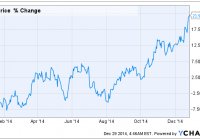
Summary Electricity companies are the major beneficiaries of growing investment in the Marcellus and Utica Shale. First Energy is making investments in order to take advantage of the growth opportunity in the region. Cracker plants will substantially increase the demand for electricity in the region. The U.S. shale boom has come under threat due to the consistent fall in crude oil prices. And fracking was already controversial due to the environmental hazards — the state of New York has banned the practice due to the environmental issues. The fall in crude prices, however, has really impacted companies with oil-heavy portfolios while companies with gas-heavy portfolios continue to grow production. The main reason behind the increase in production is that the demand for natural gas, natural gas liquids, and the components remains high. Marcellus and Utica shale are natural gas rich areas and companies continue to invest in these natural gas rich areas to grow their production. These natural gas players have gained a lot from this boom in production. However, there are some other players that have been benefiting from this boom and have been relatively anonymous. First Energy (NYSE: FE ) is one of these players. The company has been providing electricity to the facilities in the region and it has been growing impressively. Over the last year, the stock has gained about 22%. First Energy has changed its strategy and the company is now focusing on transmission and regulated distribution business. The company has become a major supplier to the oil and gas companies operating in these regions. Drilling is still done through the diesel generators, but the gas processing plants use electricity and their demand is constantly increasing. The process of separating liquids and the natural gas process needs a lot of electricity. As the investment in natural gas drilling has been increasing, the demand for electricity has also been increasing. Since July 2011, First Energy’s usage for shale-related activities has increased by 70 megawatts. By 2019, this region is expected to create further demand of about 1,100 megawatts due to the increased developments in the area. In order to capture this growth opportunity, the company is planning to invest in a number of transmission projects. First Energy is going to invest $100 million in new transmission projects to increase supply to the operators in the Marcellus shale. Natural gas processing is a multi-stage process, and the rising demand for polyethylene and other feedstock components for the petrochemical industry have prompted the natural gas players to invest in cracker plants. These plants turn liquid ethane in polyethylene and other feedstock components. As the natural gas and natural gas liquids production continues to rise from the Marcellus shale, it is likely that these companies will want to build cracker plants in order to manufacture these feedstock components from liquids ethane and natural gas. As a result, demand for electricity will further rise as these cracker plants need substantial electricity to operate. First Energy will stand to benefit from this rise in demand, and the investment in better transmission will pay off for the company. First Energy is currently serving 12 natural gas processing plants in Pennsylvania, Ohio, and West Virginia. The company previously announced a $4.2 billion project, which will run through 2017. Most of these investments are focused in these states and the Marcellus shale area. One of the planned cracker plants is the project by Royal Dutch Shell (NYSE: RDS.A ) — the company is going to build a plant in Monaca Beaver County and this facility will process over 100,000 barrels of liquid ethane every day. The plant will use between 300 and 400 megawatts of electricity. The Bottom Line A growth opportunity is present for First Energy and it is already making efforts to capture this opportunity. Timely investment in the transmission network will position the company nicely to provide electricity to the new natural gas processing plants as well as cracker plants. Despite the overall poor conditions of the energy industry, the demand for natural gas liquids and feedstock components remains high, which bodes well for the company. Natural gas players will continue to grow production of natural gas, natural gas liquids and other feedstock components in order to meet the rising global demand for these products. As a result, demand for electricity will continue to grow. In my opinion, First Energy is well-positioned to grow and the company’s investment is targeted at a high-growth area of its business mix. I believe that despite a healthy gain (22%) during the current year, First Energy will continue to grow and will have a solid 2015. Disclaimer : This article is for informational purposes only and it should not be taken as an investment recommendation. Investing in stock markets involves a number of risks and readers/investors are encouraged to do their own due diligence and familiarize themselves with the risks involved.