Tag Archives: lists

5 Successful ETF Launches Of Q2

The ETF industry has gained immense popularity within just over 20 years. Total market cap hit a record of over $3 trillion at the end of May 2015, though it recently slipped to over $2.12 trillion (up 6.10% year to date), with contribution from about 1,745 ETFs. To make the most of this appeal, issuers have lately been extremely proactive in launching products. In the second quarter itself, 61 ETFs entered the market. While existing issuers are diversifying their ETF offerings on varied themes, others are joining the league hoping to capitalize on the opportunities. Among the new products, active funds, smart-beta ETFs, high yield options and hedged international products were appreciated by investors. Below, we have highlighted five ETFs launched in Q2 that scooped up assets within a short time span on the market, and look to be big winners for their issuers down the road: Pacer Trendpilot 750 ETF (BATS: PTLC ) This ETF seeks to track the Pacer Wilshire US Large Cap Trendpilot Index. Currently, the fund offers pure equity exposure with a basket of 748 securities that are widely spread out across components. The fund has generated about $125 million within just one month of its launch. The strategy makes it a winner as the product follows a rules-based methodology to apply a systematic trend that directs exposure (i) 100% to Wilshire US Large-Cap Index, (ii) 50% to Wilshire Large-Cap & 50% to 3-Month US T-Bills or (iii) 100% to 3-Month US T-Bills, depending on relative performance of the Wilshire US Large-Cap TR Index and its 200-business day historical simple moving average. Each security holds less than 3.9% share, and information technology, financials and health care are the top three sectors with a nice mix. The fund charges 60 bps in annual fees and expenses. Innovator IBD 50 Fund (NYSEARCA: FFTY ) Having debuted in April, this active product has managed to secure about $68 million so far. The new fund looks to be a comprehensive route to invest in the top 50 growth names based on the IBD (Investor’s Business Daily) proprietary estimation. This estimation is focused on the ‘CAN SLIM’ method clubbing the top fundamentals with relative price strength. The IBD 50 targets companies with exceptional bottom-line growth, outsized revenue gains and superior return on equity. This approach provides exposure to the small cap segment of the broad U.S. stock market and results in a diversified portfolio with none of the securities accounting for more than 3.61% of assets. From a sector look, technology takes the top spot at 40% while health care and consumer discretionary round off the top three with double-digit exposure. Its active management forces the issuer to charge a higher expense ratio of 0.80%. PowerShares Europe Currency Hedged Low Volatility Portfolio (NYSEARCA: FXEU ) What can be a better way to invest in a foreign land than trying out a currency-hedged low volatile Europe ETF? Having entered the market in May, the fund has amassed about $58 million in assets. Europe has been hitting headlines the world over since the beginning of this year on the launch of the QE measure to ward off deflationary fears. While the measure proved great as evident by 0.4% growth recorded by the Euro zone in the first quarter, quandaries are refusing to leave the continent. The latest round of crisis caused by ‘Grexit’ worries made the case for a low volatility play (on Europe) stronger. The fund looks to track the S&P Eurozone Low Volatility USD Hedged Index. The index has exposure to at least 80 least volatile stocks that obey a definite liquidity bar. The fund charges 25 bps in fees. Pacer Trendpilot 450 ETF (BATS: PTMC ) Pacer Financial has also seen success for PTMC which targets the mid cap segment of the broad U.S. equity market but revolves around the same rule-based methodology, discussed earlier. The fund looks to track the Pacer Wilshire US Mid-Cap Trendpilot Index. The fund has accumulated over $50 million in assets within such a short span. Currently, it holds a basket of 450 securities with none holding more than 0.61% of assets. Consumer discretionary and industrials take the top two spots with 16% share each. The ETF has annual expense ratio of 0.60%. PowerShares S&P 500 ex-Rate Sensitive Low Volatility Portfolio (NYSEARCA: XRLV ) This three-month old ETF has already amassed over $50 million in assets. The rising rate concerns have caused some upheaval in the market and are expected to make things pretty volatile once the Fed actually hikes rates. This is why PowerShares’ low volatility ex-Rate sensitive product is already a hit. The product is pretty spread-out among its 100 holdings. No stock takes more than 1.46% of the basket. The fund charges 25 bps in fees. Financials is the top sector holding one-third of the basket. Original Post
What Is In Store For Industrial Metal ETFs After China Rout?

Things were fragile for long in China given the protracted slowdown in the domestic manufacturing sector, credit crunch concerns and a property market slowdown. As a result, the Chinese economy has been undergoing a tumultuous phase for the last few months. To inject fresh optimism into the ailing economy, the People’s Bank of China (PBOC) went into an accommodative policy mode last year, cutting interest rates thrice in just six months, announcing a mini stimulus package mainly targeted at railways and other construction investment, declaring a tax relief for small enterprises and so on. But nothing could repair the economic hole. Despite this ugly truth, investors continuously poured cash into the Chinese markets in the hope for more policy easing, imparting lofty valuations to the stocks. The valuation was, in fact, so high that a steep correction was only in the cards, leading Market Vectors ChinaAMC SME-ChiNext ETF (NYSEARCA: CNXT ) – one of the best performing China A-Shares ETFs – to bleed as much as 43.5% in the last one month (as of July 8, 2015). Before this sell-off, CNXT was up 90% this year. The sell-off was massive on July 7 following a host of policies rolled out by the Chinese government including the stopping of “new companies from selling shares to public” and “plans to establish a fund to stabilize the country’s stock market over the weekend.” The Chinese government sought to hold back the market’s maddening correction but this rang the panic alarm among investors. There was a blood bath in the Chinese equity market. In a single day, CNXT was off 15.7% (on July 7). To add to this, the peaking of the Greek debt deal drama has already contributed to the damage in the form of the global market sell-off. As a result, Chinese stocks have shed over $3.2 trillion in market cap in less than one month, per Bloomberg . Commodity Market Crash Traders viewed this equity sell-off as a driver of the deepening economic crisis, as per Wall Street. Since the Chinese economy accounts for about half of the global consumption of the industrial commodities and is the second biggest purchaser of oil, a further slowdown in Chinese economy means reduced demand for commodities. In any case, Euro zone is fated for turmoil if ‘Grexit’ happens and would see lesser commodity requirement. As a result, commodity prices and the related ETFs were thrashed on July 7. Also, the strength in the greenback owing to its safe haven appeal completely marred the appeal for commodities. Copper fell to a six-year low and nickel touched a five-year low while aluminum and lead got into bear markets, per Bloomberg. Industrial ETFs Crushed Heavily Some of the heavily shorted industrial metal ETFs on July 7 were iPath Dow Jones-UBS Nickel Subindex Total Return (NYSEARCA: JJN ) (down 6.8%), E-TRACS UBS Bloomberg CMCI Industrial Metal ETN (NYSEARCA: UBM ) (down 6.4%), DB Base Metals Double Long ETN (NYSEARCA: BDD ) (down 5%), Elements Rogers Intl Commodity Metal ETN (NYSEARCA: RJZ ) (down 3.3%) and United States Copper ETF (NYSEARCA: CPER ) (down 3%). Road Ahead Investors should note that China equities’ sell-off is basically panic-induced. Immense hope for policy easing made the stock price bubble too airy. And panic over lofty valuation and some statements and measures by the Chinese government are now bursting the same. Hardly were there economic factors behind this boom and doom. Investors can see that nothing concrete happened in the demand profile of raw materials over the last few days. It is just panic which is sweeping across the commodity market. Thus fears over the industrial metal ETFs space may not be as acute as it seems. As soon as this Chinese storm passed by, the space normalized. The horrendous sell-off was then followed by 5.9% gains at the Shanghai Composite on July 9. The industrial metal ETFs gained too. JJN was up 7.64%, RJZ added over 1.7% and CPER advanced over 1.8% on July 9. Having said this, we would like to note that 2015 has not been promising for the broader commodity market especially given the looming Fed rate hike and the consequent strength in the U.S. dollar. Original Post

Will Iran Keep USO Down?

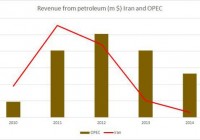
Iran’s potential nuclear deal could bring up its output in the coming years. Will this deal have a long-term impact on oil market and the price of USO? U.S. oil production keeps rising despite low rig count. The potential nuclear deal between Iran and the West, which could lift the sanctions on the country, has contributed to the decline in the price of The United States Oil ETF, LP (NYSEARCA: USO ) – the oil ETF lost over 6% on Monday and over 10% in the past month. Moreover, the weakness in China, high volatility in the foreign exchange markets over the Greek debt crisis and low oil rig counts in the U.S. also provided additional downward pressure on USO. But is Iran likely to have such a strong impact on the price of USO over the coming years? Despite the sharp rise in volatility in the oil market, the price of USO hasn’t deviated by much from the price of oil in the past couple of months – the roll decay due to the Contango wasn’t harsh. If the futures oil market keeps a low Contango or even move to backwardation, this could behoove USO investors. But the main problem remains on whether oil prices were to bounce back from its recent plunge. One factor to consider is the role of Iran in the oil market. As the EIA showed , Iran’s ability to resume its pre-sanctions oil output on the conditions of the oil fields and infrastructure – it could take time and investment to bring these fields online. Nonetheless, the potential impact of Iran’s higher output could result in low oil prices by $5 to $15 next year. These projections could be a bit too harsh considering the market conditions are harder to increase production and OPEC already exceeds its current quota. Also, the country is likely to face challenges and a more competitive oil market environment. Some of these challenges include rising oil yield of U.S. oil producers, slower growth in demand for oil in China, growing share of Saudi Arabia from OPEC’s total output, and stronger competition from Russia, which heavily relies on oil revenue and continues to face a weak currency. The market conditions have also cut down the oil exports (in U.S. dollar) of OPEC in general and Iran in particular in the past year. As I have already pointed out in the past, and based on OPEC statistical bulletin , in 2014, OPEC’s revenue from petroleum exports have gone down to $964 billion – a 12.6% fall, year on year. For Iran the revenue from output also declined, mainly between 2012 and 2013 on account of its sanctions. (click to enlarge) Source of data taken from OPEC So the potential end of the sanctions on Iran could bring back up the country’s oil revenue, even though, as presented above, the fall in revenue of OPEC also suggests it will be harder to increase oil exports in the current market conditions. Currently, Iran produces around 2.8 million barrels per day. Back in 2011, before the sanction, the country was able to produce roughly 3.6 million bbl/day – 28% higher than in 2015. Last year, it produced 3.1 million bbl per day of which only 1.1 million bbl/day were exported or 35% of total output. Over the next couple of years, assuming the sanctions are lifted, Iran could increase its total output by 700,000 bbl/day, according to the EIA . Considering the country’s energy demand keeps rising, the county is likely to partly use this added output towards its own energy needs. In the meantime, the output in the U.S. hasn’t contracted, despite the fall in rig counts in the past few months. Oil producers have also reduced their capex for 2015 and in some cases for 2016. But for now, the output hasn’t contracted and the EIA still projects the annual output will remain around 9.4 million bbl per day – only 2% lower than the current output level. (click to enlarge) Source of data taken from EIA and Baker Hughes Looking forward, the EIA estimates production will fall further in 2016 to 9.3 million bbl per day. The fall in output in the coming months could also bring back up oil prices or at the very least ease the downward pressure on oil prices. Even though Iran’s role in the oil market is very important and could have an adverse impact on the price of oil and USO, its impact could actually be less prominent considering the current market conditions and the country’s energy demands. (For more please see: ” USO Investors – Beware of The Contango! “) Disclosure: I/we have no positions in any stocks mentioned, and no plans to initiate any positions within the next 72 hours. (More…) I wrote this article myself, and it expresses my own opinions. I am not receiving compensation for it (other than from Seeking Alpha). I have no business relationship with any company whose stock is mentioned in this article.