Tag Archives: lists

A Small-Cap ETF With Big Dividend Growth Potential
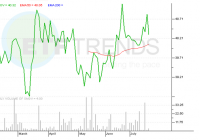
Summary Small-capitalization stocks have rebounded this year. A small-cap ETF that targets dividend growers. How the ProShares Russell 2000 Dividend Growers ETF compares to the benchmark Russell 2000. By Todd Shriber & Tom Lydon Small-caps are rebounding this year as highlighted by a gain of 4.1% for the iShares Russell 2000 ETF (NYSEARCA: IWM ) , the largest small-cap ETF. That is well ahead of the 2.9% returned by the S&P 500 this year. Investors looking for a more conservative, income-oriented approach to the Russell 2000, the benchmark U.S. small-cap index, have a compelling option in the ProShares Russell 2000 Dividend Growers ETF (NYSEARCA: SMDV ) . SMDV, which debuted in February, tracks the Russell 2000 Dividend Growth Index. That index includes small-cap firms with dividend increase streaks of at least a decade. Index constituents are screened for liquidity and dividend status, then selected and equal-weighted subject to a maximum sector weight of 30%, according to Russell Investments. Recent data indicate income investors should give small-caps and the corresponding exchange-traded funds a new look. “From the end of 2013 there has been a 10.2% increase in the number of issues paying a dividend in the S&P SmallCap 600,” according to S&P Dow Jones Indices . SMDV has returned half a percent since coming to market. While that is well behind the returns from the traditional Russell 2000 Index, investors should remember that the fund offers a more conservative approach to small-caps, with a superior yield to the Russell 2000. For example, SMDV’s 30-day SEC yield is 2.22%, or nearly 100 basis points higher than the comparable metric on IWM. Then, there is the potential for dividend growth. “Much of the potential return differential of small cap dividend growers have over other small caps can be attributed to lower historical risk,” according to a ProShares note . “Not only have small cap dividend growers had lower volatility compared with the overall small cap space, they have also had lower drawdowns. It is ‘winning by not losing as much’ that has translated to better returns over time.” SMDV is somewhat sensitive to changes in interest rates by way of an almost 27% weight to the utilities sector, but the fund combats that with a 21.6% weight to financial services names. While financials have been an important source of U.S. dividend growth in recent years, small-caps from that sector offer an advantage when rates rise , because they are highly levered to profit-boosting increases in net interest margin. For the five years ended December 31, 2014, Russell 2000 dividend growers delivered return on equity of 13.4%, 360 basis points ahead of non-dividend growers, according to ProShares data. The index’s dividend growers also delivered EPS growth of 6.2%, compared to 6% for non-dividend growers. ProShares Russell 2000 Dividend Growers ETF (click to enlarge) Tom Lydon’s clients own shares of IWM. Disclosure: I am/we are long IWM. (More…) I wrote this article myself, and it expresses my own opinions. I am not receiving compensation for it. I have no business relationship with any company whose stock is mentioned in this article.
Not All Asset Managers Are Enthused By Vanguard Index Changes

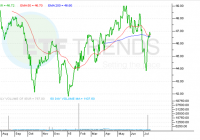
Summary Vanguard is making changes to its emerging market ETF as the FTSE makes index changes. China A-shares will have a greater role in the FTSE Emerging Market Index. Potential risks in changing up the current make-up of the widely observed index. By Todd Shriber & Tom Lydon Last month, Vanguard, the second-largest U.S. issuer of exchange traded funds, said it is making changes to four of its popular international ETFs, including the Vanguard FTSE Emerging Markets ETF (NYSEARCA: VWO ) . VWO is the largest emerging markets ETF by assets. Pennsylvania-based Vanguard said VWO will transition to the FTSE Emerging Markets All-Cap China Inclusion Index from the FTSE Emerging Index, meaning the ETF will eventually hold Chinese A-shares, becoming the second diversified emerging markets ETF to do so. The Vanguard FTSE Developed Markets ETF (NYSEARCA: VEA ) , the Vanguard FTSE Europe ETF (NYSEARCA: VGK ) and the Vanguard FTSE Pacific ETF (NYSEARCA: VPL ) , funds with nearly $80 billion in combined assets under management, are also undergoing index changes , including significantly increased exposure to small caps. Not all money managers are fussed on those index changes. In a blog post posted dated July 17 , New Frontier, a Boston-based institutional research and investment advisory firm, said it is dropping the aforementioned Vanguard ETFs in favor of competing products from BlackRock’s (NYSE: BLK ) iShares unit, the world’s largest ETF issuer. New Frontier said it is replacing positions in the Vanguard ETFs with the iShares Core MSCI Europe ETF (NYSEARCA: IEUR ) , the iShares Core MSCI Emerging Markets ETF (NYSEARCA: IEMG ) and the iShares Core MSCI Pacific ETF (NYSEARCA: IPAC ) . “These are institutional quality ETFs with known exposures to known indexes with stable histories and differentiated risk premiums. Our patented rebalance test, which signals when portfolios are meaningfully different from optimal, provided rigorous quantitative justification for the trades,” said New Frontier. Part of the iShares core lineup targeted at cost-conscious advisors and investors, IEUR, IEMG and IPAC have nearly $10 billion in combined assets under management, with IEMG controlling over $7.4 billion of that total. IEMG continues to be a popular alternative for investors – professional and retail – looking for a cost-efficient alternative to the iShares MSCI Emerging Markets ETF (NYSEARCA: EEM ) . IEMG’s annual fee is 0.18% compared to 0.69% on EEM . “Vanguard’s reconstituted ETFs represent an expanded level of one-stop diversification for investors. However, the upshot is that they will homogenize important global risk premiums, limiting the benefit of sophisticated global ETF asset management. Other concerns include the difficulty of controlling risk during the transition period as well as possible front-running by various market entities,” adds New Frontier. VEA, VGK, VPL and VWO will all see significantly increased small-cap exposure as a result of the index transitions. Under the funds’ new benchmarks, small-cap stocks will account for approximately 9-11% of each fund, according to Vanguard. VEA will also add Canadian stocks for the first time, and it is expected the ETF will eventually hold a weight of up to 8.2% in Canadian equities. iShares Core MSCI Europe ETF (click to enlarge) Disclosure: I/we have no positions in any stocks mentioned, and no plans to initiate any positions within the next 72 hours. (More…) I wrote this article myself, and it expresses my own opinions. I am not receiving compensation for it. I have no business relationship with any company whose stock is mentioned in this article.

MBG: A Comps Leader With Stable Returns

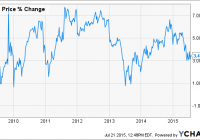
Summary Fed backed mortgage securities are very safe and provide high interest payments. Of the 4 major mortgage security ETFs, MBG offers the most potential for the highest yields. MBG is well valued and backed by strong underlying assets. Introduction Fed backed mortgage securities are safe and reliable investments that provide high interest payments. Most mortgage backed securities, however, are too expensive for the average investor. Minimum investments generally reach as high as 25,000, for a mortgage pass-through. Additionally, MBS funds generally require a 1 million dollar minimum investment. MBS ETFs allow average investors to buy some exposure to a valuable fixed income security. There are 4 main players on the market, but the SPDR Barclays Capital Mortgage Backed Bond ETF (NYSEARCA: MBG ) offers the most potential for high yields. MBG Analysis There are many MBS ETFs on the market, but of those ETFs there are really four primary ETFs that offer attractive returns with minimal risk. The other MBS ETF options have too few AUM, poor liquidity, high expenses, inadequate exposure, poor returns, or risky underlying assets. For the sake of time, trust me when I say the proceeding four MBS ETFs are the best (and safest) choices, I included others in the link above. MBG is a strong MBS ETF. It holds over 151 million in total assets and it has a net asset value of 26.88. What sets MBG apart is its 12-month returns. Average yields fall between 1.4% – 2%, while MBG has 12 month returns in excess of 3.5%. It has a miniscule expense fee of 0.20%. MBG also exclusively holds AAA bonds and cash. MBG attains comparably optimal returns while maintaining an incredibly safe portfolio. All of MBG’s assets are also agency backed, which means they come with agency guarantee (or for Ginnie Mae’s the full faith and credit of the United States government). Comps Analysis What MBG lacks in total assets, exposure, and volume, It makes up with in asset strength and 12 month yields. Mortgage Securities Analysis Mortgage securities are inversely correlated to interest rates. With the possibility of an interest rate hike , one may want to wait for prices to decrease or adapt a long term-investing horizon. Capital appreciation, while possible, is a secondary objective when investing in mortgage securities. The stable distribution of fixed income payments ( in excess of treasury yields ), as well as portfolio diversification ought to be the primary objectives of MBS investing. In the long term, MBG’s volatility is negligible. To visually express this, I included a chart of the Vanguard Total Stock Market ETF ( VTI) (total market returns) and the ten year treasury rate. Conclusion Mortgage securities offer a valuable source of fixed income. They can be used by retirees as a stable form of income, or they can be used as a tool for portfolio risk diversification. There are four investable MBS ETFs on the markets. MBG, while the smallest, historically has offered the highest comparable yields whilst maintaining a 100% AAA rated portfolio. For this reason, I consider MBG to be an attractive buy. Disclosure: I/we have no positions in any stocks mentioned, and no plans to initiate any positions within the next 72 hours. (More…) I wrote this article myself, and it expresses my own opinions. I am not receiving compensation for it (other than from Seeking Alpha). I have no business relationship with any company whose stock is mentioned in this article.