Tag Archives: handle

Canada ETFs Fizzle Out On 2014’s Massive Oil Plunge – ETF News And Commentary

Falling crude oil prices have hit the headlines as of late, and some are worried that prices might remain in the doldrums. This liquid commodity is touching a new low almost every day due to poor end-market demand and rising inventory worries across the globe. Weakness was widespread among most global economic superpowers including the Euro zone, China and Japan, putting a lid on crude oil prices. A relatively stronger greenback also played into the broad oil weakness as well. This week, oil hit yet another five-year low in the wake of soaring global supplies as confirmed by the OPEC report and a jump in U.S. output. On December 10, benchmark U.S. crude also touched $60 per barrel. Late last month, OPEC announced ‘no-cut’ in production, engaged in a price war and then forecast a drop in demand next year. OPEC expects global demand for crude to hit its lowest level in over a decade next year, much below the present production level. Notably, crude oil lost about 40% since June (read: 3 Energy ETFs Hit the Most by OPEC’s ‘No Cut’ Decision ). Canadian Impact While this carnage forced most markets to pare gains, it especially came as a shot across the bow to Canada investing. Canada, which is among the world’s top 10 oil producers, saw its stocks taking the deepest single-day dive in 18 months (read: If Oil Prices Keep Falling, Avoid These 4 Country ETFs ). Per Bloomberg , oil, banking and materials were the laggards in Canada long after 1988, stoking concerns about the future of its economy. The S&P/TSX Composite Index, made up of large-cap stocks listed on the Toronto stock exchange, slumped 2.3% on December 10, thanks to its heavy weight on energy. The average Canadian price for gasoline dropped to C$1.06 a liter , in early December from C$1.35 a liter in June marking the steepest yearly decline in five years, as noted by Bloomberg. In fact, the nation’s central bank lately expressed concerns about economic well-being, forecasting that the oil rout might reduce ‘Canada’s economic growth by 1/3 of a percentage point in 2015’. The latest guidance was harsher than the previous one which speculated a ¼ point cut. To add to this, a broad-based commodity crash will likely weigh on the nation. Though Canada’s economic prospects do not appear gloomy with better-than-expected GDP in Q3 (2.8% versus the estimated 2.1%), a better inflationary outlook, a stronger export competitiveness due to the falling currency relative to the greenback and the increasing purchasing power of the U.S. consumers, the oil tumult has definitely been a downside risk. Market Impact Investors should note that Canadian bourses have fallen behind the S&P 500 in the last four years, per Bloomberg . We get ominous cues for next year too. Given this, Canada ETFs should be closely watched in the days ahead. For those investors, we have highlighted the set of ETFs that could be in focus in the coming days, and especially if oil prices take a sharp turn: Presently there are six Canada ETFs available in the market among which Canadian Energy Income ETF (NYSEARCA: ENY ) being an energy-oriented ETF, shed the most this year. ENY was down over 20% in the year-to-date frame. Apart from this, the best way to invest in Canada is iShares MSCI Canada ETF (NYSEARCA: EWC ), a product that has nearly $2.73 billion in assets. The fund tracks the MSCI Canada Index, holding just under 100 stocks in its basket. Although financials take the top spot at 39.05%, energy makes up a huge chunk of assets accounting for 22.1% of the total. The fund was off 8% in the last one month and is down about 4% so far this year. Small Caps and New Funds Canada AlphaDEX Fund (NYSEARCA: FCAN ) ─ a $36.1 million ETF ─ invests one-third of its portfolio in energy stocks followed by 18% and 16% focus respectively on the two other struggling sectors ─ materials and finance. Year-to-date, FCAN was down 15% while the fund has shed about 11% in the last one month. IQ Canada Small Cap ETF (NYSEARCA: CNDA ) invests about 30% of its $13.2 million portfolio in energy stocks. Materials stocks take about 23% focus. CNDA is down 14% so far this year. Another small-cap ETF MSCI Canada Small Cap Index Fund (BATS: EWCS ) has $3.1 million in assets. Like its big brother, this iShares ETF too invests the most in energy (22.1%) followed by materials (21.8%) and financials (16.8%). EWCS is off 12% this year. We finally have SPDR MSCI Canada Quality Mix ETF (NYSEARCA: QCAN ), which joined the market just this year only. The product has $2.9 million assets with financials taking the top spot at 33.7% followed by energy at 20.8% and consumer discretionary at 11%. QCAN has lost 7% in the last one month. Investors should note that EWC, FCAN, CNDA and EWCS each have a Zacks ETF Rank #3 (Hold) with a Medium risk outlook.
Why Jack Bogle Is Wrong On Foreign Investing

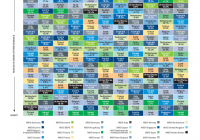
Jack Bogle, the founder and former CEO of The Vanguard Group, gave an interview to Bloomberg’s Carla Fried earlier this month. His views on investing in markets outside of the U.S. is wrong for many reasons. I will discuss two such reasons below. From the interview: You’ve often reminded investors that what’s done well in the past probably won’t do well in the future. So for a patient investor with a long horizon, where should they be investing today? I like the U.S. The U.S. is the most productive country in the world. It is the most rapidly growing of the industrialized nations, other than Switzerland. We still have plenty of problems, but we’re much better than France, Britain and Germany. And we don’t even want to talk about Italy and Greece. And importantly – people forget this too quickly – we have the most established government and legal institutions. When you look at global market capitalization it’s true that the U.S. accounts for about 48 percent and other countries 52 percent. But the top three markets outside the U.S. are the U.K., Japan and France. What’s the excitement about there? Emerging markets have great potential, but have fragile sovereigns and fragile institutions. I wouldn’t invest outside the U.S. If someone wants to invest 20 percent or less of their portfolio outside the U.S., that’s fine. I wouldn’t do it, but if you want to, that’s fine. Have you ever invested in international markets? Not really. Other than when I had small amounts when we launched [Vanguard] International Growth and the [Vanguard] International Index fund, I had small investments in both. It’s hard to believe that the differences in returns over the long term will be huge. That’s just not what we have seen for the most part. Why take the currency risk? Source: Jack Bogle: I Wouldn’t Risk Investing Outside the U.S. , Dec 9, 2014, Bloomberg U.S. investors should invest a portion of their portfolio in foreign stocks. They can invest via stocks of foreign companies trading on the U.S. markets, a mutual fund, an ETF or directly in foreign equity markets if they can access them. Despite the currency risk that Mr. Bogle mentioned, and many other risks, there are many advantages to investing in overseas stocks. 1. Diversification: By excluding foreign stocks, one loses the benefits of diversification. Diversification is one way to reduce risk. Including foreign stocks in a portfolio helps reduce risk. For example, though the U.S. stocks have done very well in 2013 and this year, there is no guarantee they will continue to outperform other markets in the future. No country has been the top performer consistently every year, as shown in the Callan’s Periodic Table of Investment Returns for 2013: (click to enlarge) Source: BlackRock 2. Many foreign markets have dividend yields that are much higher than the yields for the U.S. market. So even after accounting for currency risks and dividend withholding taxes, one can earn a higher return by investing in foreign stocks. As of December 22, the dividend yield for the U.S. equities is 1.9%, compared to 3.3%, 2.9% and 4.9 for UK, Canada and Norway, according to FT Market Data . Related ETFs: iShares MSCI Canada ETF (NYSEARCA: EWC ) iShares MSCI Australia ETF (NYSEARCA: EWA ) Global-X MSCI Norway ETF (NYSEARCA: NORW ) iShares MSCI United Kingdom ETF (NYSEARCA: EWU ) Disclosure: No positions.

Direxion To Shut Down BARS, The 3x Gold Bear ETF – ETF News And Commentary

Direxion – a renowned player in the leveraged and inverse leveraged ETF world – which was recently in the news for opting for a reverse split of its 2 leveraged ETFs – Direxion Daily Junior Gold Miners Bull 3x Shares (NYSEARCA: JNUG ) and Direxion Daily Russia Bull 3x Shares (NYSEARCA: RUSL ) – has now decided to shut down an inverse ETF targeting the gold bullion market. The product, Direxion Daily Gold Bear 3x Shares (NYSEARCA: BARS ), which was launched in April this year will cease trading on December 26 and its assets will be liquidated on December 30. BARS tracks the Gold Benchmark Futures Contract to provide three times the daily inverse performance of gold futures (read: Direxion Opts for Reverse Split for 2 Leveraged ETFs ). Given that the fund has returned roughly 8% since its inception, the closure comes as somewhat of a surprise. However, Direxion believes that the fund’s inability to garner sufficient assets has forced it to close the fund. BARS currently manages less than $5 million assets and is quite pricey with 1.56% as expenses. The high expense fee might have been a factor for the fund’s failure to lure sufficient investor interest. Moreover, BARS faced stiff competition from other bear products on gold such as ProShares UltraShort Gold (NYSEARCA: GLL ), PowerShares DB Gold Double Short ETN (NYSEARCA: DZZ ) and VelocityShares 3x Inverse Gold ETN (NASDAQ: DGLD ). While GLL has managed to garner $88.4 million since its inception, DZZ and DGLD currently manage assets worth $73 million and $16.9 million respectively (see all Precious Metals ETFs here ). It’s worth noting that Direxion Daily Gold Bull 3x Shares ( BAR ) , which was launched together with BARS and manages an AUM base of just $2.8 million and is as pricey as BARS, will continue to trade. Apart from the recent closure, Direxion had announced closures of five of its inverse 3x ETFs this September. The ETFs in question are Direxion Daily Brazil Bear 3x Shares (BRZS), Direxion Daily FTSE Europe Bear 3x Shares (EURZ), Direxion Daily Japan Bear 3x Shares (JPNS), Direxion Daily South Korea Bear 3x Shares (KORZ) and Direxion Daily Natural Gas Related Bear 3x Shares (GASX) (see all Leveraged Equity ETFs here ). Including the recent fund closure, more than 65 ETF products have been shut down or are scheduled to be closed this year. In comparison with this, we have seen roughly 192 new product launches this year, as per ETF.com. With the recent launches, the fast evolving U.S. ETF industry now has more than 1,660 products in the market with a total market cap of $1,943.05 billion.