Tag Archives: handle

3 Top Performing Utilities Mutual Funds In 2014 – Mutual Fund Commentary

Even during a market downturn, the demand for essential services such as those provided by utilities, remains virtually unchanged. Utilities funds are therefore an excellent choice for investors seeking a steady income flow through consistent yields from dividends. This is also why they are primarily considered to be a relatively more conservative investment option. In recent times their forays into emerging markets have led to appreciably higher returns and they offer superior returns at a relatively lower level of risk. The US equities have enjoyed another year of strong gains this year. The Dow, S&P 500 and the Nasdaq are up 8.7%, 12.3% and 14.1%, respectively so far this year. Fortunately, the momentum is evident in the Utilities mutual funds as well. With 16.9% gains (as of Dec 23), the Utilities sector is the third highest sector equity mutual fund gainer so far this year. Also, among the S&P industry groups, Utilities Select Sector (NYSEARCA: XLU ) is the second highest gainer this year as it boasts year-to-date return of 24.1%. We will be picking the top 3 Utilities mutual funds this year based on their year-to-date returns and favorable Zacks Mutual Fund Rank among others. However, before doing so, let’s look at the positives for the sector. Keep reading our Mutual Fund Commentary section, where we are reporting on performances and best picks from fund families and other categories. YTD Sector Performance Sector Equity Funds Returns YTD (%) 1 Year (%) Real Estate 29.48 29.51 Health 24.45 25.53 Utilities 16.94 18.07 Technology 13.95 15.12 Global Real Estate 12.22 13.31 Consumer Defensive 11.81 13.22 Industrials 9.02 10.5 Energy Limited Partnership 7.04 8.95 Financial 6.35 7.06 Consumer Cyclical 6.17 7.56 Communications 2.77 4.52 Miscellaneous Sector 0.19 1.97 Natural Resources -11.68 -9.9 Equity Energy -15.39 -14.39 Equity Precious Metals -15.58 -12.19 Source: Morningstar Strength in Utilities Sector The biggest positive as well as the fundamental strength of the utilities is that there is hardly any viable substitute for their services. The global invasion of electrical gadgets and therefore the endless need for electricity and utility services is an added advantage. The utility operators generate more or less stable earnings unless there are severe factors disrupting their operations. These operators likewise reward their shareholders through the payment of stable and growing dividends. In their pursuit to improve the standard of services, utility operators have relentlessly pursued research and development work. Keeping the rise in demand and efficient use of power in mind, the operators have brought new smart meters, transmission and distribution lines, and gas pipelines into operation. Utility operators are also benefiting from ongoing research work in the solar photovoltaic (PV) sector. Solar energy is a growing alternate energy source and the new solar cells with higher conversion rates allow operators to generate more power with fewer solar panels. This enables the operators to lower the cost of generating power from alternate sources as these are generally more expensive than fossil fuel sources. Apart from spreading business organically, the players in the utility space make strategic mergers and acquisitions, which lead to cost synergies and better utilization of resources. We believe that in a mature energy market like the United States, mergers and acquisitions represent a sure way to enhance market share. Best Performing Utilities Mutual Funds We will pick 3 top utilities mutual funds that carry a Zacks Mutual Fund Rank #1 (Strong Buy) as we expect the funds to outperform its peers in the future. Remember, the goal of the Zacks Mutual Fund Rank is to guide investors to identify potential winners and losers. Unlike most of the fund-rating systems, the Zacks Mutual Fund Rank is not just focused on past performance, but the likely future success of the fund. These funds also have high returns year to date. The funds have relatively low expense ratio and carry no sales load. The maximum initial investment required for these funds is $5000. Fidelity Select Utilities Portfolio (MUTF: FSUTX ) seeks growth of capital. It invests most of its assets in companies related to the utilities industry or firms that earn most of their revenues from utility operations. The non-diversified fund uses fundamental analysis and also looks into market and economic conditions for taking investment decisions. FSUTX has returned 20.3% year to date. The fund carries an annual expense ratio of 0.80% as compared to category average of 1.28%. FSUTX carries no sales load. Fidelity Advisor Utilities I (MUTF: FUGIX ) invests a majority of its assets in utilities companies and those deriving most of their revenues from utilities sector. The fund invests in both US and non-US companies. FUGIX has returned 20.2% year to date. The fund carries an annual expense ratio of 0.84% as compared to category average of 1.28%. FUGIX carries no sales load. MFS Utilities I (MUTF: MMUIX ) seeks total return. The fund invests a lion’s share of its assets in utilities companies, which are engaged in production, generation and distribution of electric, gas or other types of energy, and those involved in telecommunications and cable business. The fund mostly invests in equities, but may also invest in debt instruments. MMUIX has returned 12.8% year to date. The fund carries an annual expense ratio of 0.76% as compared to category average of 1.28%. MMUIX carries no sales load.

The Best U.S. Equity Factor ETFs

A version of this article was published in the August 2014 issue of Morningstar ETFInvestor . Download a complimentary copy of ETFInvestor here . The way I see it, exchange-traded funds have a lot in common with food. There are many different foods, but only a handful of essential nutrients. Likewise, there are lots of exchange-traded funds, but only a handful of distinct factors that drive their returns. When scientists look at why a food is good or bad for health, they look at its nutrients. Red meat isn’t bad in and of itself but because it contains trans fat, saturated fat, and cholesterol. Analogously, when those of a scientific mind-set look at investments, they look at factor loadings or exposures. From this perspective, a bond portfolio is a bundle of duration, term, and credit risk factors. Factors are to assets what nutrients are to foods. They’re what really matter. My goal when picking ETFs is to find the most efficient ways to obtain desired factor exposures, in the same way a dietitian picks meals to achieve a certain balance of nutrients. In equities, there are five major factors: market, value, momentum, quality (or profitability), and size. (There’s also a low volatility factor, but very few funds offer true exposure to it; minimum- and low-volatility funds obtain their superior risk-adjusted returns from their quality and value exposures.) These factors have historically earned excess returns. The market factor is simply defined as the return of the total stock market. Value, momentum, quality, and size are all defined as long-short portfolios that go long stocks with the characteristic and short stocks with the opposite characteristic. Market and size generate returns as compensation for their risks. Value, momentum, and quality, on the other hand, earn much of their returns by exploiting investor misbehavior. Stock-pickers have been exploiting these styles for decades. Think of the three as distinct stock-picking strategies that have been distilled into simple rules. When picking funds, I believe you should look for ones that offer efficient exposure to value, momentum, or quality–ideally, all three. At the very least, your fund should minimize exposure to expensive, poor-returning junk stocks, which historically have chewed through capital. Almost all equity ETFs offer some combination of these five factors. However, the price of exposure to these factors varies a lot. Some funds offer exposure to desirable factors like value and quality but fail to capture excess returns because of poor construction or high fees. iShares Select Dividend (NYSEARCA: DVY ) , for example, has historically shown a lot of exposure to value and quality but lost all of the theoretical advantage that it should have earned and more because of a disastrous 2008. The index’s yield-weighting methodology had it chasing falling knives while its quality screens weren’t stringent enough to discern firms temporarily down on their luck from firms in mortal danger. One way to rank funds is by running their historical returns through a factor model to identify the ones with the highest exposures to value, momentum, and quality. This is a tempting approach because it seems objective and scientific. However, factor regressions produce point estimates that mask the reality that factor loadings for most strategies change over time, sometimes dramatically. For example, high-yield stocks historically exhibited neutral to negative momentum loadings. The highest yielders, after all, are usually beaten-down, boring stocks. However, over the past three years or so, high-yield stocks have actually exhibited positive momentum loadings because investors have been chasing yield and defensive stocks. Most of the time, you can’t expect a strategy’s factor loadings to be constant. Assessing factor strategies requires some qualitative insights to take into account this kind of uncertainty. To extend the dietetic analogy, our factor models are like tools that offer unreliable readings on nutrient content. You can be more confident in your readings if you know certain things, like the provenance of the ingredients in your meal, the reputation of the supplier, and so forth. To ensure you’re getting the factor exposures you want, look for the following: 1) Simple selection and weighting rules. Some funds, like Vanguard Dividend Appreciation ETF (NYSEARCA: VIG ) , don’t disclose all their rules, or are vague about them, like iShares’ Enhanced series of ETFs. When a strategy is complicated or opaque, it’s harder to predict its behavior. 2) The use of multiple signals to reduce noise. While factors are traditionally defined by a single characteristic, such as price/book, practitioners often use multiple signals to capture a factor. The platonic ideal of “value,” for example, is not fully captured by price/book but also other measures like price/cash flow, price/earnings, dividend yield, and so forth. A phenomenal business like Philip Morris International (NYSE: PM ) has negative book value, so it’ll never come up as cheap using price/book, but it could come up as cheap on other signals like dividend yield. 3) Diversified portfolios. Factor investing is a statistical exercise where lots of low-edge bets are aggregated. There’s a trade-off. The deepest tilts are obtained through focused, high-turnover portfolios, but doing so introduces more noise and slippage and reduces capacity. 4) Economic intuition. If a strategy uses rules that don’t make sense, throw it out, even if its back-tested or historical returns look good. I’ve seen some crackpots use astrological signals like “Bradley turn dates” to time their investments. With a few glaring exceptions (that I won’t name here), strategy ETFs don’t use off-the-wall rules. Even if a sponsor has a fantastic strategy that fulfills all these criteria, you want to make sure the sponsor can execute it. To abuse the food analogy more, this is like making sure your meal is made by a capable chef with high-quality ingredients in sanitary conditions–it doesn’t matter if a meal’s mix of nutrients is perfectly engineered if it makes you puke out your guts the next day. Here are some operational characteristics I look for: 1) Low assets in relation to estimated capacity. If you squeeze through a big trade on the open market, you’ll push prices against you. This insidious cost is often bigger than the expense ratio–sometimes by orders of magnitude–but it’ll never show up in a prospectus or annual report. At a certain point, a strategy becomes too bloated to absorb more assets; trading costs eat up too much of the expected excess returns. Unfortunately, market impact costs are hard to predict because firms can mitigate them through block trades (where they hand over a big block of shares to another institution at a modest discount to current market price), internal crossing trades (where they simply swap the stock with another fund in the same firm), and other means. This capacity is a function of an index’s construction, the market’s liquidity, and the fund manager’s transactional capabilities. Vanguard and BlackRock/iShares are probably the best indexers, so all else held equal, you should expect a Vanguard or iShares ETF to have much more capacity than another firm’s ETF. 2) Low fees. Enough said. 3) Stable sponsors. You don’t want to invest with an ax-happy sponsor who might kill your ETF if it doesn’t maintain a certain size. Here are the funds I like, in order of preference: Schwab US Dividend Equity ETF (NYSEARCA: SCHD ) SCHD is my favorite U.S. equity fund at the moment, which might seem strange given that it’s lagged the broad market since inception. However, it has three things going for it. First, its loadings to value and quality factors are sizable, both since its 2011 inception and its 1999 back-tested index inception. That its live and back-tested returns show big and fairly stable value and quality loadings is reassuring. Over its full history, the index exhibited a value loading of 0.6, a quality loading of 0.3, and no momentum loading. However, the fund favors big, defensive stocks, which reduces its expected return. I expect SCHD will largely keep up with the market but with much lower drawdowns and volatility. Second, it’s dirt-cheap in all respects, with a 0.07% expense ratio. The strategy’s turnover averaged 15% since launch. Moreover, the fund is not bloated to the point where its trades push prices around. Finally, its index, the Dow Jones U.S. Dividend 100, is sensibly constructed, even if it’s not what I’d have come up with. The index screens for U.S. stocks that have paid a dividend in each year for the past 10 years. This screen weeds out smaller, less durable, and more-speculative stocks. It then ranks the stocks by annual indicated dividend yield and kicks out the bottom half. The remaining stocks are ranked by cash flow/total debt, return on equity, indicated dividend yield, and five-year dividend-growth rate. The four rankings are equal-weighted, and the 100 stocks with the highest composite ranks are selected for the index. Note that the ranking criteria penalize firms that 1) don’t earn adequate cash flow for each unit of debt they assume, 2) aren’t earning big profits for each dollar of invested capital, 3) haven’t grown their dividends, and 4) are expensive. By using value and quality criteria, the index focuses on cheap quality stocks. I have a few quibbles with the index’s construction. The 10-year dividend screen is arbitrary. Is a 10-year dividend history that much better than a nine-, eight-, or seven-year history? I’d be hesitant to rule out a stock based on a single metric. Apple (NASDAQ: AAPL ) in 2013 was astoundingly cheap and high-quality by numerous metrics but couldn’t have made it into this fund because it resumed its dividend in 2012 after a 17-year hiatus. Vanguard Dividend Appreciation ETF ( VIG ) This is the quintessential quality fund. Its value and quality loadings are 0.1 and 0.3, respectively. Like SCHD, VIG will lag in rallies and do better in downturns. The fund’s main screen or signal is 10 consecutive years of dividend growth. For the most part, only high-quality firms make the cut. However, there are plenty of high-quality firms that haven’t grown dividends for 10 years straight, including Wells Fargo & Co (NYSE: WFC ) . An array of weaker signals is preferable to one exacting signal. Another ding to VIG is its secret quality screens. Vanguard worked with Mergent to craft this index, so the rules are likely to be sensible, but I’d sleep better if I could see them for myself. VIG is cheap, charging only 0.10%. However, the fund’s track record has attracted a torrent of inflows in the past few years. With almost $20 billion in assets, the average stock position of VIG is about twice the stock’s three-month average daily trading volume. It’s only going to get bigger now that Wealthfront, a fast-growing robo-advisor, uses the fund in its default allocations. Despite my concerns, it’s hard to beat VIG’s low fees, capable managers, and sound quality strategy. If you own it in a taxable account and have lots of capital gains, do not sell it. The likely drag from turnover costs is probably less than 0.2% a year. But if you can swap VIG for SCHD at low cost, go ahead. iShares MSCI USA Momentum Factor (NYSEARCA: MTUM ) MTUM is the best momentum factor fund by far. It’s cheap, charging 0.15%, and well-constructed. MSCI provides back-tested history for the index starting in 1975. The index’s momentum loading averaged 0.3 with no value exposure. Its much bigger rival PowerShares DWA Momentum ETF (NYSEARCA: PDP ) charges 0.65% for lower momentum exposure (its higher recent returns are from its higher market beta), an opaque methodology, and a literally unbelievable back-tested history. MTUM buys and overweights stocks with the highest risk-adjusted returns over trailing seven- and 13-month periods, excluding the most recent month (so, months two to seven and two to 13). It rebalances semiannually but can rebalance monthly using the shorter signal if a volatility trigger goes off. This allows the fund to react more quickly to market rebounds (think 2009), when traditional momentum strategies often get slaughtered. iShares MSCI USA Quality Factor (NYSEARCA: QUAL ) QUAL’s back-tested index, which begins in 1976, has a 0.3 quality loading but a negative 0.1–0.2 value loading. In other words, if you pair QUAL with a value fund, you’ll offset some of your value exposure and get a weak quality exposure. QUAL is best for investors who don’t want much value exposure. QUAL buys and overweights U.S. stocks with high return on equity, low debt/equity, and low five-year earnings growth variability. This methodology is similar to GMO’s quality strategy but without a valuation screen. It rebalances semiannually. iShares MSCI USA Minimum Volatility (NYSEARCA: USMV ) USMV’s back-tested index begins in mid-1988. Contrary to what you’d expect, USMV is simply another way to get value and quality exposure. It shows value and quality loadings of 0.2, with below-average market exposure. However, because its methodology doesn’t explicitly target value and quality stocks, its loadings have swung around dramatically over time. The index uses a risk model to estimate variances and correlations for U.S. stocks and an optimizer to create the lowest-volatility portfolio possible given a set of diversification constraints. In layman’s terms, it takes advantage of the fact that some stocks neutralize each other to lower overall portfolio volatility. I have some general comments on iShares’ factor funds. First, the MSCI indexes they use are for the most part transparent, simple, well-diversified, robust, and high-capacity. Second, the funds won’t offer deep tilts when combined. For example, if you own MTUM and QUAL in equal portions, your aggregate quality and momentum loadings will be around 0.15 each, pretty weak. Third, even though these funds aren’t big, billions of dollars are already tracking the MSCI indexes in separate accounts and other vehicles. It’s hard to tell when the strategies will get crowded. iShares Enhanced US Large-Cap (NYSEARCA: IELG ) As far as I can tell, the Enhanced series of ETFs are the first to charge passive fees for true quantitative active equity management. The funds combine several value and quality signals, with some optimizations to target lower-than-average volatility, achieve sector- and stock-level diversification constraints, and keep a lid on turnover. IELG is the cheapest of the funds, charging a 0.18% expense ratio, a price tag that puts it well below other long-only multifactor funds like AQR Core Equity (MUTF: QCELX ) . To elaborate, the Enhanced funds look for stocks with low price/earnings, price/book, earnings variability, debt, and accruals (a measure of earnings quality). Each signal is sensible by itself. I like that no single signal will rule out a stock, an improvement over blunt (but effective) heuristics like 10 straight years of dividend growth. Unfortunately, BlackRock isn’t clear about how stocks are selected and weighted, how often the strategy is rebalanced, or the process by which the model driving the strategy is updated. Preliminary results suggest IELG has a sizable loading to quality but surprisingly little exposure to value. However, given the fund’s low cost, low asset base, logical signals, competent managers, and sound provenance, this young fund is worth betting on. For an investor with a strong belief in factor investing, this is one of my top picks. Disclosure: Morningstar, Inc. licenses its indexes to institutions for a variety of reasons, including the creation of investment products and the benchmarking of existing products. When licensing indexes for the creation or benchmarking of investment products, Morningstar receives fees that are mainly based on fund assets under management. As of Sept. 30, 2012, AlphaPro Management, BlackRock Asset Management, First Asset, First Trust, Invesco, Merrill Lynch, Northern Trust, Nuveen, and Van Eck license one or more Morningstar indexes for this purpose. These investment products are not sponsored, issued, marketed, or sold by Morningstar. Morningstar does not make any representation regarding the advisability of investing in any investment product based on or benchmarked against a Morningstar index.
How To Approach The Alternative Investments Puzzle

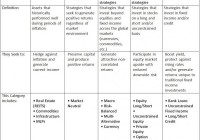
Summary In this piece, I lay out five common investment objectives and align each one with the different types of alternative investments that can help. I also address how to fund an alternatives allocation — in other words, where do you take money from in order to put it into alternatives? By Walter Davis Every summer my family and I go on a vacation to the beach. While there, my wife buys a big jigsaw puzzle for us to work on. Every year, we feel overwhelmed immediately after she dumps out all 1,000 pieces. That daunting feeling is similar to what many advisors and investors feel when they look at the myriad alternative investment offerings available today: “How am I ever going to figure this out and put all the pieces together?” When building our puzzle, my family’s first step is to sort and organize all the pieces. Once that’s done, it becomes much easier to identify where each one fits in the bigger picture. I recommend a similar approach toward alternative investments. Specifically, the first step is to organize and align the various alternative strategies with specific investment objectives. Below, I lay out five common investment objectives and align each one with the different types of alternative investments that can help: • Objective – Inflation mitigation With central banks injecting large amounts of money into the markets, many investors are concerned about the emergence of inflation in the future. In order to mitigate against the effects of inflation, investors may consider adding alternative asset classes such as real estate investment trusts (REITs), commodities, master limited partnerships (MLPs) and infrastructure to their portfolio. These investments have tended to increase in value when inflation occurs, and have similar return and risk characteristics as stocks. Several of these strategies also have a history of producing attractive levels of current income for investors. • Objective – Principal preservation Given the length of the current bull market and the low level of interest rates, many investors are concerned about the impact that a declining stock and/or bond market would have on their portfolio. To help buffer their portfolios, investors may consider an alternatives strategy known as “relative value.” This strategy has historically generated positive returns regardless of market environment, and has return and risk characteristics similar to that of bonds. • Objective – Portfolio diversification One of the benefits of alternative investments is they enable an investor to pursue opportunities that exist outside of the stock and bond markets-which may help cushion a portfolio if stocks and bonds fall at the same time. These “global investing and trading” strategies typically invest on a both a long and short basis across the global financial markets (stocks, bonds, currencies, commodities, etc.) These strategies have historically generated stock-like returns with significantly lower levels of risk than stocks. • Objective – Equity diversification For most investors, the largest allocation in their portfolio is to equities. Alternative equities strategies enable investors to diversify this exposure by investing in stocks on a long and short basis, and/or an unconstrained basis, which means the portfolio manager can invest wherever he or she sees an attractive idea. These strategies tend to generate equity-like returns with lower risk than traditional stocks. • Objective – Fixed Income diversification Investors have two concerns about fixed income: 1) what happens when interest rates rise from their historic low levels, and 2) how can they generate attractive levels of current income given the low level of interest rates. Some alternative fixed income strategies may help investors enjoy the benefits of rising interest rates (increased current income), while potentially minimizing the downside (declining value). Others are designed to seek positive total returns in both rising and falling rate environments. Furthermore, some of these strategies may help generate attractive levels of current income. In general, alternative fixed income strategies have return and risk characteristics similar to that of bonds. The table below summarizes this information and can be used as a tool to help advisors and investors organize the universe of alternatives investments. For illustrative purposes only. Not representative of any particular product or strategy. There can be no guarantee the strategies will meet income, performance or volatility objectives. Past performance is no guarantee of future results. Taking the next step Organizing the pieces of the alternative investments puzzle and deciding whether to invest is just the beginning, of course. The next step is to start clicking the pieces into place within a broader portfolio. In this step, the question becomes how to fund the allocation – in other words, where do you take money from in order to put it into alternatives? This is where puzzle-makers have the advantage – there’s only one spot for each jigsaw piece. In a portfolio, choices must be made. But how? It’s a complicated subject, and one that investors should always discuss with their advisors. As a general rule, I believe investors should base this decision on the return and risk characteristics of the alternative they want to add. By that I mean, I would first consider allocating away from fixed income to fund an alternative investment that had fixed income-like return and risk characteristics. The same would be true for equities. Let’s look at different ways to allocate to alternatives using the framework as our guide: • Objective – Inflation mitigation Real estate investment trusts (REITs), commodities, master limited partnerships and infrastructure have historically performed well in inflationary environments. Given that these alternative assets typically have had equity-like return and risk characteristics, investors, who meet certain risk criteria, could first consider allocating away from equities in order to fund an allocation to these assets. • Objective – Principal preservation As discussed in my first blog, relative value strategies such as market neutral seek positive returns in different market environments. Given that these strategies typically have had bond-like return and risk characteristics, investors, who meet certain risk criteria, might consider allocating away from bonds to fund this allocation. • Objective -Portfolio diversification Global investing and trading strategies such as global macro, risk balanced and multi-alternative may potentially help buffer a portfolio if stocks and bonds fall in tandem. Given that these strategies typically have generated stock-like returns with significantly lower levels of risk than stocks, investors, who meet certain risk criteria, could consider allocating away from equities to fund the allocation. • Objective – Equity diversification Alternative equities strategies such as equity long/short or unconstrained equity may help investors diversify their stock exposure. Given that these strategies have tended to generate equity-like returns with lower risk than traditional stocks, investors might consider allocating away from equities to fund the allocation. Furthermore, given the potential high correlations between equities and alternative equity strategies, some investors, who meet certain risk criteria, may view alternative equity as a core part of their equity allocation. • Objective – Fixed income diversification Bank loans, unconstrained fixed income and long/short credit can help diversify a traditional bond allocation. Given that these strategies have return and risk characteristics similar to that of bonds, investors may consider allocating away from fixed income to fund the allocation. Similar to investor attitudes about alternative equity, some investors, who meet certain risk criteria, may view alternative fixed income as a core part of their fixed income allocation. Of course, the above discussions are pretty straightforward if an investor holds just one of the five major investment objectives. Life isn’t always that straightforward, and investors often have goals that necessitate a combined approach. Two common investor goals are below: • Goal – Generate increased current income To pursue this goal, investors, who meet certain risk criteria, may consider allocating to 1) alternative assets that generate current income (i.e. REITs, MLPs, and infrastructure), and 2) alternative fixed income strategies that generate current income. In order to fund the allocation, the alternative assets portion could be funded from the portfolio’s equity allocation and the alternative fixed income portion could be funded from traditional bonds. • Goal – All-weather allocation to alternatives A potentially “all-weather” allocation to alternatives is one that allocates across the five different buckets shown in the framework, either on an equal-weight basis, or emphasizing certain categories over others. In order to fund the allocation, investors, who meet certain risk criteria, could consider funding the alternative asset, global investing and trading, and alternative equity allocations by investing away from equities. The relative value and alternative fixed income allocations could be funded by allocating away from fixed income. There are a variety of ways advisors and investors can allocate to alternatives, several of which are highlighted above. In addition, the charts below compare a 100% equity portfolio and a 60% stock/40% bond portfolio with: The impact of the all-weather approach, shown by the “traditional plus 20% alternatives” pie. The equity diversification approach, illustrated by the “traditional plus 10% alternative equity” pie. The current income approach, shown by the “traditional plus 10% alternatives that generate income” pie. To me, the key when allocating to alternatives is to align the different types of alternatives with specific client objectives in order to best achieve those objectives. Please keep in mind that the chart below is for illustrative purposes only and that it is not representative of any particular investment or strategy. There is no guarantee that the strategies described will meet income, performance or volatility objectives described. Past performance is not a guarantee of future results. 1 Inflation-Hedging Assets represented by FTSE NAREIT All Equity REIT Index, Dow Jones UBS Commodity Index and Alerian MLP Index. Principal Preservation Strategies represented by BarclayHedge Equity Market Neutral Index; Portfolio Diversification Strategies represented by BarclayHedge Global Macro Index, BarclayHedge Multi-Strategy Index and BarclayHedge Currency Traders Index; Equity Diversification Strategies represented by BarclayHedge Long/Short Index; and Fixed Income Diversification Strategies represented by Credit Suisse Leveraged Loan Index, HFN Fixed Income Arbitrage Index and BarclayHedge Fixed Income Arbitrage Index. Equities represented by S&P 500 Index. Fixed income represented by Barclays U.S. Aggregate Bond Index. An investment cannot be made directly in an index. Past performance is not a guarantee of future results. Risk is measured by standard deviation. 2 Equity Diversification Strategies represented by 10% BarclayHedge Long/Short Index. 3 5% Inflation-Hedging Assets represented by 2.5% FTSE NAREIT All Equity REIT Index and 2.5% Alerian MLP Index; does not include commodities. 5% Fixed Income Diversification represented by 1.66% Credit Suisse Leveraged Loan Index, 1.66% HFN Fixed Income Arbitrage Index and 1.67% BarclayHedge Fixed Income Arbitrage Index. Important Information Diversification does not guarantee profit or eliminate the risk of loss. Volatility is the annualized standard deviation of returns. Downside risk is the maximum decline based on the month end value of the index or portfolio. Correlation indicates the degree to which two investment have historically moved in the same direction and magnitude. Relative value strategies seek to provide positive returns above cash in all market environments, typically with lower volatility than the broad market. They generally employ arbitrage techniques to capture pricing anomalies by purchasing undervalued assets and shorting overvalued assets. The success of these strategies is driven by the managers’ security selection and strategy execution, as they seek to profit from the relative value created by the price differentials in the related securities. Long positions make money when an investment rises in price. Short positions make money when an investment falls in price. Unlike most alternative equity strategies, listed private equity ETFs would be expected to have higher returns and higher volatility than equities. Market neutral strategies use offsetting long and short stock positions in an attempt to limit non-stock-specific risk. Macro strategies base their investment decisions on macro views of various markets around the world. They may take long and short positions within and across such asset classes as equities, fixed income and currencies. Also known as risk parity strategies, risk-balanced portfolios are constructed so that each asset contributes a relatively equal amount of risk to the strategic allocation of the portfolio. These portfolios may also include a tactical overlay that allows managers to opportunistically adjust the strategic allocation. Multi-alternative strategies invest in a number of different types of nontraditional asset classes and strategies. Long/short strategies (equity or credit) typically take both long and short positions to benefit from rising prices on the long side and declining prices on the short side. Unconstrained strategies (equity or fixed income) may seek returns in a variety of ways, including the creation of long/short exposures or the implementation of an unconstrained approach that allows the managers to pursue their best ideas across the equity or fixed income markets. Private equity strategies invest in companies that are not publicly quoted on a stock exchange. Investments in private companies aim to deliver long-term capital gains that are realized when the holding is sold or when the company goes public. Option overlay strategies are strategies in which a manager uses options in conjunction with a portfolio of equities in an attempt to either boost return and/or reduce risk. Alternative products typically hold more non-traditional investments and employ more complex trading strategies, including hedging and leveraging through derivatives, short selling and opportunistic strategies that change with market conditions. Investors considering alternatives should be aware of their unique characteristics and additional risks from the strategies they use. Like all investments, performance will fluctuate. You can lose money. Commodities may subject an investor to greater volatility than traditional securities such as stocks and bonds and can fluctuate significantly based on weather, political, tax, and other regulatory and market developments. Investing in infrastructure involves risk, including possible loss of principal. Portfolios concentrated in infrastructure securities and MLPs may experience price volatility and other risks associated with non-diversification. Investment in infrastructure-related companies may be subject to high interest costs in connection with capital construction programs, costs associated with environmental and other regulations, the effects of economic slowdown and surplus capacity, the effects of energy conservation policies, governmental regulation and other factors. Investments in real estate related instruments may be affected by economic, legal, or environmental factors that affect property values, rents or occupancies of real estate. Real estate companies, including REITs or similar structures, tend to be small and mid-cap companies and their shares may be more volatile and less liquid. Fixed-income investments are subject to credit risk of the issuer and the effects of changing interest rates. Interest rate risk refers to the risk that bond prices generally fall as interest rates rise and vice versa. The dollar value of foreign investments will be affected by changes in the exchange rates between the dollar and the currencies in which those investments are traded. There is a risk that the value of the collateral required on investments in senior secured floating rate loans and debt securities may not be sufficient to cover the amount owed, may be found invalid, may be used to pay other outstanding obligations of the borrower or may be difficult to liquidate. The information provided is for educational purposes only and does not constitute a recommendation of the suitability of any investment strategy for a particular investor. Invesco does not provide tax advice. The tax information contained herein is general and is not exhaustive by nature. Federal and state tax laws are complex and constantly changing. Investors should always consult their own legal or tax professional for information concerning their individual situation. The opinions expressed are those of the authors, are based on current market conditions and are subject to change without notice. These opinions may differ from those of other Invesco investment professionals. NOT FDIC INSURED MAY LOSE VALUE NO BANK GUARANTEE All data provided by Invesco unless otherwise noted. Invesco Distributors, Inc. is the US distributor for Invesco Ltd.’s retail products and collective trust funds. Invesco Advisers, Inc. and other affiliated investment advisers mentioned provide investment advisory services and do not sell securities. Invesco Unit Investment Trusts are distributed by the sponsor, Invesco Capital Markets, Inc., and broker-dealers including Invesco Distributors, Inc. PowerShares® is a registered trademark of Invesco PowerShares Capital Management LLC (Invesco PowerShares). Each entity is an indirect, wholly owned subsidiary of Invesco Ltd. ©2014 Invesco Ltd. All rights reserved. blog.invesco.us.com