Tag Archives: handle

SCHA Looks Like A Nice Complimentary Holding To Enhance A Diversified Portfolio
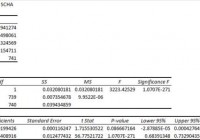
Summary I’m taking a look at SCHA as a candidate for inclusion in my ETF portfolio. The expense ratio relative to the diversification is fantastic. The moderate level of correlation to major funds helps SCHA find a place. I wouldn’t consider SCHA as a core holding, but I may choose it for 5% to 10% of the portfolio. I’m not assessing any tax impacts. Investors should check their own situation for tax exposure. Investors should be seeking to improve their risk adjusted returns. I’m a big fan of using ETFs to achieve the risk adjusted returns relative to the portfolios that a normal investor can generate for themselves after trading costs. I’m working on building a new portfolio and I’m going to be analyzing several of the ETFs that I am considering for my personal portfolio. One of the funds that I’m considering is the Schwab U.S. Small-Cap ETF (NYSEARCA: SCHA ). I’ll be performing a substantial portion of my analysis along the lines of modern portfolio theory, so my goal is to find ways to minimize costs while achieving diversification to reduce my risk level. What does SCHA do? SCHA attempts to track the total return of the Dow Jones U.S. Small-Cap Total Stock Market Index. At least 90% of funds are invested in companies that are part of the index. SCHA falls under the category of “Small Blend”. Does SCHA provide diversification benefits to a portfolio? Each investor may hold a different portfolio, but I use (NYSEARCA: SPY ) as the basis for my analysis. I believe SPY, or another large cap U.S. fund with similar properties, represents the reasonable first step for many investors designing an ETF portfolio. Therefore, I start my diversification analysis by seeing how it works with SPY. I start with an ANOVA table: (click to enlarge) The correlation is about 90%. This is a fairly moderate correlation. It’s low enough that we have a chance at lowering the risk level of a total portfolio so long as the standard deviation is not too high. Standard deviation of daily returns (dividend adjusted, measured since January 2012) The standard deviation isn’t great, but it is acceptable. For SCHA it is .9294%. For SPY, it is 0.7300% for the same period. SPY usually beats other ETFs in this regard, so that isn’t a major issue. Mixing it with SPY I also run comparisons on the standard deviation of daily returns for the portfolio assuming that the portfolio is combined with the S&P 500. For research, I assume daily rebalancing because it dramatically simplifies the math. With a 50/50 weighting in a portfolio holding only SPY and SCHA, the standard deviation of daily returns across the entire portfolio is 0.8094%. If we drop the position to 20% the standard deviation goes down to .7559%. In my opinion, that’s still too high. Once we drop it down to a 5% position the standard deviation is .7357%. If I include SCHA, I would probably seek to use an exposure level around 5%, but could potentially go as high as 10%. Why I use standard deviation of daily returns I don’t believe historical returns have predictive power for future returns, but I do believe historical values for standard deviations of returns relative to other ETFs have some predictive power on future risks and correlations. Yield & Taxes The distribution yield is 1.43%. The SEC yield is 1.30%. In my opinion, these yields make the index less appealing for a retiring investor, but an argument could still be made for a position as large as 5% because of the correlation being down to almost 80%. I’m not a CPA or CFP, so I’m not assessing any tax impacts. If I were using SCHA, I would want it to be in a tax exempt account to remove any headaches associated with frequent rebalancing. Expense Ratio The ETF is posting .08% for an expense ratio. I want diversification, I want stability, and I don’t want to pay for them. The expense ratio on this fund is still within my comfort range. This expense ratio is lower than SPY, but higher than (NYSEARCA: SCHX ). SCHX is an alternative to SPY that I found more appealing. Market to NAV The ETF is at a .07% premium to NAV currently. I’m not thrilled about that, but it isn’t terrible. However, premiums or discounts to NAV can change very quickly so investors should check prior to putting in an order. Largest Holdings The portfolio is wonderfully diversified. The largest position is extremely short duration bonds at .67%. I suspect the ETF is using this as a method for storing dry powder rather than holding cash. That would be a fine solution in my book and I don’t mind seeing it in the portfolio as long as it is less than 1% of assets. I don’t want to be paying an expense ratio on a significant amount of funds that are not invested. For the real investments of the fund, the vast majority are under .30%. This is spectacular diversification and it is remarkable to find this with an expense ratio of only .08%. (click to enlarge) Conclusion I’m currently screening a large volume of ETFs for my own portfolio. The portfolio I’m building is through Schwab, so I’m able to trade SCHA with no commissions. I have a strong preference for researching ETFs that are free to trade in my account, so most of my research will be on ETFs that fall under the “ETF OneSource” program. So far, I like SCHA for exposure to the smaller capitalization side of the market. The moderate correlation helps to mitigate the higher standard deviation of returns and makes this ETF look like a nice fit for a small portion of the portfolio. For me, that’s 5 to 10%. I’d be concerned about investors considering it a core asset and putting in 20% or more, but it looks like a nice piece for that small position in the portfolio. Additional disclosure: Information in this article represents the opinion of the analyst. All statements are represented as opinions, rather than facts, and should not be construed as advice to buy or sell a security. Ratings of “outperform” and “underperform” reflect the analyst’s estimation of a divergence between the market value for a security and the price that would be appropriate given the potential for risks and returns relative to other securities. The analyst does not know your particular objectives for returns or constraints upon investing. All investors are encouraged to do their own research before making any investment decision. Information is regularly obtained from Yahoo Finance, Google Finance, and SEC Database. If Yahoo, Google, or the SEC database contained faulty or old information it could be incorporated into my analysis. The analyst holds a diversified portfolio including mutual funds or index funds which may include a small long exposure to the stock.

The Case For Maintaining A Strategic Allocation To Real Assets

As investors continue to look for ways to diversify their portfolios away from traditional long-only stock and bond investments, real assets have become a popular alternative asset class. In fact institutional investors, such as leading endowments and foundations, have long used investments in real assets such as real estate, commodities, timber and energy as both a hedge against inflation and as a core diversifier. To provide more insight into this asset class and how institutional investors are using real assets, Michael Underhill, chief investment officer of Capital Innovations and a leading manager of multi-asset real return portfolios, answers a few questions for us on the topic. Given the increase in regional conflicts and greater overall geopolitical risks today, how is this influencing your respective portfolio positioning from both a macro and micro perspective? As geopolitical risks rise we would expect higher volatility in markets, increased risk of supply shocks to key commodities such as oil and food and a discounting of potential higher inflation and subsequent higher interest rates. As a hedge to these types of macro risks, exposure to real assets, and their relative inflation hedge qualities would become more attractive. Positioning on a more micro level we are incorporating these geopolitical risks and have been reducing our relative portfolio weighting in more interest rate sensitive groups such as electric utilities and telecomm and increasing more inflation hedge real assets such as energy, timber, agricultural commodities. What are the risks that investors should think about hedging or mitigating today and why? A common mistake investors make is to extrapolate current environment out too far and become complacent. The current environment of low interest rates, low inflation, and low volatility has afforded the opportunity to hedge the risk that this environment changes over the investment horizon. Do you want to bet that this backdrop we have had since the financial crisis does not change? The ideal time to add real asset exposure is when not many are thinking about it – buy an umbrella when the sun is shining. If we examine an allocation to real assets over the past 24 years, as shown in the chart below, we can see improved portfolio efficiency, with enhanced returns and lower volatility. Historical Effect of Allocating to Commodities (January 1980- July 2014) What are the opportunities investors should be seeking exposure to and why? In 2015, we expect improved global growth and a mid-year increase in US interest rates. The ECB and the BOJ remain in easing mode, and the policy outlook in the rest of the world varies considerably. The risk that global growth remains sluggish is high, and a lack of meaningful improvement could lead to a sharp increase in the dollar and a significant reorientation of capital flows. Most regions should see decreasing growth headwinds in 2015, although geopolitical uncertainties, volatile oil prices, and moderating Chinese growth remain concerns. It is for these reasons that we continue to advocate for a diversified, tactically managed, multi-asset portfolio that seeks to generate returns in excess of the actual rate of inflation and provides managed volatility rather than a single-asset-class solution. A broad range of real asset equity securities, including emerging markets and commodities, real estate investment trusts, and directly held positions in master limited partnerships. How does a global multi-asset real return strategy fit into a liability driven investing framework? The tangible properties of a real asset allow its price to fluctuate with overall market prices of physical assets. Real assets tend to be sensitive to inflation because of their tangible nature. Examples of real assets include direct investment in real estate, commodities, precious metals, timber, energy, farmland, precious metals, commodity-linked stocks, and commodity-linked hedge funds. Most investors are more familiar with investments in financial assets, which are contractual claims that do not generally have physical worth. In an LDI platform, real assets provide potential reductions in surplus volatility to the extent that real asset movements are not highly correlated to movements of financial assets. Returns from real assets may also boost returns since real assets are generally not as efficiently priced as the more competitively priced stocks and bonds. The return potential for real assets has become especially attractive in recent years since stocks and bonds have not performed well. From a risk management perspective, a key benefit from expanding asset classes to include real assets rests on correlations. A group of assets that have high correlations with each other but have low correlations with other groups of assets represent an asset class. There tends to be much less diversification potential from combining assets within an asset class than from combining assets from different asset classes. Real assets represent such a broad asset class that a wide range of correlations exist both within the asset class and with assets from other asset classes, allowing for attractive diversification. Our clients have found that the best performance comes from avoiding the large losses that markets often impose on passive investment portfolios. This tends to be especially important for real assets. As a first step we look behind the market consensus and identify where herding and overreaction phenomena may be at work. These phenomena occur both within and across asset classes. We perform extensive modeling with sensitivity analysis to find our best risk management strategy for an LDI structure. From there we model our best set of segments within an asset class and simulate the surplus volatility and return. This is not just simple quantitative analysis because we must also build in forward looking scenario planning. We track actual LDI performance against expected LDI performance. This type of tracking is revealing in that we can review what we were expecting when the allocations were set and identify where things developed differently. This type of learning over many years of experience is very helpful in building analysis skills.

Will Higher Physical Demand For Silver Drive Up SLV?

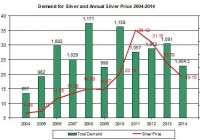
Summary The physical demand for silver has declined in 2014. Even if the demand were to pick up, the price of SLV may keep going down in 2015. The ratio of SLV to GLD gone up in 2014, which means SLV didn’t perform well compared to GLD. This year, the iShares Silver Trust ETF (NYSEARCA: SLV ) didn’t perform well as its price dropped by 18%. The low inflation, the FOMC’s change in policy and the drop in the price of gold contributed to the weakness of silver. Looking forward, even if the physical demand for silver were to pick up, it’s not likely to turn SLV back up. Let’s see why. Physical demand – does it matter? One of the main issues that bullion bulls point out is the changes in the demand for silver that could have an impact on the price of silver and SLV. But I think the changes in the physical demand played a secondary role on the price of SLV in recent years. The chart below presents the changes in demand for silver over the past decade and the average annual price of silver. Source of data Silver Institute and Reuters As you can see, the physical demand for silver seems to have limited impact on the price of SLV in the past few years especially. Back in 2008 the demand for silver reached its highest level in years, and SLV rose over $20, only to fall back by the end of the year to below $9 – so there was a reaction but it didn’t lead to staggering rise in SLV prices. Moreover, the spike in SLV prices during 2011-2012 doesn’t seem to relate to the changes in physical demand for the precious metal. During those years the demand didn’t increase compared to previous years. I also checked the changes in supply during those years — there was no a major shortage for silver on an annual scale more than in previous years. Conversely, even though the demand for silver grew in 2013, the price of SLV came down from its high levels of 2011-2012. Looking forward, HSBC still predicts higher demand for silver in 2015. This is why it retains its forecast price of silver at $17.65 per ounce. China, the world’s largest consumer of silver, will face economic challenges in 2015 – this could suggest China’s demand for silver may not increase any faster than it did in 2014. So the expected rise in physical demand may be harder to achieve next year. The other side of this equation is the changes in supply. In the past decade the supply, which mostly comes from mines, grew at a steady pace. This could change in 2015 as silver producers, which got use to the elevated price of silver over recent years, may taper down their output now that silver prices don’t provide a positive ROI for some of their mines. Such a shift, however, could take time to be reflected silver prices. And in any case, this is likely to be the secondary factor to impact SLV. The main issue is likely to be the changes in the demand for silver on paper, which is mostly driven by silver’s relation to gold, U.S. inflation expectations and treasuries yields. Let’s examine the first two. The issue related to treasuries yield you can see in this past post . This year, SLV has underperformed SPDR Gold Trust (NYSEARCA: GLD ). The relation between the two tended to be very strong and positive for the most part. Source of data: Google finance If GLD continues to remain flat or even slowly comes down, this likely to also bring down the price of SLV. The changes in U.S. inflation also tended to drive higher the price of SLV. The last time the U.S. inflation grew to over 10% was at beginning of the 1980. During that period, the price of silver spiked to around $48 for a very short time before it came back down along with the U.S. inflation. Back then, however, the story behind that spike and crash, which is known as Silver Thursday , was related to the Hunt bothers attempt to corner the silver market. But the rally of silver came even before the Hunt bothers tried to corner the market. Also, gold had a similar rise and fall in the early 80’s. The chart below presents the changes in U.S. core inflation (percent changes from a year back) and price of silver between 1978 and 1998. Source of data: FRED and Bloomberg In the past two decades, however, the U.S. inflation remained relatively flat – below 3%. But silver grew fast in 2011-2012. During those years, although the U.S. inflation remained low, the expectations for a sudden spike in inflation by bullion bulls were high. This is mainly due the FOMC’s policy of implementing its quantitative easing programs in low interest rates environment. Source of data: FRED and Bloomberg In the past few weeks the demand for SLV kept falling down: As of the end of last week, this ETF’s silver holdings have declined by 4% in the last two months. If the demand for silver for investment purposes continues to decrease, this is likely to bring down SLV. The potential fall in supply and expectations for a rise in physical demand may curb down the fall in SLV prices in 2015. But there are other factors that are likely to keep dragging down SLV: As the memories of the Fed’s QE programs remain in the rear view mirror, it becomes harder to see a sudden rise in inflation any time soon. Finally, if gold remains low and inflation doesn’t pick up, SLV isn’t likely to make a comeback in 2015.