Tag Archives: function

Respect The Trends In These ‘Widowmaker’ Trades

“Bull-markets are born on pessimism, grow on skepticism, mature on optimism and die on euphoria.” -Sir John Templeton There are a couple of trends out there in the markets right now that are becoming so-called “widowmakers.” Specifically, I’m referring to oil and long bonds. Oil has been crashing while long bonds have been soaring. Oil is way oversold and long bonds are way overbought. They should both probably retrace a bit of their recent moves simply because they’re both so overextended right now. However… See the massive inflows into the oil ETF in the chart above? That is not the sort of “pessimism” that forms a major bottom. Conversely, in bonds… Investors have been drastically underweight and heavily short bonds for over a year now. This is why I’ve been writing for some time that bonds may be more likely than stocks to see a ” blow off ” sort of move. Now traders are clearly trying to anticipate a trend change in both of these asset classes. They are getting heavily long oil and they remain heavily short long bonds. Now, to be clear, I think they may revert a bit if only to work off their overextendedness (if that’s even a word). But the big problem with these trades is that the trend is plain as day and traders shouldn’t forget, “the trend is your friend!” Oil is nowhere close to breaking out of its downtrend and long bonds are nowhere close to breaking down out of their uptrend. Trying to anticipate these trend changes must have been inordinately painful for these traders over the past few months. And the odds are neither of these trends will actually change until we see some real despair in oil and some true euphoria in long bonds, as witnessed in ETF flows or some other similar indicator. At least, that’s what I imagine the brilliant Sir John would have told us. How did this change your view of ? More Bullish More Bearish It Didn’t This impact ( ) More Bullish More Bearish Unchanged Thanks for sharing your thoughts. Submit & View Results Skip to results » Share this article with a colleague

Transport ETFs Jolted By Weak UPS Earnings Forecast

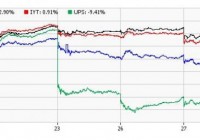
With the economy growing at the fastest clip in over a decade and the oil price at a five-year low, transportation was one of the best performing sectors of 2014. This trend continued in 2015 driven by solid retail, manufacturing, and labor data that created strong demand for the movement of goods across many economic sectors. Additionally, strong earnings from major players in the industry are fueling growth in the sector. However, the space was badly hit by the recent profit warning and sluggish outlook from the bellwether United Parcel Service (NYSE: UPS ) on January 23 that dampened investors’ mood making them cautious on the stock and the broad sector. UPS Warns of Soft Q4 Earnings The world’s largest package delivery company said that higher operating expenses and temporary hiring for the peak holiday season might take a toll on the earnings for the fourth quarter and full-year 2014. It is slated to release its fourth quarter earnings on February 3. The company now projects earnings for Q4 to come in at $1.25 per share, missing the Wall Street’s expectations of $1.47. Accordingly, the Zacks Consensus Estimate moved down to $1.25 from $1.47 over a period of seven days. United Parcel also slashed its full-year guidance to $4.75 per share, much below the previous expectation of $4.90-$5.00 a share and the current Zacks Consensus Estimate of $4.77. The Zacks Consensus Estimate has declined 21 cents over the past 7 days. Weak 2015 Guidance Further, the company expects 2015 earnings to grow slightly less than its long-term growth target of 9-13% due to increased pension costs and currency headwinds. The Zacks Consensus Estimate currently represents growth of 7.85% for this year. Market Impact The news has spread bearishness not only on this package delivery giant but also on the broad space. UPS shares dropped as much as 10% on Friday after this bearish announcement and are down nearly 11.7% over the past three days. Its major rival FedEx (NYSE: FDX ) fell 4.1% over the past three sessions. The sluggish trading has also been felt in the ETF world as both the transport ETFs – the iShares Dow Jones Transportation Average Fund (NYSEARCA: IYT ) and the SPDR S&P Transportation ETF (NYSEARCA: XTN ) – lost 2.3% and 1.2%, respectively, in the same period. What Lies Ahead? Despite the slide and UPS’ sluggish outlook, investors shouldn’t completely write off transportation ETFs from their holdings. This is because the funds have spread out exposure to a number of firms in various types of industries like railroads, airline and low cost trucking suggesting that the space can easily counter shocks from some of the industry’s biggest components. In fact, IYT puts about 47% in railroads while airfreight & logistics makes up for nearly 27% share. Meanwhile, XTN is heavily exposed to trucking and airlines as these make up roughly 62% of the total while air freight & logistics accounts for 21% share. In terms of individual holdings, the iShares product is heavily concentrated on the top firm – FedEx – at 11.65% while UPS takes the fourth spot at 6.71%. On the other hand, State Street fund uses an equal weight methodology for each security. While IYT is more popular and liquid among the two, XTN is cheap by 8 bps. Further, FedEx reaffirmed its EPS guidance of $8.50-$9.00 for fiscal 2015 on the heels of UPS’ warnings. The midpoint is well above the Zacks Consensus Estimate of $8.94, indicating sound business for the transport ETFs. If these were not enough, cheap fuel will provide a big-time boost to transport earnings growth. This has already started to reflect in the latest earnings results as earnings for the transport sector reported so far is up 20.6% with a beat ratio of 57.1% and median surprise of 3.3%.

Federated Makes Case For Truly Active Management

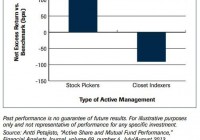
By DailyAlts Staff “It can pay to be active,” according to Federated Investment Consulting, whose recent whitepaper makes the case against passive indexing and for “truly active management.” Conceding that passive strategies can perform “as well as the average,” Federated argues that portfolios constructed with little regard to benchmarks can outperform, particularly during periods like the one we appear to be entering. Truly Active Management Actively managed funds seek to outperform their benchmarks, such as the S&P 500 for equity funds. Passively managed funds, by contrast, seek only to match the performance of the benchmark to which they’re indexed. Thus, in bear markets, passively managed funds tend to post wide losses, while actively managed funds have the flexibility to shift exposures to minimize losses or even eke out gains. According to Federated’s whitepaper , studies suggest “truly active management” can “generate the opportunity for outperformance” even after fees. These same studies show that “truly active management” tends to do better than passive management during periods of declining correlations across markets. For years, global central banks were “on the same page” coordinating monetary policy; but now the Federal Reserve is widely expected to begin raising interest rates in the U.S. sometime in 2015, while the Bank of Japan and European Central Bank are doing the opposite. This divergence of global policy is widely expected to result in the “declining correlations across markets” under which “truly active management” tends to outperform. But what is “truly active management?” Federated defines it simply as strategies “that construct portfolios with little regard to their benchmark,” in which security selection and weighting “deviates significantly” from the benchmark. These are “stock picking” strategies, and Federated believes “the virtues of stock picking may rise” since the U.S. stock market is near record highs and “the prospect for higher rates is threatening the outlook for bonds.” Federated also references a study conducted by Antti Petajisto and Martijn Cremers of the Yale School of Management that shows that funds with higher levels of active management outperform those that are considered “benchmark huggers,” as seen in the following chart: Historical Evidence Federated uses historical evidence in support of its thesis. The period of 2010-2011 saw increasing correlation, high volatility, and “low dispersion between the highest individual stock return and the lowest individual stock return.” These conditions naturally favor passive managers. But in 2012 and 2013, correlations fell and dispersion rose, creating the conditions under which active managers can more easily outperform. Passive strategies generated returns of roughly 16% and 32% in 2012 and 2013, but the returns of actively managed strategies were even higher. The top 25% of active managers have significantly outperformed passive strategies dating back to 1999. A $10,000 investment in a top quartile active manager made on December 31, 1998 would have grown to $35,411 by year-end 2013, while the same investment in the S&P 500 would have grown to just $19,854, according to Federated. This significant outperformance among the top 25% is a strong argument for investors to conduct thorough due diligence on prospective active managers. Conclusion “Active management has its issues,” Federated concedes near the end of the whitepaper, and chief among them are fees. But at the same time, Federated says “fees are relative,” and that low-fee options make sense for “highly efficient asset classes,” but not asset classes such as “international growth and value stocks, and small-cap core and value stocks,” which are “highly inefficient.” Management fees are justified since passive indexing to “highly inefficient” asset classes will result in relative underperformance, in Federated’s view. Most investors want to beat the average, and the only way to do that is through active management. Low-fee passive indexing inevitably results in average returns, minus a low fee. But active management, even with higher fees, can result in returns that greatly exceed the average, thereby resulting in market-beating returns – even after fees.