Tag Archives: function

M&A Activity Stokes Inflows To Healthcare Providers ETFs

Summary Increased industry consolidation could help support healthcare provider ETFs. Healthcare services ETFs attracting greater investment demand. The healthcare sector is booming on a wave of new clients as more enroll into the ACA. By Todd Shriber & Tom Lydon Buoyed by rumors that the health insurance industry is poised for consolidation on a grand scale, the iShares U.S. Healthcare Providers ETF (NYSEARCA: IHF ) has been steadily rising and raking in new assets. As of June 23, IHF added $247 million in new assets this year, the ETF’s biggest first-half inflows since it came to market in 2006, reports Joseph Ciolli for Bloomberg . Up 19.4% year-to-date, it is now home to $987.4 million in assets under management. For weeks, investors and the financial media have been expecting a wave of consolidation that could see marriages among some of IHF’s largest holdings. Earlier this week, Cigna (NYSE: CI ) rejected a $47 billion takeover offer from Anthem (NYSE: ANTM ). Anthem and Cigna are IHF’s fourth- and fifth-largest holdings, respectively, combining for over 13% of the ETF’s weight. Dow component UnitedHealth (NYSE: UNH ) has made overtures for rival Aetna (NYSE: AET ) while Aetna has been reportedly eying Humana (NYSE: HUM ), according to the Wall Street Journal . UnitedHealth, Aetna and Humana combine for about 23% of IHF’s weight. “Fueling the potential consolidation is the Obama administration’s 2010 health law, which put tougher rules on the industry, demanding more covered services, better care and a ceiling on profits. Companies are racing to capture the more than 20 million customers who will buy coverage under the law,” according to Bloomberg. Inflows to IHF are accelerating, including $138.1 million in the current quarter. In March 2014, the ETF had just $400 million in assets under management. Investors are also taking note of IHF’s equal-weight rival, the SPDR S&P Health Care Services ETF (NYSEARCA: XHS ) . XHS now has nearly $191 million in assets, $25 million of which have arrived this quarter. The ETF has added $54.1 million in new assets this year. Cigna, Aetna, Anthem, UnitedHealth and Humana combine for 10% of XHS’s weight. The ETF is up 15.8% this year. IHF and XHS are not strangers to healthcare mergers and acquisitions. Earlier this year, UnitedHealth agreed to acquire Catamaran (NASDAQ: CTRX ) for $12.8 billion in cash. In 2009, Express Scripts (NASDAQ: ESRX ) spent $4.7 billion to acquire WellPoint and followed up that deal with the $29 billion acquisition of Medco in 2012. Last month, shares of Quest Diagnostics (NYSE: DGX ), the provider of healthcare diagnostic testing services, after it was rumored that company could be a takeover target as well though chatter to that effect has since ebbed. Quest Diagnostics is 2.6% of IHF and 2% of XHS. iShares U.S. Healthcare Providers ETF (click to enlarge) Disclosure: I/we have no positions in any stocks mentioned, and no plans to initiate any positions within the next 72 hours. (More…) I wrote this article myself, and it expresses my own opinions. I am not receiving compensation for it. I have no business relationship with any company whose stock is mentioned in this article.
Evaluating Managers During Market Extremes

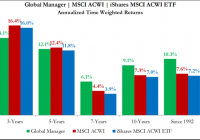
Summary Investing is a probability-based exercise; therefore, having a good decision making process is vitally important. Emotions and investing do not play well together and often lead to poor decisions. Investors should ultimately evaluate investments/managers in a way that minimizes emotional corrosion. Capital markets have a rhythm over the long term. They ebb and flow, creating investor sentiment that fluctuates between euphoria and despair. This pattern is one of the key impediments to becoming a successful investor. In order to succeed, one must master not only investment knowledge, but also investor psychology. Deciphering and filtering large amounts of data in order to make a successful investment is not enough. Investors must also control their emotions which often lead them to poor decisions. Looking at the stock markets today, the S&P 500 and the MSCI All Country World (“ACWI”) continue to climb in spite of lukewarm economic data. Through May 31st, the S&P 500 and ACWI are up 3.2% and 5.4%, respectively. This is quite a return when considering the U.S. Gross Domestic Product was reported down 0.2% for the first quarter. The three-year returns for the S&P 500 and ACWI were also very robust as these markets gained 68.0% and 53.9%, respectively. This pattern has been in place since the bottom of the market was established in early 2009. While the stock market recovery has allowed investors to regain losses from the financial crisis, the euphoria caused by accelerating markets can create doubt in one’s investment philosophy. This can overwhelm an investor’s ability to achieve their investment objectives because it can cause them to “chase returns” or “reach for yield” at the exact time in which they should be exhibiting discipline in their investment philosophy/process. At Highland, our overarching investment philosophy is one rooted in risk management. We believe investors should prudently seek return in a manner which protects them during difficult markets (i.e. large market declines). This philosophy leads us to managers which exhibit certain characteristics: Downside protection: losing less than the overall market during large, protracted declines; emphasis on intrinsic value: the price of an investment does matter; lower long-term volatility: a more consistent return pattern than the overall market (i.e. shorter peaks and troughs); and long-term time horizon: longer holding periods allows for an investment thesis to properly play out. By investing in managers which exhibit these characteristics, we believe that our investors can outperform the overall market over longer periods of time. However, in order to properly execute this philosophy, an investor must remain focused on the long term and remain patient. The goal of this approach is to enhance one’s ability to stick with their investment strategies during very difficult markets. Ironically, this investment approach tends to be most difficult to stomach during periods of rapidly appreciating markets as it and these types of managers will tend to underperform. For this reason, we will focus on evaluating managers during euphoric markets and how to determine if your objectives are still being met. Traditional Evaluation Methodology The most commonly used method to evaluate managers is to simply compare their historical performance to that of a benchmark index. While many different methods can be used, the most common method is annualized time-weighted returns. Figure 1 illustrates time-weighted returns of a global equity manager utilized by Highland: Figure 1 (click to enlarge) In order to evaluate the success of a manager, an investor must first define/understand what they mean by success. Many investors simply define success as a manager outperforming their respective benchmark. Using this measure of success, it appears that the global manager has been struggling to achieve success over the past three and five years. Based upon this analysis, an investor might be tempted to terminate the manager in search of a manager that has provided above-benchmark returns. At Highland, we believe that success is defined by an investor’s ability to achieve their long-term investment objectives. Ultimately, it is not only the return, but also how you achieve the return that determines success. We believe success is determined by the following: Outperforming the benchmark over the long term (minimum of 5-year rolling periods). Protecting capital during difficult markets. Exhibiting an overall volatility lower than the benchmark. The traditional type of analysis ultimately fails to determine success for two reasons. First, only one aspect of success (return) is being examined. Second, it can lead to poor decisions. Figure 2 compares Manager A’s and Manager B’s time-weighted returns. This chart illustrates the value added/subtracted (manager return minus benchmark return) over several time periods. Which manager would you choose? Most would pick Manager B because the value add is much higher and consistent than Manager A. The problem is that A and B are the same manager (see Figure 1 ). The only difference is that A represents data through May 31st and B represents data through February 28, 2009. This illustrates one of the major flaws with utilizing only time-weighted returns in your analysis, which is endpoint sensitivity . Figure 2 (click to enlarge) Endpoint sensitivity is a phenomenon which occurs when the conclusions of an analysis can be significantly altered by changing the ending data point (the ending date in this example). Highland’s investment philosophy employs strategies which seek to protect capital during difficult equity markets. This means that the managers in the portfolio tend to have less downside risk and lower overall volatility. Conversely, they tend to perform less well, on a relative basis, in big up markets. Therefore, this type of strategy often suffers severe endpoint sensitivity during market extremes, which was illustrated in Figure 2 . Highland’s Evaluation Methodology In order to minimize potentially erroneous conclusions caused by endpoint sensitivity, Highland employs additional analyses to evaluate manager success. The first is to consider rolling periods of compound returns (i.e. how consistent are a manager’s returns over longer periods of time). This type of analysis examines the entirety of a manager’s return stream to determine their probability of success. In addition, we examine a manager’s rolling excess performance over the benchmark to ensure consistency. By combining these two methods, we believe that we have a more predictable method of assessing whether a manager has the ability to add value. Figure 3 illustrates the global manager’s results based on this methodology. The results show that the manager has the ability to consistently outperform the benchmark, especially when examining longer time horizons (i.e. outperforming 100% of ten-year periods). This also shows how the results in Figure 1 are more driven by the extreme market environment and less by the manager’s ability to outperform. Figure 3 (click to enlarge) While the results in Figure 3 better account for endpoint sensitivity, they still only capture one aspect of success (return). To evaluate the risk aspect, Highland examines volatility and risk-adjusted returns to ensure a manager is providing the return profile required by our investment philosophy. There are numerous methods that can be used to evaluate risk-adjusted returns, and Highland uses most of them to analyze success. Figure 4 is one example, which examines return per unit of volatility over rolling periods (to eliminate endpoint sensitivity). Figure 4 (click to enlarge) Each of the methods used to evaluate success have their own set of pros and cons; therefore, one method cannot be used in isolation to properly judge a manager. Instead, Highland utilizes all of the methods discussed in order to determine if objectives are being met. This allows us to temper our emotions at market extremes and maintain sound judgment when it is the most difficult. We are then able to focus on the long term and put our clients in a position to achieve their investment objectives. Conclusion Conservative investment strategies can be beneficial for investors. They allow investors to stay calm and stick to their investment philosophy when markets are experiencing large corrections, which place an investor in the position to achieve their investment objectives over the long term. On the other hand, these types of strategies struggle to keep up with markets during long, protracted upswings, which could cause an investor to question the validity of a conservative strategy. It is important to understand that traditional evaluation tools at market extremes (i.e. peaks and troughs) often skew the appearance of success or failure. For this reason, Highland utilizes evaluation metrics that limit endpoint sensitivity. Therefore, investors can limit their emotions and make decisions in a manner that is prudent and most beneficial for their portfolio. Disclosure: I/we have no positions in any stocks mentioned, and no plans to initiate any positions within the next 72 hours. (More…) I wrote this article myself, and it expresses my own opinions. I am not receiving compensation for it. I have no business relationship with any company whose stock is mentioned in this article.
Who Ya Gonna Call? VIXbusters Are Here!

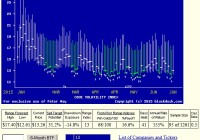
Summary The “fear index” investing/speculating/trading quickly gets submerged into what is for many ordinary investors a morass of arbitrage complexities. So most won’t go near any of the confusing and dangerous ETF products that require constant attention and diddling adjustments. Despite new ETF offerings. Too bad, since assured gains are there from time to time. The trick is in knowing when the time is right to use the tools with adequate market seasoning. Market-makers [MMs] know when. It’s woven into their job. But they are often busy frying much bigger profit fish. Here are simple guidelines for the individual investor to check periodically, any time, any day, for only $25 x 4 a year. The VIXbusters crowd They don’t screw with futures-based ETF products to track and evaluate the VIX INDEX. Contangos, roll yields, backwardation, and margin maintenance are not their things. They deal directly in arbitraging the index itself, hourly or more frequently as necessary, taking the market’s temperature, as preventive maintenance. We check them out at the close, every market day. That tells us what they expect the VIX index can be in the coming near future. Tomorrow, next day, next week. Both upper reaches possible, and lower ones. Sure, you could try to play cute-guy games with untried, unpredictable new ETFs or other more seasoned ones having low credibility and horrible odds of profit success. But there’s no need to take such risks. There are just a few simple things that need to be known. Then the game gets a lot clearer. First, take a look at how the market pros see, and have seen, coming prospects for the VIX Index. Figure 1 (used with permission) The vertical lines of Figure 1 are a visual history of forward-looking expectations of coming prices for the subject ETF. They are NOT a backward-in-time look at actual daily price ranges, but the heavy dot in each range is the ending market quote of the day the forecast was made. What is important in the picture is the balance of upside prospects in comparison to downside concerns. That ratio is expressed in the Range Index [RI], whose number tells what percentage of the whole range lies below the then current price. Today’s Range Index is used to evaluate how well prior forecasts of similar RIs for this ETF have previously worked out. The size of that historic sample is given near the right-hand end of the data line below the picture. The current RI’s size in relation to all available RIs of the past 5 years is indicated in the small blue thumbnail distribution at the bottom of Figure 1. The first items in the data line are current information: The current high and low of the forecast range, and the percent change from the market quote to the top of the range, as a sell target. The Range Index is of the current forecast. Other items of data are all derived from the history of prior forecasts. They stem from applying a T ime- E fficient R isk M anagement D iscipline to hypothetical holdings initiated by the MM forecasts. That discipline requires a next-day closing price cost position be held no longer than 63 market days (3 months) unless first encountered by a market close equal to or above the sell target. The net payoffs are the cumulative average simple percent gains of all such forecast positions, including losses. Days held are average market rather than calendar days held in the sample positions. Drawdown exposure indicates the typical worst-case price experience during those holding periods. Win odds tells what percentage proportion of the sample recovered from the drawdowns to produce a gain. The cred(ibility) ratio compares the sell target prospect with the historic net payoff experiences. Figure 2 provides a longer-time perspective by drawing a once-a week look from the Figure 1 source forecasts, back over (almost) two years. Figure 2 The most important thing to learn from these pictures and this data is that the VIX index is not like most all investable securities. It does not have a growth trend. Its prices do not fluctuate about that trend in any statistical “normal” distribution. MPT and conventional quantitative investment analysis have very little to offer here. VIX Index realities The VIX index is a derivative of other derivatives of the S&P500 index. Our implied price range forecasts from the market-makers are, in turn, a further derivative in a long family chain of such critters. They exist because they have been useful to market pros, far more than to the retail investor or the institutional investor. But like other derivatives, they can’t get used without revealing the expectations of the users. The users operate from a world that is in a narrow balance most of the time, with fluctuations that range in a limited, expected way. For the VIX, its index numbers typically hang around the 15 to 20 level. Their longterm (20-year) average is 20, but is skewed so that 60% are below 20 and 1/3rd are below 15. Its maximum of 80 is so rare that only 1/8th of the time is it above 30. The record low is a hair under 10, and it now is 13, well within, but near the low end of a usual range. The VIX Index goes up when stock prices go down, hence the “fear” label. Here’s the catch But it is very hard to tell in advance when that may happen, by a large enough amount to cause the VIX to rise productively. Past experience from the present MM forecast level has produced (see the row of data under the picture in Figure 1) +16.6% gains on average from the 95 similar forecasts of the last 5 years. But only 68/100 of them were profitable, and they had to recover from typical interim price drawdowns of nearly -15% to do that, or a price swing of over 30%. Not an experience designed to calm the nerves of many retirees. Besides, that “attraction” is largely available only to investment professionals, dealing in more limited circulation markets and securities. In contrast, what the individual investor has had most available is the i Path S&P 500 VIX Short-Term Futures ETN (NYSEARCA: VXX ). It has attracted $1.15 billion of capital and trades 39,164,600 shares a day, sufficient to turn over the entire committed capital in less than 2 days. Not exactly the company of long-term investors, if that is the way you may think of yourself. But such a liquid market might provide some comfort. Let’s see what opportunities the pros have seen there, in comparison to their direct appraisals of the VIX Index in Figures 1 and 2. Figure 3 Figure 4 No, the last 6 months were not an aberration, it is a trend built into the security by its reference to VIX futures instead of the VIX Index as an underlying security. Complex explanations are not needed where pictures make the problem clear. Two other parts of Figures 1 and 3 may also help to enlighten. They are the small blue thumbnail pictures at the bottom of each of those figures that show the distribution of opportunities presented by the forecasts. There are many more, wider opportunities in the VIX distribution than in the narrow, towering cluster of the VXX. VXX provides very little opportunity to anticipate advantageous price change for any but the aggressive day-trader. So how can the individual investor profit from the VIX? The answer is not to try to anticipate a market correction, and thus a rise in the VIX. But instead, to react to one, and profit from the recovery of the market by the VIX’s decline. As is often the case, an ability to do that requires perspective on when to act, using what instrument, and how long to stay committed to a position. The Instrument needed is one that is driven up by a rising market and a declining VIX. There is a related family of such sensitive ETF instruments, led by the P roShares Short VIX Short-Term Futures ETF (NYSEARCA: SVXY ). In support are several leveraged ETFs tracking the S&P500 Index, notably the ProShares UltraPro S&P 500 ETF (NYSEARCA: UPRO ), a 3x ETF tracker, the Direxion Daily S&P 500 Bull 3X Shares ETF (NYSEARCA: SPXL ), and the ProShares Ultra S&P 500 ETF (NYSEARCA: SSO ), a 2X ETF tracker. Figure 5 illustrates SVXY’s appealing price behavior even when markets are only in modest price progress. But Figure 6 should caution that this may not be the time to start or emphasize holdings in SVXY, since we have not yet had the market correction expected by so many VIX advocates. Figure 5 Figure 6 When to act is less of a challenge in anticipating a recovery than in anticipating a correction, but it still is not usually obvious – until after the fact. Conclusion You may do a lot better by calling VIXbusters than VIXbuilders because often market correction worries persist interminably. Time is a valuable resource, made clear by the securities involved here. Our worst recent market correction though, lasted barely 9 months, and until the last couple of them the prevailing focus seemed to be on how much worse it could get. Even missing the first month or two after the turn left another five or so years of upward march, which has pretty much nailed the VIX to its traditional floor. Stay patient. Disclosure: I/we have no positions in any stocks mentioned, and no plans to initiate any positions within the next 72 hours. (More…) I wrote this article myself, and it expresses my own opinions. I am not receiving compensation for it (other than from Seeking Alpha). I have no business relationship with any company whose stock is mentioned in this article.