Tag Archives: etf-hub

Do You Suffer From Investor ADHD?

Many investors are constantly seeking to maximize total return but this is a tactic, not a goal. If your portfolio suffers from being idea constrained, capital constrained, or diversity constrained, you might just have Investor ADHD. Avoid Investor ADHD in order to achieve better results. Do you suffer from Investor ADHD? If you read the news finance pages every day looking for companies in the news as investment ideas, you might just have Investor ADHD. If you constantly seek out a new ticker to invest in, you might just have Investor ADHD. If you buy a stock and then worry simply because it goes down the next day, you might just have Investor ADHD. If you are interested in 4 tickers and can’t decide which one to buy, you might just have Investor ADHD. If you constantly seek to always outperform the S&P500 (or any arbitrary metric stick), you might just have Investor ADHD. If you have more than 50 tickers in your portfolio, you might just have Investor ADHD. There is a lot of information out there in the financial world; staying focused and on plan is not always easy. Those who are able to shut out all the noise, the hustle and bustle, the hype, and the hum of the marketplace chatter will find that they succeed better and with more consistent results than the person who spends 4 hours a day reading and watching the latest financial news and reviewing 100 tickers. Warren Buffett quietly focuses on a simple strategy of finding companies he understands that are selling at a deep discount from their value. Jim Cramer is perhaps the poster boy for Investor ADHD. He is not just a sufferer, he’s a carrier! Don’t get me wrong, I love Cramer. He’s a great entertainer and provides tons of real information on every ticker he comments upon. He just doesn’t stay focused, and his results are scattered (and under perform) as a result. (click to enlarge) (image source: wordpress.com) Managing Investor ADHD: I think most of us have at least some Investor ADHD. We are news and information junkies. If not, we wouldn’t be Seeking Alpha readers. The key to managing Investor ADHD is discipline and planning. It is important not to confuse activity with progress. A plan lays out a goal and the pathway to reach it, along with the criteria to build that pathway. Time Management of Risk Risk is the number one impediment to achieving financial goals. Taking on excessive risk reduces the probability that you will reach your goal and increases the frequency of failure. At the same time, it is also important to realize that a failure to accept adequate risk can also doom a plan to failure. For example, if you need to double your money in 3 years (for some unfathomable reason), then you simply will have to take on large risk. The market place balances risk with returns, accompanying the potential for high rewards with higher risk and greater chance for failure also. Nonetheless, you cannot reach a goal without taking some risk. You can’t collect your prize on the other side of town if you don’t leave the safety of home and venture out upon the roads to get there. The key is to minimize the risk you must take on in order to achieve your end goal. This is why blindly pursuing highest total return is foolish. Highest total return potential requires highest total risk with it. Total return is an impressive metric to look back upon to know what historically has performed well. But it is a one-way filter; it demonstrates those who have reached today in spite of risk or by managing risk the best. It has filtered out those who tried but failed. This is why total return as a goal is far different than total return as a success metric, a subtle but important difference. To illustrate the point better, consider the 10 companies with the best performance of the past 20 years . These are mostly boring companies not seen in the daily news except rarely. Many are Tortoises , a few are rabbits. 1. Kansas City Southern (NYSE: KSU ) 19,030% 2. Middleby (NASDAQ: MIDD ) 14,330% 3. II-VI (NASDAQ: IIVI ) 10,423% 4. EMC Corp. (NYSE: EMC ) 9,624% 5. Qualcomm (NASDAQ: QCOM ) 9,232% 6. Oracle (NYSE: ORCL ) 8,571% 7. Diodes (NASDAQ: DIOD ) 8,601% 8. Biogen Idec (NASDAQ: BIIB ) 6,334% 9. Celgene (NASDAQ: CELG ) 6,244% 10. Astronics (NASDAQ: ATRO ) 6,004% Parts 1 and 2 of my Tortoise series review the historical results of how time is used to manage risk in investing. Statistics show that the longer horizon you remain invested over, the more consistent and reliable your returns will be. For the S&P 500 (NYSEARCA: SPY ), you have a 100% statistical probability of obtaining a 10% average annual rate of return on your S&P 500 portfolio if you remain invested at least 25 years. That falls to 82% chance if you only use a time horizon of 20 years and only a 55% expectation of meeting your 12% annual rate goal if you are invested for 3 years or less. On the other hand, if 8% returns are your goal, then a shorter horizon will get you there with 100% statistical certainty of achieving that goal. You will just need a time horizon of 15 years to be 100% confident of that goal. If you can accept a confidence level of 92% for achieving the 8% goal, a 10-year time horizon will suffice. (source: J.D. Roth, tinyurl.com/5p9fqf ) I strongly urge everyone to read and study J.D. Roth’s wonderful work ” How Much Does The Stock Market Actually Return “. It is a revealing piece on realistic expectations and how time is your most important investing tool if you use a diverse portfolio. Diversity to Manage Risk In addition to time as a risk management tool, diversity of holdings also helps manage risk . Generally speaking, a portfolio with a larger number of individual tickers (directly or via a mutual fund or EFT) will have less volatility and more reliable results than one with narrower holdings. The research, transaction costs, and available opportunities when trying to manage a portfolio of more than 50 individual tickers tends to become overwhelming. If you desire the diversity of more than 50 tickers, then it is probably best to focus on mutual funds and/or ETFs for all or a portion of your holdings. Avoid Being An ADHD Investor: These 8 habits will help you to avoid being an ADHD Investor: 1. First and foremost, set a clearly defined goal. Do you want to have $1 million, $5 million, $x million at the end of your “accumulation phase (generally start of retirement). 2. Consider your time horizon to reach that goal. Shorter time means smaller total returns and more risk. Time is your single greatest tool to manage risk. Start investing early! See part 1 and 2 of my Tortoise series for a discussion and statistics on this subject. seekingalpha.com/instablog/6618191-richa… 3. The second most important way to manage risk is through diversifying. If you do not have enough funds to own at least 20 equal weight tickers, then strongly consider using ETFs to provide diversity and minimize transaction costs. 4. Do not confuse activity for progress . Many investors like to compare their own results against the S&P500. That has some value as a total return metric, but *your* goal may not be total return. It may be capital preservation if you have accumulated or inherited $10 million. It may be safe and reliable dividend income, compound growth, or some other personal need such as “green investing” (oh pleeeeeeze tell me its not green investing!! hehe). 5. Always remember that almost all of us who write for Seeking Alpha are investors ourselves. Read between the lines. Watch out for agendas or pet companies, or a stated or unspoken objective that matches or departs from your own. Watch for what is not said in an reading an idea presentation. Spin can tell you a lot. Sometimes more than the actual information highlighted in a presentation. 6. Listen to and read the company conference calls. These are not just for analysts. They contain the most important information that you as an investor need to know. Keep in mind that “spin-factor” I mentioned in #5 above. Management is going to want to tell you what they want you to know, not what you need to know. For instance; “Results from consumer sales in the Midwest were held back by poor weather conditions which prevailed this past winter” is not just an excuse for low numbers, it is an admission that management is not managing weather risk by hedging for it using commodity or index hedges that are weather sensitive or by balancing with other business segments that benefit for weather that negatively impacts other segments. Thus, a simple phrase like “poor weather conditions” can tell you a lot about management and whether they are sharp enough to control the company’s destiny or at leave themselves (and you, the investor) at the whim of nature and other outside influences. 7. Following up on #6 above, seek out excellent management that has a firm grip on the reigns of destiny and guides the company though all conditions with a firm hand. These are the going to be the true champions for the long journey. 8. Read and embrace analysis that presents both good and bad sides of investments you are considering. No company is perfect. Understanding the strength and the weakness of a company will give you the edge in assessing what to watch for going forward to make it more successful or hold it back. This is true for both internal factors and the macro environment. If you know the 5 key things your company investment is sensitive to and will cause market moves in its shares, then you will know when to buy and when to sell. You will also be able to know in advance when these buy and sell points are nearing based on the gathering portents you will know to watch for. Closing Thoughts: When your brain starts screaming information overload, sit back and focus on a calming influence. Take the time to take a break. For me, I look out my window and see this view… (click to enlarge) (image source: photo by author) Developing and following these habits allowed me to create the opportunity to own my home with this view. Continuing to practice them allows me to enjoy it. I hope you all will create a dream, pursue it, and achieve it. I hope I am able to help you to do that with what I write based on my life experiences along the continuing journey. Richard Become an instant alert follower to be sure to get notice of all my latest analysis and income yield boost articles as they are released. You can follow this link to my other articles , most of which include covered option strategies. If you wish to receive notices of my future articles (or real time alerts as they publish), simply hover your cursor over the “FOLLOW” to the right of my picture at the top of this article or select the options in the author box shown below at the end of this article. I am not a licensed securities dealer or advisor. The views here are solely my own and should not be considered or used for investment advice. As always, individuals should determine the suitability for their own situation and perform their own due diligence before making any investment. Disclosure: The author has no positions in any stocks mentioned, and no plans to initiate any positions within the next 72 hours. (More…) The author wrote this article themselves, and it expresses their own opinions. The author is not receiving compensation for it (other than from Seeking Alpha). The author has no business relationship with any company whose stock is mentioned in this article.
Cornerstone Total Return: Yield Illusion Creates Substantial Downside

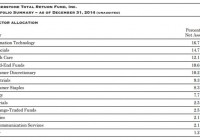
Summary CRF trades at a ~40% premium to NAV. Rich valuation driven by retail investors’ perception of high dividend yield. However, the yield is predominately just a return of investors’ own capital. Background on Closed End Funds A closed-end fund is a publicly traded investment company that raises a fixed amount of capital, and is then structured, listed and traded like a stock on a stock exchange. Whereas conventional mutual funds and ETFs frequently redeem / issue new shares to ensure that the price per share remains in line with the net asset value of the underlying holdings in the funds, this is not the case for CEFs. Rather the share price of CEFs is driven by the market forces of supply and demand, and can at times trade at either large discounts or premiums to NAV of the funds’ actual holdings. This is particularly the case given that the natural investor base for CEFs tends to be small, retail investors that in some cases do not fully understand the products that they are investing in. The Cornerstone Total Return Fund (NYSEMKT: CRF ) is one extreme example, which currently trades at among the most significant premiums to NAV in the CEF universe. Overview of CRF CRF is managed by Cornerstone Advisors, and is composed of a broadly diversified portfolio of stocks, with the largest holdings being some U.S. blue chips. A more comprehensive overview can be viewed in the fund’s annual report : (click to enlarge) (click to enlarge) Source: CRF 2014 Annual Report CRF’s expense ratio (based on 2014 figures) has been just over 1.4% of NAV. Unsustainable Yield Despite the relatively traditional composition of the fund, CRF currently pays a monthly dividend of $0.332 (equating to an annual yield of ~16.6%, or ~23% of the fund’s NAV). You might be asking yourself how this could be possible. The answer is simply that the bulk of the dividend is coming from a return of capital rather than ordinary income/capital gains. In other words, investors are being returned their own money in the fund. (click to enlarge) Source: CRF 2014 Annual Report. Note that per share figures in the table above do not reflect the one-for-four reverse stock split in Dec 2014. Unsurprisingly, the fund’s NAV has declined in turn, as shown in the chart below. (click to enlarge) Source: Yahoo Finance Rich Premium to NAV So now the question is, what do you think is the fair value of this CEF? I certainly wouldn’t pay any premium to NAV for a vanilla portfolio of equities with a ~1.4% expense ratio. Rather, I would prefer to buy a much cheaper ETF like SPY and simply sell part of the holdings each year if I needed the income. But apparently many retail investors disagree (institutional holdings of CRF stand at ~1%, according to Nasdaq), and have been lured in by the siren’s song of this CEF’s “dividend.” In fact CRF is currently trading at a 40% premium to NAV (and has been even higher in some past years). In other words, investors are willing to pay more than $1.40 for each $1 of the fund’s net assets. (click to enlarge) Source: CEF Connect Conclusion Though I hold a small short position in CRF, this is admittedly somewhat speculative given that the fund has in the past traded at any even more extreme premium to NAV, and the borrow cost has been in the mid-single to double digits. However, retail investors should be mindful of the risks that come with owning CEFs trading far above NAV. Disclosure: The author is short CRF. (More…) The author wrote this article themselves, and it expresses their own opinions. The author is not receiving compensation for it (other than from Seeking Alpha). The author has no business relationship with any company whose stock is mentioned in this article.

UGAZ Heats Up With The Summertime

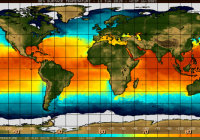
Summary Its optimal pricing is based around the 52-week low. Record heat projections will drive consumption. Improved technology and increasing demand will bolster exports. Basic Information This index is composed entirely of natural gas futures contracts and is derived by reference to the price levels of the futures contracts on a single commodity as well as the discount or premium obtained by rolling hypothetical positions in such contracts forward as they approach delivery. Currently, Velocity Shares 3X Long Natural Gas ETN (NYSEARCA: UGAZ ) is priced at 2.29. UGAZ was created 02/07/12. There are 295.6 Million shared outstanding, no dividends, and a high expense ratio at 1.65. It is a very volatile ETN and should not be traded without serious forethought. I recommend buying UGAZ around a target price of 2.1 throughout the duration of the summer. Also, its competitors include: BOIL , UNG , DGAZ , and DWTI . Investment Summary Case for Buying: Record summer heat projections exacerbated by warm Pacific upwelling from El Nino will increase consumption. The Energy Information Administration projects increasing consumption and demand from 2015-2016 particularly in the short term. Increasing export demand from Mexico and domestic cost cutting will improve profitability. Decreased rig count and decreased crude oil production may lead to higher crude prices. Increasingly efficient and improved drilling techniques and increased exploitation of the Marcellus Shale will lead to domestic production particularly in the Gulf of Mexico may increase natural gas demand due to the historically inverse relationship between natural gas and crude oil. Increasing coal retirement due to more stringent regulation may lead to higher demand for cheaper energy sources such as natural gas. This is a possible value buy around 52 week low. Case for Abstaining: Natural gas historically has shown massive volatility and comes with high risks. UGAZ in particular has a very high expense ratio. Seasonality and increasing natural gas consumption from A/C and other sources may already be accounted for in the price of the ETN. Rise in prices may cut affect profitability margins. Record Summer Heat El Nino is here and world temperatures are expected to be hotter than average this summer. Particularly Southern Upwelling near South America will lead to hotter conditions in South/Central America as well as the majority of the west coast. Temperatures will be hotter than average along parts of the East coast as well. The center of the US, however, will be slightly cooler than average. Overall hotter temperatures will increase natural gas prices as consumption increases particularly from A/C and industrial consumption. Natural Gas Consumption The Energy Information Administration forecasts total natural gas consumption at 76.6 Bcf/d (billion cubic feet per day) in 2016, 76.7 bcf/d in 2015 on average (which accounts for the warmer than average winter). Consumptive growth has largely been driven by industrial and electric power sectors. Seasonal usage generally peaks in mid July. Natural Gas Replacing Coal? Increasing worldwide pressure to limit carbon emissions and implement emission caps may be detrimental to the coal industry. Cleaner burning natural gas may prove to be a viable alternative. The coal industry is transitioning towards clean coal technology, however the R&D and process of implementing the technology will be a long and expensive process. Natural Gas Production and Trade Natural gas production is expected to increase by 4.2 bcf/d (5.7%) and 1.6 bcf/d from 2015 to 2016 alone. Increasing production in lower 48 states is expected to offset declining production in the Gulf of Mexico. Increase drilling efficiency will continue to support growing natural gas production despite relatively low natural gas prices. Most growth is expected to come from the Marcellus Shale. Many backlogged wells are expected to be completed and new pipelines are expected to deliver Marcellus gas to the Northeast. Increased domestic production is expected to reduce demand for Canadian imports and increase export demand to Mexico. Exports from the Eagle Ford Shale are expected to supply growing demand from Mexico’s electric power sector, coupled with flat Mexican natural gas production. LNG gross exports expected to increase to 0.79 bcf/d in 2016 with increasing build of major LNG liquefaction plant in lower 48. Natural Gas Prices The average commodity price was 2.85/MMBtu in May (24 cent increase from April). It is projected at: $2.97 in 2015 and $3.32 in 2016. The government projects steadily increasing prices, demand, and consumption of natural gas in the near future. Also, seasonality investor sentiment, and volatility from 3X leverage may help UGAZ push higher. UGAZ Trend UGAZ data by YCharts UGAZ is near its 52 week low which may indicate it is undervalued; however, it is not traded like a regular equity. Due to the nature of 3X levered ETN’s it is subject to contango (decay) and other variables included in the disclosure. In the short term UGAZ is poised to swing higher, though it would be prudent to wait for it to decrease to a $2.1 price range. Risks/Bearish Case I included a disclaimer for the risks of leveraged ETFs below; however, other points to consider include: 1. Natural gas price increases may only be marginal in the short term 2. UGAZ has a very high expense ratio that is justified by its volatility 3. UGAZ is high risk/high reward in nature and should not be invested in without serious forethought. Anything less is gambling 4. There are safer alternatives. UNG tracks U.S. natural gas one to one and I believe is a safer investment Disclaimer: The risks of investing in a 3X leveraged commodity trading vehicle like UGAZ/UWTI are much greater than those of other vehicles. These risks include (source: Velocitysharesetns.com/ugaz ): 1. ETNs are only suitable for knowledgeable investors seeking daily exposure (including inverse or leveraged exposure) to the underlying index. ETNs are intended for short-term trading, therefore investors with a horizon longer than one day trading should carefully consider whether the ETNs are appropriate for their investment portfolio. 2. Because the inverse leveraged ETNs and leveraged long ETNs are linked to the daily performance of the applicable underlying Index and include either inverse and/or leveraged exposure, changes in the market price of the underlying futures will have a greater likelihood of causing such ETNs to be worth zero than if such ETNs were not linked to the inverse or leveraged return of the applicable underlying Index. 3. The ETNs do not guarantee any return of principal at maturity and do not pay any interest during their term. 4. At higher levels of volatility, and since the ETNs are not principal protected, there is a significant chance of a complete loss of ETN value even if the performance of the index is flat. 5. The closing indicative value on each valuation date is determined in part by reference to the daily percentage change in the level of the underlying index. As a result, to the extent the closing indicative value of the ETNs is greater than or less than the initial indicative value, subsequent changes in the level of the index may have a bigger or smaller impact on the closing indicative value of the ETNs than if the closing indicative value remained constant at the initial indicative value. For example, assuming an initial indicative value of $100, if the closing indicative value of the ETNs increases above $100, a subsequent 1% daily change in the level of the index will result in more than a $1 decrease in the closing indicative value of the ETNs. Likewise, if the closing indicative value of the ETNs is less than $100, a 1% increase in the level of the index will result in less than a $1 increase in the closing indicative value of the ETNs. 6. If the level of the underlying index decreases or does not increase sufficiently (or if it increases or does not decrease sufficiently in the case of the inverse ETNs), to offset the effect of the Daily Investor Fee over the term of the ETNs, the investor will receive less than the principal amount of his investment upon early redemption, acceleration or maturity of the Notes. 7. This particular ETN also runs the risk of being decayed by contango which is defined by Investopedia as: 8. A situation where the future price of a commodity is above the expected future spot price. Contango refers to a situation where the future spot price is below the current price, and people are willing to pay more for a commodity at some point in the future than the actual expected price of the commodity. This may be due to people’s desire to pay a premium to have the commodity in the future rather than paying the costs of storage and carry costs of buying the commodity today. 9. Finally, there are general risks that should also be considered such as liquidity risk (Source: Investopedia.com): 10. The risk stemming from the lack of marketability of an investment that cannot be bought or sold quickly enough to prevent or minimize a loss. Liquidity risk is typically reflected in unusually wide bid-ask spreads or large price movements (especially to the downside – which are magnified in leveraged ETNs). The rule of thumb is that the smaller the size of the security or its issuer, the larger the liquidity risk. Comparisons – Three-Year Graphs In relation to TNX (10X 10-year yield) : In regards to my goal of finding an adequate hedge to 10 year interest rates, I chose to compare TNX to UGAZ. In many regards, UGAZ has shown to move inversely to TNX, albeit in a dramatic and imperfectly correlated fashion. I believe higher interest rates stifle exploration, extraction, and innovation in the energy sector which lead to higher costs and explain the inverse relationship between the two indexes. However, there are so many other factors that affect each index that it is extremely difficult to make such broad speculations. For example, Natural gas is subject to all the risks that come with commodities. Demand, seasonality, consumption, pricing, weather, regulation, etc. Interest rates are subject to different forces altogether. For example, monetary policy, the federal reserve, inflation, etc. UGAZ is a good hedge in the sense that one can hedge risk vs. riskless investments. As investments go, UGAZ is about as risky as they come, while investing in an etf tied to treasury yields has far less risk or indexes reflecting the treasury yield is about as riskless as an investment as one can make. UGAZ is good for managing risk. Playing UGAZ in the long term (more than a year) would be unwise because of its volatile nature. Relation to UNG (red line) UNG is the regular natural gas ETF while UGAZ is a tripled levered ETN. An investor looking to play natural gas long would be far better off investing in UNG in order to manage market risk and decrease market fees. UNG is a less risky investment and a better play in the long term. For short term trading, though UGAZ is a far more exciting play. Relation to UWTI (red line) UWTI is the 3X levered Crude oil index. Like UGAZ, its price is derived from crude oil futures, and it is not to be traded lightly. UGAZ has been more volatile in recent years. Interestingly, UGAZ and UWTI have historically been inversely correlated to one another. However, in the last the year the flooded energy market has caused both crude and natural gas to take a correlated nose dive in price. Crude is expected to stabilize around $60 for the next couple years until increasing in price as consumption and demand rise to meet supply. Conclusion I believe there is a very good chance natural gas prices and consumption will continue to increase over the summer. A hot summer, increasing demand, battered prices, decreasing usage of coal, and improvements in technology all contribute to this view. UNG would be an optimal investment in natural gas; however, UGAZ would be a better short term tool for managing risk and could potentially pay out huge rewards (though with high risks and potential for decay). Disclosure: The author has no positions in any stocks mentioned, and no plans to initiate any positions within the next 72 hours. (More…) The author wrote this article themselves, and it expresses their own opinions. The author is not receiving compensation for it (other than from Seeking Alpha). The author has no business relationship with any company whose stock is mentioned in this article.