Tag Archives: earnings-center

RSX: Bear Thesis In Progress

Summary The Greek drama and news that sanctions on Iran could be lifted put serious pressure on oil prices. The Ruble will continue to weaken. The Saudi deal does not impact the short thesis. I’ve recently written an article on the Market Vectors Russia ETF (NYSE: RSX ), where I outlined my bear thesis on the Russian market. The situation evolved fast. When the initial article was published, Brent oil was trading near $63. As I am writing this article, Brent oil trades at $57.50 after it touched $55.60. This was a spectacular movement, and I even got a message from a reader who was wondering whether it was time to buy RSX. The rationale of such thesis is quite simple – oil often rebounds after big moves. I think that this reader was not the only one wondering whether the plunge in oil was the opportunity to buy RSX at cheaper prices, so I decided to write a follow-up on my initial thesis. The Russian ruble – not as weak as I expected My initial thesis consisted of three main points: Russian ruble will weaken, the economy will continue to suffer and oil will drop. I will revisit them one by one. Since June 26, the ruble tumbled 4% against the dollar. The movement against the basket of currencies, which consists of dollar and euro, was more modest. I expected that ruble would be weaker. Many factors affect the value of the Russian currency, but the main factor is the price of oil. The oil price is the key variable for both the Russian economy and the Russian budget. It’s the price of oil in rubles that matters for the Russian budget. In the end of 2014, several Russian officials stated that the “comfortable” price of oil was 3600 rubles per barrel. However, as oil plunged and ruble tumbled, stabilization of the national currency became a top priority. Back in June 26, the oil price denominated in rubles was 3467. As I’m writing this article, the price of oil fell to 3277 rubles. In my initial article, I stated that the Russian budget was stretched. At the same time, the Russian Central Bank started to buy dollars at the open market to bring the country’s reserves back to $500 billion. I think that the price of oil in rubles will soon drift towards 3400-3500 level – either by forces of the market or with a little help from the Russian Central Bank. Even if oil prices stay at current levels, this will lead to further weakness of the ruble and put pressure on dollar-denominated RSX. The economy – deal with Saudi Arabia does not change the big picture Many readers already know that Saudi Arabia decided to invest up to $10 billion in Russia over the next five years. Some people speculate that some of this money could end up on the stock market. In my view, this will not be the case. What is important is the duration of the deal – five years, and the sectors – agriculture, medicine, logistics, retail and real estate. While the economy matters a lot when you buy a Russian market ETF, the fate of the actual holdings of this ETF matters more. The majority of the money will be spent on agricultural projects, and there is no agricultural producers in RSX’s holdings . Among related companies, Uralkali, the Russian producer of potash, accounts for just 2.02% of RSX’s holdings. All in all, I think that this news do not change the bear thesis. The oil plunge The Greek drama and news that sanctions on Iran could be lifted put serious pressure on oil prices. In my view, the story is far from its end. I think that oil still has room to fall, especially if the nuclear deal with Iran is successful. As I highlighted in my initial article, I believe that there is a structural imbalance between supply and demand. In my opinion, the strength of oil prices’ reaction to negative news confirms this thesis. Bottom line Let me guess your ultimate bullish argument: in a five-year period, Russian market will be higher as oil rebounds, sanctions are lifted and investors realize how cheap Russian stocks are. That may be true. However, a bearish thesis on a country is by definition not designed for five-year time frames. In shorter time frames, the bearish thesis remains valid. I expect that weaker ruble, poor economy and falling oil will continue to put pressure on RSX. Disclosure: I am/we are short RSX. (More…) I wrote this article myself, and it expresses my own opinions. I am not receiving compensation for it (other than from Seeking Alpha). I have no business relationship with any company whose stock is mentioned in this article.
SCHD: A Natural Core Holding For Dividend Growth Investors

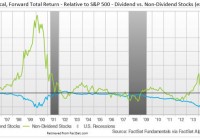
Summary SCHD offers a great portfolio for dividend investors to build around. During previous recessions (and corrections) the dividend paying companies of the S&P 500 held up better than those without dividends. With the high P/E ratios climbing over the last few years we have seen the market become more dangerous. Dividend stocks underperformed the last few years as the market became more bullish (expensive). A more bullish market makes me prefer SCHD over SPY. The holdings offer some great stocks and exposures that create natural hedges to the macroeconomic challenges. Dividend growth stocks offer investors a solid combination of current income and growth, but some investors still don’t understand their power. One of my favorite ETFs for this sector is the Schwab U.S. Dividend Equity ETF (NYSEARCA: SCHD ). Some investors will point out that they can pick and choose which individual dividend stocks offer the most compelling investments and there is nothing wrong with that plan. If an investor feels comfortable picking out individual stocks, they are welcome to do so. However, every investor needs to remember to stay diversified and that is where a low fee dividend ETF comes in. The Schwab U.S. Dividend Equity ETF has an expense ratio of only .07, is free for trading in Schwab accounts, and offers investors a yield of 2.88%. That isn’t a great yield, but it isn’t bad when considering how many companies the ETF needs to provide solid diversification. In this area I favor enhanced indexing. SCHD doesn’t need to be the only dividend investment in the portfolio, but it provides a solid piece to build around. Dividend Growth Performance Investors looking at returns over the last few years may feel like SCHD is failing to keep up with the market, but that is a natural consequence of the market getting bullish on stocks that don’t pay dividends. I prefer stocks with solid dividends. While investors should consider total return, I see no reason to move away from dividend stocks. Instead, I see the recent underperformance as making them more attractive. Since early November 2011, right after SCHD was formed, it has delivered returns of 64.6% compared to the SPDR S&P 500 Trust ETF ( SPY) delivering 79.13%. That weakness for SCHD has been a reflection of the large dividend stocks underperforming the index as shown in the chart below. (click to enlarge) Dividend stocks are out of favor and appeared to be going out of favor since 2012. As the P/E ratios climb to dangerously high levels, I would rather invest in the companies that are paying out dividends and delivering a meaningful portion of their earnings. I would rather invest in industries with strong dividend payouts. During the weakest markets, these stocks have held up better. If this market overheats, then SCHD looks like a great option to survive the weakness. If investors want to avoid losing by selling out at the bottom of a market, they would be wise to hold an investment where they can focus on the dividends rather than the panic. Holdings The following chart shows the top holdings of the Schwab U.S. Dividend Equity ETF ranked by their values. (click to enlarge) What dividend growth investor doesn’t like these companies? In my opinion, this is precisely the kind of diversification a dividend investor should be seeking. Who doesn’t like Procter and Gamble (NYSE: PG )? Some analysts can get bearish on it or argue that it is over-valued, but the point of the diversification is to protect investors from overpaying for a few companies. Verizon Communications Inc. (NYSE: VZ ) is one of the high yielding stocks (4.66%) that concern me because the telecommunications industry looks far less attractive when Sprint (NYSE: S ) is waging a price war that could severely damage earnings throughout the industry. I love the yield, but I have tried holding companies that in highly competitive industries marked by excessive growth of capacity and battles to deliver the lowest price. That was the investment where I had my worst losses and it taught me to be very wary of price based competition with excessive building of capacity. Exxon Mobile Corp. (NYSE: XOM ) is a great play on the oil industry and either it or another major oil company belongs in every dividend growth investor’s portfolio. The beauty of oil is that crashing prices on oil mean more income for middle class and lower class consumers. Cheap oil means lower costs for transporting materials. Cheap oil is good for most of the portfolio. On the other hand, expensive oil is a headwind for many major companies and a tailwind for the big oil players like XOM. This should be a natural holding for dividend growth investors. Conclusion SCHD is a solid way for investors to get a core holding for their dividend growth portfolio. It offers an excellent selection of major dividend growth champions which allows investors to build their portfolio around those champions by overweighting the companies that best align with their risk tolerance and goals. Disclosure: I/we have no positions in any stocks mentioned, and no plans to initiate any positions within the next 72 hours. (More…) I wrote this article myself, and it expresses my own opinions. I am not receiving compensation for it (other than from Seeking Alpha). I have no business relationship with any company whose stock is mentioned in this article. Additional disclosure: Information in this article represents the opinion of the analyst. All statements are represented as opinions, rather than facts, and should not be construed as advice to buy or sell a security. Ratings of “outperform” and “underperform” reflect the analyst’s estimation of a divergence between the market value for a security and the price that would be appropriate given the potential for risks and returns relative to other securities. The analyst does not know your particular objectives for returns or constraints upon investing. All investors are encouraged to do their own research before making any investment decision. Information is regularly obtained from Yahoo Finance, Google Finance, and SEC Database. If Yahoo, Google, or the SEC database contained faulty or old information it could be incorporated into my analysis.

While The Athens Exchange Is Closed, The Greece ETF Show Goes On

Investors can still trade Greece through an ETF while Athens Stock Exchange was closed. GREK showing larger discount to net asset value. Investors should understand risks of ETFs that track international markets. Exchange traded funds try to reflect the performance of an underlying market. However, there are times when an ETF may diverge from the net asset value, especially with international markets. For example, the Global X FTSE Greece 20 ETF (NYSEArca: GREK ) is was trading at a 10.4% discount to its NAV on Monday, according to Morningstar data. GREK plunged 8.9% Monday on over four times its average daily volume after Greece rejected austerity measures demanded by international creditors in a referendum vote over the weekend. The Greece ETF has been swinging in volatile trading over the past week . ETFs, more or less, consistently reflect the movement of their net asset value, or combined value of all securities in an ETF’s portfolio divided by the number of ETF shares outstanding, as market makers or authorized participants create or redeem ETF shares by buying or selling baskets of underlying securities for ETFs. Since ETFs trade like any other stock on an exchange, the ETF’s price can fluctuate throughout the day. ETFs typically update their underlying trading value, calculating the approximate NAV every 15 seconds throughout the trading day. In domestic equity ETFs, the NAV works as intended. The NAV provides a fair value of the ETF, which basically means the fund is trading in line with its underlying assets with little or no tracking error. This also allows investors to get a better view of whether or not they are over or underpaying an ETF. When the ETF’s price is lower than the NAV , the ETF is said to be at a “discount” – the ETF is valued less than the fund’s overall holdings. If the ETF’s price is above the NAV, the ETF is said to trade at a “premium” – the ETF is trading higher than what the underlying holdings are worth. However, the NAV gets cloudier when looking into other markets. For instance, international markets are not open in the same time zone as U.S. markets, but foreign stock and bond ETFs are still trading on U.S. exchanges. Since the NAV is taken based on the last price at which it was traded, the NAV may not move during normal hours. Consequently, the NAV for international ETFs, along with most commodity and fixed-income funds, may represent a stale number as these markets don’t necessarily trade during normal U.S. market hours. In the case of Greece, the Athens Stock Exchange has been closed for at least a week, following the June 28 decision by the Systemic Stability Council for a week-long closure of the country’s banks and local stock market, according to ekathimerini . The Greek bourse remains closed Monday. Consequently, the traded value of GREK has deviated considerably from its NAV – the ETF is currently trading at a much lower value to its constituents due to the underlying market closure. The last time something similar occurred was during the so-called Arab Spring of 2011 when Egyptian markets were shut down for two months, but U.S. investors were still able to trade shares of the Market Vectors Egypt Index ETF (NYSEArca: EGPT ) . Nevertheless, GREK ETF investors may still get a general sense of where the ETF is going through indirect means. For instance, Coca-Cola HBC, which makes up 21.4% of GREK, dipped 3.9% over the past week while the National Bank of Greece (NYSE: NBG ), which makes up 9.5% of GREK, saw the value of its American Depository Receipts pare recent gains to fall flat for the week. Max Chen contributed to this article . Disclosure: I/we have no positions in any stocks mentioned, and no plans to initiate any positions within the next 72 hours. (More…) I wrote this article myself, and it expresses my own opinions. I am not receiving compensation for it. I have no business relationship with any company whose stock is mentioned in this article.