Tag Archives: alt-investing

RPG Is A Solid Growth ETF That Thoroughly Outperformed SPY Over The Last 9 Years
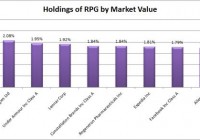
Summary The ETF looked solid all around. The standard deviation is a bit high relative to SPY, but that should be expected for tracking a smaller portion of the index. The strong liquidity may reflect many investors coming to the same conclusion about the ETF. It looks worthy of deeper consideration. Diversification within the ETF is solid, but investors should be aware that the portfolio turnover is very high. Investors should be seeking to improve their risk-adjusted returns. I’m a big fan of using ETFs to achieve the risk-adjusted returns relative to the portfolios that a normal investor can generate for themselves after trading costs. A substantial portion of my analysis will use modern portfolio theory, so my goal is to find ways to minimize costs while achieving diversification to reduce my risk level. In this article, I’m reviewing the Guggenheim S&P 500 ® Pure Growth ETF (NYSEARCA: RPG ). What does RPG do? RPG attempts to track the investment results of S&P 500 ® Pure Growth Index. The ETF falls under the category of “Large Growth”. Standard deviation of monthly returns (dividend adjusted, measured since April 2006) The standard deviation isn’t going to make a strong case for investing in RPG. For the period I’ve chosen, the standard deviation of monthly returns was 5.210%. For SPY, it was 4.416% over the same period. The higher level of volatility for RPG is a challenge since the correlation between the two funds is 94.87%. Yield & Taxes The distribution yield is .69%. I prefer higher yields so that they are more appealing for retiring investor portfolios. Sure, they could sell shares to generate income, but that may create a temptation to change the portfolio strategy at the wrong time. Expense Ratio The ETF is posting a gross expense ratio of .35% and a net expense ratio of .35%. Unfortunately, most ETFs have expense ratios higher than I’d like to see. This is another case where I prefer lower, but it isn’t going to be high enough to make me eliminate an ETF that otherwise has a fairly strong performance. The expense ratio for RPG isn’t all profit to the manager of the fund either. The fund should be incurring substantially more costs than a passive index fund because the portfolio turnover has been running at 46%. The holdings of RPG one year may be very dramatically different than the holdings in the following year. For comparison, only 19.2% of the portfolio value is in the top 10 holdings. The fund could completely exit those positions twice per year and still have a lower portfolio turnover. Market to NAV The ETF is trading at a .06% premium to NAV currently. I think any ETF is significantly less attractive when it trades above NAV and more attractive below NAV. A .06% premium is not enough to matter though. Investors should check prior to placing an order, but the liquidity in RPG should be a great hedge against any meaningful premiums or discounts. Liquidity The liquidity is excellent. I see no concerns. Average volume has been around 100,000 shares per day with share prices around $82 per share. That’s over $8 million changing hands each day. Largest Holdings The diversification within the ETF is pretty solid. Where else will you find an ETF that includes Apple (NASDAQ: AAPL ) but only has it in 10th place for weighting? (click to enlarge) Conclusion This is another Guggenheim ETF worthy of consideration. While I’d like to see lower expense ratios, I find them reasonable for the level of turnover in the holdings. On an economic level, I find it doubtful that investors will produce alpha over the long term through frequent trading when accounting for the costs of that trading. On the other hand, RPG is precisely the fund to contract me on that. Just look at the returns on the fund and you’ll see what I mean: (click to enlarge) RPG thoroughly outperformed SPY over the sample period. I’ve included comparisons that use RPG for smaller portions of the portfolio since I think few investors would decide to invest their entire portfolio into RPG. The correlation is fairly high, but it is also expected since the ETF is tracking part of the same index. The standard deviation of returns is fairly high relative to SPY, but can be tolerated if expected returns are higher. Since the ETF is on the Schwab One Source list, regular rebalancing is definitely an option for funds with strong liquidity. All around, this appears to be a solid ETF for investors that are willing to accept additional volatility and believe that the regular trading can lead to higher risk-adjusted returns. Disclosure: The author has no positions in any stocks mentioned, and no plans to initiate any positions within the next 72 hours. (More…) The author wrote this article themselves, and it expresses their own opinions. The author is not receiving compensation for it (other than from Seeking Alpha). The author has no business relationship with any company whose stock is mentioned in this article. Additional disclosure: Information in this article represents the opinion of the analyst. All statements are represented as opinions, rather than facts, and should not be construed as advice to buy or sell a security. Ratings of “outperform” and “underperform” reflect the analyst’s estimation of a divergence between the market value for a security and the price that would be appropriate given the potential for risks and returns relative to other securities. The analyst does not know your particular objectives for returns or constraints upon investing. All investors are encouraged to do their own research before making any investment decision. Information is regularly obtained from Yahoo Finance, Google Finance, and SEC Database. If Yahoo, Google, or the SEC database contained faulty or old information it could be incorporated into my analysis.
Low Volatility ETFs Turn The Lights Off And That’s A Good Thing

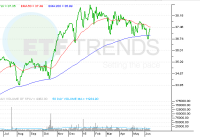
Summary Concerns about a rising rate environment has triggered a sell-off in utilities stocks. Low-volatility ETFs have trimmed their exposure to utilities. A look at the changes in low-volatility ETF options. By Todd Shriber & Tom Lydon Rising 10-year Treasury yields have, predictably, stoked chatter about the vulnerability of interest rate-sensitive asset classes and sectors. Case and point: Utilities stocks and exchange traded funds. Over the past three months, the Utilities Select Sector SPDR ETF (NYSEARCA: XLU ) , the largest utilities ETF, is off 2.2%, as 10-year Treasury yields have surged nearly 13%. There was a time when such a yield spike would have been problematic for the PowerShares S&P 500 Low Volatility Portfolio ETF (NYSEARCA: SPLV ) , particularly if investors did not properly understand how SPLV works, but that is not the case today. The low-volatility ETF targets 100 of the least volatile stocks from the S&P 500 index and weights the positions inverse to volatility – the least volatile stocks has a greater weight in the portfolio. That led to spurious accusations that SPLV was a utilities ETF in disguise. Critics will be heartened to learn that the utilities sector is now SPLV’s second-smallest sector weight. The ETF’s utilities allocation has dwindled to 2.6% as of June 12 from 19.4% in September. In fact, SPLV is underweight utilities stocks by 20 basis points relative to the S&P 500. “Given the prospect of higher rates, investors may wish to consider a low volatility investment approach and check their holdings for interest rate sensitivity. Over the past five years, financial stocks have been among the most sensitive to rising interest rates – especially insurance and diversified financial shares,” according to a recent PowerShares note. Of course, utilities are the group worst affected by rising interest rates. So, the double dose of good news for SPLV is its scant utilities weight combined with a 35.6% weight to financial services names, by far the ETF’s largest sector allocation. Digging deeper into SPLV’s financial services lineup reveals opportunity. Seventeen of the ETF’s financial services holdings are either insurance providers or regional banks, two industries that are positively correlated to rising interest rates. “In fact, since its May 2011 inception, SPLV has exhibited lower volatility than the S&P 500 Index. This is because the fund’s underlying index follows an unconstrained investment approach that allows for dynamic sector rotation,” according to PowerShares. “Due to SPLV’s unconstrained sector rotations, the fund has shed much of its exposure to the underperforming utility sector over the past two years, from just over 30% in March 2013 to under 3% currently.” SPLV’s primary rival, the iShares MSCI USA Minimum Volatility ETF (NYSEARCA: USMV ) , has a utilities weight of 7.7%, nearly triple that of the PowerShares offering. PowerShares S&P 500 Low Volatility Portfolio ETF (click to enlarge) Disclosure: The author has no positions in any stocks mentioned, and no plans to initiate any positions within the next 72 hours. (More…) The author wrote this article themselves, and it expresses their own opinions. The author is not receiving compensation for it. The author has no business relationship with any company whose stock is mentioned in this article.

Let’s Talk About Corporate Fraud

Summary A study predicts that 14.5% of firms, or one in seven, has insiders engaging in fraudulent behavior. They estimated a median loss of 20.4% of the enterprise value. The math of loss works harshly against investors. Rule #1 is to never lose money; Rule #2 is to refer back to Rule #1. We are all here “Seeking Alpha”, but we also want to avoid mistakes and catastrophe. One of the worst ways to lose money is due to corporate fraud. Some companies die a slow death, which you can argue is somewhat predictable, but what about getting Enron-ed? Isn’t that one of your worst fears as an investor that your stock goes to $0 overnight? When reading Intelligent Investor , one of the main concepts that jumped out to me was that numbers are highly subjective! How are you going to count depreciation, how are revenues going to be recognized, what goes off balance sheet… It depends; do you want earnings to be $900 million, $1.1 billion, or $1.3 billion? There are legal ways of playing the accounting game and illegal ways. One dangerous situation is when the executive team has compensation and bonuses tied to earnings which can be very subjective. Earnings can legally be recorded as $900 million, $1.1 billion or $1.3 billion, but if earnings come in at $1.2 billion or higher, then our CEO and the executive team get a big, fat bonus. Given the three choices, guess which earnings the company will have? That’s totally legal, but let’s take it a step further. What if the board members postulate that earnings of $1.5 billion earns our CEO a bonus? Think some creative accounting teams will take the board’s challenge and make it happen? My argument is that corporate fraud is real and that with the market hitting all-time highs – one or more big corporations are destined to go down. The market is “high”, and when the tide comes down, we will see who was swimming naked. The incentives to cheat are enhanced now, and I’d argue that it’s logical to presume that more fraud is occurring. I also seem to remember a fast-talking President make promises about cleaning up Wall Street, yet I missed the follow through part about anybody actually going to jail. Data It is very difficult to determine how rampant fraud is. How do you even quantify it? The data is not easy to find. I read an interesting study, How Pervasive is Corporate Fraud? by Dyck, Morse, and Zingales. Here are some key takeaways from their excellent study: – Over their time period studied, 4% of large publicly traded firms were eventually revealed to be engaged in fraud. They estimate that only 27.5% of fraud is detected, leading to an estimate that 14.5% of firms, or one in seven, has insiders engaging in fraudulent behavior. – They estimated a median loss of 20.4% of the enterprise value of the fraud companies was lost – measured by the firms’ enterprise value before the fraud took place as a benchmark. This puts a 3% price tag on all the value of all large corporations. – Their study found that on average 14.8% of MBA students were asked to do something illegal in their previous employment. Surprisingly, the incidence of illegal behavior did NOT vary among different industries. The only exception was a lower incidence among consumer goods, only 7% or 1/2 the fraud levels. Contrary to expectations, the financial services industry did NOT experience higher levels of illegal activity. A Forbes article echoed similar findings. “The 347 companies that were prosecuted in the decade that ended in 2007 represent a small fraction of the fraud cases that occurred.” Very few fraud cases resulted in SEC enforcement action; a lot of times the fraud resulted in shareholder disappointment, price drops, bond defaults and insolvency. Here is a top 10 list of the worst corporate accounting fraud. So why do it? The Forbes article cited the most common reasons for fraud being: – Desire to meet earnings expectations. – Hide the company’s deteriorating financial condition. – Bolster performance for pending equity or debt financing. – Increase management compensation. Clues – Frequent amendments to financial filings. – Boards chaired by the CEO. – Discrepancy between annual pay and bonus pay for CEO/CFO. – Large insider selling by top executives. – Frequent legal and regulatory issues. – Frequent turnover for officers. Among firms involved in fraud, 26% changed auditors, between the filing of their final clean financial statement and their final fraudulent financial statement. Sixty percent of the firms involved in fraud that changed auditors did so while the fraud was taking place, the other 40% changed auditors right before the fraud began. Conclusion The math of loss really works against you, the investor. If your company’s stock goes down 50% due to fraud or really any other reason, then you need a 100% return to get back to even. You could do all the due diligence in the world and still get wiped out. If auditors, regulators, insiders, board members and key employees can get duped, then so can John Q. Public the retail investor that doesn’t have access to the same information. There are certain industries that I don’t want to invest in due to their sheer complexity – financials. I like being in control, and corporate fraud takes an element of control away from you. In a ZIRP world, with top-line revenues hurting, companies cut costs down to the bone, what’s fueling earnings, buybacks? Nobody was punished during the last go around for fraudulent behavior. Big companies will go down. If anything, corporate fraud just increases the argument for diversification and never buying company stock in your 401(k) because you can never be sure. Disclosure: The author has no positions in any stocks mentioned, and no plans to initiate any positions within the next 72 hours. (More…) The author wrote this article themselves, and it expresses their own opinions. The author is not receiving compensation for it (other than from Seeking Alpha). The author has no business relationship with any company whose stock is mentioned in this article.