Tag Archives: yahoo

Those Are Your Favorite Dividend Growth Funds? Try This One Instead
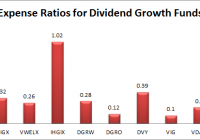
Summary SCHD feels like it doesn’t get much coverage in the dividend investing world, but it is one of the best ETFs in the space. SCHD offers the lowest expense ratio and the one of the better distribution yields. When I was browsing a list by Morningstar, I noticed they were not very interested in the expense ratios or the distribution yields. A few charts showing expense ratios and dividend yields may help you analyze which ones would make sense for you. It seems like the Schwab U.S. Dividend Equity ETF (NYSEARCA: SCHD ) is never in the news. That isn’t a bad thing, but is interesting when I look at some of the ETFs that are getting mentioned by big companies. I recently ran across an article on Morningstar that left me a little curious. The author, apparently speaking for Morningstar, was giving their take on “Our Favorite Dividend Growth Funds and ETFs.” She is a director of personal finance and the author of a book on how to succeed when investing in mutual funds . If anyone should understand the importance of low expense ratios and high distribution yields, she would have the background for it. Of course, I don’t know her and have no grudge, but I was hoping for higher quality when Morningstar decided to publish it. The article included the following funds: T. Rowe Price Dividend Growth Fund (MUTF: PRDGX ) Vanguard Dividend Growth Fund (MUTF: VDIGX ) Vanguard Wellington Fund (MUTF: VWELX ) Hartford Dividend and Growth Fund (MUTF: IHGIX ) WisdomTree U.S. Dividend Growth ETF (NASDAQ: DGRW ) iShares Core Dividend Growth ETF (NYSEARCA: DGRO ) iShares Select Dividend ETF (NYSEARCA: DVY ) Vanguard Dividend Appreciation ETF (NYSEARCA: VIG ) Vanguard Dividend Appreciation Index Fund (MUTF: VDAIX ) It did not include SCHD, which I think should have been one of the top contenders. Let’s talk about the things that actually matter when comparing ETFs with similar investing goals. Remember that this is a discussion of dividend funds, so allocations may be different but there should be quite a bit of overlap. Expense Ratios The expense ratios on an ETF (or mutual fund) are one of the very first things an investor should consider. When I’m considering funds for my portfolio a high expense ratio is pretty much an automatic rejection. When buying an ETF you are making the assumption that the market is reasonably efficient and that your best bet for limiting your risk and finding success is to diversify your investments. If you don’t believe that to at least some extent then there is no reason to invest in either unless it was a requirement of an attractive retirement plan. The point is simple. Expense ratios literally eat your investment. The only reason to pay the expense ratio rather than to buy the individual stocks is for the benefit of being able to buy them all at once with less work and fewer transaction charges. Some investors may be willing to pay a high premium to acquire the most talented that is running “the best” fund. However, the premise that an individual investor can determine which manager will be most successful without ever meeting the manager is absurd. I’m not a believer in the market being perfectly efficient. I cover small cap mREITs and the price movements I’ve seen have convinced me that the small cap companies in the sector are anything but indicative of an efficient market. That is precisely the reason I choose to focus so much of my analysis on a small corner of the market. When a market is small it is expected to have significantly more opportunities for superior analysis because there are fewer experts in the field searching for a market failure. How often were expense ratios mentioned? Only once in identifying one of the reasons VIG was a top choice. The actual expense ratios were not stated for any of the funds. Since those expense ratios matter, I built a chart to display them: As you might guess, I’m fairly partial to SCHD and VIG as my choices for the best dividend growth funds. Distribution Yield Even though the market regularly moves up, many investors find themselves significantly underperforming the S&P 500. One major reason that actual realized returns for investors frequently underperform the market (besides expense ratios) is that as a group investors are terrible at knowing when to buy and sell. If investors as a group regularly understood when to sell, the market would be absurdly stable and herd mentalities would be avoided. I’m not giving myself some kind of self-serving analyst credit there either. Analysts aren’t good at calling the bottom or the top of the markets either. When it comes to winning by market timing, the best solution is to not play the game. Focus on buying ETFs but not selling them. If an investor is simply using a buy and hold strategy for the core of their portfolio the worst they can do is buy at a market top. One of the reasons for using a dividend growth portfolio is that the investor can hopefully live off the dividends eventually. Being able to do that encourages them to avoid selling their shares when the market crashes. I don’t know when the next crash will happen, but I’m fairly confident that most of us will live to see it. The last thing I would want is to be selling off the portfolio during the crash. This is a human error. It is not something intrinsic to the stocks or the ETF that holds them. It is a human mistake that panic leads to a sell off. Being able to live off the dividends prevents that mistake. Living off the dividends requires a stronger distribution yield. The distribution yields were mentioned zero times in the article on Morningstar, but I think they are very important for encouraging good investor decisions. Here is a chart of the expense ratios: Conclusion SCHD has the lowest expense ratio and the second highest distribution ratio. How can anyone skip past SCHD when consider dividend growth ETF investments? On the other hand, IHGIX had a very high expense ratio (over 1%) and a low distribution yield. That does not automatically make it a terrible investment, but it would concern me and certainly deserves to be mentioned when the stock is being suggested as one of the “favorites” for the dividend growth space. When I looked at the prospectus I noticed there were some fairly hefty charges on buying into the fund as well including a very nice dealer commission. No thanks, IHGIX is clearly not for me. For the investors that want to pick a dividend growth ETF, it would be wise to start with determining precisely what you want out of the fund. I always start with low costs. That means a low expense ratios and a preference for free to trade. If you’re convinced that you can handle selling small amounts off to create your own dividend yield without buying into a full scale panic, then distribution yield won’t be as important. I don’t think that dividend stocks are inherently better, but I think many investors would benefit by being protected from themselves. Perhaps the question should be, if an investor does not find dividend growth stocks superior and does not mind selling off portions of their portfolio, why would they be searching for a dividend growth ETF in the first place? Disclosure: I/we have no positions in any stocks mentioned, but may initiate a long position in SCHD over the next 72 hours. (More…) I wrote this article myself, and it expresses my own opinions. I am not receiving compensation for it (other than from Seeking Alpha). I have no business relationship with any company whose stock is mentioned in this article. Additional disclosure: Information in this article represents the opinion of the analyst. All statements are represented as opinions, rather than facts, and should not be construed as advice to buy or sell a security. Ratings of “outperform” and “underperform” reflect the analyst’s estimation of a divergence between the market value for a security and the price that would be appropriate given the potential for risks and returns relative to other securities. The analyst does not know your particular objectives for returns or constraints upon investing. All investors are encouraged to do their own research before making any investment decision. Information is regularly obtained from Yahoo Finance, Google Finance, and SEC Database. If Yahoo, Google, or the SEC database contained faulty or old information it could be incorporated into my analysis.

SCHP: The Best TIPS Exposure Investors Can Get

Summary TIPS offer very weak yields, but SCHP is designed the right way for investors. The ETF offers a very low expense ratio, easily beating a much larger competitor. The difference in expense ratio alone should be enough to make SCHP an easy winner for an investor planning to keep part of their portfolio in TIPS. If I were retiring and really needed access to the inflation protection, I would be planning to convert part of my holdings to SCHO at the start of each year. Combining SCHP for inflation protection with SCHO to get some yield off a position that would otherwise be cash provides a nice interaction between the two bond ETFs. The Schwab U.S. TIPS ETF (NYSEARCA: SCHP ) has everything investors could hope for other than strong yields. The yield issue is not surprising; there are no good yields to be achieved on TIPS. When it comes to comparing SCHP to competitors, SCHP looks like the gold standard. As I’ve told investors, I’m avoiding TIPS because I want to see better yields. If I were a retiring investor and needed inflation protected bonds, SCHP would be the champion on the list of options. Portfolio Characteristics Investors should start with looking at things like the duration risk. Keep in mind that the since the portfolio is holding TIPS the risk of inflation over time is already built into the portfolio. Since there are many retirees that could use more stability in their portfolio, there should be very strong demand for TIPS. Honestly, I would love to have the inflation protection in my portfolio but I don’t want it bad enough to accept the yields on TIPS. Simply put, other investors want that inflation protection more than I do and they have demonstrated that desire by buying up the TIPS until the yields were incredibly low. The effective duration on the portfolio is 7.79 years which matches the average effective duration for the iShares TIPS Bond ETF (NYSEARCA: TIP ). Since the portfolio is 95.3% in TIPS with the rest in a mix of U.S. Treasury securities and a very small amount of cash, the question for each investor simply comes down: “Do you want inflation protection enough to accept the very weak yields after inflation?” There is not one correct answer. For some people it should be yes and for others it is no. This is not meant to be 100% of an investor’s portfolio but it would be a useful holding for stabilization of portfolio values. If you are buying an ETF filled with TIPS, you’re accepting having a yield that is just barely above inflation and even getting a positive yield after inflation requires taking some duration risk. The Next Question If an investor does not want to buy TIPS, there isn’t much reason to consider an ETF packed with them. For the investor that does want the TIPS in their portfolio, the next question is “Which ETF Should I Use?” In my opinion, the Schwab U.S. TIPS ETF is a clear winner in this category for many investors though some of them may not know it. The biggest competitor is the iShares TIPS Bond ETF. With the same effective duration, the actual allocation to individual security length is not identical. However, the holdings are similar enough that I am fairly confident that over the next 10 years the difference in returns between the two would come down to the expense ratio. For TIP the expense ratio is .20%. For SCHP it is only .07%. This is a case of a lower expense ratio outweighing virtually all other considerations because the portfolios being held are so similar. I don’t see any good argument for TIP to beat SCHP over the long haul when portfolios are similar and SCHP is willing to let investors keep an extra .13% of the portfolio value. Remember that these bond yields are not great; a difference of .13% on the expense ratio should make a meaningful difference over time. If SCHP is able to match TIP in gross returns, then SCHP is offering investors about another 1.3% to their portfolio value over a decade. The next factor is that investors holding Schwab portfolios are getting free trading on SCHP. If the investor wants to be able to frequently liquidate small positions and avoid holding a large amount in cash, then SCHP is offering another benefit by not charging a commission on the trade. For the retiree that wants to be able to withdraw one or two grand at a time to supplement their other income sources, saving a trading fee on the transaction will be an enormous factor. Investors paying trading fees would be saving around .45% to .9% of the value of the distribution. When we are talking about securities with a very small real yield, saving the trading costs can become material. Return Comparison SCHP has a fairly limited history, but it is playing out as I would expect so far. The distribution yields for TIP and SCHP have been almost identical (.85% for tip, .83% for SCHP). When we look at the NAV return over the last year SCHP was down 1.81% while TIP was down about 1.9% (rounded). The difference may be significantly tied to SCHP having a benefit from the lower expense ratio. The difference in price return over the period also favors SCHP by a small amount. These results are precisely what I would expect when the two ETFs hold extremely similar assets. If I Was Using SCHP If I was retiring, I would probably be holding part of my portfolio in SCHP. While the TIPS provide a return that automatically adjusts for inflation, there is still some volatility due to the duration risk on the portfolio. Therefore, I would consider pulling out money from SCHP at the start of the year. I would take the amount that I was pulling out of SCHP and reinvest it in the Schwab Short-Term U.S. Treasury ETF (NYSEARCA: SCHO ) to hold that cash until I needed to pull it out. I find SCHO to be a fairly acceptable substitute for cash in a portfolio. It does not provide inflation protection, but the very low duration works nicely. Keep in mind that this strategy would only work with free trading. Without free trading it would be better to just hold the cash rather than parking it in SCHO. My View I assume investors looking heavily at the Schwab funds probably opened a Schwab account to take advantage of those funds the same way I did. Schwab doesn’t give me anything for covering their ETFs, but I frequently choose Schwab ETFs to research because I want to know more about the ones I can trade without paying commissions. I’m adding to my portfolio several times per year and my investment mentality absolutely despises paying any unnecessary costs. Best Contender In my opinion, the best contender for the title of “Best TIPS ETF” would be the Vanguard Short-Term Inflation-Protected Securities ETF (NASDAQ: VTIP ). For investors seeking shorter duration, VTIP is a solid alternative. For investors willing to take on longer term TIPS as part of their retirement strategy, I think the SCHP portfolio’s longer duration is acceptable to seek stronger yields. If the investor had free trading on VTIP but not on SCHP, they would probably be better off with VTIP. If there were no free trades on either, I would favor SCHP for longer term allocations. Conclusion If investors want to put TIPS in their portfolio, SCHP looks like the way to do it. As long as investors are willing to accept the yield on TIPS, there is no weakness for SCHP. It easily beats other major ETFs on expense ratio while offering investors (through Schwab) the opportunity to avoid commissions on the trades. I’m not willing to accept the yield on TIPS since I expect to be working for a long time and can absorb any hits from inflation over my career. When I get to that point, hopefully yields will be stronger. Even if yields are weak, SCHP embodies all the other things I would be looking for. As for TIP, I don’t see any value in higher expense ratios. When it comes to SCHO, I’m planning to start using SCHO in my portfolio as a way to park cash while still generating a positive yield with very little risk. Disclosure: I/we have no positions in any stocks mentioned, and no plans to initiate any positions within the next 72 hours. (More…) I wrote this article myself, and it expresses my own opinions. I am not receiving compensation for it (other than from Seeking Alpha). I have no business relationship with any company whose stock is mentioned in this article. Additional disclosure: Information in this article represents the opinion of the analyst. All statements are represented as opinions, rather than facts, and should not be construed as advice to buy or sell a security. Ratings of “outperform” and “underperform” reflect the analyst’s estimation of a divergence between the market value for a security and the price that would be appropriate given the potential for risks and returns relative to other securities. The analyst does not know your particular objectives for returns or constraints upon investing. All investors are encouraged to do their own research before making any investment decision. Information is regularly obtained from Yahoo Finance, Google Finance, and SEC Database. If Yahoo, Google, or the SEC database contained faulty or old information it could be incorporated into my analysis.

Yahoo Earnings: MVNS Boosts Revenues Even As Core Search Continues to Suffer

Yahoo ( YHOO ) reported its second quarter earnings Tuesday, July 21st. The company’s core advertising revenues (including Traffic Acquisition Cost or TAC) improved by 14.5% year on year to $1.243 billion. However, revenues excluding TAC narrowly achieved company’s