Tag Archives: yahoo
Middlesex Water Company Is Dull, Solid, And Pays A 3.5% Dividend
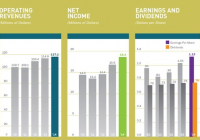
Middlesex Water Co. pays a 3.5% annual dividend. It operates in the financially well-off states of New Jersey, Delaware, and Pennsylvania. Its income should see little disruption due to economic conditions. Water supply and wastewater treatment have relatively low energy requirements, so MSEX should not lose lots of income when energy prices eventually rise. MSEX has been in business since 1897, so your money should be relatively safe here; and MSEX will pay you to wait for a recovery if necessary. “The Middlesex Water Company (NASDAQ: MSEX ) owns and operates regulated water utility and wastewater systems in New Jersey, Delaware, and Pennsylvania. It also operates water and wastewater systems under contract on behalf of municipal and private clients in New Jersey and Delaware. These states all rank in the top half of the median household income for US states. New Jersey is number three. Delaware is number eleven. Even in a downturn MSEX’s customers should not be hard put to afford their bills. MSEX’s income stream is probably as solid as you can possibly get. Even in a downturn, you still need to do dishes, laundry, drink water, use the bathroom facilities, etc. If there is a downturn, MSEX pays a stable 3.5% annual dividend. MSEX will pay you to wait for the stock price to recover, if it falls. Further MSEX probably will not fall as far as most stocks even in a downturn. It has a Beta of 0.70; and it has a debt rating of Stable A- from S&P. Further, it does not have the “not green enough” or “too dangerous” problems that electricity generating utilities have due to coal power plants or nuclear power plants. The Middlesex Water Company has also been performing solidly financially for years. The charts below give investors a good idea about this. The trend upward in operating revenues, net income, EPS, and dividends has been very strong since 2011. The increase in the dividend has been steady; but the percentage has only approximately equaled the rate of inflation from 2011-2014. This is mildly disappointing. However, the 2014 EPS of 1.13 gives investors hope that the company may eventually increase the now $0.77 per share annual dividend by a larger amount than the $0.01 per year increases of the last five years. In Q1 2015, MSEX continued to build upon its strong and steady growth. Consolidated operating revenues increased 5.9% year over year ( $28.8 million versus $27.2 million). Net Income rose 14.7% ($3.6 million versus $3.1 million in Q1 2014); and EPS were up 10% year over year ($0.22 versus $0.20 in Q1 2014). MSEX also raised the dividend on April 24, 2015 to $0.1925 per common share per quarter ($0.77 per common share annually from $0.76). Revenues from the Middlesex System in New Jersey increased $0.6 million due largely to a rate increase approved by the New Jersey Board of Public Utilities (and implemented in July 2014). Revenues from MSEX’s Delaware System, Tidewater Utilities Inc., increased $0.7 million primarily due to greater customer demand. Revenues from contract operations increased $0.4 million year over year. MSEX hasn’t let the grass grow under its feet in 2015. On April 1, 2015 it filed a request with the New Jersey Board of Public Utilities for a rate adjustment of about 13.53% in water rates for its Middlesex System in New Jersey. This was to recover costs for repairs and upgrades to its drinking water infrastructure as well as for increased costs in chemicals, fuel, electricity, technology, taxes, labor, benefits, and other factors impacting operating income. Continued diligence with respect to expenses should help MSEX remain highly profitable. It has also had higher expenses. Operating and maintenance expenses increased $0.7 million in Q1 2015 year over year. Employee Benefit Expenses increased $0.7 million year over year. This was mostly due to longer life expectancies. Various other costs increased or decreased. However, MSEX seems to be managing this all well. It seems to have a good team; and it should be a safe investment. It is a buy. The fact that most utilities have retreated considerably recently should only make MSEX more attractive. See the five-year chart below of the Utilities Select Sector SPDR ETF (NYSEARCA: XLU ). (click to enlarge) As investors can see, the sector has fallen about 10% in stock price recently. Many people believe this may have been due to the interest rate (rise) scare due to the Grexit threat. Given the relative strength of the XLU uptrend, this may be a good buying opportunity for utilities in general. The five-year chart of MSEX provides some technical direction for a trade/investment in this specific stock. (click to enlarge) Although a bit bumpier, the MSEX chart shows the same strong uptrend as the sector chart. Further, a good water utility is about as safe a bet as you can make. MSEX has proven it is a good one. Investors should be able to invest in it with confidence. Its 3.5% dividend should pay you nicely to wait for a recovery from any future pullback(s) there may be. People always need water; and it is becoming an increasingly scarce commodity with global warming and greater populations. MSEX is a solid holding. It has increased its dividend for 42 consecutive years . There has been a small amount of insider buying in the last six months. It has met or exceeded EPS estimates each of the last four quarters. MSEX is a buy. NOTE: Some of the fundamental fiscal data above is from Yahoo Finance. Good Luck Trading/Investing. Disclosure: The author has no positions in any stocks mentioned, but may initiate a long position in MSEX over the next 72 hours. (More…) The author wrote this article themselves, and it expresses their own opinions. The author is not receiving compensation for it (other than from Seeking Alpha). The author has no business relationship with any company whose stock is mentioned in this article.
The Market Doesn’t Matter: Vanguard Dividend Appreciation ETF
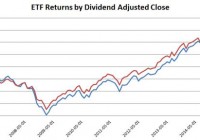
Summary Investors need to avoid decision risk. While many individual stocks can be attractive, I’ve seen to many people feel handcuffed (or married) to particular companies. Investors that held VIG and didn’t watch TV could have ignored the financial crisis. If there is one thing investors often struggle with, it is being able to pick a winner and stick with it. While picking winners in the stock market can be very difficult, I believe picking winners in the ETF market is easier. Rather than understanding every business, the fundamentals of the ETF can be used to determine the risk level and risk factors. In my opinion, there are a few ETFs that are simply born winners. It isn’t a case of looking at their performance of an arbitrary time period; it is a matter of some ETFs being designed to serve investors while other ETFs are designed to serve managers. In my opinion, the Vanguard Dividend Appreciation ETF (NYSEARCA: VIG ) is one of those born winners. The very nature of the Vanguard Dividend Appreciation ETF is what makes it such a solid choice. I’ve been asked on occasion: “If you could only invest in one ticker and had to hold it for 50 years, which ticker would you buy?” While I haven’t nailed down the answer to that question, because the premise is mildly absurd, I do believe it is important for investors to know their long term goals and to find investments that match those goals. VIG is an ETF that matches my long term goals, so it would be an extremely strong contender for that question. What does VIG do? VIG attempts to track the investment results of the NASDAQ US Dividend Achievers Select Index. The general methodology is to focus on stocks that have a history of increasing dividends over time. The ETF falls under the category of “Large Blend” and has a very high correlation with the SPDR S&P 500 Trust ETF (NYSEARCA: SPY ). Overall the ETF has been slightly less volatile than SPY and performed slightly better during the last crash as demonstrated in the following chart: (click to enlarge) Getting married I often cover Freeport-McMoRan (NYSE: FCX ) and one of the common themes I hear from investors is that they don’t like the company anymore but after holding it while it fell so far, they feel “married” to it. They resent the investment in which they lost so much money, but they don’t want to just walk away either. That isn’t the way I like to think of marriage, but I can understand how they feel. As investors we may become attached to the investments we have selected and that emotional attachment can complicate our decision making. Since it is very difficult to mitigate emotional biases through training clients, I would rather see people select an investment that will work to protect them. While I am long FCX, I certainly don’t think that it belongs in every investor’s portfolio. On the other hand, there are very few investors that wouldn’t be well served to hold VIG over the next several decades. The risk VIG solves for investors One of the major issues investors face is decision risk. While there are plenty of other kinds of risk in the market, decision risk is one of the nastiest ones. One reason that the S&P 500 regularly beats out most investors (and even money managers) is that a comparison of SPY to actual performance is that money simply stays in SPY while people trade at the wrong time, pay more commissions because of the trading, and cross the bid-ask spread. These issues all add up and stack the deck against many investors. VIG solves a substantial portion of the decision risk problem by offering investors a different way to look at part of their portfolio. Instead of deciding what they should do with their holdings in VIG, investors need simply to turn off dividend reinvestment when they are ready for an income stream. After that, there is no need to touch the investment again. My suggestion on this would be to hold VIG in a different brokerage from other holdings. Hold VIG in an account you never log into, that way there is no temptation to kill the goose that lays the golden egg. If you were holding VIG during the financial crisis As all readers should know, we had a bit of an issue in the financial markets. We saw the economy tank, stock prices plummet, and interest rates go to 0%. On the other hand, if an investor was simply holding VIG and enjoying a nice beach, they had no need to know or care. Their dividends didn’t go away. They still had a similar payment to live on. Just look at the chart below: Investors should know about a couple issues I came across preparing the chart. The fund inception date was in April of 2006, so there are only 3 dividends included for the year. It is only may of 2015, there is only one dividend included for 2015. Yahoo Finance has incorrect information on dividend history. I verified the dividend payouts through Google and Schwab. Yahoo was missing the December 2014 payout. Holdings I put together the following chart showing the top 10 holdings in VIG: (click to enlarge) Conclusion If an investor was only picking one investment, VIG should be a strong contender. If the investor wants to build a more diversified portfolio, it makes sense to put VIG in a separate account and just leave it alone. While rebalancing accounts is very useful in maintaining the optimal risk exposures, the decision risk of accessing the golden goose offsets the benefits of rebalancing. I’m not currently holding any VIG, but my long term plan will have me buying into VIG or the very similar Schwab U.S. Dividend Equity ETF (NYSEARCA: SCHD ). I’ll probably start acquiring the position later this year or early next year. Disclosure: The author has no positions in any stocks mentioned, and no plans to initiate any positions within the next 72 hours. (More…) The author wrote this article themselves, and it expresses their own opinions. The author is not receiving compensation for it (other than from Seeking Alpha). The author has no business relationship with any company whose stock is mentioned in this article. Additional disclosure: Information in this article represents the opinion of the analyst. All statements are represented as opinions, rather than facts, and should not be construed as advice to buy or sell a security. Ratings of “outperform” and “underperform” reflect the analyst’s estimation of a divergence between the market value for a security and the price that would be appropriate given the potential for risks and returns relative to other securities. The analyst does not know your particular objectives for returns or constraints upon investing. All investors are encouraged to do their own research before making any investment decision. Information is regularly obtained from Yahoo Finance, Google Finance, and SEC Database. If Yahoo, Google, or the SEC database contained faulty or old information it could be incorporated into my analysis.