Tag Archives: utilities

CenterPoint Energy: The Sweet Spot For Dividend Growth Investors
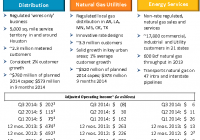
With a 4.1% current yield and dividend growth potential of 8% to 10% annually until at least 2018, CenterPoint should be a darling of the DGI crowd. The extra kicker above the usual regulated utility is its interest in ENBL whereby Centerpoint is part owner of the GP and is entitled to a growing IDR. CenterPoint is a model for the Gabelli-driven transformation of National Fuel Gas. Centerpoint Energy (NYSE: CNP ) is a diversified mid-cap utility headquartered in Houston TX. CNP offers electrical distribution in Houston, natural gas distribution, and majority ownership of its former midstream gas assets now spun-off in a publicly traded MLP. According to its November presentation, management forecasts dividend growth of 8% to 10% annually for the next three years, after a 14% increase in 2014. The forecast is based on a utility growth rate of 4-7% and a 10-12% distribution growth rate from its interest in the MLP. With a current yield of 4.1%, CNP should be in the sweet spot for dividend growth investors. The company serves 5.5 million metered customers primarily in Arkansas, Louisiana, Minnesota, Mississippi, Oklahoma, and Texas. The balance between its electric and gas regulated assets provides stability in earnings and cash flow. Below is a recap of operating income for the regulated utilities, from their latest investor’s presentation (pdf): Fourth quarter 2013 core earnings were $87 million for the electric utility and $92 million for the gas segment. Management forecasts full year 2014 earnings per share in the range of $1.14 to $1.21, including a $0.42 to $0.45 contribution from its midstream interests. In addition to its regulated utility activity, CNP owns 55.5% of Enable Midstream Partners LP (NYSE: ENBL ) and has a 40% interest in the general partner of the partnership. ENBL was formed in a joint venture with EOG Energy (NYSE: EOG ) and private equity firm ArcLight Capital Partners, and went public in April of 2014. While the regulated assets will grow in proportion to the capital investments for upgrades and expansion made over the next few years, ENBL will be a driver of added free cash flow. By the end of 2015, CNP should begin earning higher incentive distribution rights IDR. One strong advantage of most general partnerships is the profitability of IDRs. Usually, the GP earns a growing percentage of cash flow available for distribution to limited partners as an incentive to continue profitably growing the underlying business. CNP is no exception. According to the IPO prospectus , the general partners are eligible to earn as follows: The first $0.331 in quarterly distributions, 100% to the unit holders; From $0.331 to $0.394 in quarterly distributions, 85% to unit holders and 15% to GP (threshold $0.36 to unit holders, $0.034 to GP); From $0.394 to $0.523 in quarterly distributions, 75% to unit holders and 25% to GP (threshold $0.43 to unit holders, $0.093 to GP); Over $0.523 in quarterly distributions, 50% to unit holders, 50% to GP. Stated another way, on an annual basis, unit holders receive the first $1.324 in distributions, then a total of $1.44 of $1.60, then $1.72 of $2.09, then half of any cash over $2.09 per unit available for distribution. With ownership of around 245 million ENBL shares (out of 442 million outstanding) and a 40% interest in the GP and associated IDRs, CNP will reap a steady distribution and IDR cash stream. Morningstar offers a very upbeat assessment of CenterPoint in an article published this month titled, “Utilities’ Dividends: Best of Breed”: We think investors should be able to count on management’s 8%-10% annual dividend growth guidance even though the company’s utility operating earnings are growing at only half this rate. Our confidence is based on the distributions from Enable Midstream Partners, expected to provide the largest component of the cash available for dividends. During its third-quarter earnings call, Enable reiterated its 10%-12% distribution growth guidance for 2014 and 2015 and reaching low general partner splits by the fourth quarter of 2015. Management has reiterated that future dividends will be based on 60%-70% sustainable utility earnings and 90%-100% of after-tax distributions from Enable. Management continues to target 4%-6% annual earnings growth for its utility operations during the next five years, in line with our expectations. However, management did indicate it would probably be back-end-loaded due to the acceleration of capital expenditures and the lag in rates reflecting these investments. Also a drag on earnings growth is the expected reduction in right-of-way revenue to normal levels. Houston Electric’s rate base is expected to grow 7%-8% annually during the next five years, although potential investments like the $300 million Houston Import Project could push rate base growth to 9%-10%. The natural gas utilities’ rate base is projected to increase at 8%-9% annually, but upside could push it to 10%. Morningstar also offers this opinion in another research piece: Bulls Say: The 14.5% common dividend increase in 2014 is a positive signal of the earnings power of CenterPoint’s regulated utilities and anticipated cash distributions from Enable. We expect average annual dividend increases near 9% during the next five years. The formation of Enable will allow CenterPoint to focus capital expenditures on its utilities, resulting in almost 8% rate base growth during the next five years. Houston Electric’s service territory is located in one of the most economically vibrant metro areas in the country with annual customer growth averaging 2%. Bears Say: The Transmission and Distribution segment’s operating earnings have recently benefited from abnormally high transmission right-of-way revenues. These revenues will likely decline in 2014 and beyond. Profitability in the competitive natural gas sales and service business remains challenging, with low basis differentials and severe competition. Low commodity prices and reduced gathering activity continue to pressure earnings from the pipelines and field services infrastructure serving dry gas regions. This will be a headwind for Enable. CNP has generated return on invested capital ROIC slightly ahead of industry average of approximately 5%. Below is a 15-yr graph of ROIC, courtesy of fastgraph.com: (click to enlarge) According to ThatsWACC.com, CNP’s cost of capital is 4.9% versus a 3-yr average ROIC of 5.7% and a 10-yr average ROIC of 5.2%. Unlike many utility peers, CNP management has historically generated returns on its total capital base in excess of its cost of capital. Concerning its regulatory environment, CNP operates in a relatively neutral setting. The important states for regulatory environments are Texas, Arkansas and Minnesota. Less than 9% of gas utility income is generated in Mississippi, Louisiana and Oklahoma. While the categories have changed a bit in 2014, below is a table of the US Utility Regulatory Environment Assessment, according to S&P Credit analysis. There was a shift in category structure in 2014, reducing the effective number from four to three, with Credit Supportive considered neutral prior to 2014 and Strong/Adequate considered neutral post 2014 realignment. Below is a table of the regulatory assessment pre-2014 and post-2014. Source: S&P Credit Dividend growth and utility investors should review CenterPoint Energy as a top quality, core holding. Author’s Note: National Fuel Gas (NYSE: NFG ) has a similar business model to CNP prior to the spinning-off of midstream assets into ENBL. Money-manager Mario Gabelli, who owns about 10% of outstanding NFG shares, is pushing management to split the company, much like Oneok (NYSE: OKE ) and CNP. In the era of maximizing shareholder returns through spinning off assets, NFG may the next in line. More information on NFG can be found in two previous SA articles last Sept and May . Please review important disclaimer in author’s profile.
Niska Gas Is Likely Undervalued Currently

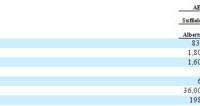
Summary NKA is being sold at a heavy discount to book value and free cash flows based on historical financial analysis. NKA will likely do quite well financially during the current volatile gas price environment. Even if NKA decides to cut dividends, the current price seems very attractive. Investors should not take a large position currently in the case that dividends are cut and the units become even more attractively priced. Niska Gas Storage Partners LLC (NYSE: NKA ) is a company that operates gas storage assets totaling roughly 250 Bcf of natural gas storage capacity in certain areas of North America. Being in the storage industry, the effects of supply and demand in the natural gas industry may not affect NKA the same way as it affects other oil and natural gas concerns. While natural gas supply is relatively stable over the short term, demand may fluctuate quite a lot due to seasonal, weather or other reasons. Therefore, storage assets can be useful when prices are unduly low and used to save gas supplies for when prices rebound to higher levels. There are a few ways that NKA protects itself from the fluctuations in gas prices or perhaps more importantly, fluctuations in the usage of storage facilities by gas and utility companies. Storage might be thought of as a hedge against price volatility and therefore, it may even benefit from exceptionally low gas prices than normal. The company enters into long-term firm (LTF) contracts in which customers pay the company monthly reservation fees for the right to use the storage facilities over a multi-year agreement. These LTF fees must be paid regardless of the actually utilization of storage capacity by the customers. Then there are variable fees that are charged based on usage of the facilities but they represent a very small portion of the fees received under LTF contracts. Therefore, on a qualitative live, the greater part of NKA’s revenue stream should be relatively stable and constant under most circumstances regardless of the direction of gas prices. The extraordinary situation would be if the supply of natural gas were to actually become in danger of being disrupted or if NKA’s customers were to experience financial failure on a large scale. This would put severe stress on the company’s revenue stream and thus severely cripple its ability to service debt. This scenario would happen if gas prices stay below profitability levels for the producers over a prolonged period of time. In the short term, it may even positively impact NKA’s profitability as low prices would beckon more usage of storage capacity. (click to enlarge) NKA’s largest operation is in Alberta with a facility in each of Suffield and Countess which act as a single hub known as the AECO hub. The weighted average contract life of LTF storage contracts in the AECO hub was 2.3 years as of March 31, 2014. As long as those customer companies manage to stay solvent, NKA’s revenues from AECO should be able to weather a fairly long period of low oil prices. Especially since the fact that TransCanada, a large customer of NKA re-implemented its contract making the weighted average life 4.2 years. The weighted average contract life of the LTF storage contracts at Wild Goose is 2.0 years. Salt Plains is 3.0 years. While LTF contracts comprise of the larger part of NKA’s total revenues, they also have Short Term Firm (STF) contracts which also accounts for a material part of their revenues. The company uses a combination of LTF, STF and other revenue optimization techniques to obtain as high an amount of revenue as possible depending on the market situation. The nature of LTF contracts is that the revenue stream is set during the window of when the contracts expire and is renegotiated for the years going forward. Thus, the revenue from this stream have little to do with the day to day fluctuations of the gas markets and is determined by the conditions prevailing when the contract is being renegotiated. The STF contracts are negotiated on an opportunistic basis and this source is more susceptible to the shorter term fluctuations of the greater market. The current scenario The poor performance in the recent quarter was largely due to the inability of the company to find attractive STF contracts. This is partially attributable to the fact that there has been a lack of energy price volatility due to a moderately cool summer in the areas served by NKA. The trend has now reversed and storage capacity will likely be in high demand due to the recent fallout in oil and gas prices. NKA’s facilities will be in short supply when producers become very uncertain about the future prospects of oil prices since storage capacity basically acts as limited type of insurance protection against uncertain prices. In that sense, although I never like to depend on predictions for the future, NKA’s future prospects for both STF and LTF contracts are looking very bright at the moment. The greater the spread in energy prices, the more valuable will be NKA’s storage assets. Restrictive ownership structure The company is effectively controlled by its sponsor HoldCo and there really isn’t any effective control given to the general public shareholders. Furthermore, the company states that if the manager or any of their affiliates own 80% more of the outstanding units, then they have the right to purchase all of the remaining units from the public unit holders at the prevailing market price. This makes holding NKA very unattractive if you were to have paid the full price of $16.00 for the units. However, at $4.00 per unit, the potential risk is much lower and the reward potential is much greater and more attractive. Should the controlling sponsors decide to acquire the entire outstanding units, there is far less risk of selling it for lower than your acquisition price when purchased at $4.00 per unit. Financial analysis Reviewing the historical performance of NKA, it would seem that the current market cap of around $140 million is unduly cheap. The cash available for distribution metric that NKA discloses should be a rough approximation of free cash flow to equity. If we take the year over year results so far, the stock is trading at merely two times free cash flow. The stock was roughly $16.00 per share and has now dropped to less than $4.00 per share based only on one quarter of poor results due to a shortfall in STF business. The company pays out $1.40 in dividends per year which amounts to roughly $51 million in total. The 2nd quarter call conference suggested that the dividend may be reduced or cut altogether going forward which is what caused the collapse in share price. Analyzing the historical financial data along with the current drop in prices, NKA appears to be extremely cheap at the moment not only due to the free cash flow record, but it also trades at such a small fraction of book value. (click to enlarge) Conclusion Even if the dividends were to be cut completely, I believe the unit price should still be worth roughly $6.00 per share when taking into consideration all the risks. Indeed, the share price will likely drop if dividends were to be cut but the fundamentals of the company are sound and should even do quite well under the current volatile oil and gas price regime. The investment is certainly a portfolio of depreciating assets and the maintenance capital expenditures will increase to roughly $10 million per annum going forward. However, this will not affect the fundamental cash flows to equity going forward to warrant a 70-80% drop in the price. There is ample protection in terms of discount to book value as well as the historical free cash flow performance to warrant a small purchase for me at the current prevailing market price. I’ve only taken on a small position because I want to have a lot of dry powder left over if they should actually cut the dividend and the price would fall further. However, I believe that at the current price, NKA is attractive even if it does cut its dividends.

3 Best-Rated Utilities Mutual Funds To Invest

Even during a market downturn, the demand for essential services such as those provided by utilities remains virtually unchanged. Utilities funds are therefore an excellent choice for investors seeking a steady income flow through consistent yields from dividends. This is also why they are primarily considered to be a relatively more conservative investment option. In recent times, their forays into emerging markets have led to appreciably higher returns and they offer superior returns at a relatively lower level of risk. Below, we will share with you 3 top rated utilities mutual funds. Each has earned a Zacks #1 Rank (Strong Buy) as we expect the fund to outperform its peers in the future. To view the Zacks Rank and past performance of all utilities funds, investors can click here to see the complete list of funds . Fidelity Select Utilities Portfolio (MUTF: FSUTX ) seeks capital growth over the long run. The fund invests a lion’s share of its assets in common stocks of companies primarily involved in utilities sector, and companies that derive major portion of its revenue from operations related to this sector. The fund invests in both U.S. and non-U.S. firms. The fund considers factors such as financial strength and economic condition to invest in companies. The non-diversified utilities mutual fund has a three year annualized return of 17.8%. The utilities mutual fund has a minimum initial investment of $2,500 and an expense ratio of 0.80% compared to a category average of 1.28%. Fidelity Advisor Utilities A (MUTF: FUGAX ) invests a major portion of its assets in utilities companies or carry out operations related to the utilities industry. Factors such as industry position and market condition are considered to invest in companies throughout the globe. The fund seeks long-term capital growth. The non-diversified utilities mutual fund has a three-year annualized return of 16.9%. The fund manager is Douglas Simmons and he has managed this utilities mutual fund since 2006. Fidelity Telecom and Utilities Fund (MUTF: FIUIX ) seeks total return with current income and capital growth. It invests heavily in companies from telecommunications services and utilities sector. The fund invests in companies all over the globe by analyzing factors which include company’s economic condition and financial strength. The non-diversified utilities mutual fund has a three-year annualized return of 15.4%. As of October 2014, this utilities mutual fund held 36 issues, with 19.96% of its total assets invested in Verizon Communications (NYSE: VZ ). Now that you’ve read this, are you Bullish or Bearish on ? Bullish Bearish Sentiment on ( ) Thanks for sharing your thoughts. Why are you ? Submit & View Results Skip to results » Share this article with a colleague