Tag Archives: utilities

Southern Company Retains Appeal For Long-Term Investors
Summary Southern Company’s near-term may remain overshadowed due to ongoing construction projects. Ongoing capital expenditures will fuel rate base and long-term earnings growth. Attractive dividend yield of 4.1% makes SO a good investment for dividend-seeking investors. Southern Company (NYSE: SO ) is one of the leading energy companies in the U.S. utility sector. The company’s solid fundamental outlook is supported by its accelerated capital expenditures for several energy projects. In the near term, the company’s stock price can come under pressure due to its risk in delay and cost overruns for its ongoing projects, Kemper and Vogtle. But in the long run, once these projects are completed, they will help the company grow its rate base and fuel earnings growth. Also, as the company’s capital expenditures have been fueling its EPS growth, it will also fuel dividend growth for the company in the future. Currently, the stock has a dividend yield of 4.1%, which makes it attractive for dividend investors. Also, the low treasury yield environment will support the utility sector and SO’s performance in 2015. The following graph shows the low U.S. 10-year treasury yield. (click to enlarge) Source: Yahoo Finance Investors Have a Secure Long-Term with SO The company has been making capital expenditures to strengthen its electricity generation portfolio. Capital expenditures, which the company is making, are focused towards regulated operations, which will provide stability to its cash flows and earnings. The capital expenditures will also fuel long-term earnings growth for the company. As far as SO’s 582MW Kemper project is concerned, the project has been subjected to ongoing cost revisions and delays, and the issues of delays and cost overruns still prevail. As per the revised estimates, the project’s total cost will now reach $6.1 billion, an increase of $330 million as compared to previous estimates. However, the project is near completion and is expected to be completed by the end of 1H’15. In addition, the company is in the process of building two new nuclear power plants, Vogtle 3 and 4, with a power generation capacity of 2,200MW . These nuclear projects were previously estimated to be in running condition by the end of 2017 or 2018, but as per recent revisions, these projects are also expected to face operational delays. The Vogtle project is expected to experience a one-year delay and cost an additional $730 million to the company. Owing to these ongoing delays and expected cost increases, I believe the project will remain an overhang on its stock price performance in the near term. But in the long run, these projects will uplift SO’s production capacity and optimize its generational portfolio, which will help grow its rate base and earnings. In addition to these power generation projects, the company is bidding on the growth potentials of solar energy projects. SO is building a 131MW solar farm in Georgia, which is expected to be operational in 2016. The value of building this farm lies in generating healthy earnings growth for the company, by selling generated electricity to corporations through long-term power purchase contracts. Moreover, the company’s subsidiary Southern Power has accelerated acquisitions to improve the overall power generation capacity and to fuel its long-term earnings base growth. Southern Power won a bid for 100MW of solar projects in Georgia, and the subsidiary acquired the 150MW Solar Gen2 and 50MW Macho Spring solar facility. The company’s robust capital expenditures for future years will add to its rate base and long-term earnings growth. The company has plans to make capital expenditures of $17.4 billion from 2014-2016. The following chart shows the company’s expected capital expenditures for future. (click to enlarge) Source: Company’s Quarterly Earnings Report The company’s efforts to expand and strengthen its electricity generation portfolio will portend well for its long-term operational performance, and the capital expenditures will fuel its long-term earnings growth. Analysts are expecting a decent next five-year earnings growth rate of 3.63% for the company. Rewarding Investors SO has a strong history of rewarding its shareholders through healthy dividend payments. The company has a solid cash flow base to support its ongoing dividend increases. SO has recently announced a quarterly dividend payment of 52.50 cents . Currently, SO offers a high dividend yield of 4.10% , which is well covered by its cash flows, as indicated by the company’s strong dividend coverage ratio (Operating cash flows/ Annual Dividends) below. Based on the growth potentials of ongoing capital expenditures and large scale dependence on regulated operations, SO’s cash flow base will continue to grow at a decent pace. And owing to the company’s secure cash flow base, I believe SO’s dividends are secure and sustainable in the long run. The following table shows the company’s healthy dividend per share, dividend coverage and dividend payout ratio in the past three years, and for 2014 and 2015, based on estimates. Dividend Per Share Dividend Payout Ratio Dividend Coverage 2011 $1.87 73% 1.4x 2012 $1.94 73% 1.4x 2013 $2.01 75% 1.3x 2014(NYSE: E ) $2.10 74% 1.3x 2015( E ) $2.17 74% 1.3x Source: Company’s Annual Reports and Equity Watch Estimates Risks The company’s earnings growth faces risks of regulatory restrictions at the federal or state level, and an increase in environmental expenditure as directed by the EPA. Also, an increase in interest rates poses a risk to the stock price. Moreover, economic weaknesses in SO’s service territory are causing lower demand growth. Significant cost increases and delays due to the construction of Kemper and Vogtle plants, and unfavorable weather are key risks to the company’s future stock price performance. Conclusion The company’s near-term may remain overshadowed due to ongoing construction projects, but in the long run, as the construction projects will be completed and its generational portfolio will improve, its operational performance and stock price will be positively affected. The ongoing capital expenditures will fuel its rate base and long-term earnings growth. And as the company has significant regulated operations, it will portend well for its earnings and cash flows stability. Also, an attractive dividend yield of 4.1% makes it a good investment for dividend-seeking investors. Due to the aforementioned factors, I remain bullish on this stock.
Exelon Corporation: A Promising Investment Opportunity

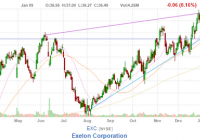
Summary The acquisition of Pepco will grant Exelon enhanced operational capacity as well as increase its ability to serve a greater number of customers in the different counties of the United. This acquisition will also result in expanded regulated business that will improve Exelon’s risk profile and ensure more stable revenue and earning steams compared to unregulated operations. Moreover, the hedging of commodity risk has not only ensured Exelon’s future earnings stability but has also given it a competitive edge in the industry. The company has a significant amount of debt to supports its project financing which will result in a focused business model. Based in Chicago, Illinois in the United States of America, Exelon Corporation (NYSE: EXC ), a well-known energy producer, has been pleasing its investors for a long time and has witnessed a sharp rise of more than 35% in its stock price over the past year. Source: Finviz The impressive performance was mainly due to some smart moves recently taken by the company. These initiatives have not only made the future profits more predictable but they have also given Exelon a competitive edge in the market. I believe Exelon is a promising investment opportunity for the long term. Let us analyze a few factors that support my opinion on the stock. Strategic Acquisitions and Divestitures Have Resulted in a More Focused Business Model Exelon Corporation has been making several acquisitions over the past few years that have not only enhanced its operational capacity but have also enabled it to enter and cater to new and growing markets. In April 2014, Exelon announced it would acquire Pepco Holding, Inc. which is one of the largest energy delivery companies in the Mid-Atlantic region that currently serves approximately 2 million customers in Delaware, the District of Columbia, Maryland and New Jersey. This merger will bring together Exelon’s gas and electric utilities – BGE, ComEd and PECO – and Pepco Holdings’s (PHI’s) electric and gas utilities – Atlantic City Electric, Delmarva Power and Pepco thus improving the combined operational capacity. This acquisition will enhance the company’s operational capacity as well as increase its ability to serve a greater number of customers in the different counties of the United States. As Exelon’s CEO said, “The combination of our companies will provide us an opportunity to take the customer service and reliability improvements we’ve already made in Maryland to an even greater level.” Moreover, the acquisition of Pepco will result in expanded and strong regulated business operations. This merger is expected to increase Exelon’s regulated business exposure to 60% to 65% during 2015-2016 which was previously approximately 55% to 60% on a standalone basis. The expanded regulated business will result in an improved risk profile with more stable revenue and earning steams compared to non-regulated operations. However, the Public Service Commission (PSC) has recently asked for some changes in the merger requirements that Exelon’s president has not agreed with. Since the PSC staff has demanded all the utilities to be managed at micro level with an independent board of directors for Pepco, this would impair Exelon’s ability to exercise control over its subsidiaries. Among the requests, the PSC staff has also demanded a $50 payment to each Delmarva residential customer, a $40 million 10-year set aside for Delaware workers’ job protection and some charitable commitments. These requests, if agreed upon, can result in heavy costs for Exelon thus hurting its future profitability. On the other side, the non-inclusion of these points would force the staff to push the commission to deny the company’s merger application. Presently, Exelon is facing a dilemma regarding the commission’s demands. This posed a possible risk to its future profitability. Perhaps, fair negotiations with the PSC staff could result in a win-win situation. Similarly, Exelon has been selling some of its non-core business assets in order to create a more optimized asset portfolio. To date, the company has divested five non-core assets which has resulted in nearly $1.4 billion of after-tax sales proceeds. This included the sale of its Fore River, Quail Run and West Valley plants for total after tax proceeds of $975 million during the third quarter of 2014. The company can use the sales proceeds to finance the acquisition of Pepco and build two combined-cycle gas turbine (CCGT) units in Texas that will enhance the company’s generation capacity as each unit is expected to add nearly 1,000 MW of capacity to their respective sites. Strategic acquisitions and dispositions have resulted in a more focused business model with improved generation capacity. This will support Exelon’s ability to successfully cater to the growing markets and give it an edge over those in its peer group. Effective Hedging Ensues Stable Earnings in Future Exelon’s energy generation business is exposed to commodity price volatility that can reasonably affect its future top and bottom lines. I believe the company can ensure stable revenue and earning streams in the future because it effectively reduces the commodity risk by hedging a portion of its portfolio on a three-year rolling basis. The hedge targets are approximately 90% – 98% in the first year, 70% – 90% in year two and 50% – 70% in year three. Source: Investor Presentation The hedging activity will help the company to meet its future cash requirements and other financial objectives that include dividends and investment-grade credit rating under a stress scenario. This again gives Exelon a competitive edge in the market and makes it an attractive investment option especially for dividend investors who seek a stable cash flows stream. Significant Debt Financing Supports the Core Business In the past, Exelon raised a significant amount of debt for project financing. Over the past three years it has successfully raised nearly $3 billion to finance several projects including Antelope Valley Solar Ranch, ExGen Renewables, Continental Wind and ExGen Texas Power. These projects have significantly increased the company’s generation capacity with no debt maturing earlier than 2021. Moreover, the company recently announced it would issue $750 million of senior notes maturing in 2020 with a coupon rate of 2.95%. The net proceeds will partially be used to pay-off Exelon’s exiting senior loan notes of $550 million with a coupon rate of 4.55% maturing in June 2015. This would result in interest costs savings of nearly $9 million annually and $4.5 million semi-annually that will boost the company’s future bottom line. Additionally, the remaining proceeds can be used to finance the Pepco acquisition that is expected to benefit Exelon in the long term. Significant debt financing will help Exelon to expand its core business and increase its generation capacity which will in turn support its ability to appropriately cater to the market. Rising Competition can limit its Future Growth Although Exelon is the largest nuclear energy producer in the United States, many alternative energy producing methods can give the company a tough time in the coming years. Presently, natural gas energy producers seem to maintain the lead. Due to the heavy capital outlay required for nuclear power plants and the way their reactors work, it is not easy to stop power generation whenever desired. On the other hand, natural gas fired plants are less capital intensive and the power generation can be easily tailored to meet the desired demand schedule. This gives natural gas energy producers a cost advantage over nuclear energy producers, thus enabling them to easily attract a greater number of customers by offering lower prices. Moreover, rapidly declining natural gas prices are further reducing the electricity production cost for these energy producers. During December 2014, the U.S. natural gas prices fell below $3 per million British thermal units for the first time since 2012. Source: Yahoo Finance Natural gas is the second largest source of power generation in the U.S. and produced nearly 27% of the country’s total electricity in 2013. The continuous decline in the natural gas prices and flexibility offered by less capital intensive natural gas fired plants supports the energy producers’ ability to price electricity at comparatively lower rates than nuclear energy producers thus capturing a major market share. In addition, the conventional energy producing methods including the coal fired and nuclear plants are severely affecting our climates, economies and most importantly, health. The electricity production in the United States accounts for more than one third of the total global warming emissions by the country. The coal fired power plants accounts for nearly 25% of these emissions whereas, natural gas fired plants represent only 6%. The rising concerns about global warming have forced many countries to invest in clean energy. The graph below shows the rising trend of clean energy consumption in the last 5 decades in different countries of the world. Source: Vox As the government is continuously encouraging the use of renewable source of energy, many renewable energy producers will witness a rising demand curve for their services in the near future. PPL Renewable Energy, one of Exelon’s competitors, is concentrating on natural gas and wind energy for power generation and has benefited from the falling natural gas prices in the past. Moreover, the company is continuously increasing its investment in renewable and clean energy production. Its hydroelectric expansion project in Montana has increased its clean energy generation capacity by 70% . The company’s hydro plants in Pennsylvania and Montana have a combined capacity of 757 megawatts of clean energy. Since Exelon is facing intense competition from both natural gas and renewable energy producers, it needs to focus on and invest in alternative energy producing methods for maintaining its market share. Conclusion The sum and substance of my analysis is that Exelon’s recently enacted initiatives have made it is well-positioned to serve the growing market. The strategic acquisitions and dispositions have resulted in a more focused business model along with improved generation capacity. A significant amount of debt financing also supports its future projects. Moreover, the hedging of commodity risk has not only ensured Exelon’s future earnings stability but has also given it a competitive edge in the industry. All of these factors make Exelon a safe and promising investment opportunity for long-term investors. However, Exelon also needs to focus on and invest in natural gas and clean energy producing methods for maintaining a decent market share in this highly competitive environment. Based on my analysis, I give the stock a buy recommendation.

Utilities And Other Industries: Capital Expenditures Vs. Depreciation

It is very common among new investors to assume that depreciation equals the capital expenditures required to keep the company in place. Free cash flow is usually calculated by subtracting the full value of the capital expenditures. This can be wildly inaccurate. The utilities industry has capital expenditures and depreciation that are very different. If all capital expenditures by utilities were maintenance, the industry would be bankrupt very quickly. It is important to understand what, where, how, and why the company you are researching is spending money on capital expenditures in order to value it. Capital expenditures (capex) include a wide variety of things companies spend money on. Capex can include buying land, fixing machinery, building a new plant, upgrading the power system, or many other items. Some of these items are to reduce expenses, increase production, or improve the production process. These are called growth capital expenditures because they improve the company above its performance prior to spending them. Other capital expenditures that keep the company at its current steady state are called maintenance capital expenditures. Most companies spend some capex in both the growth and maintenance bucket so it is important to determine how much of each in order to value the company. One of the industries where this is glaringly obvious is the utility industry. Utilities routinely spend lots of money to support new infrastructure as growth capex. They also spend money on maintenance capital expenditures to ensure their existing operations are in good shape and highly reliable. A high level summary of net income, depreciation, and capital expenditures for some of the major utility companies is shown in the following table. Utility Company 2013 Net Income (millions) 2013 Depreciation (millions) 2013 Capex (millions) Capex minus Depreciation (millions) Capex divided by Depreciation Dominion Resources (NYSE: D ) 1,697 1,390 4,104 2,714 2.95x NextEra Energy (NYSE: NEE ) 1,908 2,163 3,228 1,065 1.49x Duke Energy (NYSE: DUK ) 2,665 3,229 5,526 2,297 1.71x Exelon Corp (NYSE: EXC ) 1,719 3,779 5,395 1,616 1.43x Southern Company (NYSE: SO ) 1,644 2,298 5,463 3,165 2.38x As you can see from the table, the capital expenditures of the utility companies exceeds the depreciation charge, typically by several billion dollars for companies this size. If all of these capital expenditures were maintenance capital expenditures, the market would have to be completely insane to assign the earnings multiples shown in the following table. Utility Company Current Price/2013 Earnings Dominion Resources 25x NextEra Energy 27x Duke Energy 23x Exelon Corp 19x Southern Company 28x Average 24x Earnings multiples this high are usually reserved for high growth companies. Many of the new projects these utility companies are investing in will earn a regulated rate of return between 8% and 12% which doesn’t sound like a high growth company. If anything, this is close to an average company’s rate of return and generally average companies trade closer to 15x earnings. Depreciation is a noncash expense that reduces the net income reported. When valuing companies, it is generally advisable to add back depreciation to net income and then subtract maintenance capital expenditures to get a truer view of profit. In the case of utility companies, they generally spend less money on maintenance capital expenditures than they expense on their income statement as depreciation. This deflates their net income number which makes their price/earnings ratios look higher. The following table shows the capex numbers in relation to the net income numbers for the utility companies. Utility Company 2013 Net Income (millions) 2013 Capex (millions) Capex divided by Net Income Dominion Resources 1,697 4,104 2.42x NextEra Energy 1,908 3,228 1.69x Duke Energy 2,665 5,526 2.07x Exelon Corp 1,719 5,395 3.14x Southern Company 1,710 5,463 3.19x By looking at the capex divided by net income column it is very obvious that most of the capex must be growth capex. If most of the capex was maintenance capex and the cost of maintenance was 1.69x to 3.19x the amount of profit each company was making, they would be out of business very quickly. In addition, one of the quirks about the utility industry is that lots of its “maintenance capex” still plays into the regulatory assets that allow future rates to be raised to earn the cost of investment plus a predetermined return on equity. An easier way to track maintenance capex for utility companies is to read their filings and see how much and when the regulatory bodies approve expenditures to be counted towards the regulated rate of return. However, for companies that aren’t in the regulated utility industry, it can be more difficult to determine much of capex was maintenance capex. In general, it is a good idea to use the laws of large numbers when determining maintenance capex for companies that don’t specifically break it out. For example there could be two oil companies. Company A spent an average of $30 million on capex for each of the last few years and kept production flat. Company B spent an average of $30 million on capex for each of the last few years and production grew by 40%. Therefore it stands to reason that Company B was likely spending a much higher percentage of their capex on growth. Some companies half break it out by giving you a list of the major items they spent capex on and you can place each in the growth or maintenance bucket depending on the type. Maintenance capex should generally be determined over several years because things don’t break at the same frequency every year. This is more important for valuing small companies because larger companies generally spend similar amounts of maintenance capex every year. Another common capex that seems to be often included as an expense to reduce a company’s profit is when they buy or construct a new building for their corporate headquarters. This is actually growth capex because it will reduce future rent expense by the company (i.e. increase their profit) and it will appreciate over time. These are the reasons and some advice about making sure to understand the company’s capital expenditures when trying to value a company. It is especially important in the utility industry but even in other industries your valuations could be dramatically off without understanding where and why the company is spending money.