Tag Archives: utilities

Water Utilities: American Water Works, Aqua America Are The Best Fundamental Selections
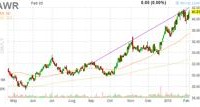
American Water Works and Aqua America rank highest on the average positioning of five fundamental criteria. American States Water is not far behind. A few water utility stocks have rewarded investors with total returns in excess of the S&P. There are a plethora of firms that play in the water sector from an infrastructure viewpoint. Regulated water utilities have been a sub-sector that attracts investors looking for the stable income attributes of a utility with exposure to both small-caps and a consolidation trend. Some utilities are pure water-focused and some firms have a diversified asset approach where water is a portion of their business portfolio. In addition, there are other industries that are water-related, such as desalination and water treatment along with pumps, pipes, and meters. A good recap of the investment thesis is provided by S Network, developer of the S Network Water Technology Index and S Network Water Works Index. These indexes were previously branded as Janney Indexes. Hundreds of articles have been published on the investment opportunities in the water sector. The underlying thesis is the same: water is one of the most crucial inputs to the global economy, not only supporting residential populations with safe, reliable drinking water, but as a necessary “feedstock” for industrial processes, including electrical power generation, semiconductor manufacturing, pharmaceutical production, and food and beverage processing. Water is also vital to agricultural production, and increasingly rainwater and groundwater supplies are not meeting local agricultural needs in many places around the globe. Within the US, there are regional water issues and many of these cross state regulatory boundaries. For example, according to a report published by calvert.com: ● California – According to the University of California, Davis, climate models show California’s water supply could fall up to 30% over the course of this century. The state’s plan to reduce per capita urban water usage 20% by 2020 is one of many efforts to address this. ● Great Lakes Region – Concerned about proposals to divert its water to other areas, an eight-state agreement now bans water exports from the Great Lakes-home to 90% of the nation’s freshwater and drinking water for 30 million people. ● Northeast – Aging infrastructure causes as much as 50% of clean water here to leak into the ground between treatment centers and the tap. ● The South – Drought has crippled the region in recent years, particularly Texas, where a record-level drought has decimated farms and ranches and caused billions of dollars in damage to the state’s economy. ● Gulf Coast – States such as Florida, Louisiana, and Texas need improvements in storm water management infrastructure due to increased risks from stronger hurricanes. Ten of the more popular stocks for many investors are the following firms, in order of market capitalization: American Water Works (NYSE: AWK ); Aqua America (NYSE: WTR ); American States Water (NYSE: AWR ); California Water (NYSE: CWT ); SJW Corp (NYSE: SJW ); Connecticut Water Service (NASDAQ: CTWS ); Middlesex Water (NASDAQ: MSEX ); York Water (NASDAQ: YORW ); Artesian A (NASDAQ: ARTNA ); Consolidated Water (NASDAQ: CWCO ) As Roberto Clemente once said, “Water stocks have been very, very good to me.” Below are 12-month charts of eight water companies as offered on finviz.com. (click to enlarge) (click to enlarge) (click to enlarge) However, not all water investments have been barnburners over the recent past. Below is a table of average annual 3-year and 5-year total returns, which includes share price appreciation plus dividend income, sorted by highest to lowest 5-yr return (S&P 500 average annual total returns are 17.8% and 16.5%, respectively): Source: Morningstar There is quite a difference between the best and the worst performers. However, this is yesterday’s news and investors should be looking towards tomorrow’s news. One management attribute worth analyzing is their ability to generate return on invested capital ROIC. The advantage of ROIC is it evaluates returns across the capital structure and is not limited to just equity or assets. One would think the highest returns would correlate with the highest share price appreciation, but it does not. Below is the same ten companies’ average ROIC for the previous 3-years and their respective 5-yr total stock returns: Source: Fastgraph, Morningstar, My Investment Navigator Overall, the regulated utility sector has an average ROIC in the 5% range, and most of these companies meet or exceed this level. Nevertheless, ROIC is only half the equation as it only evaluates the return of capital deployed and not the cost of capital. The best companies generate ROIC in excess of their weighted average cost of capital or WACC. Below is the Net ROIC, or ROIC less WACC, for these ten companies: Source: My Investment Navigator, Morningstar, ThatsWACC.com It seems only two management teams have generated returns on their total capital structure in excess of the cost of the same capital. It is intriguing the stocks with the best 5-yr total stock returns are not those generating the highest investor returns based on capital deployed and the cost of that capital. Dividend growth investors would be please by the majority of water utilities, and most have outpaced the meager inflation numbers of the past three years. In 2012, inflation as measured by the monthly CPI averaged 2.1%, in 2013 it was 1.5% and last year 1.6%, for a 3-yr average of 1.7%. Source: Reuters S&P offers an Equity Quality Ranking system evaluating a company’s 10-yr history of consistently generating earnings and dividend growth. The rankings range from A+ as the Highest, B+ as Average and NR as Not Rated. The Quality Ranking for these 10 companies are: A+: None; A: AWR, WTR, YORW; A-: CWT, MSEX, ARTNA. CWTS is ranked B+, SJW as B, and AWK, CWCO as Not Rated. Some investors prefer the diversity and ease of water ETFs: PowerShares Water Resources (NYSEARCA: PHO ), Guggenheim S&P Global Water Index (NYSEARCA: CGW ), PowerShares Global Water Resources (NYSEARCA: PIO ), and First Trust ISE Water Index (NYSEARCA: FIW ) Fund. In addition to these popular water utility firms and ETFs, several others play in the water sector. Of interest is the list offered by S Network Water Technology Index found here . These are global companies in the infrastructure, pump, and metering business with exposure to the water industry. Scanning these names may provide further opportunities worth researching. S Network also offers a variety of water information resources linked to its site here . I prefer to pick specific stocks over ETFs, unless there is disruptive technology involved that can upset the apple cart, and I do not see this happening in the water sector. As one who believes in ROIC, if I had to chose one water utility, it would be either American Water Works or Aqua America. Below is that ranking of each company in the tables above. AWK and WTR ranked the highest on average of these five criteria. American States Water is very close as well and should not be forgotten. Ranking By Order For Each Category Source: My Investment Navigator I have been writing about water stocks since 1997 and the trends in water investing are called out in my two books. This is one area every investor should have in their utility portfolio. Author’s Note: Please review disclosure in Author’s profile. Disclosure: The author is long WTR, AWK. (More…) The author wrote this article themselves, and it expresses their own opinions. The author is not receiving compensation for it (other than from Seeking Alpha). The author has no business relationship with any company whose stock is mentioned in this article.
Sapa JV Achieves 9% Growth In North America For Norsk Hydro

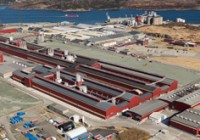
Summary Today’s earnings from Orkla act as a partial pre-announcement for Hydro’s earnings next week, due to the 50/50 joint venture. The Norwegian government invests NOK 1.5 billion in Norsk Hydro’s new plant, with the European Trade Commission’s blessing. Hydro reports on February 10th – are there more surprises? In my most recent article about Norsk Hydro ( OTCQX:NHYDY ), I focused on some key drivers for EPS that I felt made the company a better value play than Alcoa, Inc. (NYSE: AA ). Today’s earnings announcement by Orkla ASA ( OTCPK:ORKLY ) gives us a sneak peek into Hydro’s earnings next week. Sapa is an extruded aluminum company, and is run as a 50/50 joint venture between, Orkla ASA ADR and Hydro: September 12, 2013 press release . Sapa is the global leader in extruded aluminum, and has a market share of 30% in North America and 26% in Europe. It offers a variety of solutions to its customers through five business segments, and is a leader in energy-efficient buildings. Sapa also has a strong presence in Asia and South America. “Orkla’s share of Sapa’s result was NOK -360 million in the quarter. Sapa’s results were negatively impacted by extraordinary costs related to the accounting write-down of fixed assets in China. Demand for extruded aluminium products in North America rose by 9%, primarily driven by growth in the automotive and building industry. In Europe, demand was on a par with 2013.” – Earnings release Sapa makes up only a part of Hydro’s earnings, but level demand in Europe is encouraging, as it has been recognized that the European economy may be contracting. Growth in North America appears robust at 9%, and bodes well given the current high aluminum price. It will be necessary to wait for Hydro’s results to get a full picture of the accounting write-down, but I anticipate that it will be similar to write-downs made by Alcoa this quarter, which had a negligible effect on share price. The write-down should not be taken out of context from the rest of Hydro’s earnings. The strong demand is evident, and should translate across all of Hydro’s primary aluminum business. A further NOK 1 billion in synergy savings is anticipated over the next 2 years. This fact will only enhance the value of Sapa for both of its parent companies. It is all cash that falls straight to their bottom lines at each earnings announcement. Norwegian Government Invests in Eco-Friendly Norsk Hydro Central to my thesis about Hydro is the idea that the company can continue to make more money by being as environmentally friendly as possible. In other news yesterday: “The EFTA (European Free Trade Association) Surveillance Authority has approved funding of NOK 1.5 billion from Enova for Hydro to test the world’s most energy- and climate-efficient aluminum production in a full-scale pilot plant at Karmøy, Norway.” – Hydro press release. Enova is a Norwegian state-supported agency for promoting efficient-energy consumption and renewable energy. The same day, and sticking with the eco-friendly theme, Hydro announced a new research partnership with SGL Group ( OTCPK:SGLFF ). The project will take place over the next three years, and is being funded by the Research Council of Norway. The goal is to develop new, energy-saving, carbon cathode technology for use in the primary aluminum production process. Any reduction in energy costs is a big saving for Hydro, but it also provides extra income, because Hydro sells any excess energy it produces into the national grid. Exactly how well Hydro performed over all in the fourth quarter is still somewhat of a mystery. If results from Alcoa are anything to go by, the company should surprise to the upside next week. The two press releases yesterday continue to confirm that the future looks bright for Hydro. I look forward to seeing the increased earnings created by the synergies at Sapa over the rest of the year. The stock has performed well over the last year or so since my first article about it . It would appear there is more to come. NHYDY data by YCharts Editor’s Note: This article discusses one or more securities that do not trade on a major exchange. Please be aware of the risks associated with these stocks. Disclosure: The author is long NHYDY. (More…) The author wrote this article themselves, and it expresses their own opinions. The author is not receiving compensation for it (other than from Seeking Alpha). The author has no business relationship with any company whose stock is mentioned in this article. Additional disclosure: This article is not intended as investment advice. It is for informational purposes only and expresses the authors opinion. The reader should conduct their own research and form their own opinion prior to initiating any position. Actual outcomes may vary from those discussed in the article.This article may contain certain forward-looking statements. I have tried, whenever possible, to identify these forward-looking statements using words such as “anticipates,” “believes,” “estimates,” “expects,” “plans,” “intends,” “potential” and similar expressions. These statements reflect my current beliefs and are based on information currently available. Accordingly, such forward-looking statements involve known and unknown risks, uncertainties and other factors which could cause actual results, performance or achievements to differ materially from those expressed in or implied by such statements. I undertake no obligation to update or provide advice in the event of any change, addition or alteration to the information contained in this article including such forward-looking statements.

ALLETE, Inc: Consistent Dividends Since 1950

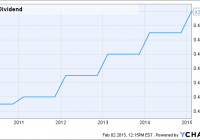
The company has paid dividends consecutively since 1950. The shares currently sport a yield of about 3.57%. Growth of the company points directly to further growth of the dividend. As I continue my never-ending quest to find quality companies with safe, and attractive dividends, my search led me to ALLETE, Inc (NYSE: ALE ). The diversified utility company mainly focuses on electric generation in Minnesota, North Dakota, and Wisconsin. Founded in 1906, the company has a rich history, but I am more interested in its dividend history. In late January it raised its dividend 3.1% to 50.5 cents a quarter. With the raise the company now sports a 3.57% yield that is very attractive in my eyes. This was the fourth straight year of a raise, according to Dividends.com. This doesn’t seem like that much, but what I view as being just as important is consistency. Even so I believe going forward the company will continue this track of dividend growth and that is one of the main reasons I’m a fan. ALE Dividend data by YCharts The company has paid a consecutive dividend since 1950, and this is most definitely not going to change anytime soon. Some don’t like to reference the past to point to the future, however, I always believe a strong dividend history is a plus. It shows the company is dedicated to maintaining its dividend even when the market may be bad overall. On a different note, growth is setting up nicely for the company and the chart below illustrates this beautifully. year Revenue Earnings Per Share 2013 $1.02B $2.63 2014(Est) $1.09B $2.93 2015(Est) $1.15B $3.21 (Source: Yahoo Finance ) The company is expected to release its Q4 2014 results along with its FY 2014 results on February 17th before market open. Revenue, as seen above, is estimated to be reported up 7.4% compared with last year. EPS is expected to be up 11.4% compared with last year, and that trend looks to continue with EPS forecasted to be up another 9.55% for FY 2015. I have heard a lot lately about utilities being overpriced, and for some names I am in agreement. Currently the shares are trading at 19.33 times earnings, which is lower than the industry average at 21.8. The forward price to earnings is 17.9, and this is why I believe the shares are not currently overpriced. The company currently has a payout ratio of about 65%, which is a very safe number for a business in a quite stable and consistent industry. EPS of $3.21 for 2015 point to a payout ratio of just 62.8%. This then points to the company being in a great position to raise the dividend again in the next year. Beyond that, things also look good for more raises with earnings increasing nicely into 2016. A mid-term growth catalyst for the company is its recent acquisition of U.S. Water Services. This further diversifies its holdings and will provide an extra boost to growth. U.S. Water generated $120 million in revenue in 2014 and the company projects it to grow revenue 10%-15% on an annual basis going forward. This is a great investment for the company and should definitely begin to pay off during the next few years. I love this diversification because as a diversified utility, it offers good exposure for one’s portfolio. In conclusion, ALLETE is yet another strong dividend payer in the utilities sector. Although the company’s core business is electricity generation, it does have a fairly diversified portfolio of holdings, adding to it most recently with the purchase of U.S. Water. The growth trend looks to be strong, and the company has lots of room to continue to raise its dividend in the future. I believe as a long-term play, ALLETE will continue to reward its shareholders both through growth in the business and the dividend. Disclosure: The author has no positions in any stocks mentioned, and no plans to initiate any positions within the next 72 hours. (More…) The author wrote this article themselves, and it expresses their own opinions. The author is not receiving compensation for it (other than from Seeking Alpha). The author has no business relationship with any company whose stock is mentioned in this article. Additional disclosure: Always do your own research before investing.