Tag Archives: utilities

Public Service Enterprise: Facing A Long-Term Decline
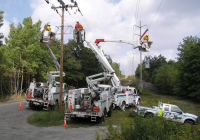
Summary Public Service Enterprise is facing many headwinds in the form of an unsustainable business model and an aging infrastructure. The company’s continual infrastructure build out should prove to be counterproductive in the long-run. While societal electricity usage will likely increase dramatically over the next few decades, Public Service Enterprise should still feel downward pressure in the long-term. Public Service Enterprise Group (NYSE: PEG ) is currently one of the nation’s oldest and largest electric utilities. The company dominates the New Jersey electricity landscape, providing millions of individuals with electricity. The company has been one of the top performing electric utilities over the past few years, consistently beating investor expectations on many fronts. Despite all of this, PEG will likely underperform investor expectations moving forward. While PEG may continue to do well in the near-term, the company’s long-term prospects are dimmer. PEG is a diversified electric utility, which means that it incorporates all types of energy sources into its business model. While this business model makes it more competitive against non-diversified electric utilities, the company is still too highly valued at $20.74B . The energy landscape is starting to shift away from a one dominated by centralized generation, and PEG will likely be one of the first companies to feel the effects of this change. Given that PEG’s business model has remained unchanged for countless decades, the company should have a hard time adapting to changing realities. Continual Grid Build-Outs Are A Long-Term Negative PEG makes much of its money by building out grid infrastructure in order to sell more electricity. This only makes sense given that the only way to reach more residences/buildings is to expand its grid system. In fact, PEG expects to spend approximately $1.6B in 2015 on its transmission infrastructure. The company’s transmission investments are expected to continue rising moving forward, which could actually dampen the company’s long-term prospects. Such grid investments incur huge sunk costs, as PEG expects to spend $2.6B in upgrades on its electric/gas distribution and transmission systems. While this would be a great investment under the assumption that centralized methods of generation will remain at similar levels of profitability for the foreseeable future, this is far from certain. Distributed generation methods is becoming more promising by the day, especially with the progress being made in energy storage technologies. As such, these growing grid infrastructure investments could very well end up as billions of dollars in unrecoverable sunk costs. Given the rather slim margins of PEG, these investments would only be recouped if individuals continue buying electricity from the company’s power plants at current rates. With the proliferation of alternative energies, distributed generation has become more viable than ever, and could force PEG to reduce electricity costs in order to remain competitive. This will make it increasingly hard for PEG to recoup investments. Given PEG’s centralized generation model, the company needs to continue expanding and maintaining its infrastructure in order to grow. On the bright side, PEG is implementing many grid efficiency programs, which is actually conducive to distributed generation. The company is planning to spend an additional $95M on increasing energy efficiency over the next three years, although this amount is minimal in the grand scheme of things. Given that distributed generators still requires a grid to function, improving grid efficiency is a win for everyone. Regardless, PEG is still spending enormous amounts of money building out its grid, which may actually end up costing the company in the long-run. Aging Infrastructure With PEG’s aging infrastructures, increasing amounts of investments will be needed just to sustain the company’s current grid. Given that PEG has one of the oldest grid systems in the country, grid maintenance investments will likely ramp up moving forward. Even worse, these grid maintenance costs cannot be avoided, which means that more and more of PEG’s expenditures will go purely towards maintaining its current infrastructure. Such a model of centralized generation reliant on a rapidly decaying grid infrastructure is not sustainable in the long-run, and is one more reason why PEG should increasingly lose revenue to distributed forms of generation. On top of this, many policies restrict PEG from entering into the distributed energy game due to concerns about monopoly power abuse. For instance, regulators rightly fear that utilities will enter the distributed power game for the sole purpose of eliminating the competition to keep the centralized generation model dominant. This scenario is realistic given that such utilities already have countless billions of dollars invested in centralized power plants. The United States has some of the oldest electric grid infrastructures among the developed nations. PEG is no exception in this regard, and is planning to spend billions over the next few years just on upgrading/maintaining its grid. Source: tdworld The Silver Lining Unless PEG finds an alternative business model that is not reliant upon building out an aging infrastructure, the company will find itself in trouble. Unfortunately, the company has no real solution to this problem. In the best case scenario, PEG shifts its business model to become more conducive to distributed generators like rooftop solar by focusing more heavily on grid efficiency. In the worst case scenario, PEG ends up in a utility death spiral as a result of its current business model. The main point is that a business model dependent upon continually building out infrastructure to grow profits is not sustainable in the long-run. The good news for PEG is that the timeline for distributed generations rise is uncertain. While there are many reasons to believe that this model will overtake centralized generation in the future, this could happen much later than expected. Also, the future energy landscape could be a healthy mix between centralized and distributed generation, in which case PEG can still maintain a large portion of its revenues. Not only that, total future electric use could easily grow multifold due to the increasing electrification of the society(i.e. electric transport). The energy used in transportation alone is approximately equivalent to the energy used by households. This essentially means that PEG’s future may not be so pessimistic even if distributed generation starts to play a much larger role in the energy landscape. PEG’s annual revenue( $11.26B for 2014) could grow immensely if electric use were to indeed skyrocket in the long-term. Although PEG may look undervalued in this light, there still seems to be too many headwinds facing the company. With all things considered, PEG will likely still underperform the market over time. Conclusion From a rapidly aging infrastructure to the rise of distributed generation, PEG’s prospects are not looking great. The company has experienced an overall trend of declining profits over the last couple of years, which should only continue moving forward. Although PEG’s net income spiked in 2014 to $1.52B, the company will likely experience declining net incomes moving forward. While PEG’s business model has remained essentially unchanged for countless decades, this will almost certainly change in the future. Even assuming that electricity usage increases significantly over the next few decades, PEG’s P/E ratio of 12 is still much too high given current trends. Disclosure: I/we have no positions in any stocks mentioned, and no plans to initiate any positions within the next 72 hours. (More…) I wrote this article myself, and it expresses my own opinions. I am not receiving compensation for it (other than from Seeking Alpha). I have no business relationship with any company whose stock is mentioned in this article.
Ormat Technologies: Overpriced In Light Of Industry Headwinds

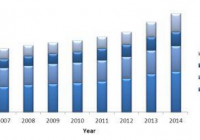
Summary Geothermal power generation will likely stagnate or outright decline in the coming years, putting Ormat Technologies in a bad position. Ormat’s strategy of expansion could backfire if subsidies/incentives dry up, which has a high likelihood of happenings given the arrival of more promising alternative energies. With stagnating revenues and industry pressures, Ormat is much too expensive at a P/E ratio of 40. The geothermal power industry has seen some impressive growth over the past few years, and is currently an important part of the renewable energy mix. By harnessing the enormous amounts of thermal energy stored in the earth, clean energy can be produced in relative abundance. Ormat Technologies (NYSE: ORA ) is a standout in the geothermal space, with approximately 2 GW in power plants supplied worldwide. Although Ormat has grown tremendously over the past few years, there are reasons to believe that it is headed for a long-term decline. While many have touted geothermal’s potential on the basis that there are terawatts of thermal energy that could theoretically be harvested, the technology it takes to actually harness this energy may be questionable in the long run. On top of this, rapid battery innovation may take away geothermal’s big advantage of having base-load qualities. Once other forms of renewables, e.g. wind, will be able to cost effectively store energy, geothermal loses its base-load edge to other potentially more promising clean energies. Ormat is especially vulnerable given that it is relatively more expensive than its peers. Technology Risks Geothermal technologies are especially capital intensive, as massive amounts of resources are needed to build geothermal plants. Ormat’s fast expansion rate could ironically be a negative for the company. If Ormat overextends its reach to more questionable regions in terms of profitability, its expensive geothermal plants could end up costing the company in lost sunk costs if subsidies dry up in the future. Given how many other forms of clean energies are showing more growth potential, namely wind and solar PV, future alternative energy subsidies/incentives will likely be concentrated on these clean energy technologies. While Ormat’s own growth projections of the geothermal electricity and product segments are optimistic, with the global geothermal markets growing eight-fold by 2020, such projections are likely overestimations given that more promising energy technologies are abound. In addition to the fact that other forms of clean energies look to have more inherent growth potential, geothermal is a centralized energy generation technology. If the future energy landscape is indeed one dominated by more distributed forms of energy, this is just one more negative for the geothermal industry. With prime geothermal locations hard to come by and costs likely to be increasingly less competitive compared to other alternative energies, Ormat is facing an uphill battle. Although geothermal technologies are nowhere near mature and still have much more room for improvement, geothermal likely remains a niche market. While the hype surrounding ORA is somewhat justified given its status as the second largest geothermal company in the U.S. and its general cost competitiveness against it peers, it is likely overvalued given its pessimistic growth prospects. With technologies as large and unwieldy as those in geothermal plants, there are much better ways to go about clean energy production. Ormat’s own geothermal growth projections are likely too optimistic in light of industry pressures. While geothermal has indeed grown over the past couple of years, as is clearly shown in the graph below, such growth is likely not sustainable. Source: Frost & Sullivan Analysis Growth Prospects At a P/E ratio of 40 , investors are much too optimistic about Ormat’s growth potential. Given how Ormat’s growth has stagnated in recent years, with both its 2013 and 2014 revenues hovering around the mid-$500M level, it seems unlikely that the company will fulfill such lofty growth expectations. With Q1 revenues at $120M, this growth slowdown trend seems to be continuing. Although Ormat is focusing on expanding by increasing its geographical reach, the company should have a hard time growing in the mid/long term. Ormat’s revenues from third-party sales, which constitute a sizable portion of the company’s total revenues, have long stagnated around the $180M-$200M range. Its products, which make up for a majority of its revenues, have just recently started slowing down. On top of this, 2015 is the first year in a long time where its product sales could actually come in lower than sales in 2014. While Ormat has considerably outperformed the broader market over the past few years, it would not be surprising to see the company underperform moving forward. Although Ormat is highly diversified on the global scene, this may not matter for much longer as the global energy market seems to be gravitating towards solar PV in particular. Many governments are increasingly looking towards solar PV as the main long-term answer to global warming and pollution, which means that geothermal will increasingly be relegated towards more niche situations. While a case could certainly be made that Ormat will have a long-term place in the energy landscape, the company does not seem to be a wise investment on balance. Conclusion Ormat’s long-term prospects are not looking too bright in the long term. While geothermal will likely end up playing a permanent role in the renewable landscape, Ormat is valued much too high. At a market capitalization of $1.89B and a P/E ratio of 40, investors are putting too much confidence in the company’s growth potential. With stagnating revenues and the rise of more promising alternative energies, Ormat will have very little chance of beating the market in the future. There is a high probability that geothermal is not the disruptive technology that many investors are hoping it to be, with Ormat likely to be one of the first to feel the effects of a possible decline in geothermal. Disclosure: I/we have no positions in any stocks mentioned, and no plans to initiate any positions within the next 72 hours. (More…) I wrote this article myself, and it expresses my own opinions. I am not receiving compensation for it (other than from Seeking Alpha). I have no business relationship with any company whose stock is mentioned in this article.

Tenaga Nasional – Brace For Explosive Growth Of This Under Covered Electric Utility

Summary The company benefits from the growth of electricity consumption in Malaysia which is set to double in the next 15 years. Tenaga is going to increase its total capacity by 30% by the end of 2017. The regulatory landscape in Malaysia does not set any hurdles for coal fired power plants, unlike in much of the developed world. Often times opportunities lie where people tend not to look. While the current stock market valuation makes it more and more difficult to find solid companies at great prices with compelling outlooks, there are still gold nuggets to be found if one dwells deeply into the fringe areas of the market, which are poorly covered and exactly where the greatest opportunities lie in the first place. Tenaga Nasional Berhad ( OTCPK:TNABY ) is the largest electric utility company in Malaysia with about $29.7 billion in assets and total installed capacity of roughly 13,000 MW (14,000 MW if Manjung 4, which went online in April this year, is included). About 93% of the capacity is made up of coal and gas fired power plants and the remaining 7% is hydro power. The majority stake in the company is owned by the Malaysian state, as the future success of the company is of strategic importance for the South-East Asian country. The expansion of the total generation capacity is vital for the country’s economic progress. First, let’s take a look at the macro view of the Malaysian electricity market and the TNB’s position in it. Usually foreign equities trade with an inherent discount compared to companies in the U.S. and Europe with a similar asset base. This is true for TNB as well, as investors perceive higher risk considering the geographic region and the potential for political turmoil. Although as I will argue later in this article, Malaysia provides more stability for a primarily coal/gas based utility than the Unites States. Whether the perceived risks are realistic or not doesn’t matter for the stock market as the discount can stem just from the sentiment only. A researching arm of The Economist ranked Malaysia among the countries with very low risk of social unrest, while neighboring Thailand, Indonesia and Philippines received medium to high risk status. This goes to prove that one can not make generalizations about a country just because the media may portray the region as unstable. Now that we have established that the Malaysian social situation is stable enough for the utility business, it’s time to take a look at the long-term trends that provide the necessary top-down framework for the bull thesis. First, the electricity consumption per capita has been growing at a fast pace – up roughly 50% in the past 15 years as can be seen from the chart below. (click to enlarge) And another chart to complement the previous one, showing new peaks in consumption year over year. (click to enlarge) Source: Quarterly report The future outlook is positive and the growth in electricity consumption will go hand in hand with the expanding GDP of South-East Asian countries. The Economic Planning Unit (EPU) of Malaysia is projecting the current consumption of roughly 125,000 GWh to reach 315,000 GWh by 2030, essentially doubling over the coming 15 years. To reach the goal and keep up with the growing demand, the only viable option is to build more base capacity – coal and gas. The same analysis, which is based on EPU’s data, is predicting the electricity mix to remain roughly the same in face of this rapid growth. Projections of consumption and the share of electricity production per fuel type Source: Electricity energy outlook in Malaysia While many have called the political actions of the U.S government “War on Coal” and the carbon legislation is definitely pushing the electricity production to alternatives, TNB does not have this problem as Malaysia’s leadership is aware that the only way to keep up with the consumption is to aggressively invest in base power plants. These aligned goals of the Malaysian government and TNB provide a fertile ground for future growth without worries for potential regulatory scrutiny. And as gas and coal remain the goal (no pun intended), all that remains for TNB to do is to stay on the course and reap the benefits by expanding capacity – pretty straight forward. Below is a summary of TNB’s generating mix by fuel type. The Fuel Mix Source: Latest Quarterly Report The bear market in the energy sector has benefited TNB as the historically low natural gas and coal prices have brought down the input costs. With no substantial shift in the fundamentals (supply/demand imbalance induced glut is here to stay) in sight, TNB will be seeing its benefits in the form of higher margins. Even the first half of the financial year 2015 already saw a substantial improvement in EBITDA margins compared to the same period last year, up from 27.5% to 37.1%. The takeaway here is that if the primary energy prices remain at these low levels, the elevated margins are to be expected going forward. The Catalyst The company has been aggressively investing in its CapEx program and is on track to add 3,800 MW of capacity by the second half of 2017 – a 30% increase in total capacity . Given that the current capacity for Q2’15 (Dec-Feb) was roughly 13,000 MW (excluding the Manjung 4’s 1,000 MW that went online in mid April this year) and the total production was 27,197 GWh which generated a revenue of $2.86 billion (MYR/USD Exchange rate of 0.27), we can roughly estimate the impact that the extra 3,800 MW is going to have on revenues. The assumption is that the capacity utilization remains at similar levels and the revenue per unit stays roughly constant at $105 MWh ($0.105/kWh). The 30% increase in the total capacity will result in a roughly equal rise in the revenue, ceteris paribus, which translates into an extra $850 million per quarter or $3.4 billion per year. Of course, the main variable that will determine the margins and profitability is going to be fuel cost, but as stated before, the situation in the natural gas/LNG and coal markets is likely going to be a tailwind for the foreseeable future. What’s more, the current contracts allow for a tariff raise in the event of a drastic fuel cost rise as can be seen from the chart below. Tariff Breakdown Source: Q2 Report The key takeaway here is that the company is on track for massive top line growth, and given the nature of the utility business – secure revenues and long-term contracts – the bottom line margins are expected to remain at roughly the current levels, meaning that the 30% in capacity growth will show up in the EPS with minimal deviation. Below is a timeline for the projects currently under construction: (click to enlarge) Source: Company’s Presentation The Main Risks The main risk for foreign investors buying shares in the company is the exchange rate, which can either make or break the investment. The past 10 years have seen constant annual deficits that have brought the public debt to 52% of the GDP. Now this is not catastrophic, but in this case, the trend is not your friend, although the ratio has seem to have hit a plateau. Malaysia’s Debt/GDP (click to enlarge) Moreover, at this point it seems that the growth in GDP can outpace the debt. Historical GDP Growth (click to enlarge) Another risk associated with the investment would be the bursting of the bubble in China which would likely cause a contagion in the region – magnitude of which is unpredictable. Still, I believe that TNB’s fixed revenue streams will provide the necessary shelter, should this scenario come to life. The Valuation The recent quarters and semi-annual results are indicating that the year end EPS for FY 2015 is going to land somewhere around RM 1.5-1.6 (first half of the FY 2015 brought in RM 0.785 in net profits per share), which puts the P/E ratio at 8.5. Remember, that the revenue generated by the Manjung 4 unit, which went live in April, is not reflected in the current results, making the above estimates conservative. Assuming that the 30% revenue increase, that was discussed before, adds to the bottom line net profit with similar margins, the EPS for FY 2017 would be somewhere around RM 2, which translates to a forward P/E of 6.6 with the current stock price of RM 13.2. This puts the forward P/E at the absolute bottom of the historical range as can be seen from the graph below. Notice that for the calculations above, I used the original currency for the sake of simplicity. Dividend and Debt The company also pays a dividend and the official policy is to pay out 40%-60% of annual free cash flow (Cash Flow from Operations – Normalized CapEx). This means that the aggressive growth discussed before would not tamper the dividend as only the maintenance CapEx is accounted in the Free Cash Flow calculation. The growth CapEx is financed by debt. As of now, all of the large growth CapEx projects are already accounted for on the balance sheet. The net debt is currently at RM 21 billion ($5.7 billion), 99.6% of which is with fixed rates, protecting against any potential fluctuations in the interest rate, and for the coming few years, there are not many major payments due, except for the USD denominated loan this year as can be seen from the chart below. This payment is easily covered with the cash on the balance sheet (RM 10 billion). Debt due (click to enlarge) Source: 2014 Annual Report The Takeaway TNB’s business model offers great visibility of future revenues and the coming expansion of total capacity is going to act as a catalyst for revenue growth. This translates into a rare mix of stability and recurring revenues, while allowing for an explosive growth of roughly 30% over the coming 2 years. As discussed before, the forward P/E of 6.6 puts the ratio at an absolute bottom of the historical range, acting as a limit to the downside, providing a risk/reward profile that is greatly skewed to the upside. Editor’s Note: This article discusses one or more securities that do not trade on a major U.S. exchange. Please be aware of the risks associated with these stocks. Disclosure: The author has no positions in any stocks mentioned, and no plans to initiate any positions within the next 72 hours. (More…) The author wrote this article themselves, and it expresses their own opinions. The author is not receiving compensation for it (other than from Seeking Alpha). The author has no business relationship with any company whose stock is mentioned in this article.