Tag Archives: undefined

The Best Japan ETF For The Long-Term, Hint: It’s Not DXJ
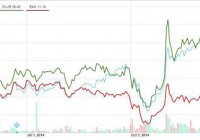
Summary I examine the Japan Hedged Real Estate ETF. I compared the performance of the Japan Hedged Real Estate ETF to the DXJ, and the un-hedged EWJ. Based on the policies of the BOJ, and Japan’s Pension fund, along with the underlying fundamentals I believe the Japan Hedged Real Estate ETF will be a long-term winner. In this article, I will be conducting an overview of a unique ETF that I believe is currently in the sweet spot for potential long-term gains. The WisdomTree Japan Hedged Real Estate ETF (NYSEARCA: DXJR ) I believe is worth considering because of the monetary stimulus that the Bank of Japan [BOJ] initiated in late October, in addition to increased buying of REITS and real estate equities from Japan’s Government Pension Investment Fund [GPIF]. DXJR Fund Facts Index Description The Index and the Fund are designed to provide exposure to Real Estate companies in Japan, while at the same time hedging exposure to fluctuations between the value of the U.S. dollar and the Japanese yen. [ DXJR Fund Page ] Assets: $35.3 million Expense Ratio: 0.43% SEC 30-Day Yield: 1.13% Inception Date: 4/8/2014 DXJR Performance I went to ETF.com and used their ETF Finder to see how the performance of DXJR compared to other Japan related ETFs. I excluded leveraged & inverse funds from my search, and found there were 19 Japan related ETFs. I compared the performance of DXJR since its inception, to the un-hedged iShares MSCI Japan ETF (NYSEARCA: EWJ ), and the largest hedged Japan ETF, the WisdomTree Japan Hedged Equity ETF (NYSEARCA: DXJ ). The chart below shows that since inception, DXJR has significantly outperformed EWJ, and has modestly outperformed the DXJ. The chart clearly shows that in an environment where the BOJ is easing, and Yen is weakening, a currency hedged ETF is the best option. (click to enlarge) Why DXJR Over DXJ? Someone may pose the question, why consider the DXJR which has only $35 million in assets, compared to DXJ which has over $11.5 billion in assets? Both ETFs will benefit from the GPIF allocating more to equities & real estate, and both will benefit from having a hedge to profit from the weakening Yen. The big difference that I believe will lead to DXJR outperforming DXJ is the supply of real estate. Supply Shortage For example, there was an article earlier this year from the WSJ, which, talked about an office space shortage, or this article from Japan Property Central about a severe shortage in apartments. Putting it in simple terms and stating the obvious, Japan is an island, therefore there is a limited supply of available land, and the only way to get around that fact is to build vertically. In a CNBC interview Daisuke Kitai who is the spokesperson at Nomura Real Estate Development stated: The availability of plots large enough to build new apartment complexes in central Tokyo is very limited. As I stated above, the only way to go is to build vertically, however, based on the statement from Mr. Kitai, it is easy to see why there is a shortage of apartments. Foreign Buying Mr. Kitai also brought up another source of demand that is leading to a shortage and that is increased buying from foreign buyers. Mr. Kitai made two statements, which show that there is demand from foreign buyers for Japanese real estate. Based on these statements its easy to see that foreign buyers will continue to properties in Japan, and with the yen weakening foreign buyers who are buying with a stronger currency will get more bang for their buck. Tokyo prices look relatively reasonable compared with similar quality properties in Hong Kong and Singapore. Of the seventy properties sold in the Toranomon Hills complex this summer, 30 percent were sold to foreigners, many from Hong Kong and Taiwan. Estate Planning The final reason why there is a supply shortage is the aging population of Japan is buying properties to minimize inheritance taxes. Also from the CNBC interview Kosei Ajima who is the general manager of property developer Mori Building Co stated: Many Japanese are buying an apartment as a gift to their children to minimize the eventual inheritance tax burden. With the population of Japan aging fast, I would expect there to be continued buying from Japanese citizens who are looking to leave their children with a lower tax bill. Closing Thoughts In closing, I believe the combination of the underlying fundamentals of the Japanese real estate, buying of REITS and real estate stocks by the GPIF, and the BOJ continuing to weaken the yen will lead to long-term gains for DXJR. For someone considering DXJR remember that the ETF has low volume, therefore it would be wise to use limit orders. Disclaimer: See here .

Bill Gross Cautious On Rate Hike In 2015: 2 Investment Grade Bond Funds To Buy

According to the ‘Bond King’ or bond investor extraordinaire William Hunt ‘Bill’ Gross, the good times may be over and many asset prices may drop in 2015. Record-low rates have failed to spur enough economic growth, according to Gross, and he believes the Fed may not be in a position to hike rates until late this year, if it at all does. “With the dollar strengthening and oil prices declining, it is hard to see even the Fed raising short rates until late in 2015, if at all,” said Gross, who is now in charge of the Janus Unconstrained Bond Fund. In an investment outlook for the Janus Capital Group, Inc. (NYSE: JNS ), Gross said investors would look for alternatives to risky assets. Gross Warns of ‘Minus Signs of Returns’ Gross seemed extremely cautious on 2015. Global economic growth is not enough even after years of low rates, and this may lead investors to seek alternatives to risky assets. The fact that borrowing costs are still stuck at near zero even after over half a decade of the end of the recession shows investors’ lack of confidence in the economic strength. “Be cautious and content with low positive returns in 2015. The time for risk taking has passed,” said Gross. He added, “At some future date … asset returns in many categories may turn negative.” This year has already begun on a dismal note for the benchmarks, registering their biggest declines to begin a year since 2008. The Dow, S&P 500 and Nasdaq are down 2.6%, 2.8% and 3.1%, respectively, year to date. However, 2014 too had begun with losses for these benchmarks. Gross however supports holding high-quality assets that have stable cash flows. He said that investors’ focus on “Treasury and high-quality corporate bonds, as well as equities of lightly levered corporations with attractive dividends and diversified revenues both operationally and geographically.” Debt Supercycle? Bill Gross warned of “minus signs in front of returns for many asset classes” at the end of 2015. The creation of cheap money by the central banks might face a troubled end. Gross believes that the realization of the debt supercycle approaching an end would show the markets’ gains as ‘debt-fueled sugar high,’ reported The Wall Street Journal. The recent years of the Bull Run was sparked by low rates and accelerated credit growth. Gross states that the central banks have countered challenges by rounds of credit creation and low rates. Gross said: The power of additional and cheaper credit to add to economic growth and financial-asset bull markets has been underappreciated by investors since 1981…Investors have continued to assume that monetary (and at times fiscal) policy could contain the long-term business cycle. However, Gross believes that the debt supercycle is nearing its end. It ends “when yields, asset prices and the increasing amount of credit place an unreasonable burden on the balancing scale of risk and return.” Growth Concerns Global economic growth concerns surfaced in 2015, with the Eurozone particularly posting dismal growth numbers. Japan too had entered a technical recession. Chinese economic data was shaky as well. However, the U.S. has outperformed these major economies and reported 5% growth in the third quarter of 2014. Gross believes that the growth rates in developed and developing nations are failing as a lot of capital is put into “risk-free” capital markets instead of the real economy. Now, there are concerns about Greek exiting the euro. The latest turmoil comes while the oil prices have slumped below $50 a barrel. These factors have combined to send the U.S. markets tumbling by the worst margins to start a year since 2008. Fed’s Stance In the Fed statement following the two-day policy meeting last month, the central bank sounded positive regarding economic growth and also mentioned that they will show some patience before hiking interest rates. The Fed stated: Based on its current assessment, the committee judges that it can be patient in beginning to normalize the stance of monetary policy. Investment Grade Bond Funds to Benefit A low interest rate environment is favorable for investments in bond funds. This stems from the fact that market value of a bond is inversely proportional to the interest rates. The primary forms of bond risk include default risk and the interest rate risk. The latter is obviously the most important these days. Meanwhile, global government bond yields dropped to a new low recently. 10-year U.S. Treasury note yield was down to 1.964% on Tuesday, the lowest since May 2013. Gross warns that investors “do not look, therefore, for economic growth to be the magic elixir for 2015.” He suggests, “Investors should be flexible and consider more liquid securities. Fixed income with shorter maturities is one starting place.” Investors agreeing with Gross’ views may thus look for investing in Investment Grade Bond funds. Bill Gross suggests “high-quality corporate bonds.” Here we will suggest 2 Investment Grade Bond Funds that carry a Zacks Mutual Fund Rank #1 (Strong Buy) as we expect the funds to outperform its peers in the future. The funds have decent 1-year return. They also have beta of less than 1. Funds having betas within this range will show less volatility than the broader markets. BlackRock Total Return Services (MUTF: MSHQX ) seeks total return that outperform Barclays Capital U.S. Aggregate Bond Index. Over 90% of the fund’s assets are invested in varied fixed-income securities such as corporate bonds and notes, mortgage-backed securities, asset-backed securities, convertible securities, preferred securities and government obligations. It mostly invests in investment grade fixed-income securities. It is a feeder fund, investing in a corresponding “master” portfolio. The fund has a one-year return of 8.3% and carries a Zacks Mutual Fund Rank #1 (Strong Buy). It has a one-year beta of 0.94. It carries an expense ratio of 0.76% as compared to category average of 0.86%. Nuveen Core Plus Bond A (MUTF: FAFIX ) seeks to provide current income along with limited risk to capital. It invests the majority of its assets in bonds. These include U.S. government securities that may include zero coupon securities, residential and commercial mortgage-backed securities, and corporate debt obligations among others. The fund has a one-year return of 5.2% and carries a Zacks Mutual Fund Rank #1 (Strong Buy). It has a one-year beta of 0.92. It carries an expense ratio of 0.77% as compared to category average of 0.86%.

How Are Housing ETFs Poised For The New Year?

The housing construction market has recovered at a steady and gradual pace in the second half of 2014 after a slump at the beginning of the year. Overall economic growth, improving job numbers, growing consumer confidence, moderating home prices, stabilizing mortgage rates and a low level of housing inventory all led to the improvement. A string of housing data released lately portrays a mixed to slightly positive picture of the housing market. Existing home sales and new home sales rose in the month of October. Though housing starts declined in October and November, analysts in general believe the broader housing trends are stable to slightly positive and will pick up momentum in the New Year. Homebuilders are also turning more optimistic as demand for new homes rises with an improving job market and growing consumer confidence. Homebuilders’ confidence, as indicated by the National Association of Home Builders (NAHB)/Wells Fargo housing market index, rose 4 points to 58 in November. Though the index declined a point to 57 in December, it is still well above 50, which is the demarcating line between expanding and contracting activity levels. However, what keeps us concerned are the chances of a rise in short-term interest rates in 2015 as the Fed has already ended its six-year long quantitative easing program in October. Though the Fed had earlier promised to keep the key interest rate at record low for a ‘considerable time,’ investors are speculating about the timing of the planned rate hike. The robust job numbers might draw the Federal Reserve closer to raising interest rates. Higher interest/mortgage interest rates may have a moderating effect on housing demand and pricing. ETFs to Tap the Sector Given the improving fundamentals, the homebuilding sector deserves a closer look. For investors willing to play the space in a less risky way, an ETF approach can be a good idea. This technique can help to spread out assets among a wide variety of companies and reduce company specific risk at a very low cost. Below, we have highlighted three ETFs that are worth looking into. The SPDR Homebuilders ETF (NYSEARCA: XHB ) XHB is one of the more popular homebuilding ETFs in the market today with assets under management of around $1.48 billion and a trading volume of roughly 4.07 million shares a day. The fund has an expense ratio of 35 basis points. The fund holds 37 stocks in its basket, with 44% of the assets going to mid caps and 6% comprising large cap stocks. Despite the smaller holding pattern, the fund does not appear to be concentrated in the top 10 holdings. The fund has just 34.1% in the top 10 with Lowe’s Companies (NYSE: LOW ), Whirlpool Corporation (NYSE: WHR ) and Restoration Hardware Holdings (NYSE: RH ) occupying the top 3 positions with asset allocation of 3.64%, 3.63% and 3.56%, respectively. The fund’s assets include 33% homebuilders, 15% household appliances securities, 26% specialty retail stocks and the balance 26% building materials companies. The fund carries a Zacks Rank #3 (Hold) with a high level of risk. The iShares U.S. Home Construction ETF (NYSEARCA: ITB ) Another popular choice in the homebuilding sector is ITB, which tracks the Dow Jones U.S. Select Home Construction Index. It has $1.55 billion in assets with a trading volume of roughly 3.5 million shares a day, while its expense ratio is just 45 basis points. The fund holds 39 stocks in its basket, out of which only 12% are large cap securities. The fund has a concentrated approach in the top 10 holdings with 62.9% of the asset base invested in them. Among individual holdings, top stocks in the ETF include D.R. Horton, Inc. (NYSE: DHI ), Lennar (NYSE: LEN ) and Pulte (NYSE: PHM ) with asset allocation of 10.97%, 10.53% and 9.67%, respectively. Homebuilders accounts for around 64% of this fund. The fund carries a Zacks Rank #3 (Hold) with a high level of risk. The PowerShares Dynamic Building & Construction Portfolio ETF (NYSEARCA: PKB ) This ETF comprises around 30 housing companies and has its assets invested across all classes of the market spectrum. Engineering and construction stocks comprise 21% of the fund, followed by building materials companies that account for 17%. A look at the style pattern reveals that the fund has a preference for value stocks. The fund manages an asset base of $58.0 million and has an expense ratio of 63 basis points. The fund has only 16% in large cap securities and 46.1% in the top 10 holdings. The fund carries a Zacks Rank #3 (Hold) with a High level of risk. To Sum Up The housing market has improved dramatically from the trough year of 2009. Homebuilding activity is expected to take a cue from improving job numbers and a rebounding economy. Though the timing of a rise in interest rates creates uncertainty, homebuilders are increasingly optimistic of a pick up in sales in the New Year.