Tag Archives: undefined

PBS Is Just What I’m Not Looking For In An ETF
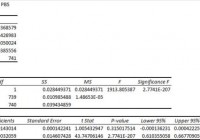
Summary I’m taking a look at PBS as a candidate for inclusion in my ETF portfolio. A limited underlying index, high standard deviations, moderate correlation, weak yields and high expense ratios make this a poor fit for my tastes. The best things going for the portfolio is decent (but not great) liquidity. I’m not assessing any tax impacts. Investors should check their own situation for tax exposure. Investors should be seeking to improve their risk-adjusted returns. I’m a big fan of using ETFs to achieve the risk-adjusted returns relative to the portfolios that a normal investor can generate for themselves after trading costs. I’m working on building a new portfolio and I’m going to be analyzing several of the ETFs that I am considering for my personal portfolio. One of the funds that I’m considering is the PowerShares Dynamic Media Portfolio (NYSEARCA: PBS ). I’ll be performing a substantial portion of my analysis along the lines of modern portfolio theory, so my goal is to find ways to minimize costs while achieving diversification to reduce my risk level. What does PBS do? PBS attempts to track the total return (before fees and expenses) of the Dynamic Media IntellidexSM Index. At least 90% of the assets are invested in funds included in this index. The index only includes the common stock of 30 companies, all of which are considered U.S. Media companies. PBS falls under the category of “Communications.” Does PBS provide diversification benefits to a portfolio? Each investor may hold a different portfolio, but I use (NYSEARCA: SPY ) as the basis for my analysis. I believe SPY, or another large cap U.S. fund with similar properties, represents the reasonable first step for many investors designing an ETF portfolio. Therefore, I start my diversification analysis by seeing how it works with SPY. I start with an ANOVA table: (click to enlarge) The correlation is mediocre at 85%. I want to see low correlations on my investments. Extremely low levels of correlation are wonderful for establishing a more stable portfolio. I consider anything under 50% to be extremely low. However, for equity securities an extremely low correlation is frequently only found when there are substantial issues with trading volumes that may distort the statistics. Standard deviation of daily returns (dividend adjusted, measured since January 2012) The standard deviation is great. For PBS it is .9703%. For SPY, it is 0.7300% for the same period. SPY usually beats other ETFs in this regard, but this combination of standard deviation and correlation isn’t going to do much good under modern portfolio theory. Liquidity looks acceptable Average trading volume isn’t very high, a bit over 40,000, but that also isn’t low enough to be a major concern for me. Mixing it with SPY I also run comparisons on the standard deviation of daily returns for the portfolio assuming that the portfolio is combined with the S&P 500. For research, I assume daily rebalancing because it dramatically simplifies the math. With a 50/50 weighting in a portfolio holding only SPY and PBS, the standard deviation of daily returns across the entire portfolio is 0.8182%. With 80% in SPY and 20% in PBS, the standard deviation of the portfolio would have been .7558%. If an investor wanted to use PBS as a supplement to their portfolio, the standard deviation across the portfolio with 95% in SPY and 5% in PBS would have been .7352%. Why I use standard deviation of daily returns I don’t believe historical returns have predictive power for future returns, but I do believe historical values for standard deviations of returns relative to other ETFs have some predictive power on future risks and correlations. Yield & Taxes The distribution yield is .50%. I simply don’t see this as a useful holding for retiring investors. The combination of mediocre correlation and high standard deviation results in an ETF that is unlikely to lower the total risk profile of the portfolio unless it was used in phenomenally small amounts. The distribution yield is weak, which means retiring investors may have a stronger temptation to sell shares if their income is too low. The point of building the portfolio with ETFs is to avoid active management outside of rebalancing. I can deal with a weak yield because I’m far from retirement, but it is starting to feel like the ETF is looking for a fairly small niche to fill. I’m not a CPA or CFP, so I’m not assessing any tax impacts. Expense Ratio The ETF is posting .62% for a gross expense ratio, and .62% for a net expense ratio. I want diversification, I want stability, and I don’t want to pay for them. For an ETF that already left me wanting more in most categories, being hit with a big expense ratio isn’t the way to draw me back in. Market to NAV The ETF is at a .04% premium to NAV currently. Premiums or discounts to NAV can change very quickly so investors should check prior to putting in an order. The ETF is large enough and liquid enough that I would expect the ETF to stay fairly close to NAV. Generally, I don’t trust deviations from NAV and I will have a strong resistance to paying a premium to NAV to enter into a position. Largest Holdings The diversification can’t be very good when there are only 30 companies in the underlying index. The chart below supports that assessment. The top seven companies are each more than 5% of the total holdings. (click to enlarge) Conclusion I’m currently screening a large volume of ETFs for my own portfolio. The portfolio I’m building is through Schwab, so I’m able to trade PBS with no commissions. I have a strong preference for researching ETFs that are free to trade in my account, so most of my research will be on ETFs that fall under the “ETF OneSource” program. PBS won’t make the next round of comparison. It feels like the ETF would be most useful for making short-term bets on the sector. Some sector ETFs can provide additional value to a portfolio by improving the balance of different exposures, but I don’t see that benefit here.

Guide To European Hedged ETFs

Apart from the oil price havoc, Europe has taken center stage globally with the start of the New Year thanks to the struggling economy, political instability in Greece and tumbling Euro. This is especially true as fears of the opposition party’s win in Greece later in the month led to apprehensions of the country’s departure from the Eurozone. Europe is struggling with slow growth, tumbling inflation, higher unemployment and deflation fears that have been stalling the burgeoning Euro zone economic recovery for several months. This is especially true as PMI Composite index, for the Euro zone fell to 51.4 in December from the flash estimate of 51.7. However, it is up from the 16-month low of 51.1 in November, suggesting that economic and business activity in the Eurozone is growing but at an anemic pace. In fact, the PMI Composite index grew by just 0.1% in the final quarter of 2014 driven by continued downturn in France and Italy as well as a faltering Germany, a powerful engine and the largest economy of Europe. Additionally, several months of decline in energy prices has finally trapped Eurozone into deflation for the first time in more than five years. Inflation has turned negative with consumer prices falling 0.2% year over year in December. All these sluggish fundamentals have bolstered the case for aggressive quantitative easing (QE) measures by the European Central Bank (ECB) that might be similar to the policies that the U.S. or U.K. undertook over the past few years. The ECB signaled last week that it could announce a major bond-buying program later this month to reinvigorate growth in the continent and fight deflation. If successful, this will propel the European stocks higher but continue to weigh on the currency. The euro tumbled to a nine-year low of $1.18 against the greenback. The downfall can also be credited to the measures taken by the ECB last year when it cut interest rates to record lows and supported the purchase of some private-sector bonds. Further, the strengthening the U.S. economy and the prospect of rising interest rates sometime in mid 2015 are driving the U.S. dollar upward, thereby resulting in depreciation of the euro against the USD. However, a slumping euro will actually benefit exporters and the manufacturing industry, resulting in soaring stock prices. This is because Japan is primarily an export-oriented economy and a weaker currency makes its exports more competitive. It will also help in improving the regions’ trade balances. Given this, investors may still want to play the European space while simultaneously seeking protection against the sliding euro. Fortunately, there are a handful of euro-hedged ETFs available on the market, any of which could be excellent choices in the current environment. Below, we have profiled some of these in detail for those who are looking for a hedged European ETF exposure at this time: WisdomTree Europe Hedged Equity Index Fund ( HEDJ ) This fund offers exposure to the European stocks while at the same time provides hedge against any fall in the euro. This will be done by tracking the WisdomTree Europe Hedged Equity Index. In total, the fund holds 126 securities with a heavy concentration on the top 10 holdings at 45.4%. However, it is pretty well spread across a number of sectors with consumer staples, industrials, consumer discretionary, financials and health care taking double-digit exposure. Among countries, Germany (26%), France (24.5%), Spain (18%) and the Netherlands (16.7%) dominate the holdings list. HEDJ is one of the popular and liquid choices in the European space with AUM of about $5.5 billion and average daily volume of more than 1.2 million shares. Expense ratio came in at 0.58%. The fund is up 0.2% in the trailing one-year period. Deutsche X-trackers MSCI Europe Hedged Equity ETF ( DBEU ) This product tracks the MSCI Europe US Dollar Hedged Index, which provides exposure to the European equity market and hedges the euro to the U.S. dollar. The fund holds 442 securities in its basket, which is widely spread out across each component with none holding more than 2.92% of assets. United Kingdom takes the top spot at 28.5% while Switzerland, France and Germany round off the next three spots. From a sector look, financials account for the largest share at 22.2% closely followed by consumer staples (19.2%). Other sectors make up for a nice mix in the portfolio with a single-digit allocation. The fund has amassed $723.2 million in its asset base while trades in good average daily volume of more than 310,000 shares. It charges 45 bps in fees per year and returned 0.7% over the past one year. iShares Currency Hedged MSCI EMU ETF ( HEZU ) This product provides local currency performance of stocks from developed market countries within the EMU (European Monetary Union) while managing currency risk as well. It follows the MSCI EMU 100% USD Hedged Index and is a play on the popular iShares MSCI EMU ETF ((NYSEARCA: EZU ) with a hedge to strip out the euro currency exposure. The fund holds 248 well-diversified securities in its basket dominated by financials (22.7%) and followed by consumer discretionary (13.2%) and industrials (12.7%). The ETF has amassed $64.2 million in its asset base since its debut in July 2014 and trades in small volumes of 39,000 shares a day. The fund charges 51 bps in annual fees from investors and has delivered flat returns since its debut. Currency hedge strategies are gaining immense popularity in recent months on a strengthening U.S. dollar and the prospect of higher interest rates. Given a weak Euro and hopes of stimulus, investors could definitely look to these currency hedged ETFs. These products are expected to perform better than the traditional funds if ECB introduces a massive asset buying program.

When Picking Stocks, It’s Good To Be Lucky.

Summary There are very few human endeavors that do not involve any element of luck. Investing is no exception luck plays a role. When judging the luck vs. skill ratio in a game an interesting test is to try to lose. The harder it is to intentionally lose, the less skill the game requires. The same test can be applied to investing. I suggest we give it a try. Have you ever played a game with a young child and tried to lose, only to find yourself having to cheat to allow the toddler to win? That’s because most games for very young children have a very low skill component. A few years later perhaps you’re teaching the child to play checkers or chess. Now it is very easy to lose intentionally. The more skill a game requires the easier it is to lose intentionally. (Being competitive I find it very difficult to lose intentionally to anyone over six – a sad but true commentary on my personality.) This can also be applied to stock picking. If stock picking is mostly based on skill, it should be easy to pick stocks that trail the market. I propose we put the theory to the test by having a contest to see who can pick a portfolio that will trail the market over the next year. Let’s start February 1st, to give everyone a chance to select their stocks and to give me a chance to find a place to post and share the portfolios. Before I give the rules of the contest I want to discuss skill and luck a little. First, let’s look at the definition of skill from Merriam-Webster: Skill: The ability to use one’s knowledge effectively and readily in the execution of performance. Skill is not based only on the outcome. The outcome can be the result of luck. I have known investors who have made a lot of money by making large bets on a small number of stocks and letting those bets ride. Was it skill? It’s hard to know. I do know that if enough investors participate in the market in that manner some of them will get rich even if no skill is involved. If we have a coin flipping contest and define flipping heads as winning: If you flip a coin 10 times the chances that you end up with 60% heads or greater are approximately: 38%. If you flip a coin 20 times the chances that you get 60% heads or greater is about 25%. If you flip the coin 100 times the chances of getting 60% heads or greater is approximately 3%. If at least part of investment returns are based on luck, an investor who does not make a lot of bets has a better chance of out performing the market by a large amount. An investor can limit his bets by only selecting a limited number of stocks. An investor can also limit his number of bets by investing only in a single industry, sector, market cap etc. Of course, making fewer bets also means you have a better chance of under performing the market by a large amount. Which is why my portfolio is diversified; it is not that important to me to have outsized gains, but it’s very important to me to avoid outsized losses. I will also note that the reason the market involves so much luck is actually because most of the participants are highly skilled. If you sit down at a poker table with a bunch of rubes your skill at poker will almost guarantee you win. If everyone at the table has the same skill level, skill evens out and luck becomes a much larger factor. Now back to our contest.. Each contestant should select a portfolio of twenty stocks from the S&P 500. The stock must be diversified with two stocks from each sector: Consumer Discretionary Consumer Staples Energy Financials Health Care Industrials Information Technology Materials Telecommunications Services Utilities Each stock gets equal weighting and the entire portfolio is invested in these equities – no bonds no cash. The portfolio is created in La-La land where there are no expenses and no taxes. The goal is to select a portfolio that will trail the S&P 500 in total return over the next year. Send me a message with your selections. I will post the selections somewhere where we can monitor our progress. I will post the location on an insta-blog. The contest will start Feb. 1 2015 and end Feb. 1 2016. Is this a perfectly formulated study? No, far from it. Even I, who am not a researcher can point out a lot of flaws, but I think it will be interesting and challenging, and in spite of its flaws, we may learn something. Conclusion It is difficult to tell luck from skill when judging investment returns. Portfolios that lack diversification have a better chance of either greatly outperforming or greatly underperforming the market. If we account for this, by forcing the selection of a diversified portfolio, a skilled stock picker should still be able to create a portfolio that will under perform the market. Let’s give it a try and see how we do.